
 How Much Are They Worth?
Celebrity fortunes, explained
How Much Are They Worth?
Celebrity fortunes, explained









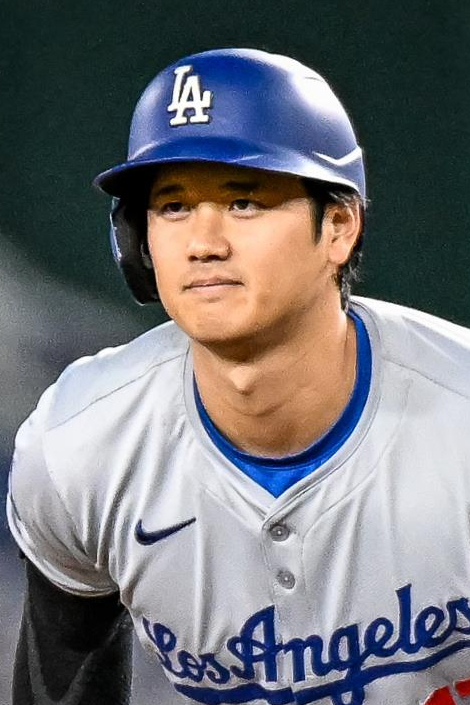
How did Shohei Ohtani build this fortune?
The answer unfolds through the career, earnings, deals and assets behind the headline estimate.
Before the fame
The background and early turning points that shaped Shohei Ohtani’s route to prominence.
Shohei Ohtani was born on 5 July 1994 in Mizusawa, a town now part of the city of Oshu in Japan’s Iwate Prefecture, according to Wikipedia. His father, Toru, worked at a local automobile manufacturing plant and played amateur baseball in Japan’s Industrial League, while his mother, Kayoko, competed nationally in badminton in high school, a sporting household that also produced his older brother Ryuta and older sister Yuka.
Ohtani attended Hanamaki Higashi High School in Iwate, where coach Hiroshi Sasaki refused to slot him into a single position and instead built his training around both pitching and hitting, reportedly assigning him chores such as cleaning toilets to instil humility alongside the baseball work. As a 17-year-old amateur he threw a pitch clocked at 160 kilometres per hour, a Japanese high-school record at the time that made him a national prospect before he had played a single professional game.
Rather than move directly to Major League Baseball out of high school, Ohtani was selected with the first pick of the 2012 Nippon Professional Baseball draft by the Hokkaido Nippon-Ham Fighters, who persuaded him that Japan offered the better path to becoming a genuine two-way player. He made his NPB debut in 2013, splitting time between the mound and the outfield in an arrangement almost unheard of in Japanese professional baseball, per his Wikipedia profile.
By 2016 Ohtani had established himself as the best all-round player in Japan, winning the Pacific League MVP award on the strength of a season that combined frontline pitching with everyday-calibre hitting, a dual-threat body of work that made him the most coveted amateur-to-pro talent Japan had produced in years.
The breakthrough years
The career decisions and defining moments that turned recognition into sustained earning power.
The Fighters posted Ohtani to Major League Baseball after the 2017 season, and despite interest from nearly every club in the league he signed with the Los Angeles Angels, who could offer him only a modest $2,315,000 signing bonus because international free-agent bonus-pool rules capped what any team could pay a player of his age, as reported by Sports Illustrated at the time of the signing.
He justified the wait almost immediately, batting .285 with 22 home runs and 61 RBIs while also going 4-2 with a 3.31 ERA on the mound in his 2018 rookie season, a two-way workload not seen at major league level since Babe Ruth, which earned him the American League Rookie of the Year award before a torn elbow ligament forced him into Tommy John surgery that October.

What the work can earn
Reported pay, contracts, royalties and performance income reveal how the fortune was funded.
Ohtani has since become the most decorated player of his generation, winning the American League MVP award in 2021 and 2023 and the National League MVP award in 2024 and 2025 after his move to the Dodgers, becoming only the second player in history to win four MVPs and the only one ever to be voted the award unanimously more than once, doing so all four times, according to CBS Sports. His 2024 campaign also included the first 50-home-run, 50-stolen-base season in major league history, finishing with 54 home runs and 59 stolen bases.
Those individual honours have come alongside team success; Ohtani helped the Dodgers win the World Series in 2024 and again in 2025, making Los Angeles the first team to win back-to-back titles since the New York Yankees’ three-peat from 1998 to 2000, a run of dominance detailed by NPR.
Ohtani’s two-way ability has made him a genuinely global sporting figure rather than simply a baseball star, and Major League Baseball has built entire season-opening series in Seoul and Tokyo around his popularity across Asia. The Dodgers’ back-to-back championship run turned the team’s 2025 title parade into one of the largest sporting celebrations in Los Angeles history, according to the same NPR coverage of the celebrations.
His profile extends well beyond the sport itself; Ohtani was named to Time magazine’s list of the 100 most influential people in the world in 2021, one of only a handful of baseball players ever to make the list, and he has remained one of the most recognisable athletes on earth in the years since, a status that continues to shape how brands, broadcasters and MLB itself market the game internationally.

The business beyond the main career
Endorsements, ownership interests and investments can keep compounding long after the initial breakthrough.
Ohtani signed a multi-year footwear and apparel deal with New Balance in January 2023, ending a partnership with Asics that had lasted since 2014, and became the face of the brand’s “We Got Now” campaign with a signature logo built around his own initials, according to Hypebeast.
That deal sits alongside more than twenty other partners, including Seiko, Kose, Hugo Boss, Fanatics, Japan Airlines and the beverage firm Kirin, which together generated an estimated $125 million in endorsement income in 2026 alone, the largest single-year off-field total recorded by any active team-sport athlete, according to Forbes.
Beyond his playing contract, Ohtani has increasingly stepped into the business side of sport, agreeing in 2023 to serve as celebrity spokesperson and an intended buyer at Vista at Mauna Kea Resort, a $240 million luxury housing development on Hawaii’s Big Island where residences average $17.3 million each; the arrangement was meant to give him both an endorsement fee and a future off-season base with a private training facility, as reported by ESPN.
That venture became more complicated in 2026, when the development’s original broker and project manager sued Ohtani and his agent, Nez Balelo, alleging the pair used Ohtani’s celebrity leverage to have them forced out of a project they had spent eleven years building, a dispute that remains unresolved and is detailed in the same ESPN report.

Notable luxury item
A reported property or major asset offers a tangible glimpse of the wealth behind the public estimate.
In May 2024, shortly after his move to the Dodgers, Ohtani bought a 7,327-square-foot midcentury-modern mansion in La Canada Flintridge, California, from radio host and comedian Adam Carolla for $7.8 million; the five-bedroom property includes a home theatre, gym, sauna and infinity-edge pool, according to NBC Los Angeles.
His Hawaii commitment adds a second major property interest, with Ohtani on the hook to purchase one of the $17.3 million residences at the Vista at Mauna Kea Resort as part of his 2023 endorsement and investment agreement, the same Big Island project now at the centre of the lawsuit described above.
Shohei Ohtani’s estimated net worth
Public estimates vary because private contracts, investments, taxes and liabilities are not fully disclosed.
How this estimate is calculated
This estimate starts with Ohtani’s documented on-field pay, which remains modest relative to his fame; his rookie-scale Angels contract and the heavily deferred structure of his Dodgers deal mean his actual MLB salary paid to date totals only in the region of $46 million, even though the Dodgers contract is worth $700 million on paper. Of that total, $680 million is deferred without interest and due to be paid out in annual instalments between 2034 and 2043, a structure also noted by Forbes, meaning most of the contract’s headline value is a future entitlement rather than money Ohtani can draw on today.
Set against that comparatively small salary is his endorsement income, which the same Forbes reporting put at $125 million in 2026 alone, on top of similarly outsized totals in the two preceding years, making him the highest-earning athlete off the field in professional team sport. As a secondary reference point, Celebrity Net Worth, a celebrity wealth estimation site rather than a financial disclosure source, lists a net worth of $250 million; that figure is used here only as a supplementary data point alongside the documented salary, contract and endorsement figures above, not as the sole basis for the estimate.
Weighing Ohtani’s modest current MLB salary, the enormous but largely deferred value of his Dodgers contract, and his record-setting endorsement income against typical deductions for agent fees and taxes, Shohei Ohtani’s estimated net worth falls in the following range.
In November 2023, Ohtani donated 60,000 youth baseball gloves, produced with New Balance, to roughly 20,000 elementary schools across Japan, saying he hoped children could “spend their days happily with a lot of energy through baseball,” a gesture covered by the World Baseball Softball Confederation.
He has also given more quietly to causes closer to home, contributing to Japan’s mask-supply effort for healthcare workers during the COVID-19 pandemic in 2020 and to relief funds for victims of Japanese earthquakes, part of a broader pattern of low-key philanthropy that has helped keep his public image almost entirely free of scandal outside the one major controversy detailed below.
Ohtani’s only serious public controversy came in 2024, when his long-time interpreter and close aide, Ippei Mizuhara, was found to have stolen nearly $17 million from Ohtani’s bank account between November 2021 and January 2024 to cover debts run up with an illegal sports bookmaker, at times calling Ohtani’s bank and impersonating him to authorise the wire transfers himself. Major League Baseball investigated the matter and formally closed its inquiry after Mizuhara pleaded guilty to bank and tax fraud, stating that it “considers Shohei Ohtani a victim of fraud” and clearing him of any rule violations, according to CBS Sports.
Mizuhara was sentenced on 6 February 2025 to 57 months in federal prison and ordered to pay nearly $17 million in restitution to Ohtani, alongside a further $1.1 million to the IRS, according to ESPN. Throughout the case, prosecutors, MLB and the Dodgers were consistent that Ohtani himself had no knowledge of the gambling or the theft and was a victim of the scheme rather than a participant in it.