
 How Much Are They Worth?
Celebrity fortunes, explained
How Much Are They Worth?
Celebrity fortunes, explained








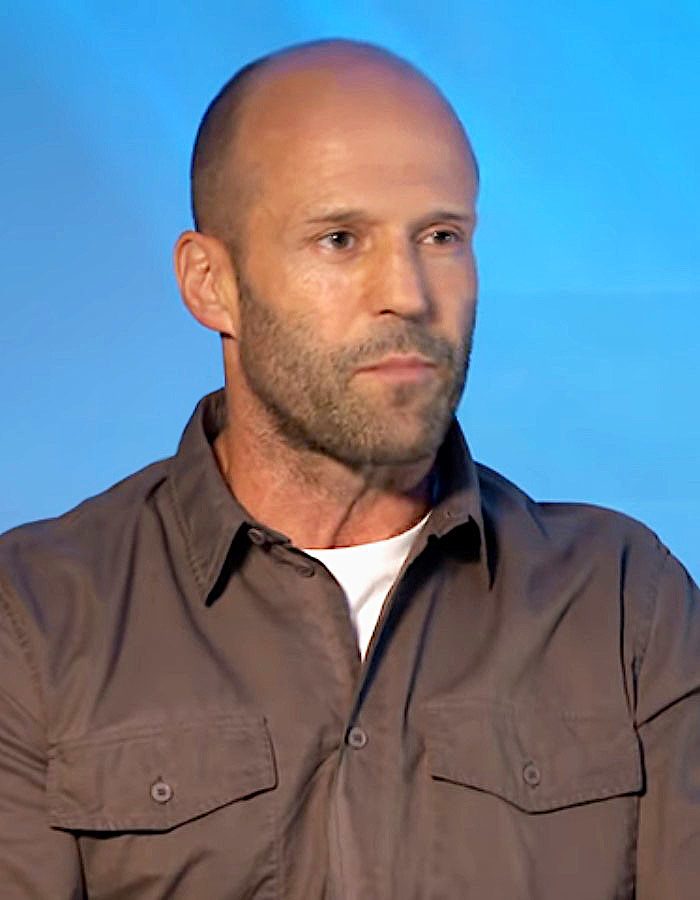
How did Jason Statham build this fortune?
The answer unfolds through the career, earnings, deals and assets behind the headline estimate.
Before the fame
The background and early turning points that shaped Jason Statham’s route to prominence.
Jason Statham was born on 26 July 1967 in Shirebrook, Derbyshire, and grew up in Great Yarmouth, Norfolk. His family had little money; his father worked as a street trader and lounge singer, and Statham himself sold goods on London street markets as a young man, a background he later drew on for his first film roles.
Sport came first. He spent years in Britain’s national diving squad and represented England at the 1990 Commonwealth Games in Auckland, finishing eighth in the 1m springboard and 11th in both the 3m springboard and the 10m platform, according to Team England.
After diving, Statham worked as a model, becoming a face for brands including French Connection and Levi’s, according to Olympics.com. French Connection’s backing led indirectly to his screen career, because the company was an investor in Guy Ritchie’s first feature.
Ritchie cast him as Bacon in Lock, Stock and Two Smoking Barrels (1998), and then as Turkish in Snatch (2000). Both roles drew on his street-market past and established the dry, clipped delivery that became his trademark.
The breakthrough years
The career decisions and defining moments that turned recognition into sustained earning power.
The Transporter (2002), produced by Luc Besson, turned Statham into an action lead. Its success led to two sequels and a run of mid-budget genre hits including Crank, The Bank Job and The Mechanic, which made him one of the most reliable international action stars of the 2000s.
The Expendables series in 2010 placed him alongside Sylvester Stallone and a roster of veteran action stars, and in 2013 he joined the Fast & Furious franchise as Deckard Shaw, the role that took him into the top tier of Hollywood earnings.
Paul Feig’s comedy Spy (2015), in which he parodied his own tough-guy persona opposite Melissa McCarthy, showed a comic range that critics had rarely credited him with and broadened his appeal beyond action audiences.

What the work can earn
Reported pay, contracts, royalties and performance income reveal how the fortune was funded.
His biggest commercial successes came in the late 2010s. The shark thriller The Meg (2018) grossed about $529 million worldwide on a $130 million budget, according to Box Office Mojo, and the spin-off Hobbs & Shaw (2019), in which he co-starred with Dwayne Johnson, grossed about $761 million, according to Box Office Mojo.
He then reinvented himself as the star of lean, adult action thrillers. The Beekeeper (2024) grossed about $163 million worldwide, according to Box Office Mojo, a strong return for an original, mid-budget film, and its success led Amazon MGM Studios to acquire a sequel in a deal worth more than $50 million, according to Deadline.
Statham’s recognition has been commercial rather than critical. Forbes ranked him joint seventh on its list of the highest-paid actors of 2023, with estimated earnings of $41 million, as reported by CBS News and published by Forbes. He appeared on the Forbes list of the highest-paid actors of 2024 as well, credited with a run of profitable action films including The Beekeeper.
He is also widely admired within the industry for performing many of his own stunts, a reputation rooted in his years as an elite diver.

The business beyond the main career
Endorsements, ownership interests and investments can keep compounding long after the initial breakthrough.
Statham’s early modelling work for French Connection and Levi’s is documented by Olympics.com. Since becoming a film star he has kept a low commercial profile and has not been associated with long-running global endorsement contracts.
His value is concentrated in his films: studios buy the Statham brand for action thrillers that perform well at the box office and in streaming, which is why his earnings rank alongside actors with far larger advertising portfolios.
Statham produces through his own company, Punch Palace Productions. He produced Levon’s Trade, sold to Amazon with David Ayer directing and Sylvester Stallone co-writing, according to Deadline; it was released in 2025 as A Working Man.
His production role on The Beekeeper sequel, reported by Deadline, gives him a share of the value of his own films rather than an acting fee alone, a move typical of stars at his level.

Notable luxury item
A reported property or major asset offers a tangible glimpse of the wealth behind the public estimate.
Statham’s documented assets are mainly property. He and his partner, Rosie Huntington-Whiteley, sold their Beverly Hills home in 2025 for about $19.9 million, around ten years after buying it for $12.99 million, according to SFGate.
The same report states that Statham bought a Malibu beach house in 2009 for $10.95 million and sold it in January 2020 for $18.5 million, and that he bought a nearby midcentury home in 2015 for $2.7 million, according to SFGate. Together these transactions show a record of profitable property sales.
Jason Statham’s estimated net worth
Public estimates vary because private contracts, investments, taxes and liabilities are not fully disclosed.
How this estimate is calculated
Statham is one of the few subjects here with published prices on both sides of a transaction. SFGate records that he and Rosie Huntington-Whiteley sold their Beverly Hills house in February 2025 for $19.9 million, having bought it in 2015 for $12.99 million; that he bought a Malibu beach house in 2009 for $10.95 million and sold it in January 2020 for $18.5 million; and that he bought a nearby midcentury house for $2.7 million in 2015 and still owns it. Those are asset records, showing about $14.5 million of realised gains plus one property still held.
On earnings, CBS News reports Forbes placing him joint seventh among the highest-paid actors of 2023 on estimated earnings of $41 million, and Deadline reports Amazon MGM acquiring worldwide rights to a Beekeeper sequel in a deal worth more than $50 million — a price for a film, not a fee for him.
The range begins from the property record, which is solid, and then has to cross a gap the property record cannot fill. Treating 2023 as a guide to his stronger years rather than his typical ones, and allowing roughly half of gross earnings to go to tax and representation across a run of lead roles since 2010, the working gives about $90 million to $140 million.
What is firm here is the bricks and mortar: four purchase and sale prices on the public record, and a fifth property still in his name. What is soft is everything else. No individual film fee of his has ever been published, his producing arrangements through Punch Palace are private, and the $41 million is a magazine’s estimate of one year’s income rather than an audited figure, with every other year in the span inferred from it. If the earnings guess is wrong, the property gains are the last part of this range that would move.
Confidence: Partly documented – five purchase and sale prices on his homes are on the public record and confirmed, but only one year of his earnings has ever been reported and the rest of the span is inferred from it.
Statham guards his privacy closely and rarely gives interviews outside film promotion. His charitable giving has not been publicised in major outlets, and he has no named foundation.
His public image rests on consistency: a working-class Englishman who became a global action star without abandoning the persona that made him famous, and who has kept a scandal-free reputation over nearly three decades in the business.
Statham has faced little public controversy. The most widely discussed story about him concerned his work rather than his conduct: in 2019 The Wall Street Journal reported that he, Dwayne Johnson and Vin Diesel had contract provisions limiting how badly their Fast & Furious characters could be beaten on screen.
Beyond that, his career has attracted scrutiny mainly for the familiarity of his roles, a criticism he has shrugged off as his films continue to make money for studios.