
 How Much Are They Worth?
Celebrity fortunes, explained
How Much Are They Worth?
Celebrity fortunes, explained







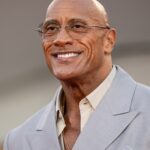


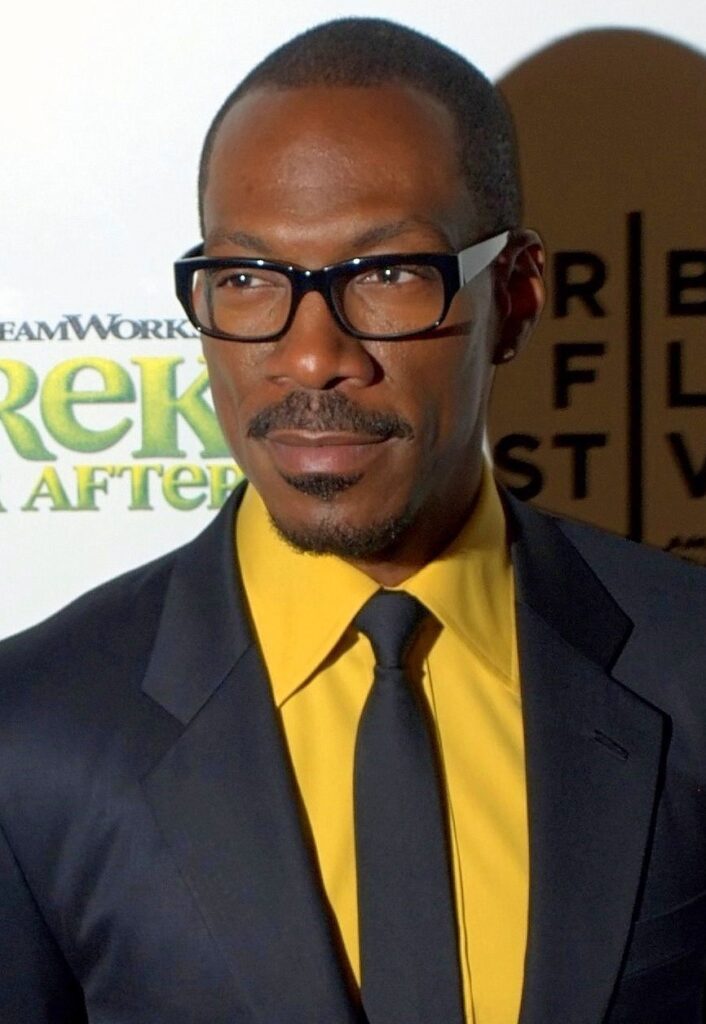
How did Eddie Murphy build this fortune?
The answer unfolds through the career, earnings, deals and assets behind the headline estimate.
Before the fame
The background and early turning points that shaped Eddie Murphy’s route to prominence.
Edward Regan Murphy was born on 3 April 1961 in Brooklyn, New York, and grew up largely in Roosevelt, on Long Island, where he was raised by his mother, a telephone operator, and his stepfather. He has said that a year spent in foster care as a child helped shape his sense of humour.
He was performing stand-up in his mid-teens, inspired by Richard Pryor’s records, and was hired by Saturday Night Live at 19. Few performers have moved from a club stage to national fame so quickly, and his financial trajectory followed the same steep curve.
Murphy joined Saturday Night Live in 1980 and stayed until 1984, creating characters such as Gumby, Buckwheat and Mr Robinson. He was the show’s breakout star at a time when the programme was rebuilding after its original cast left.
Alongside the television work he released stand-up albums and the 1983 special Delirious, and his concert film Eddie Murphy Raw (1987) became one of the most successful stand-up films released in cinemas. When he returned to host the show in 2019 he won his first Primetime Emmy, for guest actor in a comedy series, as Deadline reported.
The breakthrough years
The career decisions and defining moments that turned recognition into sustained earning power.
His film debut, 48 Hrs. (1982), was followed by Trading Places (1983) and then Beverly Hills Cop (1984), which grossed about $316.4 million worldwide according to Box Office Mojo. Before he was 25, he was among the most bankable stars in Hollywood.
Paramount built its slate around him through the 1980s, and Coming to America (1988), in which he played several characters, grossed about $288.8 million worldwide (Box Office Mojo). He earned Golden Globe nominations for both Trading Places and Beverly Hills Cop, according to the Golden Globes.

What the work can earn
Reported pay, contracts, royalties and performance income reveal how the fortune was funded.
After a quieter early 1990s, Murphy found a second peak with family comedies, including The Nutty Professor and Dr Dolittle, and with voice work, as Mushu in Mulan and as Donkey in the Shrek films. Shrek 2 alone grossed about $932.5 million worldwide, according to Box Office Mojo.
In Dreamgirls (2006), which grossed about $155.5 million worldwide (Box Office Mojo), he won the Golden Globe for Best Supporting Actor, as Billboard and the Golden Globes record, and received his only Academy Award nomination. His later revival included Dolemite Is My Name and Beverly Hills Cop: Axel F for Netflix, after Netflix licensed the rights from Paramount, as Deadline reported.
Murphy received the Kennedy Center’s Mark Twain Prize for American Humor in 2015, as CNN reported, and the Golden Globes’ Cecil B. DeMille Award in 2023.
In 2026 the American Film Institute gave him its 51st Life Achievement Award, with tributes from Dave Chappelle, Chris Rock, Kevin Hart and Stevie Wonder; the American Film Institute said the gala raised more than $2.5 million and that the tribute special would premiere on Netflix on 31 May 2026.

The business beyond the main career
Endorsements, ownership interests and investments can keep compounding long after the initial breakthrough.
Murphy has done very little advertising work, and no major-outlet report documents a personal endorsement deal with a disclosed value. His income has come from film fees, stand-up, producing and streaming deals.
The closest thing to a sponsorship-scale payment is the Netflix stand-up arrangement. A figure circulated in 2019, but it originated with a gossip outlet, was never confirmed by Murphy or by Netflix and is not repeated here. The value of the arrangement remains unreported.
Murphy has long produced as well as starred, and in the 1980s he launched Eddie Murphy Television Enterprises with Paramount Television. His most significant recent business arrangement is with Amazon: in September 2021 he signed a three-picture, first-look deal with Amazon Studios, Variety reported. Its value was not disclosed.
That deal followed Amazon’s purchase of Coming 2 America from Paramount during the pandemic for $125 million in distribution rights, according to Variety. The $125 million was paid to the studio, not to Murphy, and his own fee for the sequel was not reported. The film launched on Prime Video in March 2021, as Variety announced.

Notable luxury item
A reported property or major asset offers a tangible glimpse of the wealth behind the public estimate.
Murphy’s homes have attracted press attention over the years, but prices and current holdings are not reliably documented by major outlets, so no property value is included here as a separate figure.
His most valuable financial assets are likely to be continuing participation in the franchises he leads and the library of films he helped make. Beverly Hills Cop, Coming to America and Shrek all returned in the streaming era, as the Deadline report on the Netflix licensing deal shows, which keeps those titles earning.
Eddie Murphy’s estimated net worth
Public estimates vary because private contracts, investments, taxes and liabilities are not fully disclosed.
How this estimate is calculated
Documented figures are limited, and none of them is a payment to Murphy. IndieWire repeated a report, originating with TMZ, of about $70 million for Netflix stand-up specials; neither Murphy nor Netflix ever confirmed it. Variety reported the three-picture Amazon deal without a value, and the $125 million paid for Coming 2 America went from Amazon to Paramount, a studio-to-studio transaction in which Murphy was the asset being bought rather than the party being paid. The box office of his films is public, including Beverly Hills Cop at about $316.4 million (Box Office Mojo) and Shrek 2 at about $932.5 million (Box Office Mojo), but those totals are divided between exhibitors, distributors and studios before any share reaches a performer, and the terms of that division are confidential.
The working therefore infers from the scale of the career. It assumes 1980s film, stand-up and Paramount deal income of $30 million to $50 million; about 20 lead or major voice roles from 1990 to 2010 at an average of $10 million to $15 million, or $200 million to $300 million; and $60 million to $120 million from 2019 onwards, covering the Netflix specials and the Amazon and Beverly Hills Cop work. That totals $290 million to $470 million gross. Deducting about 20 per cent for representation leaves $232 million to $376 million, and allowing about 45 per cent for tax leaves roughly $128 million to $207 million, before living costs and investment returns.
The single largest uncertainty is Shrek. Murphy voiced Donkey across four films and a run of spin-offs in the most profitable animated franchise of its era, and voice actors on a hit of that size are sometimes paid a modest flat fee and sometimes given participation worth many multiples of it. Which applied to him has never been reported, and the answer alone could shift this range by $100 million in either direction. His property and investments are unpublished too, and a performer who has supported ten children over four decades has outgoings that no estimate from outside can see.
Confidence: Indicative – in four decades not one of Murphy’s fees, deal values or asset prices has been made public, so this is an inference from the scale of his career rather than from anything he has been shown to hold.
Murphy is famously private and rarely gives interviews, which has helped keep his image focused on his work. Tributes at the American Film Institute gala in 2026 reflected his standing among comedians who cite him as an influence, and the event raised more than $2.5 million for AFI’s programmes.
Specific personal donations are not well documented by major outlets, and no personal foundation with published accounts is attached to his name, so his giving is not quantified here.
Murphy’s early stand-up included material about gay people that he has since said he regrets and would not perform today. It remains the most frequently cited criticism of his early career.
In November 2011 he withdrew as host of the 84th Academy Awards after his collaborator Brett Ratner resigned as the show’s producer over an anti-gay remark, as CNN reported. He also gave testimony in the late 1980s in the humorist Art Buchwald’s lawsuit against Paramount over the story credit for Coming to America; the case was brought against the studio, not Murphy.