 How Much Are They Worth?
Celebrity fortunes, explained
How Much Are They Worth?
Celebrity fortunes, explained











How did Claire Danes build this fortune?
The answer unfolds through the career, earnings, deals and assets behind the headline estimate.
Before the fame
The background and early turning points that shaped Claire Danes’s route to prominence.
Claire Danes was born in New York City on 12 April 1979, according to the awards database of the Golden Globes. She was a working television lead before she had finished her teens.
Her career has since run on two tracks that rarely overlap for one performer: a steady run of literary and period films in the 1990s and 2000s, and later a series of demanding television roles that brought her more major awards than almost any actress of her generation.
Danes first came to wide attention as the teenage Angela Chase in the ABC drama My So-Called Life (1994–1995). The series lasted a single season but won her a Golden Globe, the first of four recorded by the Golden Globes. Film roles followed quickly: Gillian Armstrong’s Little Women (1994), Jodie Foster’s Home for the Holidays (1995), Juliet opposite Leonardo DiCaprio in Baz Luhrmann’s Romeo + Juliet (1996) and Francis Ford Coppola’s The Rainmaker (1997).
The breakthrough years
The career decisions and defining moments that turned recognition into sustained earning power.
Her adult breakthrough came with HBO’s television film Temple Grandin (2010), in which she played the autistic scientist and advocate. The role won her the Emmy for Outstanding Lead Actress in a Miniseries or a Movie, as recorded by the Television Academy, and a Golden Globe the following January. A year later she was cast as the CIA officer Carrie Mathison in Showtime’s Homeland (2011–2020), the part that defined the next decade and made her one of the best-paid actresses on American television.
What the acting has paid her: our estimate is $40 million to $55 million in gross fees across three decades, before tax and commission. Homeland is the bulk of it. The Hollywood Reporter’s oral history of the series records that by the final season Danes alone was making north of $500,000 an episode (The Hollywood Reporter); a twelve-episode final season at that rate is $6 million on its own. Work backwards along the curve a premium-cable lead follows – something like $75,000 an episode for an unproven Showtime drama in 2011, renegotiated upwards after the 2012 and 2013 Emmys, and past $250,000 by the middle seasons – and 96 episodes average out at roughly $250,000, or about $24 million for the run, plus producer fees from season four. Around it: some twenty-five film credits between 1994 and 2010, rising from teenage scale to $1 million or more for a studio lead, call it $10 million to $16 million; $300,000 or so for a single season of My So-Called Life; and the recent limited series – Fleishman Is in Trouble, Full Circle, The Beast in Me – at prestige-lead rates of $150,000 to $400,000 an episode, another $5 million to $9 million. The assumption doing the most work is that early Homeland rate, since the final-season figure is the only one on the record.

What the work can earn
Reported pay, contracts, royalties and performance income reveal how the fortune was funded.
Homeland won Danes the Emmy for Outstanding Lead Actress in a Drama Series in both 2012 and 2013, and further nominations in 2014, 2015 and 2016, according to the Television Academy. She also won Golden Globes for the role in 2012 and 2013, as listed by the Golden Globes.
In total the Television Academy records 12 Emmy nominations and three wins. Her more recent nominations include supporting actress for FX’s Fleishman Is in Trouble (2023) and, in 2026, lead actress in a limited series for Netflix’s The Beast in Me.
Between her early and later television work Danes built a substantial film record, including The Hours, Igby Goes Down, Stage Beauty, Shopgirl and Me and Orson Welles, as summarised by the Golden Globes.
Her Golden Globe record shows the span of it: seven nominations stretching from My So-Called Life in the 1990s to The Beast in Me in 2026. Few performers have been nominated across such a long period for television work.

The business beyond the main career
Endorsements, ownership interests and investments can keep compounding long after the initial breakthrough.
Unlike many actresses of her profile, Danes has not built her income around fashion or beauty contracts, and no long-running brand ambassadorship features in trade coverage of her career.
Her commercial value has instead been expressed through her television deals, which is why the Homeland pay reported by The Hollywood Reporter carries most of the weight in any assessment of her earnings.
Danes has moved into producing on her own projects rather than into consumer brands. The Television Academy credits her as a producer on Homeland when it was nominated for Outstanding Drama Series in 2015, as a co-executive producer on its 2016 nomination, and as an executive producer on The Beast in Me, which was nominated for Outstanding Limited or Anthology Series in 2026.
A producing credit of that kind normally carries a per-episode fee on top of the acting rate and sometimes a share of the back end. On a show she carried for nine years, that is a meaningful addition to the figure above rather than a decorative title.
Notable luxury item
A reported property or major asset offers a tangible glimpse of the wealth behind the public estimate.
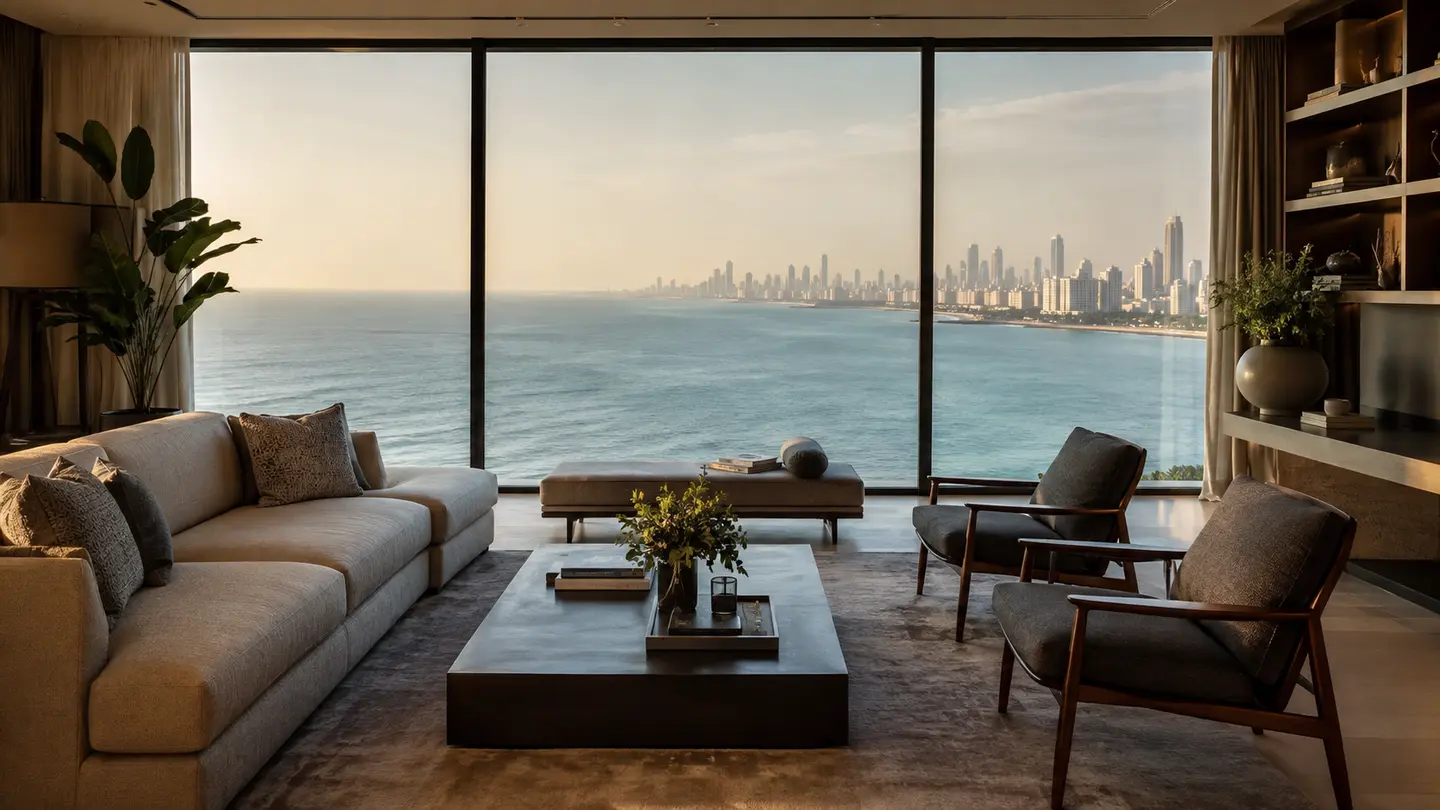
Danes and her husband, the actor Hugh Dancy, bought a Greek Revival townhouse in Manhattan’s West Village in late 2012 for $6.8 million, according to Robb Report, and renovated the four-bedroom house to give it a more open, loft-like feel before listing it at $9.75 million (The Hollywood Reporter).
In March 2025 Robb Report reported that the house had sold for $9.9 million, slightly above its asking price, and that the couple were understood to have bought a larger townhouse near Gramercy Park for about $13 million. A $3.1 million gain on the first house, shared with Dancy, appears to have gone straight back into the second.
Claire Danes’s estimated net worth
Public estimates vary because private contracts, investments, taxes and liabilities are not fully disclosed.
How this estimate is calculated
From fees to wealth. Start with the $40 million to $55 million of gross career earnings set out above. Representation takes 15 to 20 per cent off the top, and a New York resident at those income levels loses something close to half of what is left to federal, state and city tax, so $17 million to $24 million is what actually reached her over thirty years. Nine of those years were spent shooting a cable drama in Charlotte and Cape Town rather than living a studio-star lifestyle, but three decades of New York living, three children and a private-school city still absorb a great deal of it.
What can be counted directly. The West Village townhouse was bought for $6.8 million in late 2012 and sold for $9.9 million in March 2025 (Robb Report), a gain shared with Hugh Dancy and apparently redeployed into a roughly $13 million replacement. Property equity at that scale, held jointly, is the most solid component of the total and also the least liquid.
The width of the range. Two things set it. The first is that eight of the nine Homeland seasons are modelled rather than reported, so the biggest single line in her career earnings rests on a rate curve we have drawn. The second is that she is married to a working actor and the assets are held between them, so any figure for her alone involves a split nobody outside the household has seen. A single trade report of her middle-season rate would narrow this by half overnight.
Confidence: Partly documented – the townhouse purchase and sale prices are on the record and a final-season rate has been reported once; the rest is our estimate, built from a modelled Homeland pay curve and three decades of film and producing work.
Danes’s portrayal of Temple Grandin brought wide attention to Grandin’s own advocacy for autistic people, and the role remains one of the most celebrated of her career.
She has otherwise kept a relatively private public image, centred on her work and her family with Dancy, with whom she has three children according to Robb Report. Her giving has been personal and low-key rather than run through a named foundation.
The most serious controversy of her career came in 1998. After filming Brokedown Palace in Manila, Danes made disparaging remarks about the city in magazine interviews. Manila’s city council voted 23–3 to declare her persona non grata and ban her films from the city, and President Joseph Estrada said she should not be allowed to enter the Philippines, as CBS News reported at the time. Danes said her comments described the conditions where the film was shot rather than Filipino people. The episode is now more than a quarter of a century old and has had no lasting effect on her career.