 How Much Are They Worth?
Celebrity fortunes, explained
How Much Are They Worth?
Celebrity fortunes, explained





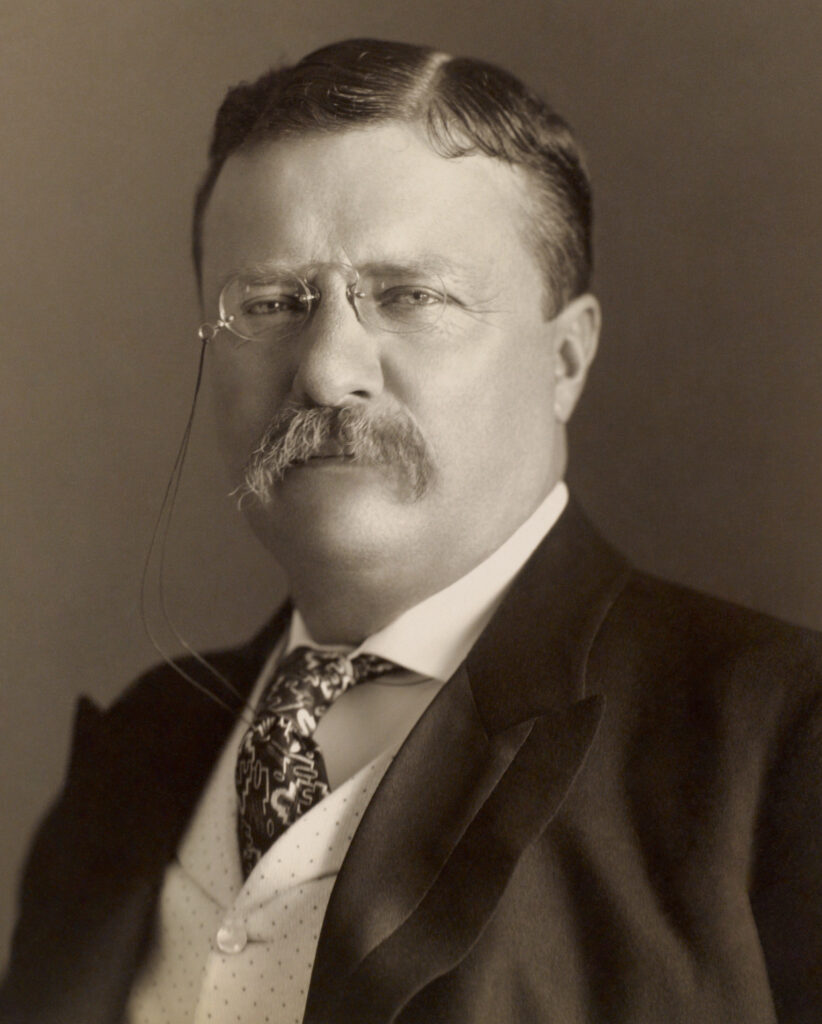
How did Theodore Roosevelt build this fortune?
The answer unfolds through the career, earnings, deals and assets behind the headline estimate.
Before the fame
The background and early turning points that shaped Theodore Roosevelt’s route to prominence.
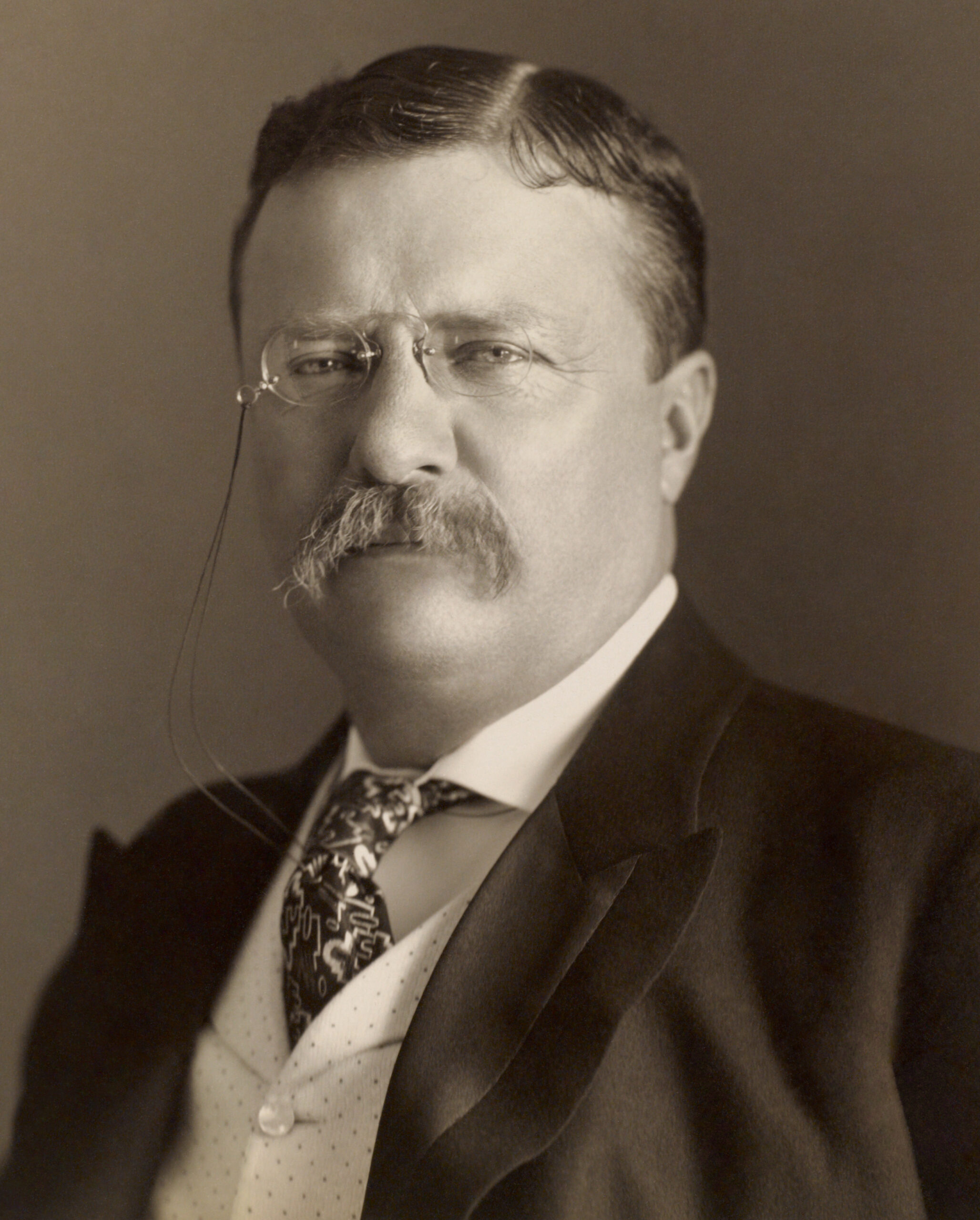
Theodore Roosevelt was born on 27 October 1858 in New York City, as recorded by the Nobel Prize, into a prosperous family whose wealth came from trade and banking. A sickly child with asthma, he was encouraged by his father to build up his body through exercise, and developed an early fascination with natural history.
He entered Harvard in 1876, graduated in 1880 and married Alice Hathaway Lee that year. As a newlywed he began buying land at Oyster Bay on Long Island, where his family had long spent summers.
Roosevelt was elected to the New York State Assembly and served from 1882. His first book, The Naval War of 1812, appeared the same year. On 14 February 1884 his mother and his wife both died, two days after the birth of his daughter Alice.
He went west to the Dakota Badlands, where he had first arrived in 1883. The National Park Service records that he invested $14,000 in ranching, significantly more than his annual salary at the time, and lost over half his herd in the winter of 1886 to 1887, when losses across the region reached around 80 per cent.
The breakthrough years
The career decisions and defining moments that turned recognition into sustained earning power.
Back in the East he served on the US Civil Service Commission, as president of the New York City police board and as Assistant Secretary of the Navy. In 1898 he helped raise the volunteer cavalry known as the Rough Riders and led a charge up Kettle Hill on 1 July 1898, returning home a war hero, according to the National Park Service.
He was elected Governor of New York and then Vice President. Following the assassination of President William McKinley, Roosevelt was sworn in as the 26th President on 14 September 1901.
What the work can earn
Reported pay, contracts, royalties and performance income reveal how the fortune was funded.
Roosevelt won the presidency in his own right in 1904 and served until 1909. The National Park Service credits his administration with creating the US Forest Service and 150 national forests, naming 18 national monuments under the Antiquities Act, adding five national parks and protecting approximately 230 million acres of land. Abroad, he oversaw the start of the Panama Canal and mediated the end of the Russo-Japanese War; at home he pursued trusts through the courts and signed food and drug safety legislation in 1906.
Our estimate is that office and authorship together paid Roosevelt roughly $650,000 to $900,000 in the money of his day – on the order of $22 million to $31 million on a consumer-price conversion. Salaries account for about $443,000: the New York Assembly from 1882, the Civil Service Commission, the New York City police board, the Navy department, two years as Governor of New York at $10,000, and seven and a half years as president at $50,000 a year, which alone is $375,000 (National Archives). Writing accounts for the rest – around thirty books and a steady stream of magazine work, benchmarked on the $50,000 Scribner’s paid him for twelve articles from Africa in 1909 (Smithsonian Magazine). He was among the best-paid American authors of his generation, and he spent almost all of it.
He received the 1906 Nobel Peace Prize, the Nobel Prize citation praising his role in ending the war between Japan and Russia, which made him the first American Nobel laureate. He was posthumously awarded the Medal of Honor in 2001 for his actions in Cuba, and his face was carved on Mount Rushmore.
Roosevelt died at Sagamore Hill on 6 January 1919, aged 60, as recorded by Sagamore Hill National Historic Site.
The business beyond the main career
Endorsements, ownership interests and investments can keep compounding long after the initial breakthrough.
Commercial endorsement in the modern sense did not exist for Roosevelt, and he did not lend his name to products for payment. The teddy bear took his nickname after a 1902 hunting story, and the manufacturers kept the proceeds.
Sponsorship in his case ran through science. The 1909 to 1910 safari was sponsored by the Smithsonian and funded by private donations, according to the Theodore Roosevelt Center, and it gathered 11,400 animals and 10,000 plant specimens for the national collection.
His only direct commercial venture was ranching, at the Maltese Cross and Elkhorn ranches in Dakota Territory. The National Park Service describes how the winter losses of 1886 to 1887 pushed him out of the cattle business; he finished divesting his Elkhorn interests in 1898.
Writing was the more reliable business. The National Park Service says he wrote about 30 books over his life, and his post-presidential safari was sold in advance: Smithsonian Magazine reports that Scribner’s paid $50,000 for twelve articles from the field and agreed to publish the resulting book, African Game Trails.
Notable luxury item
A reported property or major asset offers a tangible glimpse of the wealth behind the public estimate.
His principal asset was Sagamore Hill at Oyster Bay. The National Park Service records that he bought 155 acres for $30,000 in 1880, devoted 47 acres to farming, and had the house built by John A. Wood and Son to a Lamb and Rich design, completed in 1885 at a cost of $16,975.
The house served as the Summer White House from 1902 to 1908. His widow Edith lived there until her death in 1948, and the estate is now run by the National Park Service as Sagamore Hill National Historic Site.
Theodore Roosevelt’s estimated net worth
Public estimates vary because private contracts, investments, taxes and liabilities are not fully disclosed.
How this estimate is calculated
The core earnings. The figure above is our estimate and it is the more solid half of this page, because presidential and state salaries of the period are a matter of statute: about $443,000 in office pay between 1882 and 1909, of which the presidency at $50,000 a year is $375,000 (National Archives). Writing is inferred from the one published rate – the $50,000 Scribner’s paid for twelve pieces in 1909, about $4,000 an article (Smithsonian Magazine) – applied to thirty-odd books and three decades of magazine work, which puts authorship at $200,000 to $450,000. The assumption carrying the weight is that his pre-1909 journalism was paid at a fraction of the Africa rate, as a less famous man’s work would have been.
What he owned. Three property figures are firmly documented. The National Park Service records 155 acres at Oyster Bay bought for $30,000 in 1880 and the house completed in 1885 for $16,975, a combined outlay of $46,975; the National Park Service records an initial $14,000 in Dakota ranching, most of it lost when over half his herd died in the winter of 1886 to 1887. Converted with a consumer-price multiplier of roughly 34 to 36 times (MeasuringWorth), the Sagamore Hill outlay is near $1.6 million in today’s money. Measures based on share of national income give far larger numbers, so the choice of method matters as much as the arithmetic.
The range below is therefore a floor of what Sagamore Hill and the ranching money convert to, and a ceiling that allows for his inheritance and three decades of royalties. Roosevelt is the reverse of most subjects here: we can say with some confidence what he was paid, and only with a range what was left when he died.
The working supports a range of $5 million to $15 million. The figure we publish is its midpoint.
Confidence: Indicative – the documented figures are 1880s purchase prices and one publishing contract, and the conversion method is contested, so this is an order of magnitude rather than a measurement.
Roosevelt declined to keep his Nobel award. In his Nobel lecture he said the money had been given to him in trust for the United States, and a footnote published by the Nobel Prize records that the $36,734.79 prize was held by a committee including the Chief Justice, then returned in 1917 and distributed among war relief charities.
A document held by the Theodore Roosevelt Center sets out his instructions for the roughly $40,000 fund to establish an Industrial Peace Committee. His public image, as conservationist, reformer and man of action, remains among the strongest of any president.
The most serious stain on his record is the Brownsville affair. After shootings in Brownsville, Texas, in August 1906, Roosevelt approved the discharge without honour of 167 Black soldiers of the 25th Infantry without trial or hearings, a decision the Theodore Roosevelt Center describes in detail. The Texas State Historical Association records that the Nixon administration granted honourable discharges in 1972.
His views on race and empire have drawn sustained criticism, and in 2022 the equestrian statue outside the American Museum of Natural History was removed. His 1912 third-party run split the Republican vote and remains contested history.