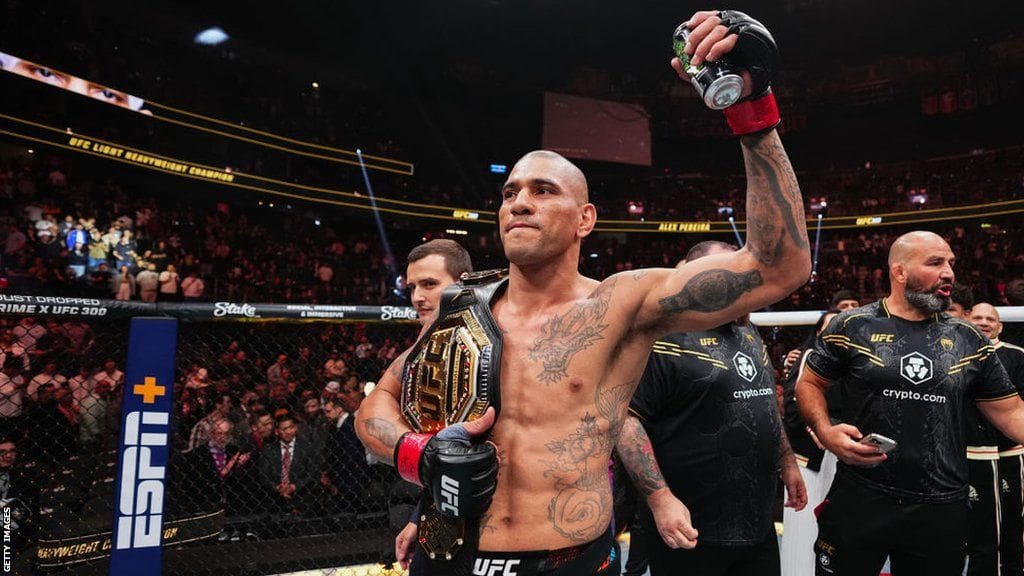
How did Alex Pereira build this fortune?
The answer unfolds through the career, earnings, deals and assets behind the headline estimate.
Before the fame
The background and early turning points that shaped Alex Pereira’s route to prominence.
Alex Pereira is a Brazilian former Glory kickboxing champion who won UFC titles at middleweight and light-heavyweight in an unusually short span. His official UFC profile records both championship reigns and knockout results. HMW gives greatest weight to his recent UFC headline compensation, but discounts public payout estimates because commissions have not disclosed complete PPV settlements. Kickboxing success is treated as documented career history, not presumed wealth.
Pereira worked in a tyre shop, overcame alcohol problems and began kickboxing comparatively late. He became a two-division Glory champion and defeated Israel Adesanya in kickboxing before entering UFC. Glory’s fighter profile establishes the pre-UFC titles. Kickboxing purses are less transparent and generally below UFC headliner pay, so this phase receives conservative income values.
The breakthrough years
The career decisions and defining moments that turned recognition into sustained earning power.
After only three UFC wins, Pereira stopped Adesanya at UFC 281 in 2022 to win the middleweight title. UFC’s event report confirms the fifth-round comeback. A rematch loss ended that reign, but the rivalry established Pereira as a PPV attraction and increased his leverage before moving to light-heavyweight.
What the work can earn
Reported pay, contracts, royalties and performance income reveal how the fortune was funded.
Pereira beat Jiří Procházka for the vacant light-heavyweight belt, defended against Jamahal Hill and accepted a short-notice UFC 303 rematch with Procházka. UFC’s UFC 303 report documents the defense. Public estimates place his total compensation for that card around $3.3 million, but HMW treats it as an estimated package, not a filed purse.
UFC guarantees, title-event PPV participation, performance bonuses and compliance pay now dominate Pereira’s earnings. He headlined or co-headlined several premium events in rapid succession, making 2023-25 the core ledger period. UFC’s record review verifies which appearances carried championships. Estimated multi-million-dollar totals receive a discount for unknown PPV thresholds and taxes.
The business beyond the main career
Endorsements, ownership interests and investments can keep compounding long after the initial breakthrough.
Pereira has worked with betting, apparel, supplement and gaming brands and sells Poatan merchandise. Contract amounts are private. His UFC equipment and compliance payments are separate from personal sponsor revenue under uniform rules. HMW applies conservative annual sponsor income only after his first UFC title and does not project peak rates back into the Glory years.
Pereira’s clearest owner-linked interests are merchandise, seminars, appearances and brand licensing. No audited gym chain, real-estate company or venture exit is publicly established. HMW therefore gives a modest value to ongoing personal-brand cash flow rather than assigning a speculative enterprise multiple. Training-team businesses are excluded unless ownership is documented.
Notable luxury item
A reported property or major asset offers a tangible glimpse of the wealth behind the public estimate.
Brazilian and US tax, management, coaches, repeated camps and international travel reduce gross receipts. Pereira’s high-income period is recent, which limits compounding but also shortens the period of consumption. Property, liabilities and investment performance are private. Public payout sites often include PPV, sponsor and guessed discretionary bonuses without separation; those totals receive a wide error margin.
Alex Pereira’s estimated net worth
Public estimates vary because private contracts, investments, taxes and liabilities are not fully disclosed.
How this estimate is calculated
The ledger assigns conservative Glory and early-UFC income, then championship-level ranges from the Adesanya event forward. The estimated UFC 303 package is discounted and cross-checked against other title cards; known bonuses and compliance payments are kept separate. HMW deducts blended tax, management, coaching, camps, travel and household consumption, then adds restrained property, investments, merchandise and appearance value. No unpriced company is invented.
UFC’s UFC 300 result and UFC 307 report verify two distinct title defenses, preventing them from being collapsed into one payday. UFCStats’ individual ledger is used to check appearance count and methods. HMW assigns each event its own range because short notice, venue, PPV placement and opponent affect compensation. The estimate also allows for translation, management and international tax complexity without inventing hidden sponsorship or a large gym ownership stake.
Because Pereira’s peak income arrived recently, the model uses only limited investment growth and gives greater weight to taxes, active-career spending and capital that may still be held in operating accounts rather than long-duration portfolios.
Pereira’s “Poatan” identity, rapid championships, stoic presentation and rivalry with Adesanya produced a large global audience. His Indigenous Pataxó heritage and signature bow-and-arrow entrance further distinguish the brand. Reach supports merchandise and sponsor work, but HMW does not capitalize follower counts. Only realized bouts, named partnerships and plausible product income enter the calculation.
Official UFC reports establish the event sequence, while the UFC 303 estimate provides a useful scale reference. No commission filing confirms the total. HMW applies similar but not identical ranges to Hill, Procházka, Rountree and later title events because notice, opponent and PPV placement differ. It excludes hypothetical boxing matches, comeback offers and brand valuations based solely on popularity.

JavaScript is off, so all sections are displayed together.