 How Much Are They Worth?
Celebrity fortunes, explained
How Much Are They Worth?
Celebrity fortunes, explained









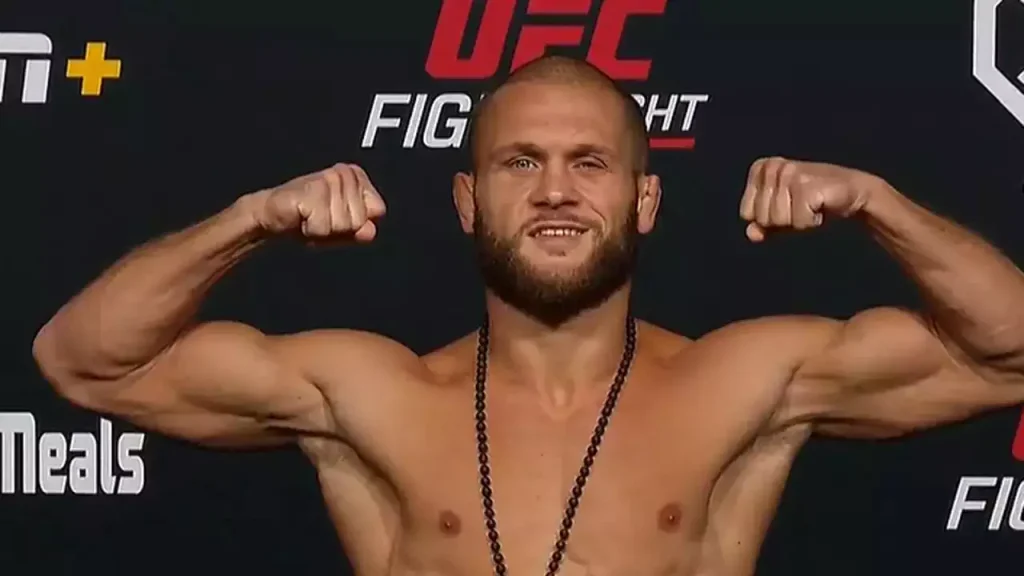
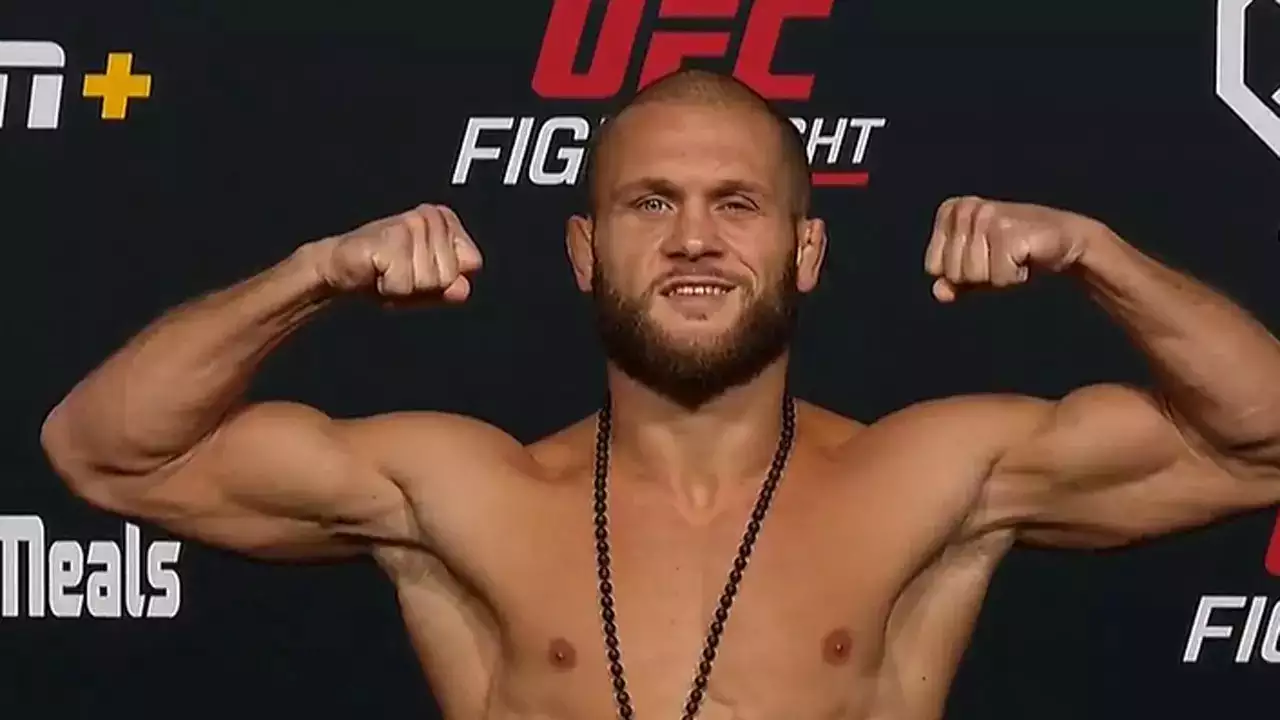
How did Rafael Fiziev build this fortune?
The answer unfolds through the career, earnings, deals and assets behind the headline estimate.
Before the fame
The background and early turning points that shaped Rafael Fiziev’s route to prominence.
Fiziev was born on March 5, 1993, in Korday, Kazakhstan, to an Azerbaijani father who worked as an undercover police officer and a Russian mother; the family relocated to Bishkek, Kyrgyzstan while he was young (Wikipedia). He took up Muay Thai at age 11 after experiencing bullying at school, a decision that set the course for the rest of his career. Fiziev is married to Kamilla Fiziev, whom he met while living in Kyrgyzstan, and the couple have two sons, Musa and Ali-Abbas (TheCityCeleb). Before committing to fighting full time, he trained at the Police Academy of Kyrgyzstan and worked as an undercover officer.
Fiziev built an extensive amateur and professional Muay Thai record before ever competing in MMA, winning the Kyrgyzstan Muay Thai championship three times between 2007 and 2009, taking silver at the 2009 IFMA World Championships in the junior division, and later adding a bronze at the 2016 IFMA World Championships (Wikipedia). He also won the WMF Intercontinental title in 2010 and compiled a professional Muay Thai record of 39 wins and 8 losses, including bouts on Thailand’s Toyota Marathon circuit against opponents such as Sorgraw Petchyindee Academy. A 2017 clip of Fiziev slipping a flurry of strikes with rapid head movement, nicknamed his “Matrix” moment by fans, went viral and introduced him to an international audience before his MMA career had properly begun. That same period saw him relocate to Phuket, Thailand, training first at Phuket Top Team before an injury-related falling out led him to Tiger Muay Thai in 2017.
The breakthrough years
The career decisions and defining moments that turned recognition into sustained earning power.
Fiziev turned to MMA while still competing in Muay Thai, opening his professional record with a first-round knockout of Sam Bastin in 2015 and running it to 6-0 through wins in W.I.N FC, MMA Kyrgyzstan, Road FC and Titan FC before signing with the UFC (Wikipedia). His UFC debut did not go to plan: he was finished by first-round TKO by Magomed Mustafaev in April 2019. He rebuilt from there, winning a decision over Alex White that October and then Marc Diakiese in July 2020, before the breakthrough stretch that made his name, a first-round knockout of Renato Moicano in December 2020, a decision win over Bobby Green in August 2021, and a spinning wheel kick knockout of Brad Riddell in December 2021 that pushed him into lightweight title contention (UFC.com).

What the work can earn
Reported pay, contracts, royalties and performance income reveal how the fortune was funded.
Fiziev’s signature UFC win came in July 2022, when he knocked out former lightweight champion Rafael dos Anjos with punches 18 seconds into the fifth round, a result that vaulted him into the division’s top five. He has since gone the distance twice with former interim champion Justin Gaethje, losing a majority decision at UFC 286 in March 2023 and a unanimous decision in a rematch at UFC 313 in March 2025, both fights that earned Fight of the Night bonuses and were cited by UFC.com among the best fights of their respective years (Wikipedia). In between, a title eliminator bout against Mateusz Gamrot ended early when Fiziev suffered a knee injury and was stopped by TKO in September 2023. He rebounded with a unanimous decision over Ignacio Bahamondes in June 2025 and, most recently, a second-round spinning wheel kick knockout of Manuel Torres at a UFC Fight Night card in Baku in June 2026 that earned him a $100,000 Performance of the Night bonus (EssentiallySports).
Fiziev has collected four UFC Performance of the Night and four Fight of the Night bonuses across a 14-5 UFC run fought almost entirely at lightweight under the nickname “Ataman,” a bonus tally that reflects a fighting style built around highlight-reel finishes and back-and-forth wars rather than cautious point fighting (ESPN). He was named Combat Press’ Breakout Fighter of the Year in 2021, and his first fight with Justin Gaethje at UFC 286 was ranked among the best fights of 2023 by UFC.com’s own editorial staff. Both Gaethje bouts, in particular, drew coverage well beyond typical UFC prelim attention, with MMA outlets and mainstream sports press alike singling him out as one of the division’s most reliably exciting performers even in defeat.

The business beyond the main career
Endorsements, ownership interests and investments can keep compounding long after the initial breakthrough.
Fiziev signed a cooperation agreement with Bank Respublika, one of Azerbaijan’s larger financial institutions, reflecting his competing affiliation with the country since 2021 (Initiativs). He has also carried a sponsorship with Goodies Global, a protein bar and snack brand, and has been linked in past fight-camp coverage to a since-lapsed partnership with Granite Supplements and a merchandise arrangement through Full Violence (EssentiallySports). These deals sit well below marquee UFC sponsorship territory, consistent with his standing as a ranked contender rather than a pay-per-view headliner.
Fiziev has coached Muay Thai and kickboxing classes at Tiger Muay Thai in Phuket since 2018, a paid position he took on after an injury layoff and one that has continued alongside his UFC career (EssentiallySports). No other formally documented business, gym ownership stake, or media company was found in the sourcing for this profile; his income outside fight purses appears concentrated in coaching and sponsorship rather than outside ventures.

Notable luxury item
A reported property or major asset offers a tangible glimpse of the wealth behind the public estimate.
No specific home purchase, property value, or other major asset has been publicly documented for Fiziev in the sources reviewed for this profile. He is consistently described as based in Phuket, Thailand, where he has trained since the mid-2010s and where Tiger Muay Thai, his longtime gym and coaching employer, is located (UFC.com); beyond that training-base residency, his property holdings are not itemized in any public record found for this profile.
Rafael Fiziev’s estimated net worth
Public estimates vary because private contracts, investments, taxes and liabilities are not fully disclosed.
How this estimate is calculated
HMW’s estimate starts from Fiziev’s UFC fight purses, which have not been officially disclosed by an athletic commission since Nevada stopped publishing them in 2021, but which independent payout trackers have estimated at roughly six figures per fight in recent years, ranging from an early-career $12,000 show fee for his 2019 debut up to purses estimated between $250,000 and $450,000 for his most recent headline-level appearances against Justin Gaethje, Ignacio Bahamondes and Manuel Torres (EssentiallySports). On top of that base, the model adds his eight career bonus awards, four Performance of the Night and four Fight of the Night, typically worth $50,000 to $100,000 apiece, plus his coaching salary at Tiger Muay Thai and disclosed sponsorship income from Bank Respublika and Goodies Global. It then deducts training-camp and coaching cuts, historically as high as 10 percent of a fight purse under his earlier Phuket Top Team arrangement, along with management fees and taxes that commonly consume a third or more of a touring fighter’s gross earnings. The result sits above older secondary estimates such as richathletes.com’s $1 million figure from 2023 (RichAthletes) and TheCityCeleb’s $1.5 million estimate, both of which predate his higher-purse fights in 2025 and 2026, but well below what his gross career purses alone might suggest before expenses and taxes are factored in.
Fiziev is a devout Shia Muslim who walks out to a Latmiya, a form of religious lament music, a choice that ties directly into the nationality dispute detailed below (Wikipedia). Outside the cage, he has spoken about blacksmithing cold steel weapons as a hobby and keeps a relatively private family life centered on his wife and two sons rather than a public philanthropic platform (TheCityCeleb). No formal charitable foundation or sustained giving campaign bearing his name was found documented in the sourcing for this profile.
In late 2021, Fiziev announced he would stop competing under the Kyrgyz flag, citing harassment of himself and his family by the muftiate, the body overseeing Kyrgyzstan’s Islamic clergy, over his Shia faith; he has fought under the Azerbaijani flag, a nod to his father’s heritage, ever since (Kloop). Earlier in his career, Fiziev’s departure from Phuket Top Team drew tension after he described an arrangement in which the gym would house him in exchange for a 10 percent cut of his fight purses; when he left for a paid coaching role at Tiger Muay Thai following a 2017 injury, he later described “bad blood” that developed with his former team on social media (EssentiallySports). More recently, his standing has been shaped by an inconsistent run against elite and rising competition: after entering as a betting favorite, he was stopped by then-unheralded prospect Mauricio Ruffy at UFC 325 in February 2026, a result widely covered as an upset given Fiziev’s ranking at the time (UFC.com). The loss fit a broader pattern that has defined public perception of his career, spectacular, bonus-earning performances alternating with high-profile defeats against the division’s best.