 How Much Are They Worth?
Celebrity fortunes, explained
How Much Are They Worth?
Celebrity fortunes, explained

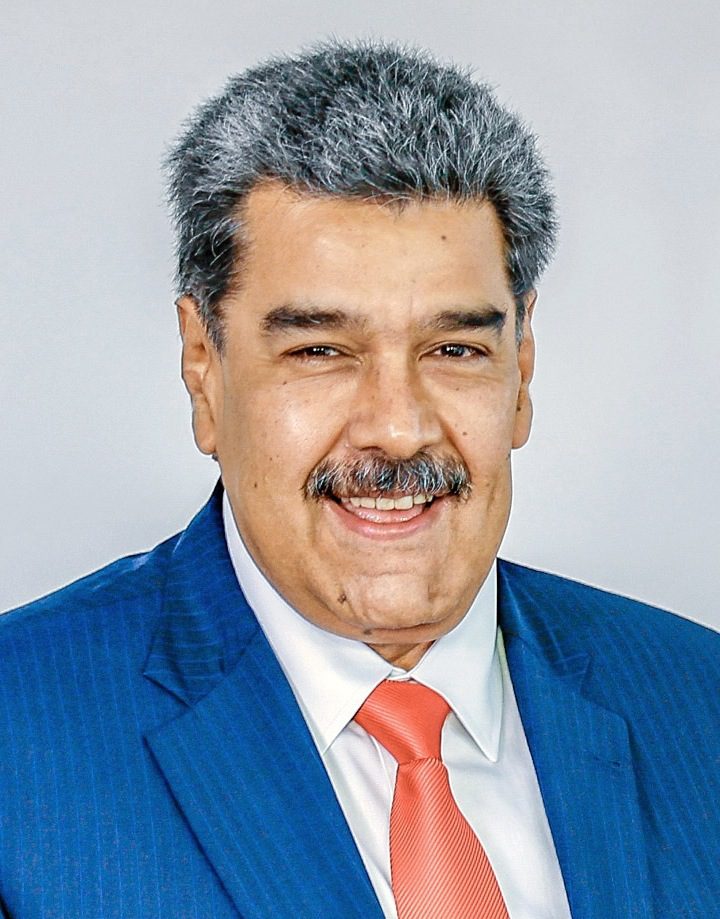
How did Nicolás Maduro build this fortune?
The answer unfolds through the career, earnings, deals and assets behind the headline estimate.
Nicolás Maduro before the fame
The background and early turning points that shaped Nicolás Maduro’s route to prominence.
Nicolás Maduro Moros was born on 23 November 1962 in Caracas, Venezuela, and served as President of Venezuela from 2013 until his capture by U.S. forces in January 2026, making him one of Latin America’s most divisive modern heads of state. A former bus driver and trade unionist, he rose through the ranks of Hugo Chávez’s socialist movement to become the chosen successor when Chávez died of cancer in March 2013, according to Britannica. His personal finances have never been officially disclosed, and almost everything publicly known comes from foreign governments, anti-corruption researchers and investigative journalists rather than Venezuelan state records.
Before entering politics, Maduro worked as a bus driver on the Caracas metro system and became a leading figure in the transport workers’ union, eventually founding the SITRAMECA union in 1991, per Al Jazeera. He had little formal education beyond secondary school; his only further study was a year of ideological training in Cuba in 1986, reports EBSCO Research Starters. Through the union movement he aligned himself with Hugo Chávez’s emerging political project, entering elected office as a National Assembly deputy in 2000.
Nicolás Maduro’s breakthrough years
The career decisions and defining moments that turned recognition into sustained earning power.
Maduro’s breakthrough came through loyal service inside the Chávez government: he became President of the National Assembly in 2005, Minister of Foreign Affairs in 2006, and Vice President of Venezuela in 2012, according to Britannica. As his cancer worsened, Chávez publicly named Maduro as his preferred successor. Following Chávez’s death on 5 March 2013, Maduro became acting president and then narrowly won a special election that April, formally taking the presidency he would hold for the next thirteen years.

What Nicolás Maduro’s work can earn
Reported pay, contracts, royalties and performance income reveal how the fortune was funded.
In institutional terms, Maduro’s central achievement was consolidating and retaining executive power in Venezuela for over a decade, including formal re-election in 2018 and a further, disputed term declared in 2024, both contested by international observers, notes NPR. His government continued Chávez-era social missions in housing, healthcare and subsidised food distribution, though independent economists widely attribute Venezuela’s subsequent economic collapse to policies pursued under his leadership, as detailed by the Atlantic Council.
Maduro was internationally recognised as Venezuela’s head of state for most of his presidency, though that recognition steadily eroded after the disputed 2024 election, when the United States, much of the European Union and several Latin American governments instead recognised opposition figure Edmundo González Urrutia as the legitimate winner, per Freedom House. Domestically he remained recognised by Venezuela’s Supreme Tribunal and National Electoral Council, both widely viewed by observers as loyal to his government.

Nicolás Maduro’s business beyond the main career
Endorsements, ownership interests and investments can keep compounding long after the initial breakthrough.
As a head of state rather than a public entertainer or athlete, Maduro has not undertaken commercial endorsements or sponsorship deals, and this category does not meaningfully apply to his career.
Maduro has no known private-sector business ventures in the conventional celebrity sense; his entire adult career has been spent in trade unionism and state office. Any commercial activity linked to his name in reporting concerns allegations of state-enabled corruption rather than legitimate entrepreneurship, which are addressed separately below.

Nicolás Maduro’s notable luxury item
A reported property or major asset offers a tangible glimpse of the wealth behind the public estimate.
No Venezuelan government disclosure lists Maduro’s personal property; his publicly acknowledged residences were the Miraflores presidential palace and an official family home in Caracas. Independent investigators allege far more, however. U.S. prosecutors say they have seized or moved to seize more than $700 million in assets connected to Maduro’s inner circle and associated trafficking networks, including private jets, vehicles and luxury properties in Florida and the Dominican Republic, according to Yahoo News. Separate reporting by Fox News has linked tens of millions of dollars in New York real estate to figures in Maduro’s political-business orbit, though this reporting concerns his broader network rather than assets proven in court to be his personally.
Nicolás Maduro’s estimated net worth
Public estimates vary because private contracts, investments, taxes and liabilities are not fully disclosed.
How this estimate is calculated
Venezuela has no equivalent of a formal financial-disclosure system, so there is no official record of Maduro’s personal net worth. Public trackers such as Celebrity Net Worth put his declared wealth at roughly $2 million, based largely on his modest official presidential salary and acknowledged property. Separately, U.S. Department of Justice filings describe asset seizures exceeding $700 million tied to Maduro’s alleged trafficking network, and investigative outlets have linked tens of millions more in real estate to his political-business circle — but these figures describe a broader network of associates and state institutions, not funds proven in court to be Maduro’s own personal property. Because the gap between officially declared wealth and the allegations made in indictments, sanctions filings and investigative journalism is so wide, and because none of the higher figures has been established by a court as Maduro’s personal wealth, this estimate is presented as a broad range rather than a single confident number. Readers should treat every figure above the low, declared end of that range as allegation, not confirmed fact.
The working supports a range of $1 million to $50 million. The figure we publish is its midpoint.
Maduro cultivated a “worker president” public image, frequently invoking his bus-driver origins and presenting his government as a continuation of Chávez’s socialist, redistributive project, notes MSN. State-run social missions distributing subsidised food and housing were presented domestically as government generosity rather than private philanthropy in the conventional sense. Internationally, his image was increasingly dominated by allegations of authoritarianism and human rights abuses, which overshadowed any charitable framing.
Maduro’s presidency was defined by sustained, serious controversy. Venezuela’s economy contracted by more than two-thirds during his time in office amid extreme hyperinflation, and more than 7.9 million Venezuelans fled the country, one of the largest displacement crises in the world, according to the Council on Foreign Relations. His 2018 and 2024 re-elections were both widely disputed: international observers, the opposition and several governments said Edmundo González Urrutia won the July 2024 vote by a wide margin based on published tally sheets, while Venezuela’s electoral authority declared Maduro the winner, reports NPR. In March 2020, the U.S. Department of Justice indicted Maduro and several current and former officials on narco-terrorism, cocaine-trafficking and corruption charges, alleging he led a network known as the “Cartel de los Soles” — allegations Maduro has consistently denied — according to the U.S. Department of Justice. The U.S. reward for information leading to his arrest rose over time, reaching $50 million in August 2025, per the U.S. Department of State. On 3 January 2026, U.S. forces captured Maduro and his wife, Cilia Flores, during a military operation in Caracas; he was flown to New York and arraigned in the Southern District of New York, pleading not guilty to narco-terrorism, cocaine-importation and weapons charges, according to JURIST. As of this writing, Maduro remains in U.S. federal custody awaiting trial, while Venezuela’s vice president, Delcy Rodríguez, was sworn in as interim president, per the Center for Strategic and International Studies.