 How Much Are They Worth?
Celebrity fortunes, explained








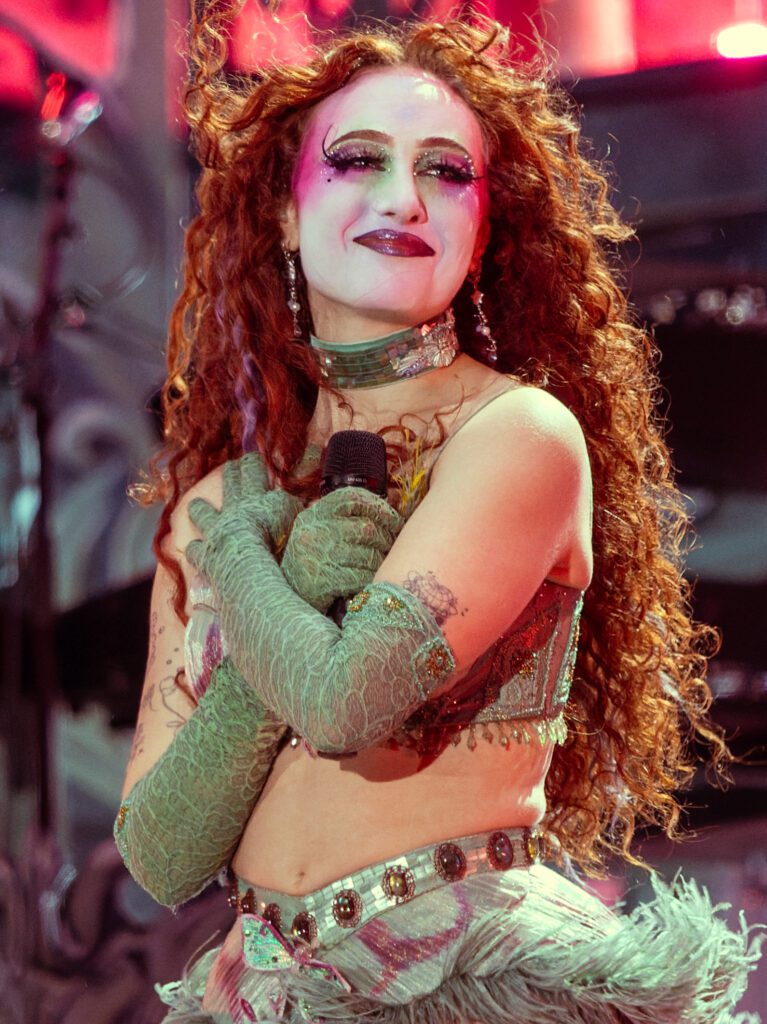
How did Chappell Roan build this fortune?
The answer unfolds through the career, earnings, deals and assets behind the headline estimate.
Chappell Roan before the fame
The background and early turning points that shaped Chappell Roan’s route to prominence.
On 5 April 2024 Chappell Roan put out a standalone single with no album behind it. By 29 November, as Billboard recorded, “Good Luck, Babe!” had passed a billion plays on Spotify alone. Four years earlier a major label had let her go.
She was born Kayleigh Rose Amstutz on 19 February 1998 in Willard, Missouri, signed to Atlantic Records at seventeen, and was off the roster by 2020. Everything in the arithmetic here was earned after that, which is the useful fact about her money: it is large, very new, and almost none of it has turned into anything you could point at.
The Atlantic years produced one EP, School Nights, in 2017, and little else that paid. After the label dropped her she went back to Missouri and took ordinary work while writing, and the song that redirected her career nearly went unreleased: Rolling Stone reported that her former label tried to stop her putting out “Pink Pony Club”.
Our working carries 2017 to 2022 at under $150,000 gross — our estimate, on an unrecouped new-artist deal whose advances are repayable against royalties. Dan Nigro then founded the Island Records imprint Amusement Records and signed her as its first artist, which is where the money starts.
Chappell Roan’s breakthrough years
The career decisions and defining moments that turned recognition into sustained earning power.
The debut album The Rise and Fall of a Midwest Princess was released on 22 September 2023 and took almost a year to climb; Billboard’s chart data puts its peak at number two on the Billboard 200, on the chart dated 24 August 2024, with 72,000 equivalent album units that week behind The Tortured Poets Department. It is now certified double platinum in the United States. What it and the live work are worth to her follows in four lines, all our estimates, with the arithmetic in section eleven.
- Recorded music and publishing: about $10.2 million gross. From a catalogue of roughly twelve billion plays worldwide by October 2026, a 20 per cent royalty on the master’s receipts, and her writer’s share as co-writer.
- The Midwest Princess Tour: about $4.3 million net. Eighty-nine shows from 20 September 2023 to 13 October 2024. Pollstar, mid-run in July 2024, had her averaging 2,413 tickets and $89,355 a night before the autumn dates moved into amphitheatres. The $17 million of ticketed gross that implies is the promoter’s number, not hers; a quarter nets to the artist.
- 2025 and 2026: about $2.5 million net. Thirty-four dates from Warsaw on 30 May 2025 to Lollapalooza São Paulo on 21 March 2026, mostly festival billing. Fees we cannot establish stay out; the ticketed American pop-ups carry the line.
- Support fees and merchandise: about $1.5 million net. An arena support slot in 2024, and merchandise across both runs.
The craft comes to about $18.5 million gross in three years.

What Chappell Roan’s work can earn
Reported pay, contracts, royalties and performance income reveal how the fortune was funded.
MTV gave her Best New Artist in September 2024, and the the Recording Academy followed with Best New Artist at the Grammy ceremony on 2 February 2025 — the award that converts a breakout year into a career.
The next cycle tested whether it held. KY3 reported two nominations announced on 7 November 2025, both for “The Subway”: Record of the Year and Best Pop Solo Performance. Neither converted at the ceremony on 1 February 2026 at the Crypto.com Arena, though a Record of the Year nomination for a standalone track is itself unusual.
Her 2025 and 2026 schedule is the clearest measure of where she sits: thirty-four dates across Europe, North America, Oceania and South America, most of them festival billing rather than her own ticketed rooms. That pays differently — a fee instead of a share of the gate, settled privately.
What she drew without new material is the other measure: the album was over two years old through that run, and the set leaned on it alongside three standalone singles.

Chappell Roan’s business beyond the main career
Endorsements, ownership interests and investments can keep compounding long after the initial breakthrough.
One brand relationship carries this line. M·A·C Cosmetics named her a global brand ambassador on 8 December 2025; as Coveteur reported, the first campaign was shot by Inez and Vinoodh, with further work scheduled through 2026.
The terms stayed between the parties, so our working prices it: a global beauty ambassadorship at her chart level sits in the $1 million to $3 million band for a first year, and we carry $1.5 million, assuming a one-year term with worldwide campaign usage rather than a renewal.
Her money runs through agreements rather than companies. The recordings come out on Amusement Records, the Island Records imprint Dan Nigro founded and signed her to, so the label upside sits with the label; what she holds is a royalty on the masters and a writer’s share of the songs she co-wrote.
That structure matters more than any venture would: the figure turns on two contractual percentages rather than on a business she controls, which is why section eleven closes on a royalty rate.
Chappell Roan’s notable luxury item
A reported property or major asset offers a tangible glimpse of the wealth behind the public estimate.
The documented position is that she rents. Hello, relaying a Rolling Stone interview from September 2024, described the home she was then in as a one-bedroom rental outside Los Angeles, boxes still half unpacked; she later said the January 2025 wildfires moved her into short lets for months.
Our working therefore credits her with no property equity and no portfolio of priced assets. What we are estimating is retained cash, almost all of it hers for less than three years.
Chappell Roan’s estimated net worth
Public estimates vary because private contracts, investments, taxes and liabilities are not fully disclosed.
How this estimate is calculated
The recorded-music line starts from streaming volume. Spotify is roughly a third of global streaming revenue, so the billion Spotify plays Billboard recorded for one single imply about three billion worldwide, and the album plus the two 2025 singles take the catalogue near twelve billion by October 2026. At a blended $3.50 per thousand that is some $42 million to rightsholders, splitting three to one between recording and song: 20 per cent of the master’s receipts gives $6.2 million, her writer’s share $4 million.
| Recorded music and publishing, 2023–2026 | $10.2 million |
| Live, net to the artist | $6.8 million |
| Support fees and merchandise, net | $1.5 million |
| Brand ambassadorship | $1.5 million |
| Gross earnings to October 2026 | $20.0 million |
| Less representation at 22 per cent | $4.4 million |
| Less tax at a blended 45 per cent | $7.0 million |
| Less three peak years of personal spending | $1.8 million |
| Retained, plus a small return | $7.0 million |
Three things are deliberately absent from it: a tour’s gross, which belongs to the promoters; festival headline fees, which we decline to invent; and the Midwest Princess Project’s funds, which are the charity’s.
The working supports a range of $5 million to $9 million, and we publish its midpoint. What decides it is the master royalty rate: 20 per cent gives the figure below, 30 adds roughly $1.7 million after commission and tax, 12 takes about a million off. That percentage sits in a contract between an artist and a boutique imprint, and with the second album described to Dork as “so beyond far away”, no new income event dilutes its weight.
Confidence: Indicative — the chart, certification, streaming and per-show figures behind the working are published, but every figure about what she personally receives is our reasoned illustration.
In 2025 she founded the Midwest Princess Project, a non-profit supporting trans and LGBTQ+ young people. PinkNews reported in September 2026 that it had raised more than $800,000 and supported over sixty organisations, and that the net proceeds of the Super Graphic Spectacular — two nights at the Shrine Auditorium in Los Angeles on 21 and 22 October 2026, on bills The Line of Best Fit published — would go to it.
That $800,000 is the charity’s and it is excluded here. Money a foundation raises and spends on its beneficiaries is not a balance the founder holds.
The scrutiny that followed her breakout year was about its pace. In September 2024 she withdrew from two All Things Go festival appearances, writing that things had become overwhelming and that she needed a few days to prioritise her health, as BrooklynVegan reported; the festival said publicly that it supported the decision. Cancelled dates are forgone fees, and our live estimate counts the shows she played rather than the schedule as announced.
The same period brought sustained argument about what a performer at her visibility owes an audience.