 How Much Are They Worth?
Celebrity fortunes, explained
How Much Are They Worth?
Celebrity fortunes, explained







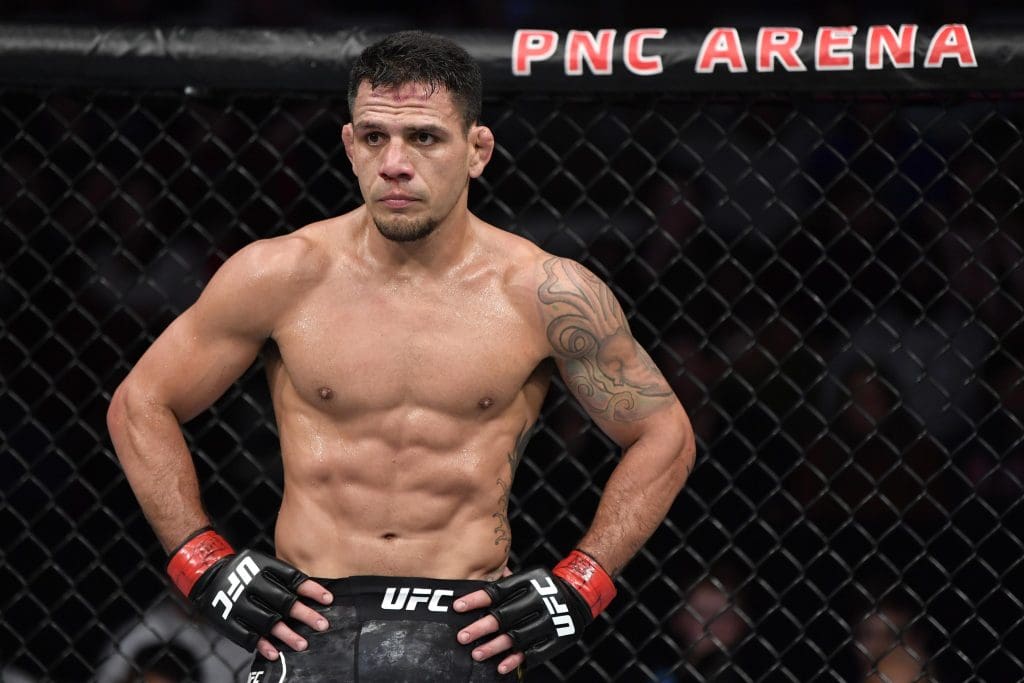
How did Rafael Dos Anjos build this fortune?
The answer unfolds through the career, earnings, deals and assets behind the headline estimate.
Before the fame
The background and early turning points that shaped Rafael Dos Anjos’s route to prominence.
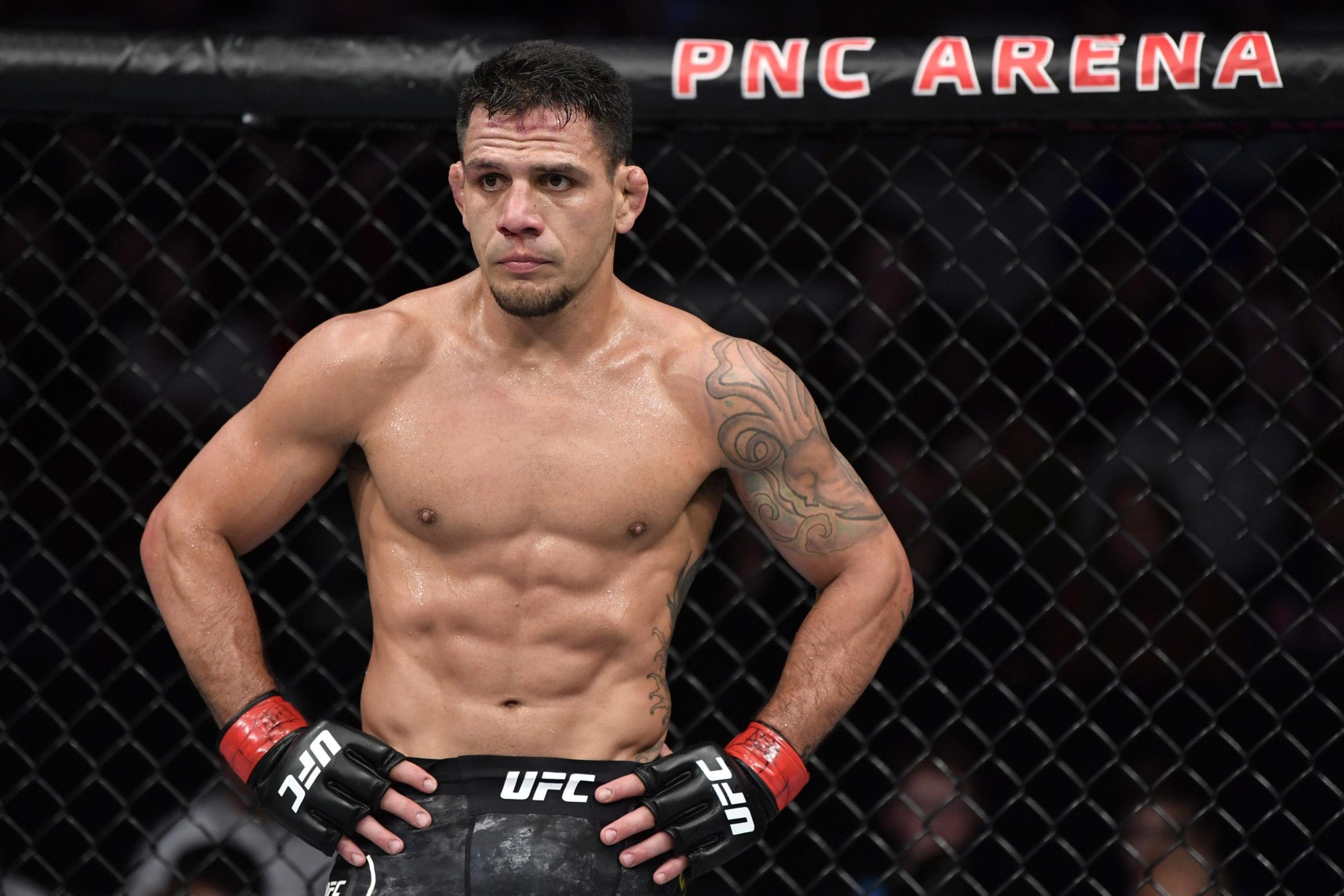
Rafael dos Anjos was born on October 26, 1984, in Niteroi, in the Brazilian state of Rio de Janeiro. By his own account he was a troubled kid who spent much of his early childhood fighting in the streets of his hometown, and at age nine he began training Brazilian jiu-jitsu under Daniel Matheus, a discipline that redirected his energy away from street violence and toward competition. His early life and family background are documented on Wikipedia.
Dos Anjos rose through the Brazilian jiu-jitsu ranks quickly, winning a World Jiu-Jitsu Championship gold medal as a purple belt in 2003 before eventually earning a black belt, a path detailed on his own RDA Academy biography page. He went on to become a fourth-degree black belt under Aldo “Caveirinha” Januario and Philipe della Monica and later added a black prajied in Muay Thai under Rafael Cordeiro, the well-rounded base that carried him into professional mixed martial arts.
Dos Anjos turned professional in 2004 and spent the next four years fighting almost exclusively on Brazil’s regional circuit, competing for promotions including Juiz de Fora Fight, Arena BH and Shooto Brazil, plus a brief run in Japan’s Pancrase organization, building an 11-2 record that eventually earned him a call from the UFC. His path into full-time competition, and the previous work as a jiu-jitsu instructor that supported him along the way, is outlined on his official UFC athlete profile.
He made his UFC debut on November 15, 2008, at UFC 91, losing to Jeremy Stephens by third-round knockout in a rocky start to his time in the organization. The following years were a grind through the deep lightweight division, with paydays that were modest by UFC standards while he worked to establish himself as a legitimate contender rather than a house fighter.
The breakthrough years
The career decisions and defining moments that turned recognition into sustained earning power.
Dos Anjos’s move up the rankings accelerated with a Fight of the Night win over Tyson Griffin, a submission of Terry Etim in Abu Dhabi, and a knockout of George Sotiropoulos, before he strung together the two biggest wins of his career: a first-round knockout of former champion Benson Henderson in August 2014 and a lopsided decision over Nate Diaz that December, a run that forced the UFC to give him a title shot.
He challenged Anthony Pettis for the UFC Lightweight Championship at UFC 185 on March 14, 2015, and won a shutout unanimous decision, with all three judges scoring it 50-45 across five rounds despite dos Anjos fighting through a torn MCL suffered weeks before the bout. The scale of the win, detailed on Wikipedia’s UFC 185 event page, is still described as one of the most decisive title-winning performances in UFC history.

What the work can earn
Reported pay, contracts, royalties and performance income reveal how the fortune was funded.
Dos Anjos defended the belt against Donald Cerrone at UFC on Fox 17 in December 2015, stopping him by TKO in just 66 seconds, the fastest finish in UFC lightweight title history at the time, before losing the title to Eddie Alvarez by first-round TKO in July 2016. He rebuilt at both lightweight and welterweight over the following years, and in December 2022 he submitted Bryan Barberena to become the first fighter in UFC history to surpass eight hours of total cage time, a record he extended further at UFC 299 in March 2024, as confirmed by Guinness World Records, which credits him with 8 hours, 41 minutes and 49 seconds inside the Octagon.
Across a UFC career spanning 36 fights he is tied for the seventh-most bouts in promotion history and has fought a remarkable cross-section of eras, sharing the cage with Anthony Pettis, Donald Cerrone, Eddie Alvarez, Tony Ferguson, Kamaru Usman, Leon Edwards, Robbie Lawler and Colby Covington, a résumé his official UFC profile lists alongside 11 submission wins and five knockouts.
Dos Anjos’s dominant 2015, in which he shut out Pettis for the title and then blitzed Cerrone in 66 seconds, earned him recognition as Sherdog’s Fighter of the Year for 2015, one of the sport’s most respected year-end honors.
Nearly a decade later, returning to fight at UFC 308 on his 40th birthday, he was still being profiled by the promotion as a defining example of longevity, telling UFC.com, “I feel I still have a lot in me… I don’t feel that the time to stop is right now,” a comment that captures how the MMA media has come to frame him: less a fading former champion than a durable veteran who keeps showing up against the next generation.
The business beyond the main career
Endorsements, ownership interests and investments can keep compounding long after the initial breakthrough.
During the UFC’s Reebok apparel era from 2015 to 2021, dos Anjos was one of the promotion’s more consistently paid fighters through the brand’s outfitting payouts, and he separately carried sponsorship from 1Law around his UFC Fight Night 49 bout in 2014 and later from logistics company SHIFT Freight, deals summarized by FirstSportz’s breakdown of his career finances, which notes his outside sponsorship associations have been more modest than his in-cage accomplishments would suggest.
The Reebok relationship was not without friction. In January 2016, he was fined $10,000 for wearing an unauthorized Evolve MMA shirt at the UFC on Fox 17 weigh-ins, a violation of the promotion’s exclusive outfitting policy that was widely reported in MMA media at the time and underscored just how tightly the league controlled fighter apparel income during that era.
Dos Anjos founded RDA Academy, a Brazilian jiu-jitsu, Muay Thai and MMA gym at 6001 W Parmer Lane in Austin, Texas, where he serves as founder and head instructor offering adult, teen and kids classes. The academy’s mission, to build “champions both on and off the mats,” is described on the gym’s official about page.
He has also held a seasonal teaching contract with Evolve MMA in Singapore and trained fighters including Cris Cyborg and Marlon “Chito” Vera as a training partner at the RVCA Training Center in California before that facility closed in 2023. Running his own academy while still competing has meant balancing coaching duties with a full training camp schedule deep into his forties.
Notable luxury item
A reported property or major asset offers a tangible glimpse of the wealth behind the public estimate.
In 2012, dos Anjos relocated his family from Rio de Janeiro to Orange County, California, to train full-time at Kings MMA, and by 2015 he and his wife Cris and their two sons were settled in Newport Beach, an upscale coastal community, a move covered in a UFC.com feature on his relocation in which he credited the move with giving his family a better quality of life and himself better training partners.
No specific home purchase price, additional real estate holdings or vehicle collection has been independently documented in public reporting. Secondary write-ups describe him as living comfortably off two decades of fight purses rather than pointing to any single marquee asset, and HMW treats his residence as a lifestyle choice tied to training rather than as a valued investment property absent verified figures.
Rafael Dos Anjos’s estimated net worth
Public estimates vary because private contracts, investments, taxes and liabilities are not fully disclosed.
How this estimate is calculated
The foundation for dos Anjos’s estimate is his disclosed UFC purse history across 36 fights, one of the longest active ledgers in the promotion. Reported figures compiled by FirstSportz include a $390,000 purse for his 2015 title defense against Donald Cerrone, $350,000 for his 2016 title loss to Eddie Alvarez, $380,000 for his 2018 interim-title challenge against Colby Covington, $300,000 for his 2020 win over Paul Felder and $421,000 for his 2022 win over Renato Moicano, on top of a $50,000 Performance of the Night bonus for winning the belt from Anthony Pettis at UFC 185 and a further $300,000 disclosed for his 2024 loss to Mateusz Gamrot at UFC 299.
Layered on top of career purses estimated in the low millions is additional income from Reebok outfitting pay during the 2015-2021 era, secondary sponsors and coaching revenue from RDA Academy, offset by standard deductions for management, Brazilian and American taxes, training camp costs at Kings MMA and the RVCA Training Center, and the travel and family relocation expenses tied to more than a decade of training in the United States. Secondary estimates from outlets including FirstSportz have placed his net worth at roughly $4 million, a figure used here only as a supplementary cross-check alongside the disclosed purse and bonus history above. Weighing his documented fight-by-fight pay, career length and standard fighter deductions, a reasoned range is used below rather than a single unverified number.
Dos Anjos is a public supporter of BJJKids.org, a registered charity that renovates Brazilian jiu-jitsu academies in the favelas of Rio de Janeiro to give underprivileged children access to training, mentorship and a safer environment, a cause the organization credits him with backing on the charity’s own site, which fits naturally with his own path out of street fighting through jiu-jitsu as a child.
Away from fundraising, his public image is built mainly around coaching the next generation at RDA Academy, where his gym profile frames him as someone who “continues to give back to the sport through coaching and leadership,” passing on the discipline that shaped his own career to students in Austin.
Dos Anjos has never been the subject of a doping suspension or legal scandal, but he became one of the sport’s most cited cautionary tales about championship-level weight cutting. Before his title defense against Eddie Alvarez in July 2016, he passed out three times during his final cut to 155 pounds, at one point falling backward with his head landing inches from a bathtub faucet, a near-miss he described in graphic detail to ESPN, adding that afterward “my body kind of shut down, and I wasn’t sweating” during the fight itself.
He lost the title that night, and the incident, along with the accumulating physical toll of repeated 155-pound cuts, became the public rationale he gave for eventually moving up to welterweight in 2017. Rather than avoiding the subject, dos Anjos has been unusually candid about it in interviews, using his own experience to draw attention to the dangers of extreme weight cutting in combat sports.