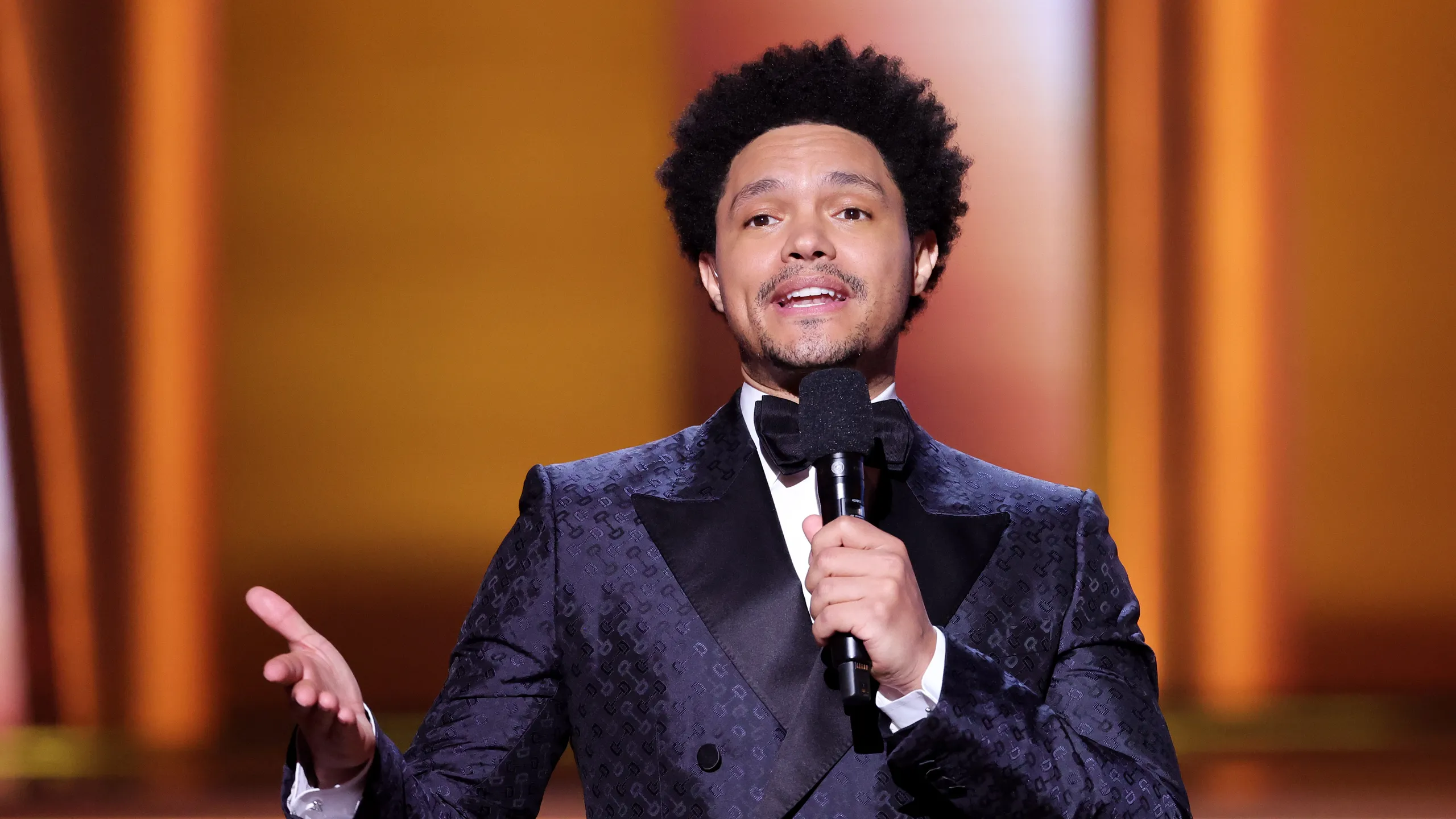
How did Trevor Noah build this fortune?
The answer unfolds through the career, earnings, deals and assets behind the headline estimate.
Before the fame
The background and early turning points that shaped Trevor Noah’s route to prominence.
Born in Johannesburg in 1984, Noah developed as a performer in South African radio, television and stand-up before touring internationally. His multilingual comedy and accounts of growing up under apartheid became the foundation of both his stage work and later memoir. These years established audience and intellectual property, but the largest financial acceleration began after Comedy Central hired him as a Daily Show correspondent and selected him to succeed Jon Stewart in 2015.
Noah hosted The Daily Show for seven years, also serving as writer and executive producer. A 2017 extension kept him through 2022 and added annual year-end specials; TheWrap documented those expanded duties. Contract value was not disclosed, so HMW does not repeat unattributed salary figures. It instead uses the length, senior credits and independently estimated overall earnings to bound television income.
The breakthrough years
The career decisions and defining moments that turned recognition into sustained earning power.
Stand-up remained important even during the nightly programme. Forbes estimated $28 million of pretax earnings from June 2018 to June 2019 and said touring supplied the largest share. Its methodology used Pollstar data and industry interviews and explicitly did not deduct agents, managers or lawyers. That makes the figure a strong gross-income checkpoint, not a one-year increase in net worth.
What the work can earn
Reported pay, contracts, royalties and performance income reveal how the fortune was funded.
After leaving the desk, Noah returned to intensive international touring. Pollstar reported 29,504 tickets across three Australian arena shows in late 2024, including grosses of $524,173 in Brisbane and $659,973 in Perth. Venue, promoter, travel, crew and production costs precede his share, and international tax applies, so HMW uses a percentage of gross rather than booking the entire box office.
Publishing supplies a measurable secondary stream. Penguin Random House’s page says Born a Crime sold more than one million copies, while Pan Macmillan’s later announcement places worldwide sales above two million and confirms Into the Uncut Grass. Royalties depend on format, territory, advance recoupment and collaborators, so copies sold are not multiplied by cover price.
The business beyond the main career
Endorsements, ownership interests and investments can keep compounding long after the initial breakthrough.
Noah also founded Day Zero Productions. Paramount’s 2018 filing describes a multi-year first-look deal covering television, film, digital and short-form projects and confirms that Viacom invested in the company. Financial terms and Noah’s fully diluted ownership are undisclosed. HMW includes a moderate private-company value, not a speculative studio multiple, and does not count unproduced projects as completed income.
Hosting the Grammys, producing programmes, the What Now? podcast and other media work diversify cash flow. Day Zero can earn producer fees and retain rights, but it also employs staff and develops projects that may never sell. The estimate therefore separates operating revenue from Noah’s personal wealth. No valuation is assigned to his social following, and charitable work through the Trevor Noah Foundation is not treated as an asset he can personally withdraw.
Notable luxury item
A reported property or major asset offers a tangible glimpse of the wealth behind the public estimate.
Property transactions show substantial purchasing power but also real losses. Architectural Digest reported that his Manhattan penthouse sold for $9.5 million after a roughly $10 million purchase and extensive renovation. His Bel-Air home bought for $27.5 million sold for $26.39 million, according to People’s transaction report. Those prices do not reveal debt, and commissions and improvements deepen the economic loss.
Trevor Noah’s estimated net worth
Public estimates vary because private contracts, investments, taxes and liabilities are not fully disclosed.
How this estimate is calculated
HMW starts with seven years of senior Daily Show work and a longer international touring career, calibrated against Forbes’ $28 million pretax year and Pollstar’s per-show evidence. It adds conservative Netflix, book, podcast, hosting and production receipts plus a restrained Day Zero value. It then removes touring overhead, US and international tax, representation, staff and personal spending, and recognises the documented property losses. Long-term investment growth is allowed only on retained cash, producing a rounded estimate rather than an audited balance sheet.
Netflix extended the worldwide reach of that material. Netflix Tudum identifies I Wish You Would as his third special on the service, following Afraid of the Dark and Son of Patricia. Netflix’s media centre calls 2023’s Where Was I his fourth original special. Fees are private, so the model includes a conservative licensing allowance rather than a generic per-special number borrowed from another comedian.
The evidence is strongest for one Forbes earnings year, selected tour grosses, book-sales thresholds and recorded property transfers. It is weakest for Daily Show salary, Netflix fees, the Day Zero cap table, investment returns and current real estate. The model does not assume that 2019’s peak earnings repeated every year, nor that the face value of sold homes was equity. South African and US income streams also create cross-border tax complexity.
JavaScript is off, so all sections are displayed together.