 How Much Are They Worth?
Celebrity fortunes, explained
How Much Are They Worth?
Celebrity fortunes, explained






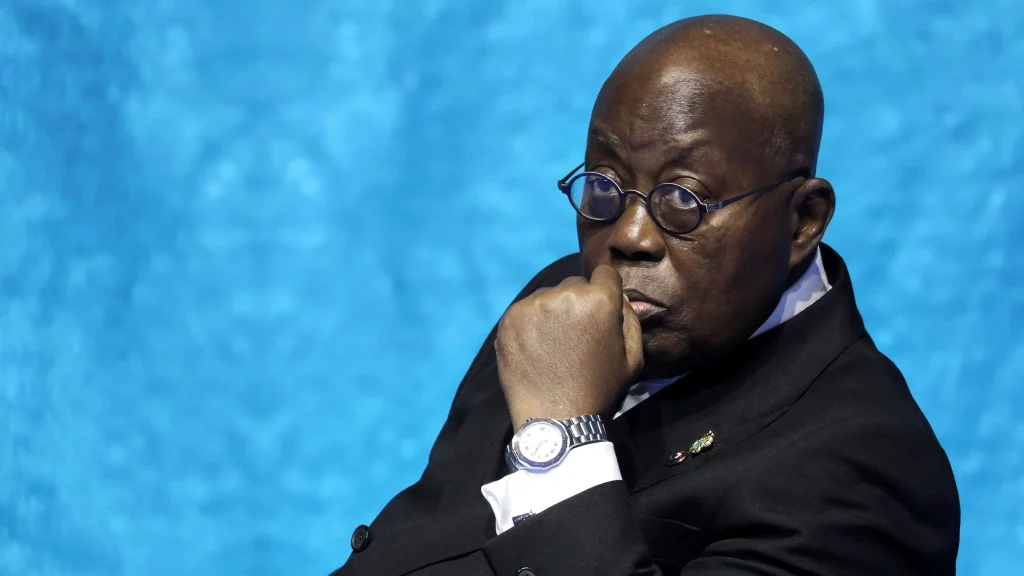
How did Nana Akufo-Addo build this fortune?
The answer unfolds through the career, earnings, deals and assets behind the headline estimate.
Before the fame
The background and early turning points that shaped Nana Akufo-Addo’s route to prominence.
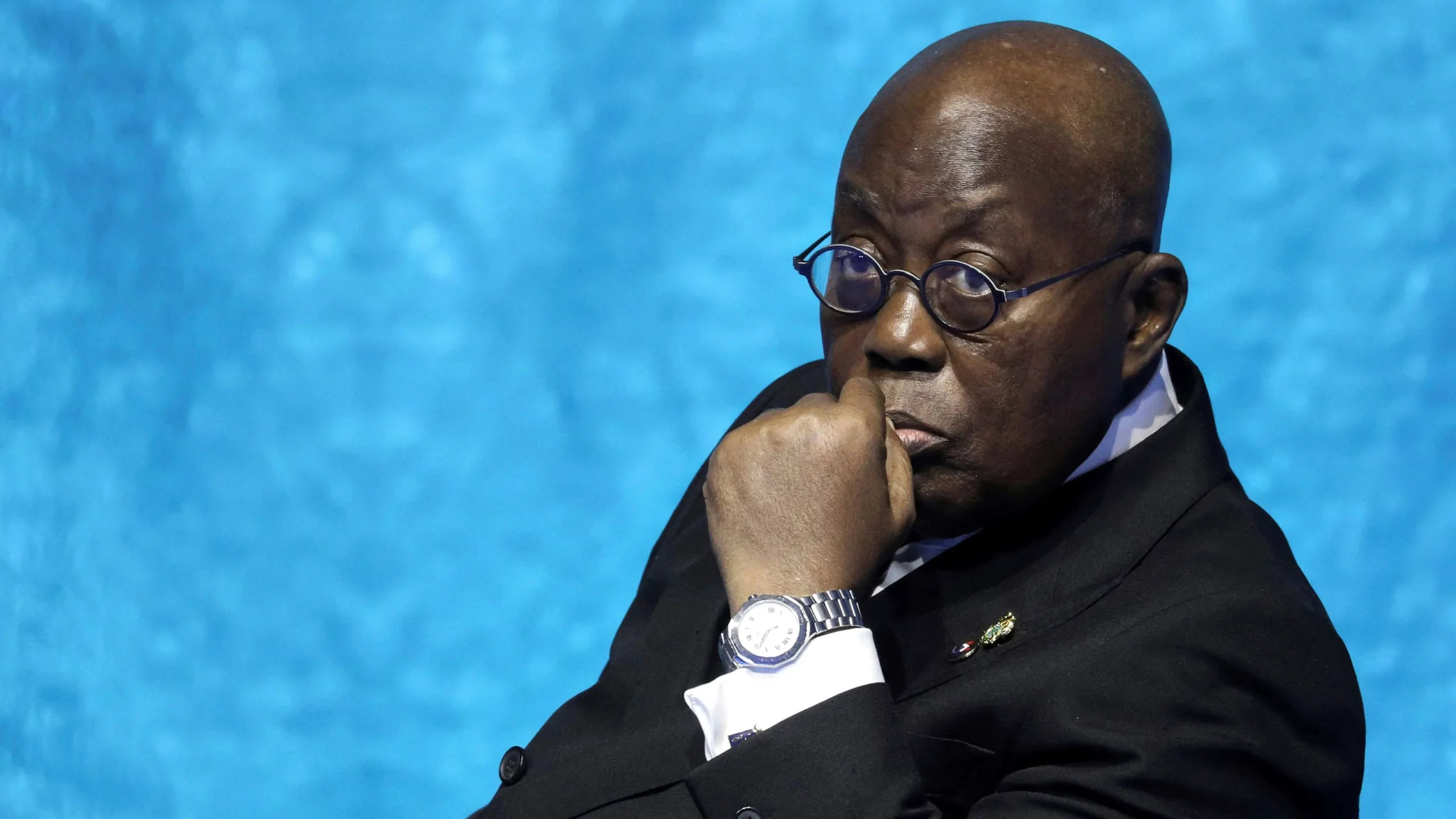
Nana Addo Dankwa Akufo-Addo was born in Accra in 1944 into a family prominent in Ghanaian public life. His father, Edward Akufo-Addo, served as chief justice and later as ceremonial president, while other relatives were associated with the nationalist movement. That background gave him proximity to politics, but his own professional identity was built through education and law. He studied at the University of Ghana and was called to the Ghanaian bar after legal training. A detailed Ghana News Agency retrospective marking his eightieth birthday traces the combination of family, legal training and democratic activism that shaped his career. He is married to Rebecca Akufo-Addo and has five daughters. Those family facts provide context, but they do not establish ownership of assets held by relatives or public institutions.
Akufo-Addo worked as a lawyer for decades before reaching the presidency. He trained in France and later helped establish the Ghanaian firm Akufo-Addo, Prempeh & Co. His public profile grew through opposition to military and one-party rule. He was involved in the People’s Movement for Freedom and Justice in the late 1970s and, in the 1990s, in the Alliance for Change demonstrations. The documented chronology of Akufo-Addo’s legal and political career records his entry into parliament in 1997. Legal practice was a genuine private-sector occupation, yet surviving public information does not provide a reliable ledger of his historical partnership income, retained earnings or current interest in the firm. It would therefore be misleading to turn a distinguished legal résumé into an assumed fortune.
The breakthrough years
The career decisions and defining moments that turned recognition into sustained earning power.
His national breakthrough came under President John Kufuor. Akufo-Addo served as attorney general and minister of justice, then foreign minister. Those cabinet roles gave him an international platform and strengthened his position within the New Patriotic Party. He sought the presidency in 2008 and 2012, losing close contests before winning in 2016. His inauguration in January 2017 began an eight-year presidency that ended when John Mahama returned to office in 2025. The term-by-term record of the Akufo-Addo presidency distinguishes his two elected mandates from earlier ministerial service. Public salaries from those offices are relevant to an estimate, but gross official compensation is not the same as accumulated personal wealth.

What the work can earn
Reported pay, contracts, royalties and performance income reveal how the fortune was funded.
Akufo-Addo’s signature domestic programme was Free Senior High School, introduced early in his first term. His government also promoted industrialisation, digital public services, infrastructure and regional trade, while he chaired ECOWAS during a period of coups and political instability in West Africa. Late in his presidency he broke ground for a proposed petroleum hub. The Reuters report on the petroleum-hub launch makes clear that the project was a national development initiative funded by a consortium, not an asset personally owned by the president. That distinction matters: roads, schools, refineries and state programmes may form part of a political legacy, but they do not belong on an individual balance sheet.
Supporters credit Akufo-Addo with expanding access to secondary education and defending constitutional government at a time of regional democratic retreat. He received honorary degrees and foreign decorations during office, including recognition associated with democratic leadership and education. His public standing was nevertheless mixed by the end of his second term because Ghana’s economic crisis placed pressure on households. In a 2024 interview, Le Monde recorded his defence of democracy and regional cooperation. Awards, decorations and honorary degrees carry reputational significance, but generally do not provide evidence of saleable personal wealth.

The business beyond the main career
Endorsements, ownership interests and investments can keep compounding long after the initial breakthrough.
The Encyclopaedia Britannica biography of Akufo-Addo frames his public identity around law and elected office rather than commercial celebrity.
Akufo-Addo’s public career does not resemble that of an entertainer or athlete with a published sponsorship portfolio. Political campaign support belongs to a party or campaign structure and should not be counted as the candidate’s income unless credible records show a personal transfer. Likewise, ceremonial gifts received in office may be governed by disclosure, ethics or state-property rules. No dependable evidence reviewed for this profile identifies a continuing commercial endorsement arrangement that materially changes his personal finances. This section therefore contributes caution rather than a speculative revenue stream: visibility, speeches and international honours do not automatically imply paid brand deals, and political advertising for the New Patriotic Party is not a personal sponsorship asset.
The central commercial chapter in Akufo-Addo’s biography is his legal practice. Unlike an entrepreneur whose wealth can be estimated from disclosed company stakes, he has not presented the public with a current portfolio of operating businesses, shareholdings or investment vehicles that can be valued confidently. His presidency encouraged private investment and launched projects involving domestic and foreign companies, but those companies were not thereby his property. The absence of a transparent, current beneficial-ownership schedule is important evidence in itself. A responsible assessment should acknowledge professional earnings and possible conventional savings while declining to assign him the value of government programmes, party resources, projects announced during his term or businesses associated only through professional and political networks.

Notable luxury item
A reported property or major asset offers a tangible glimpse of the wealth behind the public estimate.
Public discussion has long associated Akufo-Addo with family background, legal success and residences used during political life, but association is not proof of sole beneficial ownership. Jubilee House is the official presidential workplace and state property. Security arrangements, official vehicles and accommodation available to a serving president also remain public resources. Ghana’s asset-declaration system does not provide the comprehensive, easily auditable public schedule needed to price every property, investment and liability. Consequently, this estimate does not assign him state residences, motorcades, family property, party offices or the assets of his wife’s foundation. Only wealth plausibly accumulated through his legal career, official earnings and ordinary investment is considered, with a substantial uncertainty discount.
Nana Akufo-Addo’s estimated net worth
Public estimates vary because private contracts, investments, taxes and liabilities are not fully disclosed.
How this estimate is calculated
The calculation uses a career-based method rather than copying circular celebrity-finance websites. It considers several decades of senior legal practice, parliamentary and ministerial service, two presidential terms and the possibility of long-term savings and conventional investments. It then applies conservative deductions for tax, household expenditure, political-career costs and the fact that gross professional receipts are not retained wealth. The method excludes Jubilee House, official transport, state projects, party funds, the Rebecca Foundation and assets merely linked to extended family members. It also treats the 2025 handover as the end of presidential compensation; the official Ghana presidency portal now reflects the institution rather than a privately owned Akufo-Addo enterprise. Because no current public balance sheet verifies his holdings and liabilities, the result is necessarily a broad editorial estimate.
On the evidence available, Nana Akufo-Addo’s estimated net worth is $5 million to $10 million. The range reflects the earning capacity of a long legal career and decades at the highest levels of Ghanaian politics, without attributing state, party, charitable or family-controlled assets to him. It should be read as an informed estimate, not a declared or audited figure. A materially different total could be justified if a current asset declaration, company-ownership schedule or reliable liabilities record becomes public.
Rebecca Akufo-Addo has undertaken charitable work through the Rebecca Foundation, while the former president has supported educational, health and social causes in public appearances. Those activities affect the family’s public image, but a spouse-led charity is a separate entity; its donations and projects should not be treated as household property. Akufo-Addo’s democratic credentials were strengthened by accepting adverse election outcomes before his eventual victory and by completing the constitutional two-term limit. The peaceful 2025 transfer is covered in the Associated Press report on Mahama’s inauguration. His image also suffered from public frustration over living costs, debt and perceptions of elite privilege.
His administration faced criticism over economic management, procurement, environmental policy and allegations of nepotism. Ghana defaulted on most external debt in 2022 and entered a restructuring programme. A Reuters account of the debt-restructuring effort places the crisis and IMF programme in context. Akufo-Addo also apologised after passages in his inaugural address were found to resemble earlier speeches. None of those controversies alone proves personal enrichment. Conversely, the lack of a criminal finding does not supply a precise asset total. A neutral financial profile must separate criticism of national policy from verified evidence about private ownership and must avoid converting contested political allegations into additions or deductions.