 How Much Are They Worth?
Celebrity fortunes, explained
How Much Are They Worth?
Celebrity fortunes, explained


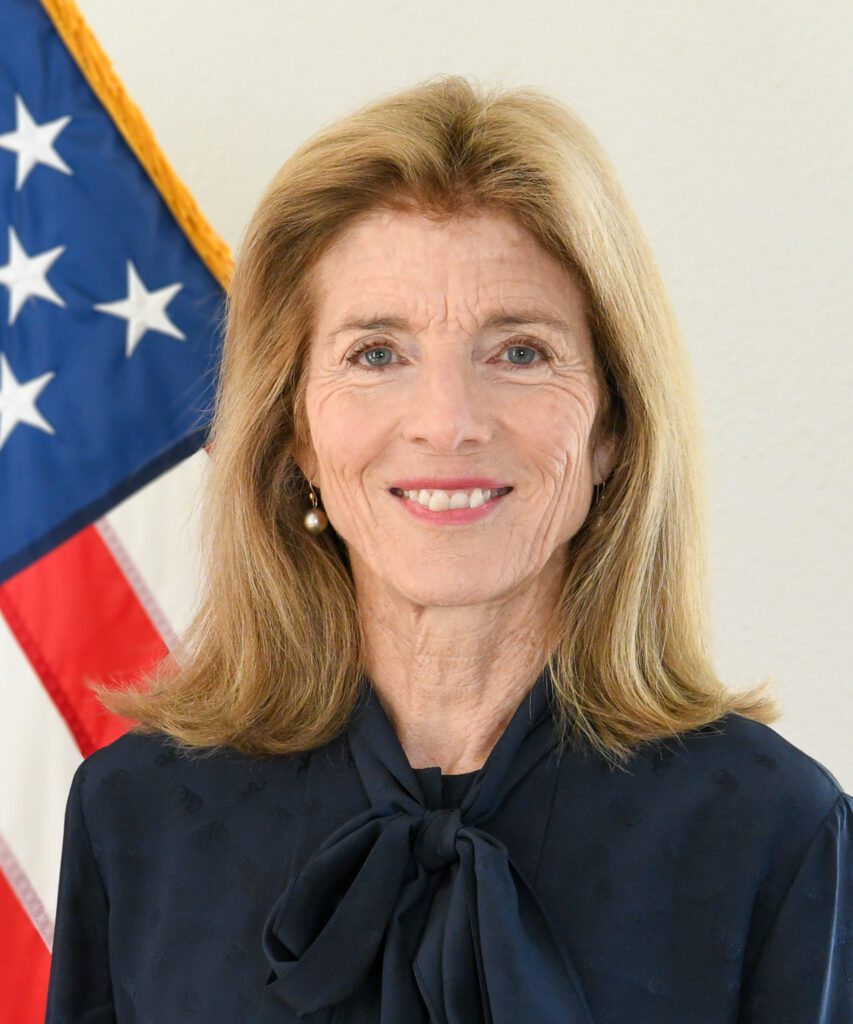
How did Caroline Kennedy build this fortune?
The answer unfolds through the career, earnings, deals and assets behind the headline estimate.
Before the fame
The background and early turning points that shaped Caroline Kennedy’s route to prominence.
Caroline Bouvier Kennedy was born on 27 November 1957 in New York City, the daughter of John F. Kennedy and Jacqueline Kennedy. She was five when her father, then President, was assassinated in November 1963, and she grew up in New York with her mother and brother.
She earned a BA in fine arts at Harvard in 1980 and a law degree at Columbia Law School in 1988, where she was a Harlan Fiske Stone Scholar, according to the U.S. Department of State certificate prepared for her 2022 nomination. She also studied at Sotheby’s Institute of Art in London.
Before law school she worked as a coordinating producer in the Office of Film and Television at the Metropolitan Museum of Art and wrote a freelance column for Time, the U.S. Department of State records. Law then led to writing: with Ellen Alderman she wrote In Our Defense and The Right to Privacy, and she went on to edit a series of bestselling poetry anthologies, beginning with a collection of her mother’s favourite poems.
The breakthrough years
The career decisions and defining moments that turned recognition into sustained earning power.
Her public role expanded in the 2000s. For over a decade she worked on New York City public school reform, serving as Vice Chair of the Fund for Public Schools and Chief Executive of the Office of Strategic Partnerships, according to the U.S. Department of State. Much of that service was unpaid.
What her own work has earned: our estimate is $10 million to $20 million. The books are the bulk of it. She is the author or editor of eleven titles, several of them bestsellers, and her 2013 ethics filing showed book royalties of more than $400,000 in a single year, decades after the first of them appeared (ABC News). An average of $300,000 to $500,000 a year in advances and royalties across nearly four decades in print gives $11 million to $19 million, and the anthologies in particular have stayed in print as gift books, which is the steadiest kind of publishing income there is. To that add two diplomatic postings: a United States chief of mission is paid on the senior Foreign Service scale, roughly $180,000 to $190,000 a year at current rates, so her four years in Tokyo and three in Canberra are worth about $1.3 million. Lectures add a little more, at $75,000 an engagement for three engagements in 2013. The assumption doing the most work is the long-run royalty average; only the one year is on the record.
Her endorsement of Barack Obama in early 2008 was one of the notable political moments of that primary season. In January 2009 she withdrew from consideration for the Senate seat vacated by Hillary Clinton, citing personal reasons, as reported by NPR.

What the work can earn
Reported pay, contracts, royalties and performance income reveal how the fortune was funded.
Obama appointed her ambassador to Japan. The Office of the Historian records her appointment on 24 October 2013, her presentation of credentials on 19 November 2013 and her departure from post on 18 January 2017. She was the first woman to hold the post, as ABC News noted at the time of her nomination.
In 2022 she returned to diplomacy as ambassador to Australia, presenting her credentials in Canberra in July 2022, as the U.S. Embassy in Australia records. The U.S. Department of State certificate describes her as the author or editor of eleven bestselling books on law, poetry, civics and history.
She is Honorary President of the John F. Kennedy Library Foundation, which presents the Profile in Courage Award created by the family in 1989. The U.S. Department of State lists board roles including the Carnegie Corporation, the United States-Japan Foundation and the International Rescue Committee.
Her time in Tokyo was widely regarded as a success, and her State Department certificate for the Australia post cited her record as a diplomat in the Indo-Pacific.

The business beyond the main career
Endorsements, ownership interests and investments can keep compounding long after the initial breakthrough.
She does not do commercial endorsements. Her paid appearances take the form of lectures: ABC News reported that her 2013 filing showed $75,000 per speech for three speeches that year, alongside the book royalties above $400,000.
Her name is attached instead to institutions: the Kennedy Library Foundation, poetry education programmes and the NAACP Legal Defense and Educational Fund, on whose board she has served.
Kennedy has not built an operating business. Her financial life runs through family trusts, investments and publishing. Her 2013 disclosure, summarised by ABC News, listed positions with JP Morgan, Blackstone, Vornado Realty Trust, Apollo and Goldman Sachs alongside real estate and a series of Kennedy family trusts.
She served as a director of The Boeing Company, one of the few corporate board seats she has held.

Notable luxury item
A reported property or major asset offers a tangible glimpse of the wealth behind the public estimate.
The 2013 filing described family trusts established in her name in 1959, 1963 and 1982 that pay combined income of up to $3 million a year, commercial property in Chicago paying millions more, and a trust in her late brother’s name paying up to $1 million, according to ABC News.
Boston.com reported from the 53-page filing that it put her assets at between $48.6 million and $274.8 million, most of them in bonds, health care holdings and property in New York, Chicago, Washington and Massachusetts. She inherited her mother’s estate on Martha’s Vineyard, and she has lived in New York with her husband, the designer Edwin Schlossberg, whom she married in 1986.
Caroline Kennedy’s estimated net worth
Public estimates vary because private contracts, investments, taxes and liabilities are not fully disclosed.
How this estimate is calculated
The anchor is a sworn form. She filed with the Office of Government Ethics in July 2013 on her nomination as ambassador to Japan. Boston.com reported from the 53-page document that it put her assets at between $48.6 million and $274.8 million. ABC News itemised the income side of the same filing: trusts established in her name in 1959, 1963 and 1982 paying combined income of up to $3 million a year, a further trust in her late brother’s name paying up to $1 million, $75,000 a speech for three speeches, and book royalties above $400,000.
Why the band is the answer. Nominees report each holding inside a bracket rather than at a value, so the total can only be stated as the sum of the floors to the sum of the ceilings. That is the range below, used unaltered. It is the rare case on this site where the arithmetic has already been done under oath.
Rolling it forward. Thirteen years have passed, and a portfolio weighted towards bonds, healthcare equities and American commercial property has had a strong run over that period; ordinary market growth would place her somewhere in the upper half of the same band today rather than outside it, which is why no separate 2026 figure is offered. Her income in the intervening years came from trusts she did not have to touch, two government salaries and continuing royalties, so the capital is likelier to have compounded than to have been drawn down.
Three cautions. The form lists assets rather than net worth. It covers a filer’s own holdings together with a spouse’s reportable interests, so it describes a household. And a much larger figure of $250 million to $500 million that circulated in 2013 came from a lawyer reading the form second-hand for a newspaper rather than from the filing itself, which is why it is set aside here instead of averaged in.
Confidence: Documented – this is the asset band reported on a sworn federal ethics disclosure, used unaltered, though it dates from 2013 and covers her household rather than her alone.
Much of her work has been unpaid public service. In New York she helped raise private money for public schools, and after returning from Japan she founded the International Poetry Exchange Program with the DreamYard Project in the Bronx. Her public image is reserved and dutiful; she has given few interviews and has generally spoken through her books and official roles.
The 2009 Senate episode drew criticism of interviews that were seen as halting, and a source told CNN that Governor David Paterson had not planned to appoint her. In January 2014 she tweeted that she was deeply concerned by the inhumaneness of the dolphin drive hunt at Taiji, prompting the Japanese government to defend the practice, as reported by NPR.
In January 2025 she sent a letter to senators urging them to reject her cousin Robert F. Kennedy Jr.’s nomination as health secretary, calling him a predator, as reported by CBS News. The letter was one of the sharpest public interventions of her career.