 How Much Are They Worth?
Celebrity fortunes, explained
How Much Are They Worth?
Celebrity fortunes, explained










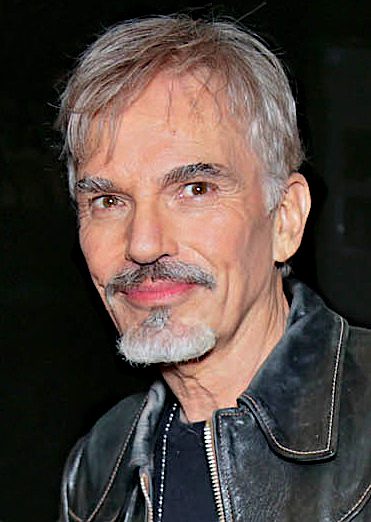
How did Billy Bob Thornton build this fortune?
The answer unfolds through the career, earnings, deals and assets behind the headline estimate.
Before the fame
The background and early turning points that shaped Billy Bob Thornton’s route to prominence.
Billy Bob Thornton was born on 4 August 1955 in Hot Springs, Arkansas, the eldest son of Billy Ray Thornton, a high-school basketball coach, and Virginia Faulkner, according to the Encyclopedia of Arkansas. The family lived for a time with relatives in a shack without electricity or plumbing, and he grew up largely in Malvern.
Before acting paid anything, he worked as a roadie, drill-press operator, bulldozer driver and sawmill worker, and briefly studied psychology at Henderson State University, the same encyclopaedia records. A job as a recreation director at a mental-health facility later fed directly into the script that made his name.
Thornton moved to California in the late 1970s chasing a music career with his friend and writing partner Tom Epperson, and in 1983 toured the South in a ZZ Top tribute band, the Encyclopedia of Arkansas notes. Screen acting came slowly through small parts, and his first real break was as a writer: he and Epperson co-wrote the 1992 crime film One False Move, in which he also acted.
A 25-minute short, Some Folks Call It a Sling Blade, directed by George Hickenlooper, was selected for Sundance and helped him raise the money for a feature-length version.
The breakthrough years
The career decisions and defining moments that turned recognition into sustained earning power.
Sling Blade, which Thornton wrote, directed and starred in, was made for about $1.3 million and bought by Miramax for $10 million, according to the Encyclopedia of Arkansas. It grossed $24.4 million in North America, Box Office Mojo records, and won Thornton the Academy Award for best adapted screenplay, with a nomination for best actor.
The film changed his earning power overnight. Within two years he was co-starring in Michael Bay’s Armageddon, which grossed $553.7 million worldwide, according to Box Office Mojo, and he received a further Oscar nomination for A Simple Plan.

What the work can earn
Reported pay, contracts, royalties and performance income reveal how the fortune was funded.
The late 1990s and early 2000s were his peak years as a film actor: Primary Colors, Monster’s Ball, the Coen brothers’ The Man Who Wasn’t There and Bad Santa, the black comedy that took $76.5 million worldwide, per Box Office Mojo, and became a perennial Christmas title. He also directed All the Pretty Horses with Matt Damon and Penélope Cruz.
His second peak came on television. The Golden Globes shows Golden Globe wins for FX’s Fargo in 2015 and Amazon’s Goliath in 2017, among seven nominations. Goliath ran for four seasons; Variety reported its renewal for a fourth and final season in 2019.
Thornton’s honours span three decades: an Oscar for Sling Blade’s screenplay, two Golden Globe wins and, most recently, a 2025 Golden Globe nomination for Landman, the Golden Globes shows. The Encyclopedia of Arkansas describes him as an actor, director, screenwriter and musician, which reflects how broad his working life has been.
Landman, Taylor Sheridan’s Texas oil drama for Paramount+, has become one of the biggest streaming hits of his career. Deadline reported that the season-two premiere drew 9.2 million views in its first two days, the platform’s biggest original-series premiere, and Paramount+ renewed the show for a third season in December 2025, per Deadline.

The business beyond the main career
Endorsements, ownership interests and investments can keep compounding long after the initial breakthrough.
Thornton has done little conventional endorsement work, and no significant paid ambassadorships have been reported. His commercial value has come almost entirely from acting fees, and more recently from the kind of long-term series contract described below. Deadline reported in June 2026 that he holds a separate three-year Landman deal with standard year-to-year increases, while the rest of the original cast were renegotiating.
Thornton’s main venture outside acting is music. He has recorded four solo albums and tours North America and Europe with his band the Boxmasters, the Encyclopedia of Arkansas records. Touring income for a band of that size is modest by Hollywood standards and has not been published.
He also co-wrote a 2012 memoir with Kinky Friedman, The Billy Bob Tapes: A Cave Full of Ghosts. No advance has been disclosed, and he has no widely reported stakes in outside businesses.

Notable luxury item
A reported property or major asset offers a tangible glimpse of the wealth behind the public estimate.
The best-documented asset sale is the Beverly Hills house on Roxbury Drive that he once shared with Angelina Jolie. LAist reported, citing TMZ, that it was bought in 2000 for $3.75 million and sold for $8 million, an 11,000 sq ft property with nine bedrooms, a library and tennis courts that had previously belonged to Slash.
His current homes have not been valued to this site’s standard, and other property figures circulating online are not included here.
Billy Bob Thornton’s estimated net worth
Public estimates vary because private contracts, investments, taxes and liabilities are not fully disclosed.
How this estimate is calculated
Three money figures here are documented, and not one of them is a fee paid to Thornton. Sling Blade was made for about $1.3 million and bought by Miramax for $10 million, per the Encyclopedia of Arkansas; that was the price of a finished film, and what reached him as its writer, director and star was never separated out. Armageddon’s $553.7 million worldwide gross, per Box Office Mojo, belongs to its studio. The transaction that was plainly his own is the Roxbury Drive house in Beverly Hills, bought in 2000 for $3.75 million and sold for $8 million, reported by LAist on the basis of a TMZ report rather than a public record.
The earnings working is assumed throughout. Twenty-five significant film roles between 1997 and 2016 at $1 million to $2.5 million each, a season of Fargo and four of Goliath at $6 million to $12 million, and thirty episodes of Landman at $500,000 to $1 million an episode give gross career earnings of roughly $48 million to $108 million, of which 38 to 40 per cent would survive representation and tax, alongside a share of the $4.25 million gross gain on the Roxbury house. That produces the range below. The $1 million an episode for Landman that circulates freely has never been confirmed by anyone in a position to know, and Deadline‘s reporting on the cast’s pay rises did not print his figure, so it is treated here as an upper bound rather than a fact.
Thornton is hard to price because his career has run through three pay structures that are opaque in three different ways. As a writer-director he took points in his own films rather than a fee, so his Sling Blade income depended on Miramax’s accounting. As a character actor through the 2000s he worked almost continuously at rates studios have never announced. And as the lead of a Paramount+ drama he sits inside a streaming contract of a kind that is now hardly ever reported, with no box office to reason from. Six marriages and a long recording career add further private finances. The house purchase and sale are the firm points beneath the range below; everything between them is inference.
Confidence: Partly documented – the Roxbury Drive purchase and sale are real figures of his own, but they reach this site through a tabloid rather than a deed record, and no fee he has been paid for any film or series has ever been disclosed.
Thornton’s public image has always been that of an outsider who happens to have an Oscar: a Southern writer-director who never lost his accent or his interest in rock and roll. The Encyclopedia of Arkansas notes that he narrated The First Boys of Spring, a 2015 documentary about Hot Springs’ role in the history of baseball spring training, part of a long pattern of championing his home state.
His charitable giving has not been itemised publicly, and this profile does not estimate it.
Thornton’s personal life drew heavy tabloid attention in the early 2000s, but this profile does not speculate about private matters. More recently the scrutiny has concerned his work. In January 2026 he dismissed online reports that he was leaving Landman as “AI-gen crap”, Deadline reported; he remains attached to the show’s third season.
He has also been known for combative press interviews over the years, which have occasionally overshadowed the projects he was promoting but have not been linked to any documented financial consequence.