 How Much Are They Worth?
Celebrity fortunes, explained







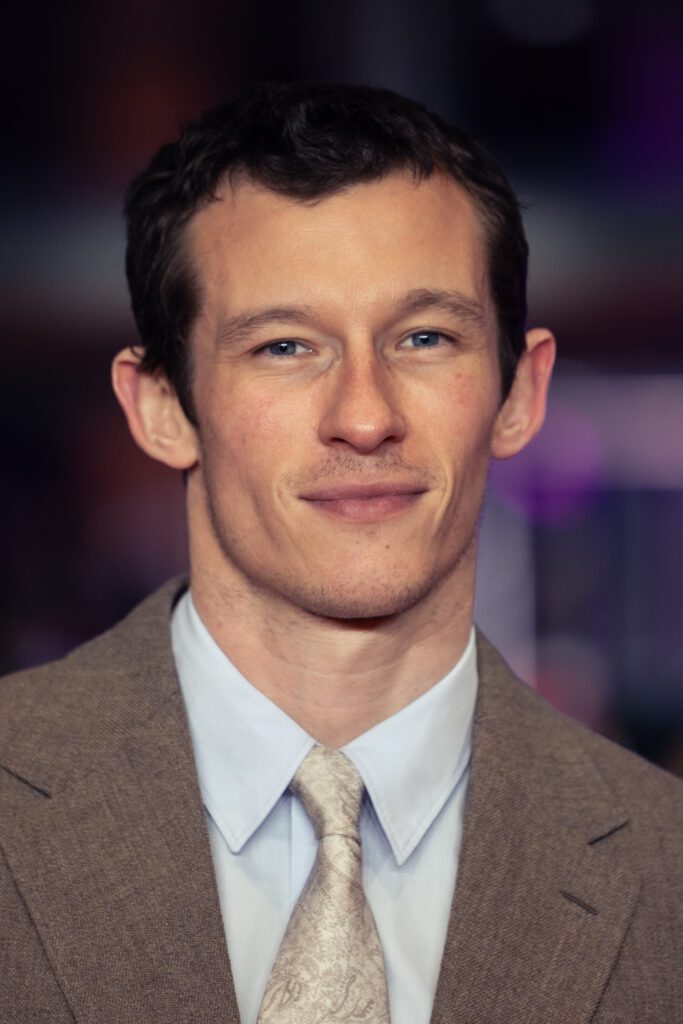
How did Callum Turner build this fortune?
The answer unfolds through the career, earnings, deals and assets behind the headline estimate.
Callum Turner before the fame
The background and early turning points that shaped Callum Turner’s route to prominence.
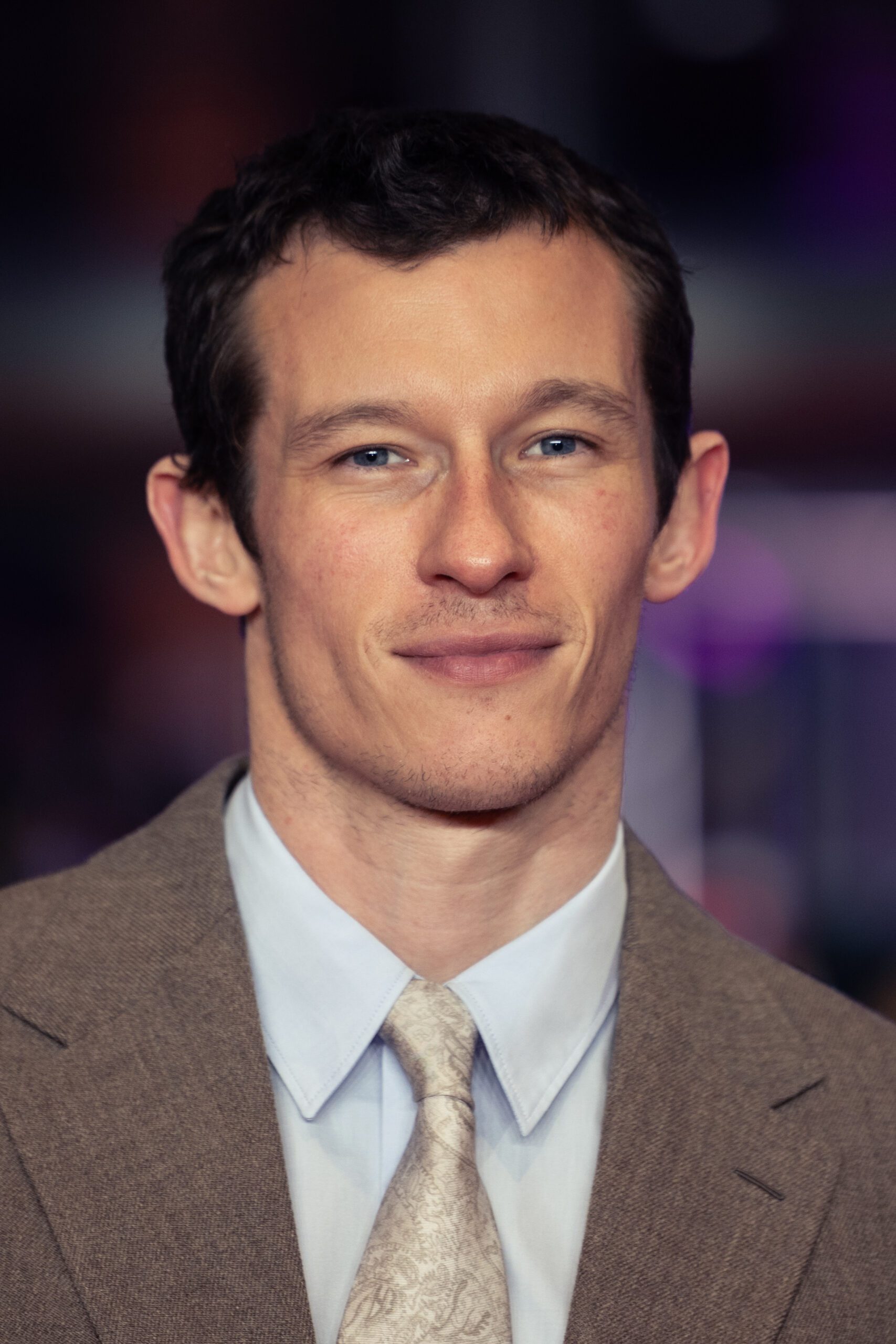
Callum Robilliard Turner was born on 15 February 1990 in Hammersmith, west London, and raised by his mother on a council estate in Chelsea. His middle name honours the poet and painter David Robilliard, a friend of his mother’s.
His mother worked as a club promoter, and Turner has credited her with the film habit that became a career. He left school early to chase a semi-professional football contract, and when that closed he went into modelling rather than drama school.
His first paid work was in fashion: he walked for Louis Vuitton in the house’s spring/summer 2009 show as a teenager and shot campaigns for Burberry, work W later called the foundation of a public image built before the acting caught up.
The acting arrived in fragments: guest parts in British television, then a regular role in E4’s Glue in 2014 and John Boorman’s Queen and Country the same year. BAFTA named him a Breakthrough Brit that year, and in 2016 he played Anatole Kuragin in the BBC’s War & Peace, his first Sunday-night audience of millions.
Callum Turner’s breakthrough years
The career decisions and defining moments that turned recognition into sustained earning power.
The job that turned him into a lead was The Capture, the BBC One surveillance thriller in which he played the soldier Shaun Emery. the Royal Television Society announced him and Holliday Grainger as the leads in 2019; he carried Emery through the first six-part run only, the second returning in 2022 with Grainger’s DI Rachel Carey and Paapa Essiedu as a new accused man, and the part brought him a British Academy Television Award nomination for Leading Actor alongside Jared Harris for Chernobyl, as ITV News reported.
A leading actor carrying a returning BBC One drama of that budget class sits, on our estimate, at roughly £20,000 to £35,000 an episode, which across his six episodes gives about £120,000 to £210,000, or $155,000 to $270,000. Alongside it came two turns as Theseus Scamander in the Fantastic Beasts films, in 2018 and 2022, at a franchise supporting rate we put at $250,000 to $600,000 a picture, and Frank Churchill in Autumn de Wilde’s Emma in 2020.
What Callum Turner’s work can earn
Reported pay, contracts, royalties and performance income reveal how the fortune was funded.
He led George Clooney’s The Boys in the Boat in 2023 as the oarsman Joe Rantz, then played Major John “Bucky” Egan opposite Austin Butler in Masters of the Air, the nine-part Apple TV+ series that Slate noted cost around $250 million. That budget is Apple’s, not his. For a co-lead billed second on a limited series of that scale we estimate $125,000 to $250,000 an episode, or $1.1 million to $2.25 million for the run.
He was one of three stars of A24’s Eternity in 2025, worth an estimated $600,000 to $1.2 million at that studio’s mid-budget rates, and he now carries Neuromancer for Apple as the hacker Case: Deadline reported a ten-episode order and Apple billed him first on the teaser. A first-position lead on a ten-part Apple drama is $200,000 to $350,000 an episode on our estimate, so $2 million to $3.5 million for the season — money that arrives as the episodes are delivered, not wealth he holds now.
The Capture nomination remains his most significant professional citation, and Masters of the Air brought a Satellite Award nomination in 2024. Variety framed him, on a first look at Neuromancer, as the face of one of Apple’s largest genre bets.
His profile has also been lifted by his private life: he married the singer Dua Lipa at Old Marylebone Town Hall on 31 May 2026, followed by a celebration in Sicily, as The Knot recorded. That fame has not changed what his own work pays.

Callum Turner’s business beyond the main career
Endorsements, ownership interests and investments can keep compounding long after the initial breakthrough.
In 2026 Louis Vuitton named Turner a house ambassador, an appointment WWD reported first and which he called a full-circle moment, seventeen years after walking the same house’s runway as an unknown. TheIndustry.fashion noted he has since fronted the house’s Buttersoft sneaker campaign.
The value of that contract is our estimate. For a European maison signing a thirty-something actor with a live franchise lead and a global tabloid profile, the rate is roughly $700,000 to $1.5 million a year on a two or three-year term. With his modelling income from 2009 onwards, we put his fashion earnings at $1 million to $2.5 million.
Turner’s commercial affairs are organised as most British screen actors at his level are: fees, residuals and ambassador income run through a personal company, taxed as company profit and drawn as salary and dividends. The money therefore arrives lumpy and is smoothed over several years.
The second line is the fashion work, the trade he started in rather than a sideline. The third is Neuromancer, which in earnings terms is closer to a salaried job than a film deal.

Callum Turner’s notable luxury item
A reported property or major asset offers a tangible glimpse of the wealth behind the public estimate.
Turner has been London-based throughout his career, and a performer who buys in west London at his stage holds most of his accumulated wealth as housing equity rather than cash or securities. On our estimate his property equity, net of mortgage, is $300,000 to $800,000, which is what the working carries.
Beyond property, his significant assets are contractual: the Neuromancer order still to be delivered, the remaining years of the Louis Vuitton term, and residuals from Masters of the Air and the Fantastic Beasts pictures. Each is earned as the work is done or the term runs, so none of it is counted in the figure.
Callum Turner’s estimated net worth
Public estimates vary because private contracts, investments, taxes and liabilities are not fully disclosed.
How this estimate is calculated
What is documented is the work: the six-part Capture run he led, the nine episodes of Masters of the Air, the ten-episode Neuromancer order confirmed by Deadline and Apple, and the Louis Vuitton ambassadorship confirmed by WWD. The rates attached to those credits are our estimate, built from what each budget class pays a performer at his billing.
Early television and supporting film work, six credits between 2014 and 2018 at $60,000 to $150,000 each, gives $400,000 to $900,000. The Capture gives $155,000 to $270,000; two Fantastic Beasts films $500,000 to $1.2 million; The Boys in the Boat $750,000 to $1.5 million; Masters of the Air $1.1 million to $2.25 million; Eternity $600,000 to $1.2 million; fashion work, the modelling from 2009 plus the first year of the Louis Vuitton term, $1 million to $2.5 million. Every line there is earned or receivable now, and together they come to roughly $4.5 million to $9.8 million. The Neuromancer season, which we put at $2 million to $3.5 million, sits outside that total: the order is still running and the fees land as episodes are delivered, so it is upside to this figure rather than part of it.
Representation takes about 20 per cent in agent, manager and legal commissions, and a British resident on that income pays an effective rate near 40 per cent once corporation and dividend tax are combined, leaving about 48 per cent retained, or $2.2 million to $4.7 million. With property equity and investment growth, the working supports a range of $2.5 million to $5.5 million, and the figure we publish is its midpoint. It assumes he has lived on a fraction of the gross and counts no fee still to be earned. Not one of his fees has ever been published, so the band rests on what a lead in a prestige series of that budget is normally paid.
Confidence: Indicative — the credits, the episode orders and the Louis Vuitton appointment are confirmed, while every rate attached to them is our own estimate from comparable productions.
The image Turner has built is of a working actor rather than a star. He has spoken, in the W profile among others, about arriving through modelling because drama school was never on the table.
His charitable life runs through industry and access causes rather than a foundation of his own. He has not turned his profile into a product line, a spirits brand or a media venture, which keeps his balance sheet simple.
What the public record carries on Turner is work rather than incident: a decade of British television credits, two American studio franchises, a BAFTA nomination for Leading Actor and a Louis Vuitton ambassadorship, reported in the trade press as casting and awards news. Over that span the coverage of him has tracked his jobs.
The scrutiny he attracts is of the tabloid kind, and it arrived with his relationship rather than his work. Much of what is written about his money is really about his household. That is why the figure here is built from his own credits and contracts alone, and why his wife’s earnings, catalogue and touring income appear nowhere in it.