 How Much Are They Worth?
Celebrity fortunes, explained
How Much Are They Worth?
Celebrity fortunes, explained










How did Christopher Nolan build this fortune?
The answer unfolds through the career, earnings, deals and assets behind the headline estimate.
Before the fame
The background and early turning points that shaped Christopher Nolan’s route to prominence.
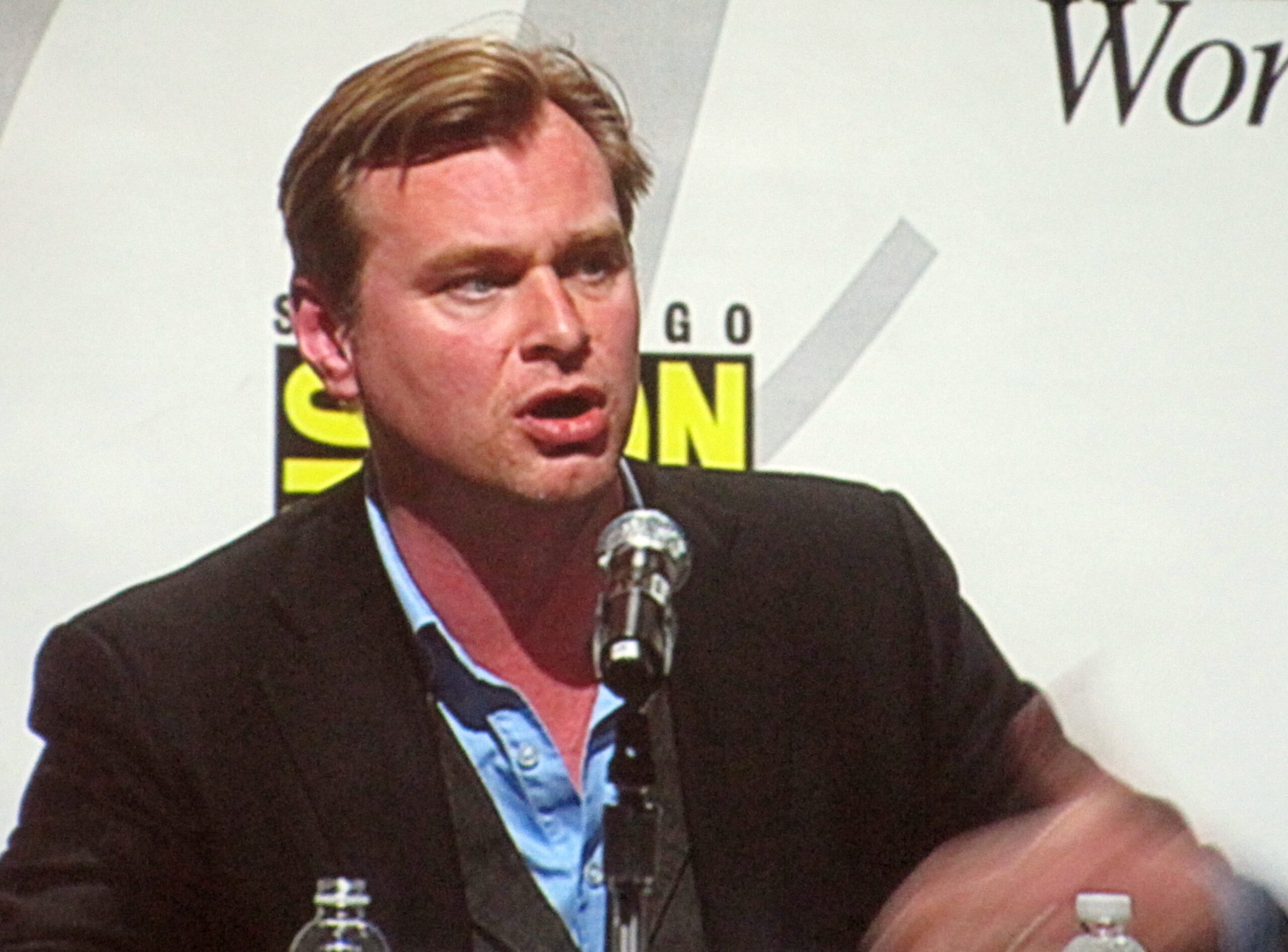
Christopher Edward Nolan was born on July 30, 1970, in London, England, to Brendan James Nolan, a British advertising executive, and Christina Jensen, an American flight attendant and English teacher. He holds dual British and American citizenship and spent much of his childhood moving between Illinois and England, attending Haileybury School in Hertfordshire. Nolan developed an early fascination with filmmaking, inspired by science-fiction films such as 2001: A Space Odyssey and Star Wars, and began making short films on his father’s Super 8 camera as a child. He went on to study English Literature at University College London, where he used the film society’s 16mm equipment rather than take a formal film production course — a hands-on, self-taught path he has credited with shaping his approach to directing.
Nolan’s breakthrough came with Memento (2000), a low-budget neo-noir thriller told in reverse chronological order that earned him an Academy Award nomination for Best Original Screenplay and established him as a distinctive new voice in Hollywood. Following his 1998 debut feature Following, shot for roughly 3,000 British pounds, and the psychological thriller Insomnia (2002), Nolan was entrusted by Warner Bros. with reviving the dormant Batman franchise. Batman Begins (2005) relaunched the character to critical acclaim, and the follow-up The Dark Knight (2008) became a cultural phenomenon, grossing over $1 billion worldwide and cementing Nolan’s reputation as a director capable of blending blockbuster spectacle with serious thematic ambition.
Photo: BrokenSphere via Wikimedia Commons (CC BY-SA 3.0)
The breakthrough years
The career decisions and defining moments that turned recognition into sustained earning power.
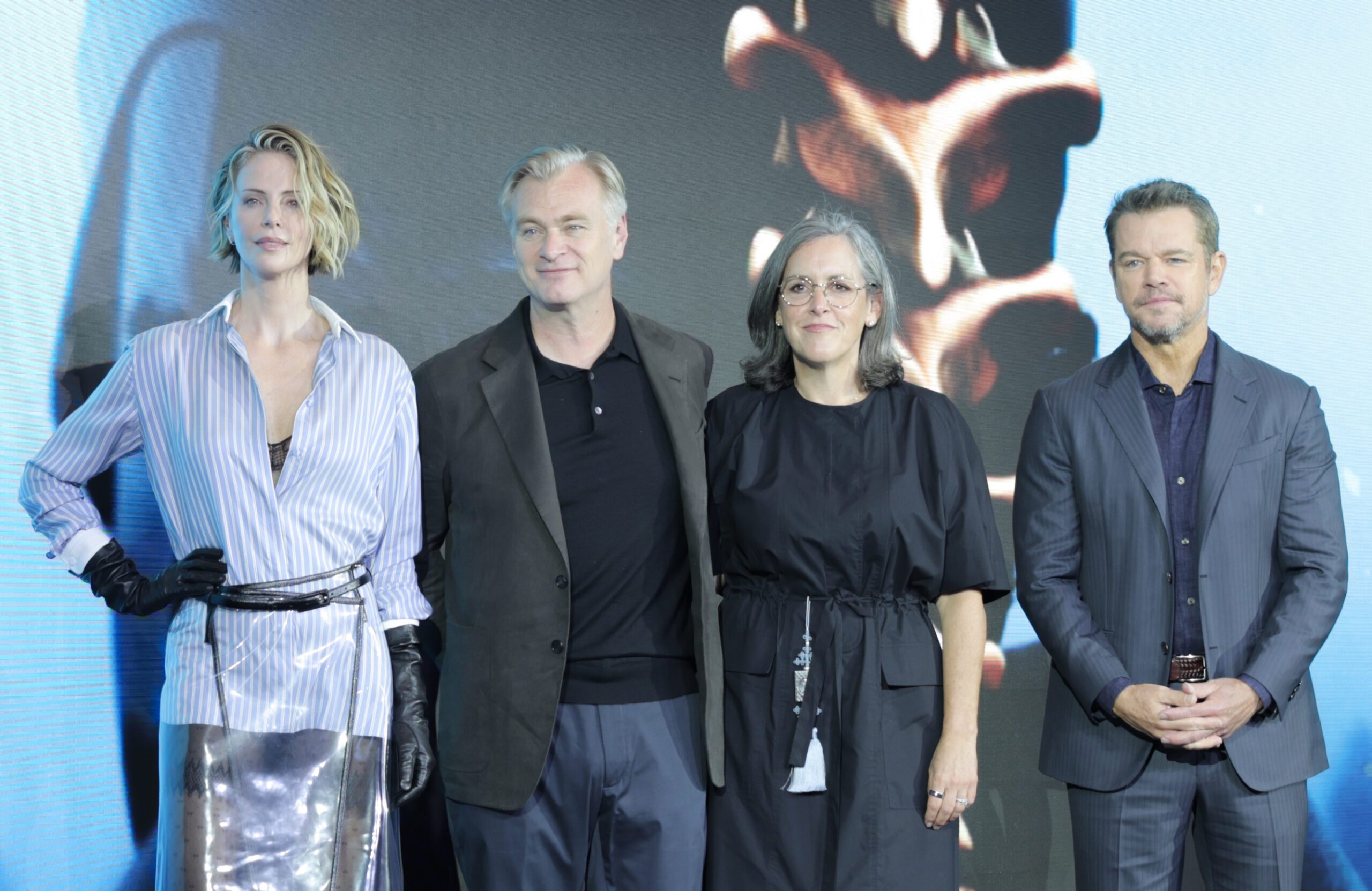
Nolan followed The Dark Knight’s success with The Dark Knight Rises (2012), completing what is widely regarded as one of the most successful trilogies in film history, and interspersed the Batman films with original projects including the magician drama The Prestige (2006) and the dream-heist blockbuster Inception (2010), both of which he wrote and directed. He continued to alternate between large-scale spectacle and personal, high-concept storytelling with the space epic Interstellar (2014), the World War II drama Dunkirk (2017), and the time-inversion thriller Tenet (2020). In 2023, Nolan wrote, directed, and produced Oppenheimer, a biographical drama about physicist J. Robert Oppenheimer that grossed nearly $1 billion worldwide and won seven Academy Awards, including Best Picture and Best Director for Nolan — his first competitive Oscar wins after six prior nominations. He was knighted by King Charles III in 2024 for services to film. Nolan is currently working on The Odyssey, an adaptation of Homer’s epic made on one of the largest budgets of his career, slated for release in 2026.
Photo: Republic of Korea via Wikimedia Commons (CC BY-SA 4.0)

What the work can earn
Reported pay, contracts, royalties and performance income reveal how the fortune was funded.
Because Nolan is typically paid through box-office participation rather than a flat annual salary, his yearly earnings vary enormously depending on whether a film is in release. In years when a major film opens, industry estimates have placed his earnings well into eight figures; Variety and other outlets reported his total payday from Oppenheimer’s theatrical run, home entertainment, and awards bonuses at close to $100 million, realized over roughly a year following the film’s 2023 release. In years without a new release, his income is comparatively modest, drawn mainly from producing credits, older-title residuals, and ongoing Syncopy projects.
Nolan is known throughout the industry for negotiating some of the most favorable compensation structures of any working director, typically forgoing a large upfront fee for a percentage of a film’s first-dollar gross — meaning he is paid a share of revenue before a studio can claim the production has yet to turn a profit. For Interstellar and Dunkirk, he reportedly received an upfront fee of around $20 million plus 20% of the box-office gross, a structure that reportedly delivered around $73 million on Dunkirk alone. For Tenet, he negotiated a similar arrangement built around 20% of first-dollar gross. On Oppenheimer, he reduced his guaranteed fee for an estimated 15% of first-dollar gross, which — combined with box-office escalators and awards bonuses — produced a payday reported by Variety at just under $100 million. His producing partner and wife, Emma Thomas, is reported to have held a separate profit participation of around 5%, pushing the couple’s combined take from the film above $125 million.

The business beyond the main career
Endorsements, ownership interests and investments can keep compounding long after the initial breakthrough.
Unlike many A-list actors, Nolan has not built a significant personal endorsement portfolio, and his income comes almost entirely from directing, writing, and producing fees rather than commercial sponsorships. He has, however, been a prominent public advocate for celluloid film and large-format exhibition, maintaining close working relationships with Kodak and IMAX that support his continued use of physical film stock — industry partnerships tied to his filmmaking craft rather than traditional paid endorsement deals.
In 2001, Nolan and Emma Thomas founded Syncopy Inc., a production company that has produced or co-produced nearly all of his films since Batman Begins, giving the couple an ownership stake in the underlying intellectual property beyond his personal director’s fee. Syncopy has also backed television and film projects outside Nolan’s own directing work. Beyond Syncopy, Nolan has kept a comparatively low public investment profile compared to some of his Hollywood peers, with his wealth concentrated primarily in film compensation and real estate rather than a wide portfolio of outside ventures.

Notable luxury item
A reported property or major asset offers a tangible glimpse of the wealth behind the public estimate.
Nolan and Thomas have assembled a private compound of several adjoining properties in the Los Feliz neighborhood of Los Angeles, beginning with a 1909 house they purchased in 2002 for just over $1.1 million and expanding over two decades to include neighboring homes used for both residential living and Syncopy production office space. The couple has also owned additional Los Angeles-area property, including a home in the Hollywood Hills. Real estate outlets have consistently described the Los Feliz compound as Nolan’s primary base.
Christopher Nolan’s estimated net worth
Public estimates vary because private contracts, investments, taxes and liabilities are not fully disclosed.
| 1998 | Following released on a shoestring budget, marking his feature debut |
| 2000 | Memento becomes a breakout critical hit and Oscar-nominated screenplay |
| 2005 | Batman Begins relaunches the Batman franchise for Warner Bros. |
| 2008 | The Dark Knight grosses over $1 billion worldwide |
| 2014-2017 | Interstellar and Dunkirk cement his $20m-plus-20%-of-gross deal structure |
| 2023 | Oppenheimer wins seven Oscars, including Best Picture and Best Director; reported payday near $100 million |
| 2024 | Knighted by King Charles III for services to film |
| 2026 | Estimated net worth widely reported in the $250m-$350m range; The Odyssey nears release |
Nolan is often compared financially to fellow blockbuster filmmakers such as Steven Spielberg, whose decades of ownership stakes in Amblin Entertainment and DreamWorks have made him one of the few directors in history to reach billionaire-level estimates. James Cameron, known for negotiating substantial backend participation on films like Avatar and Titanic, is commonly estimated in the $700 million to $1 billion range. By contrast, younger blockbuster-scale directors such as Denis Villeneuve are still earlier in their careers and have not yet accumulated comparable box-office-participation wealth, illustrating how heavily a director’s fortune depends on decades of hit films and favorable backend deals.
Sources and references
Sources referenced for this article include reporting from Forbes, Celebrity Net Worth, Variety, The Hollywood Reporter, and Wikipedia, alongside contract details reported around the release of Oppenheimer, Dunkirk, Interstellar, and Tenet. Net worth figures are estimates compiled from public entertainment-industry reporting. Last updated: August 2026.
From a self-funded short film shot on borrowed equipment to a reported $100 million Oppenheimer payday and a knighthood from King Charles III, Christopher Nolan’s financial rise has mirrored his transformation into one of the defining filmmakers of his era — and with The Odyssey on the way, his box-office-tied earning power shows no sign of slowing down.
Answer 5 questions about Christopher Nolan and get a free offer
Take the Quiz