
 How Much Are They Worth?
Celebrity fortunes, explained
How Much Are They Worth?
Celebrity fortunes, explained









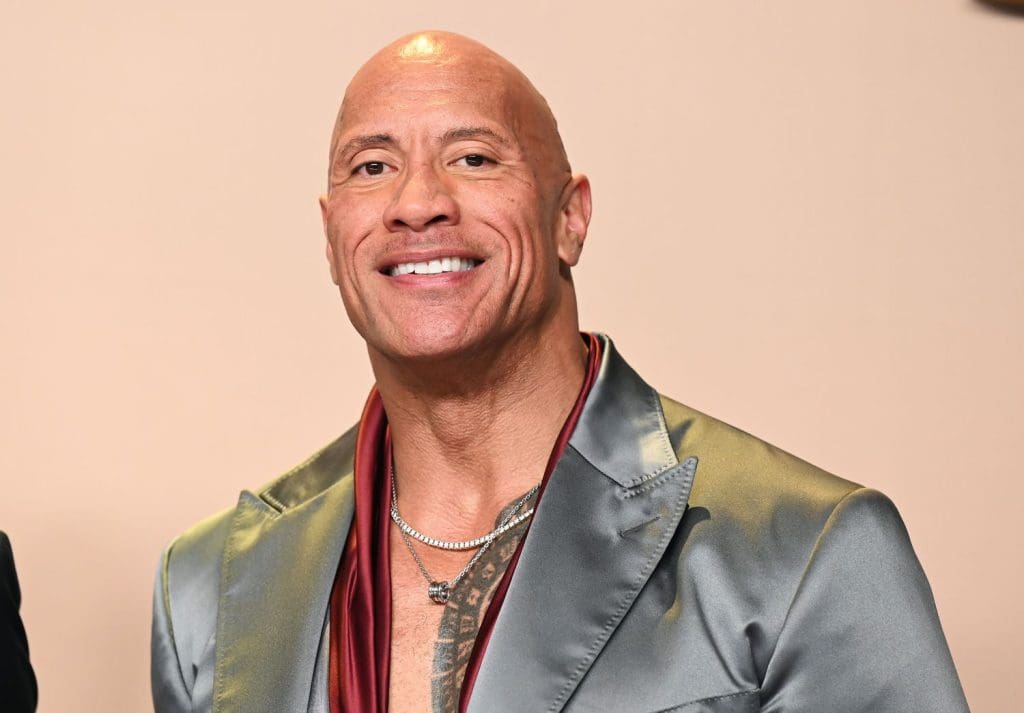
How did Dwayne “The Rock” Johnson build this fortune?
The answer unfolds through the career, earnings, deals and assets behind the headline estimate.
Before the fame
The background and early turning points that shaped Dwayne “The Rock” Johnson’s route to prominence.
Dwayne Douglas Johnson was born on 2 May 1972 in Hayward, California, into a family already steeped in professional wrestling. His father, Rocky Johnson, was a pioneering Black Canadian wrestler, and his maternal grandfather, High Chief Peter Maivia, was a legendary Samoan performer, meaning Johnson grew up moving between arenas and territories as his father’s career dictated. According to his Wikipedia biography, the family eventually settled long enough for him to attend Freedom High School in Bethlehem Township, Pennsylvania, where he excelled at football, wrestling and track and field.
That athletic talent earned Johnson a scholarship to the University of Miami, where he played defensive tackle on the Hurricanes’ 1991 national championship team while studying criminology and physiology. He spent much of his college career as a back-up behind future NFL star Warren Sapp, and went undrafted when he left university, a setback that pushed him towards a much longer road into professional sport than he had originally planned.
With no NFL contract forthcoming, Johnson signed with the Calgary Stampeders of the Canadian Football League in 1995, earning around $250 to $300 a week on the practice roster while moonlighting on the local Stampede Wrestling circuit. As he later told the league itself, in an interview with CFL.ca, he was released just two months into the season, a blow that left him back in Florida with reportedly seven dollars to his name.
That low point became the turning point. Trained by his father and grandfather, Johnson signed with the then World Wrestling Federation and debuted in 1996 under his birth name before adopting the ring name Rocky Maivia, a tribute to both men. He struggled to connect with audiences at first, but by reinventing himself as the brash, quick-witted “Rock” and joining the villainous Nation of Domination stable, he began the climb that would make him one of wrestling’s biggest ever stars.
The breakthrough years
The career decisions and defining moments that turned recognition into sustained earning power.
By the late 1990s, The Rock had become the face of WWE’s Attitude Era, trading catchphrases and rivalries with Steve Austin and Triple H while winning multiple world championships. That mainstream popularity translated directly into Hollywood opportunity: he made his film debut as the Scorpion King in “The Mummy Returns” (2001) for a reported $500,000, then parlayed that appearance into the lead role in the spin-off film “The Scorpion King” (2002).
His $5.5 million salary for that first starring role set a Guinness World Record for the highest pay ever given to a first-time leading man, a mark reported to still stand, according to Far Out Magazine. The payday signalled that studios saw genuine box office value in Johnson beyond the wrestling ring, and it set the template for the blockbuster career that followed.

What the work can earn
Reported pay, contracts, royalties and performance income reveal how the fortune was funded.
In the two decades since, Johnson has become one of the biggest box office draws in the world, anchoring the “Fast & Furious” franchise from “Fast Five” onwards, rebooting “Jumanji” into a billion-dollar series, voicing Maui in Disney’s “Moana” and “Moana 2”, and headlining “San Andreas”, “Baywatch” and “Black Adam”. His production company, Seven Bucks Productions, co-founded with former wife Dany Garcia, had grossed roughly $4.6 billion at the worldwide box office as of 2023, according to its company history.
That commercial pull has repeatedly translated into record paydays. Johnson topped Forbes’ list of the world’s highest-paid actors for the fifth time in 2024, earning an estimated $88 million, driven largely by a reported $50 million fee-plus-buyout deal for the Amazon film “Red One”, detailed in Forbes’ 2024 rankings, which the outlet described as the largest single-movie payday in history.
Johnson’s crossover appeal has been formally recognised on multiple occasions. He received his star on the Hollywood Walk of Fame on 13 December 2017, an honour documented on the Walk of Fame’s official site, cementing his status as one of the entertainment industry’s most bankable names.
He was also named People magazine’s Sexiest Man Alive for 2016, a title covered widely at the time including by Time, and he has topped Forbes’ highest-paid actors list in multiple separate years, including 2016, 2019, 2020 and 2021, a run of dominance few actors of his generation can match.

The business beyond the main career
Endorsements, ownership interests and investments can keep compounding long after the initial breakthrough.
For a decade, Johnson’s flagship endorsement was Project Rock, his training line with Under Armour, a global partnership reported by FandomWire to be worth around $25 million when it launched in 2016. That long-running deal came to a close in August 2026, with Retail Dive reporting that Under Armour and Johnson’s camp both confirmed the partnership had ended as part of a wider marketing reset at the brand.
His self-founded ZOA Energy drink, launched in 2021 with Dany Garcia and beverage executives Dave Rienzi and John Shulman, took on a different structure after Molson Coors acquired a majority stake in the brand in late 2024, a deal covered by ESM Magazine, under which Johnson continues to front the brand’s marketing while the drinks giant took over its retail and distribution operations. He has also carried long-running endorsement relationships with Ford and Apple.
Away from acting, Johnson has built a genuinely diversified business portfolio. He co-founded Teremana Tequila in 2020, a brand that grew fast enough that trade press began comparing it to George Clooney’s Casamigos, which sold to Diageo for around $1 billion in 2017. The Hollywood Reporter has cited media estimates placing Teremana’s valuation as high as $3.5 billion, though no sale or independent valuation of the still privately held brand has been officially confirmed.
Johnson has also moved into sports ownership. In 2020, he and Dany Garcia, alongside RedBird Capital Partners, bought the bankrupt XFL out of receivership for a reported $15 million, then merged it with the rival USFL in 2024 to create the United Football League, of which Johnson and his partners retain a 50 per cent stake alongside Fox, as reported by the Hollywood Reporter.

Notable luxury item
A reported property or major asset offers a tangible glimpse of the wealth behind the public estimate.
Johnson’s real estate history includes both wins and losses. He purchased a 46-acre equestrian estate in Powder Springs, Georgia, in October 2019 for a reported $9.49 million, complete with a 15,000 square foot main house, only to sell it in September 2021 for $6.1 million, a loss on paper documented by TheRichest.
His primary residence today is a 46-acre estate in Southwest Ranches, Florida, reportedly purchased in 2023 for around $9.5 million and since built out with a private gym, equestrian facilities and extensive family living space that has pushed its estimated value towards $27.8 million, according to a property profile from This Older House. The Florida base keeps him close to both his family and the training facilities central to his public image.
Dwayne “The Rock” Johnson’s estimated net worth
Public estimates vary because private contracts, investments, taxes and liabilities are not fully disclosed.
How this estimate is calculated
Johnson’s estimated net worth is built from several distinct income streams rather than a single fortune. His acting career alone is worth tens of millions annually, underlined by his Forbes-topping $88 million haul in 2024 covered above, alongside his backend participation in Seven Bucks Productions’ film slate and his reported 30 to 40 per cent ownership stake in Teremana Tequila, a brand whose speculative valuation runs into the billions.
Layered on top of that are his UFL ownership stake, his continuing marketing role and residual equity tied to ZOA Energy following the Molson Coors deal, and a long history of endorsement income from partners including Under Armour, Ford and Apple. As with any actively working entertainer and entrepreneur, none of these figures represent a confirmed personal balance sheet, and the totals below are compiled from public reporting rather than any statement from Johnson himself.
This range reflects the estimate most consistently reported across entertainment and finance outlets tracking Johnson’s earnings, including Celebrity Net Worth, used here as a secondary reference point alongside a wider 2026 breakdown published by Parade, both of which put his fortune at approximately $800 million once film salary, production income and business equity are combined.
Given the scale of his Teremana stake and his continuing box office pull, several outlets have suggested Johnson is on a realistic path towards billionaire status in the coming years, particularly if Teremana is ever sold outright. For now, this figure should be read as a snapshot of a still-growing fortune rather than a fixed or verified ceiling.
Johnson has leaned on his platform for large-scale disaster relief. In August 2023, he and Oprah Winfrey jointly seeded the People’s Fund of Maui with $10 million of their own money, $5 million each, to provide direct cash assistance to residents who lost homes in the devastating Lahaina wildfires, a launch reported in detail by Variety. The fund went on to pay out tens of millions of dollars in monthly assistance to thousands of families.
His broader public image blends relentless positivity with an openly discussed history of hardship, including past struggles with depression that he has spoken about candidly in interviews to encourage others to seek help. That combination of blockbuster stardom and an accessible, work ethic-driven persona has made him one of the most consistently well-regarded celebrities in the world, even as some of his business and production choices have drawn more mixed scrutiny in recent years.
Johnson’s reputation for professionalism was tested in late 2024 when The Wrap reported that anonymous crew sources on the film “Red One” accused him of chronic lateness that allegedly added tens of millions of dollars to the production’s budget. Representatives for Johnson and the studio disputed the specifics of the claims, and no independent verification of the figures has been published, but the story generated significant coverage of his on-set reputation.
He has also faced criticism over his approach to politics. After publicly endorsing Joe Biden ahead of the 2020 election, Johnson said he regretted the divisiveness it caused and declined to endorse any candidate in the 2024 race, telling Rolling Stone that the decision was “between me and the ballot box.” That choice to stay neutral drew public criticism from some fellow celebrities who felt he was avoiding a moment that called for a clear political stance.