 How Much Are They Worth?
Celebrity fortunes, explained
How Much Are They Worth?
Celebrity fortunes, explained





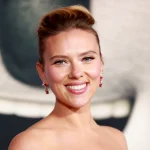




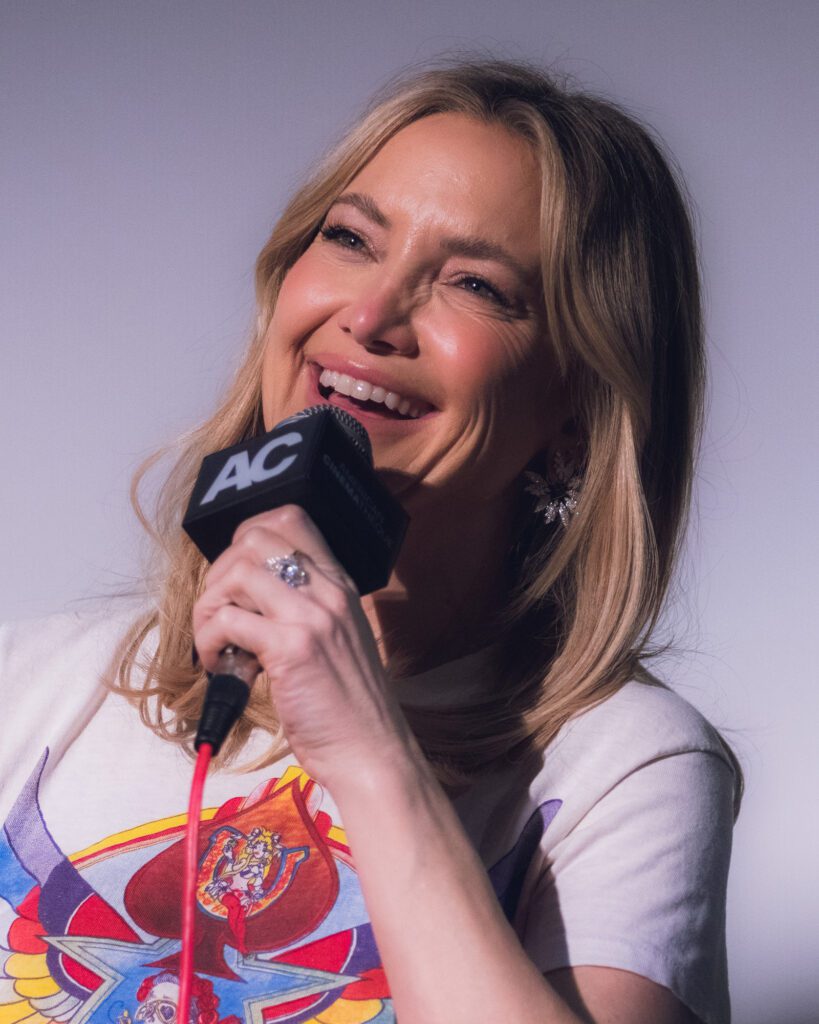
How did Kate Hudson build this fortune?
The answer unfolds through the career, earnings, deals and assets behind the headline estimate.
Before the fame
The background and early turning points that shaped Kate Hudson’s route to prominence.
Kate Garry Hudson was born on 19 April 1979 in Los Angeles, the daughter of the actress Goldie Hawn and the musician and actor Bill Hudson. Her parents divorced when she was a baby, and she and her brother Oliver were raised by Hawn and her long-term partner, the actor Kurt Russell, in Los Angeles and Colorado.
She attended Crossroads School in Santa Monica and was offered a place at New York University but chose to pursue acting instead. Her first professional work came in the late 1990s in small independent films.
Hudson’s early credits included Desert Blue (1998), 200 Cigarettes (1999) and Robert Altman’s Dr T and the Women (2000). She was originally cast in a different part in Cameron Crowe’s Almost Famous before persuading the director to let her play the lead female role, Penny Lane, as she recalled to Deadline.
The breakthrough years
The career decisions and defining moments that turned recognition into sustained earning power.
Almost Famous (2000) made her a star. Her performance as Penny Lane won the Golden Globe for best supporting actress and earned an Academy Award nomination when she was 21, as recorded by the Golden Globes.
She became one of the leading romantic comedy stars of the 2000s. How to Lose a Guy in 10 Days (2003), opposite Matthew McConaughey, took $105.8 million in North America and $177.6 million worldwide, according to Box Office Mojo. She followed it with Raising Helen, You, Me and Dupree, Fool’s Gold and Bride Wars.

What the work can earn
Reported pay, contracts, royalties and performance income reveal how the fortune was funded.
Hudson broadened her range with the musical Nine (2009), a recurring role in Glee, the disaster drama Deepwater Horizon (2016) and Rian Johnson’s Glass Onion: A Knives Out Mystery (2022) for Netflix. In 2025 she took the lead in the Netflix comedy Running Point as the new president of a professional basketball team; Netflix renewed it for a second season within a week of its premiere, according to The Hollywood Reporter.
In May 2024 she released her debut album, Glorious, written largely with her partner Danny Fujikawa and Linda Perry, and discussed the long-delayed move into music with Variety.
Beyond her Golden Globe and Oscar nomination for Almost Famous, Hudson received a further Golden Globe nomination for Sia’s film Music (2021). She co-hosts the podcast Sibling Revelry with her brother Oliver and published the wellness book Pretty Happy in 2016. She has three children.
The business beyond the main career
Endorsements, ownership interests and investments can keep compounding long after the initial breakthrough.
Before Fabletics, Hudson was a brand ambassador for Ann Taylor, fronting its campaigns and designing a capsule collection, as reported by WWD. The value of that contract was not disclosed. Since 2013 her commercial energy has gone mainly into companies she co-owns rather than paid endorsements.
Fabletics is the central financial story. Hudson co-founded the membership-based activewear brand in 2013 with Adam Goldenberg and Don Ressler of TechStyle Fashion Group, and has been its public face since launch. In 2021 the company hired Morgan Stanley, Goldman Sachs, Barclays and Bank of America for a planned flotation that was expected to raise about $500 million and could have valued the brand at more than $5 billion, according to WWD. The listing did not go ahead.
The business has kept growing. Fabletics passed $1 billion in revenue in 2025, has more than 3 million active customers, about 2.7 million of them paying VIP members, and more than 135 stores, according to Bloomberg. Hudson’s percentage stake has never been disclosed.
She has also started smaller brands: King St. Vodka, announced in 2019 with David Kanbar, according to a company announcement, and the supplement line InBloom, which launched in Whole Foods stores, as reported by WWD.
Notable luxury item
A reported property or major asset offers a tangible glimpse of the wealth behind the public estimate.
Hudson lives in Pacific Palisades, Los Angeles, in a house once owned by her mother, and she later bought the neighbouring property to create a family compound. Purchase prices have been reported in lifestyle and property media but not confirmed in major outlets, so they are not used as documented figures here. Her other major asset is her Fabletics equity, discussed below.
Kate Hudson’s estimated net worth
Public estimates vary because private contracts, investments, taxes and liabilities are not fully disclosed.
How this estimate is calculated
The documented figures concern Fabletics rather than Hudson. Revenue passed $1 billion, with more than 135 stores and about 2.7 million of its three million active customers on paid VIP memberships (Bloomberg), and the abandoned 2021 flotation was expected to value the brand at more than $5 billion (WWD). Revenue and valuation are the company’s, not a shareholder’s, and the brand is privately held within TechStyle with no published accounts and no disclosed ownership split. On acting, How to Lose a Guy in 10 Days grossed $177.6 million worldwide (Box Office Mojo), but her fees were never published.
The working assumes $60 million to $90 million of gross acting, television and music earnings over 27 years; after about 20 per cent for representation and about 45 per cent for tax, roughly $26 million to $40 million remains. For Fabletics it assumes a stake of 1 to 3 per cent in a business valued at one to two times revenue, or $1 billion to $2 billion, giving $10 million to $60 million. Property equity and her smaller brands add an assumed $15 million to $20 million. The total is roughly $51 million to $120 million, narrowed below to $60 million to $110 million.
Almost the whole width of that range comes from one unknown. Moving the assumed Fabletics stake by a single percentage point moves the answer by tens of millions, and nothing in the public record says what she holds, how far it was diluted across the funding rounds, or whether she has ever sold any of it. A founder’s stake closer to the top of the assumed band, or a valuation near the 2021 target, would put her well above this range; a heavily diluted one would put her near the bottom of it. King St. Vodka and InBloom are privately held too, and no property price or court filing exists to triangulate from.
Confidence: Indicative – the billion-dollar figure belongs to Fabletics rather than to Hudson, her shareholding in it has never been disclosed, and none of her film fees has been reported.
Hudson sits on the board of MindUP, the children’s mental-fitness programme founded by the Goldie Hawn Foundation, according to MindUP. In 2018 she and Hawn designed a Fabletics capsule collection, with half of the net proceeds going to fund MindUP in schools, as announced in a company announcement.
Fabletics has faced sustained criticism over its VIP membership model. In 2015 BuzzFeed News reported more than 1,400 Better Business Bureau complaints and more than 200 complaints to the Federal Trade Commission about unexpected charges and difficult cancellations across JustFab brands, and noted earlier settlements with California district attorneys and the Florida attorney general; the company said complaints came from a very small minority of customers, according to BuzzFeed News.
Hudson was also drawn into the 2022 debate about nepotism in Hollywood. She told interviewers she did not care about the label and that she saw nepotism in business far more than in film, comments that drew both support and criticism, as reported by The Hollywood Reporter.