 How Much Are They Worth?
Celebrity fortunes, explained
How Much Are They Worth?
Celebrity fortunes, explained










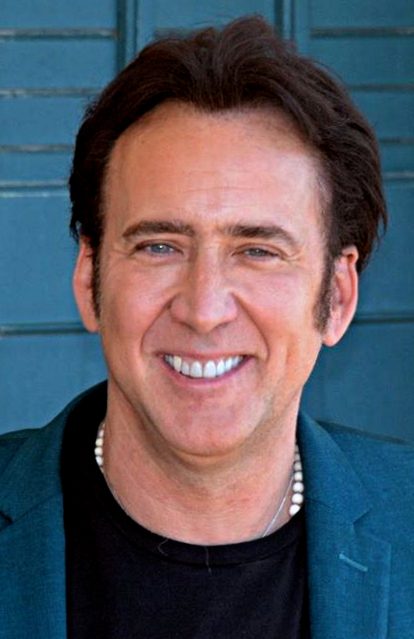
How did Nicolas Cage build this fortune?
The answer unfolds through the career, earnings, deals and assets behind the headline estimate.
Before the fame
The background and early turning points that shaped Nicolas Cage’s route to prominence.
Nicolas Cage was born Nicolas Kim Coppola on 7 January 1964 in Long Beach, California, the son of a literature professor, August Coppola, and a dancer and choreographer, Joy Vogelsang. Through his father he is a nephew of the director Francis Ford Coppola.
He took the surname Cage early in his career to avoid being seen as trading on the family name, drawing on the Marvel character Luke Cage. In a 2026 interview with Variety he said he had legally changed his name the previous year, so that he is now Nick Cage both on camera and in life.
Cage had a small part in Fast Times at Ridgemont High in 1982 and a first lead in the romantic comedy Valley Girl in 1983. He then worked repeatedly with his uncle, in Rumble Fish, The Cotton Club and Peggy Sue Got Married.
By 1987 he had two defining roles: the hapless H.I. McDunnough in the Coen brothers’ Raising Arizona, and Cher’s lover in Moonstruck. Those films established the intense, unpredictable screen persona that has defined him since.
The breakthrough years
The career decisions and defining moments that turned recognition into sustained earning power.
The turning point came with Leaving Las Vegas, a low-budget drama in which he played an alcoholic screenwriter. It grossed about $32 million in North America, according to Box Office Mojo, and won Cage the Academy Award for Best Actor at the March 1996 ceremony, as UPI reported.
Almost immediately he turned to big-budget action: The Rock (1996), Con Air (1997) and Face/Off (1997). That run made him one of the most bankable stars of the late 1990s and set up the large fees of the following decade.

What the work can earn
Reported pay, contracts, royalties and performance income reveal how the fortune was funded.
Cage’s commercial peak includes Gone in 60 Seconds and the National Treasure films. National Treasure alone grossed about $347.5 million worldwide on a $100 million budget, according to Box Office Mojo. He also received a second Oscar nomination, for playing twin brothers in Adaptation. (2002).
After years of mostly low-budget releases, his standing recovered with Mandy in 2018, whose surprise success Deadline covered, followed by Pig, The Unbearable Weight of Massive Talent, Dream Scenario and Longlegs. He also leads the live-action series Spider-Noir, whose first look Variety revealed in 2025.
Beyond the Oscar, Cage has won a Golden Globe and a Screen Actors Guild Award, and he received a star on the Hollywood Walk of Fame in 1998. Winning Best Actor so early turned him from a character actor into a leading man with the pay to match.
At his financial peak he ranked fifth among the best-paid actors in the United States, with earnings of $40 million, according to Forbes figures cited by the Los Angeles Times. His later reputation rests as much on his cult following and willingness to take risks as on box office.

The business beyond the main career
Endorsements, ownership interests and investments can keep compounding long after the initial breakthrough.
Cage has not been a major commercial endorser, and no significant endorsement deal with a disclosed value has been reported by a major outlet. His income has come overwhelmingly from acting fees.
That makes his finances unusually dependent on film work. When his spending outran his income in the late 2000s, there was no large sponsorship stream to fall back on, which helps explain why he took on so many films in the following decade.
Cage founded the production company Saturn Films, which produced Shadow of the Vampire (2000) and The Life of David Gale (2003), and he directed the drama Sonny (2002). The company’s revenues have not been published.
His other ventures were largely personal investments, and many went badly. In his 2009 lawsuit against his former business manager, Cage alleged he had been placed in speculative and risky real estate investments that caused catastrophic losses, as Reuters reported.

Notable luxury item
A reported property or major asset offers a tangible glimpse of the wealth behind the public estimate.
Cage’s property spending is well documented. CNBC reported that he once owned 15 residences, including a waterfront home in Newport Beach, an estate in Rhode Island and the LaLaurie Mansion in New Orleans, bought for $3.4 million, as well as two European castles and an island in the Bahamas. His Bel Air house, carrying $18 million in loans, drew no bids at an April 2010 foreclosure auction that opened at $10.4 million, the Los Angeles Times reported.
Collectibles were part of the story. He paid $276,000 in 2007 for a Tyrannosaurus bataar skull and returned it after US authorities established it had been taken illegally from Mongolia, as Reuters reported; CNBC noted that he reportedly outbid Leonardo DiCaprio for it. His copy of Action Comics No. 1 sold for a record $2.16 million in 2011, according to CNN.
Nicolas Cage’s estimated net worth
Public estimates vary because private contracts, investments, taxes and liabilities are not fully disclosed.
How this estimate is calculated
The documented figures are his peak earnings of $40 million in a year (Forbes, via the Los Angeles Times), the IRS debt of $6.3 million reported by CNBC, the foreclosures reported by CNN Money, the $2.16 million comic sale (CNN) and CNBC‘s 2018 report that his wealth had fallen to around $25 million, which that report presented as an estimate rather than a disclosed figure.
Taking $25 million as a 2018 base, the working assumes around 20 film and television jobs since then at an average of $1.5 million to $3 million each, giving $30 million to $60 million gross. Deducting about 20 per cent for representation leaves $24 million to $48 million, and allowing about 45 per cent for tax leaves roughly $13 million to $26 million. After living costs and continuing debt service, perhaps half of that is retained, adding about $6 million to $13 million and suggesting roughly $30 million to $38 million.
Cage is the rare case where the shape of a fortune is documented and its size is not. The lost property portfolio, the tax liens, the record comic sale and the suit against his former business manager together establish that a very large fortune was earned and then largely dispersed, but none of them says what survived. The second act is harder still: he has worked at extraordinary volume since 2010, almost entirely in independent films whose budgets and fees are not reported, which is precisely the corner of the industry where pay is least visible. Our reading is that the output did both: at a working rate of four to six films a year and fees we put in the high six figures to low seven figures for this tier of independent work, the run since 2010 plausibly cleared the tax liability and rebuilt a holding of tens of millions, which is where the range below sits.
Confidence: Indicative – the 2018 base is a journalist’s estimate rather than a filing, and not one of the twenty or so jobs since has a reported fee, so the arithmetic compounds assumptions on top of a guess.
Cage has supported humanitarian causes, including Amnesty International’s work rehabilitating former child soldiers, but the sums involved are not documented by a major outlet, so his giving is not quantified here.
His public image mixes respect for his acting with fascination at his spending. He has said openly that he kept working through the 2010s to clear his debts, and critics now credit the same period with sharpening the performances that revived his reputation.
In 2009 the Internal Revenue Service filed liens against Cage’s property over unpaid federal taxes, and CNBC later summarised that he had owed the IRS $6.3 million. His New Orleans properties, including the LaLaurie Mansion, were foreclosed and sold at auction that year, as CNN Money reported.
Cage sued his former business manager, Samuel Levin, for $20 million, alleging negligence and fraud, according to Reuters. Levin countersued, saying he had warned Cage that he was living beyond his means; the Los Angeles Times reported his description of a spending binge that included 15 homes, four yachts and a private jet.