 How Much Are They Worth?
Celebrity fortunes, explained
How Much Are They Worth?
Celebrity fortunes, explained









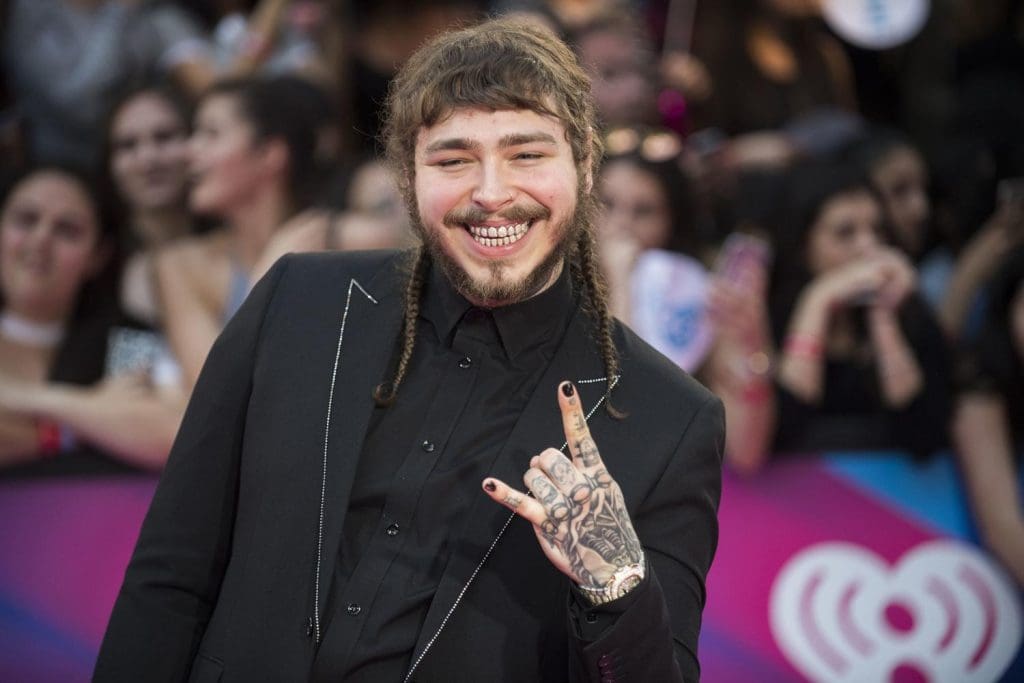
How did Post Malone build this fortune?
The answer unfolds through the career, earnings, deals and assets behind the headline estimate.
Before the fame
The background and early turning points that shaped Post Malone’s route to prominence.
Post Malone was born Austin Richard Post on July 4, 1995, in Syracuse, New York, and was raised by his father, Richard, and stepmother, Jodie, according to his Wikipedia biography. When he was nine, the family relocated to Grapevine, Texas, after his father took a job managing concessions for the Dallas Cowboys, a move that exposed him to the mix of hip-hop, country, and rock his father played growing up.
As a teenager he played guitar in a local metalcore band and even auditioned, unsuccessfully, for the band Crown the Empire. He picked his stage name around age 14 or 15 using an online rap name generator, pairing it with his own surname. After briefly attending Tarrant County College, he moved to Los Angeles and began recording under the name that would carry him to a career few of his high school peers could have predicted.
Working out of home setups with the free program Audacity, Post released his first mixtape, Y.A.T.R. (Young and After Them Riches), in 2014 while still finishing high school, per his Wikipedia profile. The real turning point came in February 2015, when he uploaded the single “White Iverson” to SoundCloud and watched it pass a million plays within a month, drawing praise from Mac Miller and Wiz Khalifa.
The viral response was enough to get him signed to Republic Records in August 2015. “White Iverson” went on to crack the top 20 of the Billboard Hot 100 and, years later, was itself certified Diamond by the RIAA, an early sign that his internet-first breakout was not a one-song fluke.
The breakthrough years
The career decisions and defining moments that turned recognition into sustained earning power.
Post’s debut album, Stoney, arrived in December 2016 and produced the hit “Congratulations” featuring Quavo, which reached number eight on the Hot 100. But the record that turned him into a genuine chart-topping act was his second album, Beerbongs & Bentleys, released in April 2018, which debuted at number one on the Billboard 200 and set a first-day Spotify streaming record with 78.7 million streams.
That album carried two of his signature songs, “Rockstar” featuring 21 Savage, which spent eight weeks atop the Hot 100, and “Psycho” featuring Ty Dolla Sign. Both singles were later certified Diamond, cementing Post as an artist who could move from SoundCloud curiosity to genuine commercial force inside three years.

What the work can earn
Reported pay, contracts, royalties and performance income reveal how the fortune was funded.
Post now holds the record for the most RIAA Diamond-certified singles by any artist, with nine, including “White Iverson,” “Congratulations,” “Rockstar,” “Psycho,” “Better Now,” “Wow,” “I Fall Apart,” “Circles,” and “Sunflower.” In February 2024, “Sunflower,” his collaboration with Swae Lee for the Spider-Man: Into the Spider-Verse soundtrack, became the first single in RIAA history to be certified double-Diamond, a mark of 20 million combined sales and streaming units, according to uDiscover Music.
His third album, Hollywood’s Bleeding, debuted at number one in September 2019 and included “Circles,” which spent 61 weeks on the Hot 100. Across his catalogue Post has also collected 18 Grammy nominations without a win, the most of any performing artist in Recording Academy history, a distinction covered in detail by Consequence.
Post’s biggest recent headline came from an unlikely direction: a full pivot into country music. His album F-1 Trillion, released in August 2024 and featuring 15 collaborations with artists from Dolly Parton to Morgan Wallen, debuted at number one on the Billboard 200 with 250,000 equivalent album units, his third career chart-topper, according to Billboard. The Wallen duet “I Had Some Help” became one of his longest-charting hits.
The country crossover did more than sell records; it reintroduced Post to an entirely new audience segment while his existing hip-hop and pop fan base stayed intact. He further raised his public profile by performing “America the Beautiful” at Super Bowl LVIII in February 2024, a slot typically reserved for the country’s most recognizable vocalists.
The business beyond the main career
Endorsements, ownership interests and investments can keep compounding long after the initial breakthrough.
Bud Light has been Post’s longest-running brand relationship, starting with limited-edition Bud Light Seltzer cans and a pair of Super Bowl LIV commercials in 2020 and continuing into a deeper, culture-focused partnership announced in 2026 built around concerts and fan activations rather than a standard ad buy, according to Forbes.
He has also released five rounds of Crocs collaborations since 2018 that routinely sell out, along with an Arnette sunglasses line, a custom-designed Raising Cane’s location in Midvale, Utah, that opened in April 2023, and a limited-edition Oreo cookie partnership with Mondelez International in February 2025. None of these deals have disclosed dollar terms, so HMW does not assign them individual figures.
Post’s most established outside business is Maison No. 9, a French rosé he launched in May 2020 with wine entrepreneur James Morrissey and his manager Dre London, distributed through E&J Gallo and named after Post’s favorite tarot card. The initial release sold out within days of launch, per Forbes, and the line has since expanded beyond its original rosé.
He also holds an equity stake in Envy Gaming, the Dallas-based esports organization behind the Call of Duty League’s Dallas Empire and the Overwatch League’s Dallas Fuel, becoming a co-owner in August 2020, according to a PR Newswire release announcing the deal. The size of his stake has never been disclosed publicly.

Notable luxury item
A reported property or major asset offers a tangible glimpse of the wealth behind the public estimate.
Post’s primary known asset is his Cottonwood Heights, Utah, compound, purchased in 2018 for roughly $3 million. The property spans 6.75 acres and includes a 12,702-square-foot house with five bedrooms, six bathrooms, a wine cellar, home gym, pool deck, and a planned underground bunker reflecting his openly discussed interest in disaster preparedness, according to TMZ’s report on the home.
Unlike many artists at his income level, Post has not assembled a wider real estate portfolio, staying in the same Utah property for years rather than trading up. His most notable big-ticket purchase has instead been a rare Magic: The Gathering “The One Ring” card, which he bought for a reported sum north of $2 million, a hobbyist collectible rather than an income-producing asset.
Post Malone’s estimated net worth
Public estimates vary because private contracts, investments, taxes and liabilities are not fully disclosed.
How this estimate is calculated
This estimate starts from Post’s documented high-earning years rather than a single snapshot. Forbes placed his 2025 pretax earnings at $62 million, ranking him 11th among the world’s highest-paid musicians, and separately reported he earned around $60 million in the twelve months through June 2020, indicating a pattern of repeated eight-figure years rather than one outlier season. Those totals draw on recording royalties from nine Diamond-certified singles and catalogue sales exceeding 80 million records, plus a run of large tours, including a reported $169.7 million gross from his recent stadium run with Jelly Roll and earlier tours grossing $93.7 million, $81 million, and $63 million.
The model applies a standard 15 percent deduction for management and agent commissions and a blended 40 percent tax rate across touring, recording, and endorsement income, consistent with HMW’s approach for high-earning touring artists. It adds modest value for his undisclosed equity stakes in Envy Gaming and ongoing Maison No. 9 wine royalties, while treating his real estate conservatively, since he has stayed in a single roughly $3 million Utah home rather than building a wider property portfolio, and factoring in reported high-ticket personal spending such as a Magic: The Gathering card purchased for more than $2 million. Celebrity Net Worth, used here only as a secondary cross-check rather than a primary source, publishes a lower standalone figure of $50 million.
In April 2020, Post staged a livestreamed Nirvana covers set that raised more than $800,000 directly and contributed to over $4 million in total donations to the United Nations Foundation’s COVID-19 Solidarity Response Fund for the World Health Organization, according to Billboard’s coverage of the benefit. That same spring he separately pledged $1 million to be distributed to causes his fans selected by text message.
Among the recipients was St. Jude Children’s Research Hospital, which received $28,500 from that fan-directed pledge, as detailed on the hospital’s own St. Jude Inspire blog. Publicly, Post has cultivated an unpolished, self-deprecating persona built around Bud Light, video games, and tattoos, an image that has traveled comfortably across his hip-hop, pop, and country audiences.
Post has faced no major legal scandal, but he has weathered recurring “culture vulture” accusations questioning a white artist’s dominance in hip-hop, criticism that intensified after 2017 remarks suggesting modern hip-hop lacked substance. He has said publicly that the backlash affected him personally, at one point acknowledging it drove him to drink more heavily during that period.
The other recurring storyline has been awards-show scrutiny: Post’s 18 Grammy nominations without a single win, a Recording Academy record surpassing Snoop Dogg’s previous mark of 17, has become a running media narrative about a commercially dominant artist repeatedly passed over, as detailed by Consequence. Separately, a September 2022 concert accident in St. Louis, where he fell through an open stage trapdoor and bruised his ribs on live video before finishing the show, drew wide coverage, per Rolling Stone, though it reflected an onstage mishap rather than any misconduct.