 How Much Are They Worth?
Celebrity fortunes, explained
How Much Are They Worth?
Celebrity fortunes, explained


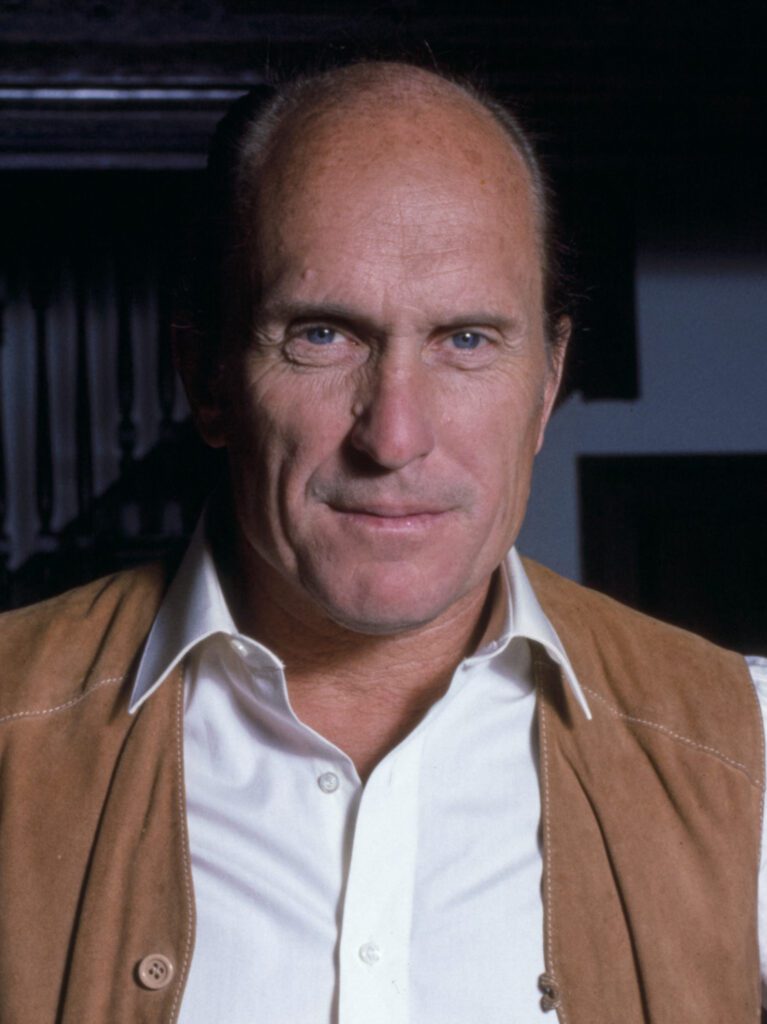
How did Robert Duvall build this fortune?
The answer unfolds through the career, earnings, deals and assets behind the headline estimate.
Before the fame
The background and early turning points that shaped Robert Duvall’s route to prominence.
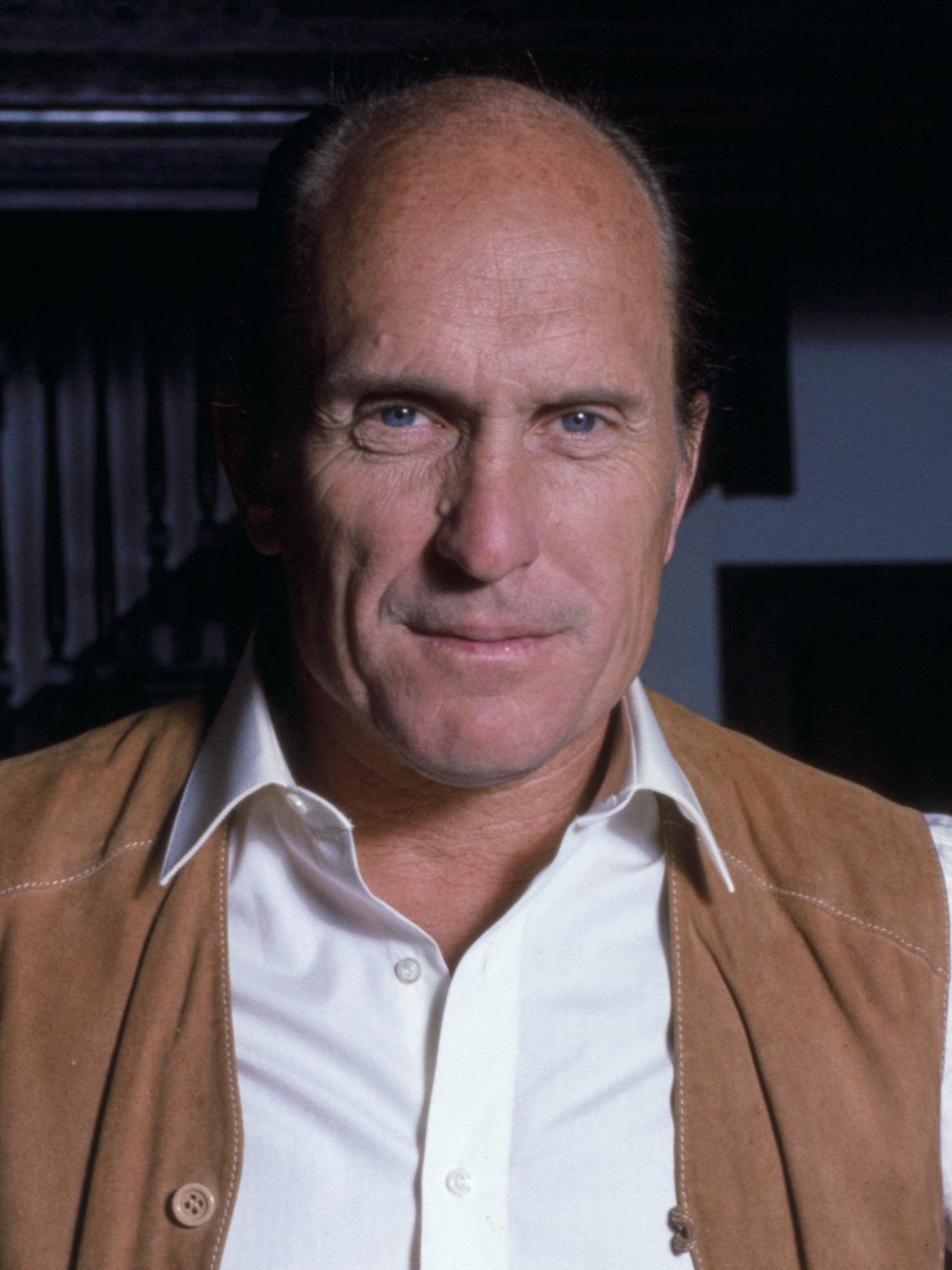
Robert Seldon Duvall was born on 5 January 1931 in San Diego, the son of Mildred Hart, an amateur actress, and William Duvall, a US Navy rear admiral. He grew up on naval bases around the country, including the Naval Academy at Annapolis, graduated from Principia College in Illinois in 1953 and then served two years in the US Army, according to NBC News. He later told NPR that acting was something his parents steered him towards at college, where a drama class gave him his first real sense of worth, as recounted by NPR.
Duvall died peacefully at his home in Virginia on 15 February 2026, aged 95, with his wife Luciana at his side, according to CNN. His family asked admirers to mark his life by watching a great film or telling a good story among friends.
After the Army, Duvall studied under Sanford Meisner at the Neighborhood Playhouse in New York, alongside Dustin Hoffman, Gene Hackman and James Caan, and shared lodgings with Hoffman and Hackman while taking odd jobs. He worked on and off Broadway, including in Arthur Miller’s A View from the Bridge, and picked up television guest parts such as The Twilight Zone before making his film debut at 31 as Arthur “Boo” Radley in To Kill a Mockingbird (1962), according to NBC News. The part carried no dialogue, yet the final reveal of Boo stepping into the light became the moment that launched his screen career, as NPR noted.
The breakthrough years
The career decisions and defining moments that turned recognition into sustained earning power.
Through the late 1960s Duvall built a reputation in Bullitt, True Grit and Coppola’s The Rain People, then became one of the defining faces of the New Hollywood era: Major Frank Burns in Robert Altman’s M*A*S*H (1970), the title role in George Lucas’s THX 1138 (1971) and, decisively, Tom Hagen, the Corleone family’s adopted son and consigliere, in The Godfather (1972). That performance brought his first Academy Award nomination and an expanded role in The Godfather Part II (1974), according to NBC News. People magazine once called him Hollywood’s number one number two lead, a description that captured both his range and his preference for character work over conventional stardom.
What the work can earn
Reported pay, contracts, royalties and performance income reveal how the fortune was funded.
In 1979 Duvall played two military men in a single year, the bullying Marine pilot Bull Meechum in The Great Santini and Lieutenant Colonel Kilgore in Apocalypse Now, delivering the line about loving the smell of napalm in the morning; both roles earned Oscar nominations. He won the Academy Award for Best Actor for Tender Mercies (1983), in which he did his own singing as a washed-up country musician, according to NPR. He went on to career-defining television as Gus McCrae in Lonesome Dove (1989), and wrote, directed and starred in The Apostle (1997), which brought another nomination. Further nominations followed for A Civil Action (1998) and The Judge (2014), giving him seven Oscar nominations and seven Golden Globe nominations, and he appeared in more than 90 films.
Our estimate: acting and directing grossed Duvall roughly $50 million to $110 million across six decades. The anchor is the $1 million Paramount offered him in 1990 to return as Tom Hagen (Forbes), which was a supporting-role rate at the height of his standing. From Tender Mercies onwards he took about 45 substantial paid film and television roles; at $1 million to $2.5 million apiece, with two earlier decades adding modestly on 1960s and 1970s scales, that is the band above. It is the money from the craft, and it came in fees rather than ownership.
Beyond his Oscar, Duvall received the National Medal of Arts from President George W. Bush in 2005, according to the National Endowment for the Arts. He won Primetime Emmy Awards as lead actor and as a producer of the AMC miniseries Broken Trail, which took four Emmys in total, as recorded by the Television Academy. His Army service in the Korean War era was remembered alongside his screen work when veterans’ outlets marked his death, including Military.com.

The business beyond the main career
Endorsements, ownership interests and investments can keep compounding long after the initial breakthrough.
Duvall took no brand campaigns of any note; his income came from acting and producing fees. What he did lend his name to were the causes he cared about, chiefly Argentina, where he met his wife Luciana Pedraza and set his tango film Assassination Tango, a project his own company produced, as noted by NBC News.
Duvall’s main business vehicle was Butcher’s Run Films, the production company he founded in 1992 and named after a Virginia horse farm he had bought in the 1980s, according to Washingtonian. The company developed the personal projects studios would not finance on his terms, most notably The Apostle, which he wrote, directed and funded with $5 million of his own money, as reported by NBC News. He also directed Angelo My Love, Assassination Tango and Wild Horses through it.

Notable luxury item
A reported property or major asset offers a tangible glimpse of the wealth behind the public estimate.
His principal asset for more than three decades was Byrnley Farm, a working cattle farm of roughly 360 acres near The Plains in Virginia’s hunt country, where he lived with his wife and where he died, according to reporting in the Prince William Times. Land in that part of Virginia carries real value: his earlier 28-acre Butcher’s Run estate near Philomont was listed for sale by later owners at $3.7 million in 2024, according to Washingtonian, which sets the going rate per acre for the district rather than the value of his own, far larger, holding.
Robert Duvall’s estimated net worth
Public estimates vary because private contracts, investments, taxes and liabilities are not fully disclosed.
How this estimate is calculated
Three figures about Duvall’s own money are on the record. Paramount offered him $1 million to return for The Godfather: Part III in 1990, which he refused (Forbes). He financed The Apostle with $5 million of his own (NBC News), and the film took $19,868,354 at the domestic box office (Box Office Mojo) – box office is not an actor’s pay, and the two are never added.
The working runs from the estimate above. Gross career earnings of about $50 million to $110 million, less roughly 15 per cent for agents, managers and lawyers and a combined tax take of 40 to 45 per cent, retains about $22 million to $50 million in cash. Set residuals from the Godfather films and Lonesome Dove beside that, add decades of investment growth on money earned early, and add the Fauquier County farm, roughly 360 acres of hunt-country land in a district where 28 acres carried a $3.7 million asking price in 2024 (Washingtonian). The result is the range below. The per-film average is the load-bearing assumption, inferred from one offer he turned down.
What is certain is the direction of travel: he worked constantly for six decades, refused a seven-figure cheque on principle, and put $5 million of his own money into the film he cared most about.
Confidence: Indicative – anchored on one $1 million offer he refused and one $5 million self-financed film, with the per-film average behind the range inferred rather than reported.
With Luciana Pedraza, Duvall co-founded the Robert Duvall Children’s Fund in 2001 to support families in northern Argentina, later widening its work to micro-credit, education and health projects. His public image was that of an unshowy craftsman: he described his method as simply talking and listening and keeping it simple, according to NPR. He counted Hackman and Hoffman as lifelong friends and spent his later decades away from Hollywood on his Virginia farm.
The best-known dispute of his career was over pay. Duvall declined to return as Tom Hagen in The Godfather Part III (1990) after Paramount offered $1 million, according to Forbes. He told the Associated Press that he would have accepted Al Pacino earning twice his fee but not three or four times as much, as reported by TODAY. The character was written out, and Duvall said he did not regret it.