 How Much Are They Worth?
Celebrity fortunes, explained
How Much Are They Worth?
Celebrity fortunes, explained

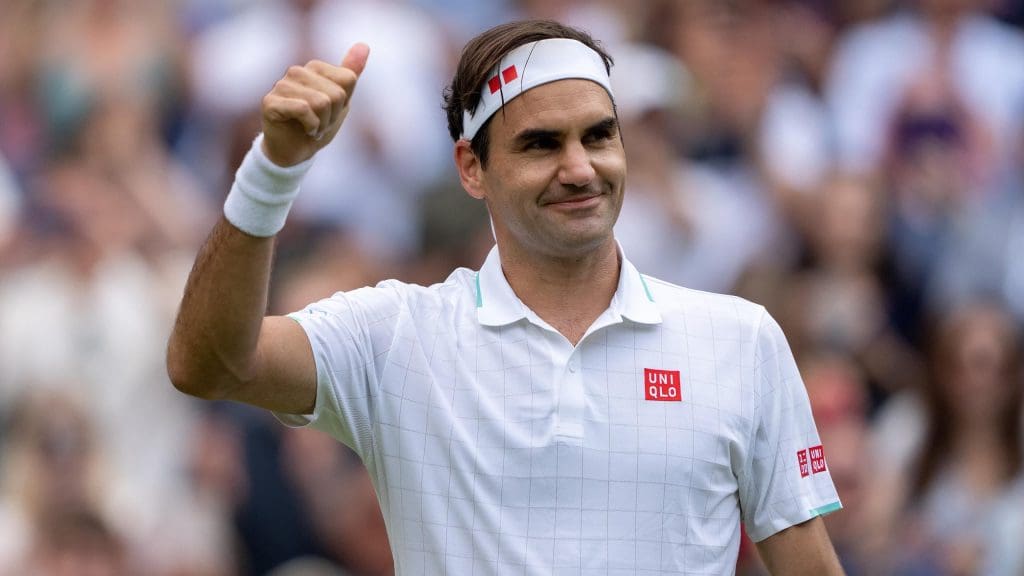
How did Roger Federer build this fortune?
The answer unfolds through the career, earnings, deals and assets behind the headline estimate.
Before the fame
The background and early turning points that shaped Roger Federer’s route to prominence.
Roger Federer was born on August 8, 1981, in Basel, Switzerland, to Robert Federer, a Swiss businessman, and Lynette Federer, a South African-born former hockey player. Both parents worked for the pharmaceutical company Ciba-Geigy, and it was at the company’s private tennis courts that Federer first picked up a racket as a young child. He grew up in the Basel suburb of Munchenstein alongside his older sister Diana, and his multilingual upbringing near the French and German border left him fluent in Swiss German, French and English, a background documented on Wikipedia.
Federer showed early promise on court, becoming one of the top three junior players in Switzerland by age eleven. In 1995, at fourteen, he was accepted into the National Development Program of Swiss Tennis in Ecublens, a two hour trip from his family home in Basel. Two years later, having completed his compulsory schooling, he made the decision, with his parents’ cautious blessing, to leave formal education behind and commit fully to tennis.
Federer’s junior career peaked in 1998, when he won both the boys’ singles and boys’ doubles titles at Wimbledon and finished the year as the world’s top-ranked junior. He turned professional later that same year and spent his first seasons on tour working through the rankings, claiming his first ATP singles title in Milan in 2001. That year also produced the result that first announced him to a wider audience, a fourth round upset of seven-time Wimbledon champion Pete Sampras at Wimbledon, a match still remembered as a symbolic passing of the torch, as recounted on Wikipedia.
Despite that breakthrough win, consistency at the majors did not come immediately. Federer failed to advance past the quarterfinals in his first seven Grand Slam main draw appearances, including first round exits at the French Open in successive years, a stretch that tested the early promise shown by his talent before his game matured into the form that would soon dominate the sport.
The breakthrough years
The career decisions and defining moments that turned recognition into sustained earning power.
Federer’s defining breakthrough arrived at Wimbledon in 2003. Seeded fourth and coming off a title run in Halle, Germany the week before, he defeated Mark Philippoussis in straight sets, 7-6, 6-2, 7-6, to become the first Swiss man in history to win a Grand Slam singles title. The victory, detailed in Scroll.in’s retrospective on the match, marked the first of a record eight Wimbledon men’s singles titles and the first of 20 major championships across his career.
The 2003 Wimbledon win reshaped Federer’s trajectory almost overnight. He finished that season ranked world number two and opened 2004 by winning the Australian Open, the first of a run in which he would claim at least one Grand Slam title in seventeen consecutive seasons, establishing the foundation of dominance that followed for the rest of the decade.
What the work can earn
Reported pay, contracts, royalties and performance income reveal how the fortune was funded.
Federer retired in 2022 with 20 Grand Slam singles titles, a men’s record at the time he set it: eight Wimbledon championships, six Australian Open titles, five US Open titles and one French Open title, completing the career Grand Slam in 2009. He spent a record 310 weeks at world number one, including 237 consecutive weeks, and won 103 ATP singles titles across his career, the second most in the Open Era.
Federer also won a gold medal in men’s doubles at the 2008 Beijing Olympics alongside Stan Wawrinka, and he retired with career prize money of approximately $130.6 million, the third highest total in men’s tennis history behind Novak Djokovic and Rafael Nadal, a figure confirmed by HITC’s breakdown of his career earnings.
Federer’s on-court dominance and off-court demeanor made him one of the most honored athletes of his generation. He won the Laureus World Sportsman of the Year award five times, in 2005, 2006, 2007, 2008 and 2018, a tally matched only by Novak Djokovic, and he added a Laureus Comeback of the Year award in 2018 after returning from knee surgery to win the Australian Open, a sweep covered by Sky Sports’ report from that year’s ceremony.
Beyond formal awards, Federer is consistently ranked among the most respected and admired athletes in global sport, frequently topping fan popularity polls on the ATP Tour and widely cited by peers, rivals and commentators as a central figure in tennis’ greatest of all time conversation alongside Nadal and Djokovic.
The business beyond the main career
Endorsements, ownership interests and investments can keep compounding long after the initial breakthrough.
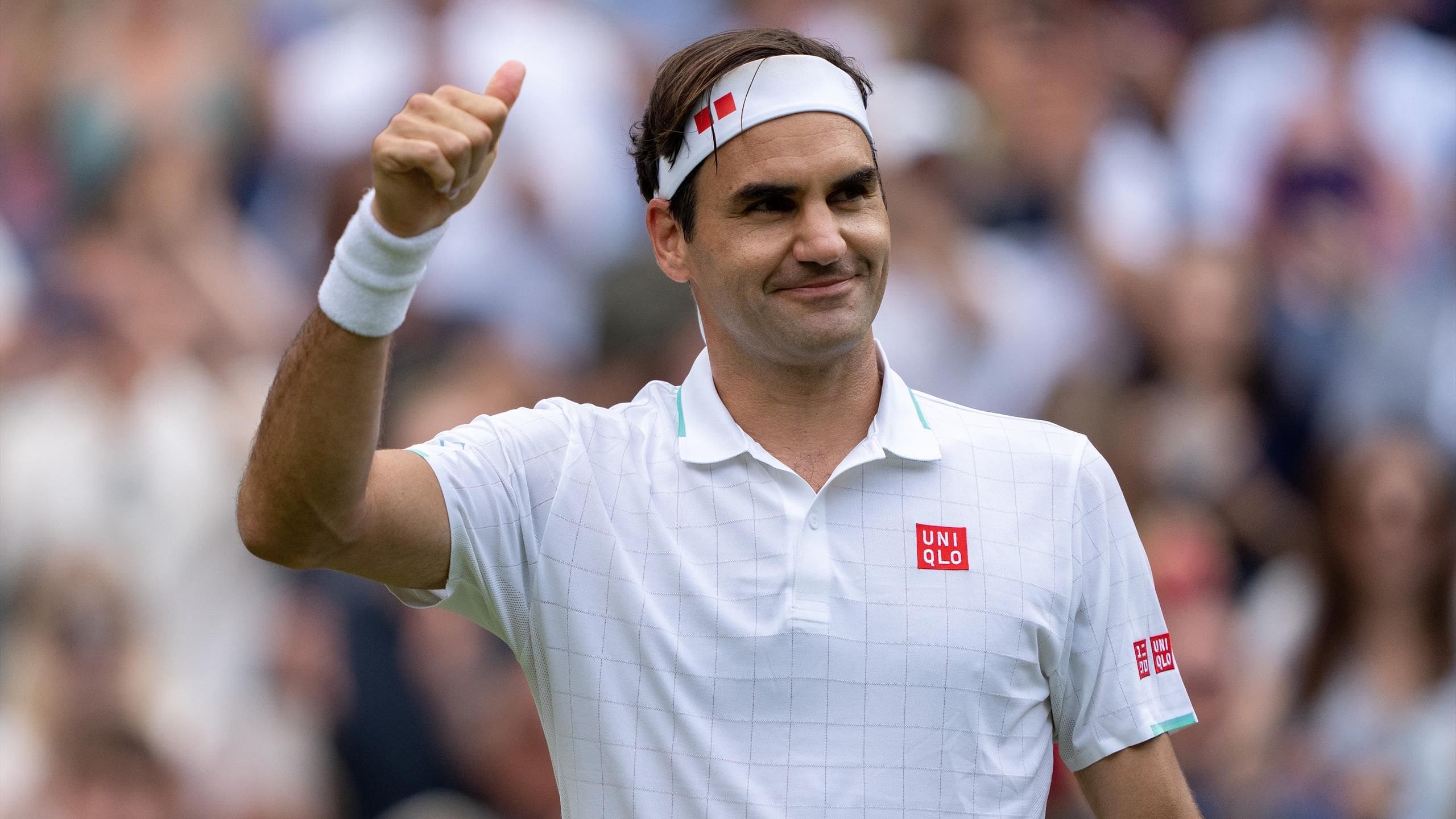
Federer has been a Rolex ambassador since 2003 in a deal reported to be worth around $8 million a year with no fixed end date, and he has partnered with Mercedes-Benz since 2008, a relationship renewed in a ten-year agreement in 2017. His highest-profile deal came in 2018, when he signed a ten-year, $300 million apparel agreement with Uniqlo running through 2028, replacing his earlier long-term partnership with Nike, terms reported by Verdict’s analysis of his sponsorship earnings.
His broader endorsement portfolio has also included Lindt, Credit Suisse, Barilla, Jura and Moet & Chandon, among others. At his commercial peak in 2020, Federer’s off-court income made him the first tennis player ever to top Forbes’ list of the world’s highest-paid athletes, an endorsement empire that, together with his On stake, is described in detail by Luxurylaunches’ coverage of his path to the Forbes billionaires list.
Federer’s most significant financial asset beyond tennis is an equity stake in On, the Swiss athletic footwear and apparel company. He took the stake in 2019 in exchange for helping develop the brand’s on-court tennis shoe and lifestyle apparel line, and the company went public on the New York Stock Exchange in September 2021. Federer’s holding, reported at roughly 2.5 to 3 percent of the company, has become the single largest driver of his fortune, a relationship detailed on his Forbes profile.
In 2013, Federer co-founded Team8, a sports management and entertainment agency, with longtime agent Tony Godsick, Ian McKinnon and Dirk Ziff. Team8 represents a small roster of elite athletes and is the creator and majority owner of the Laver Cup, the team tennis event pitting Europe against the rest of the world that Federer helped launch in 2017, a business relationship also outlined in his Forbes profile.
Notable luxury item
A reported property or major asset offers a tangible glimpse of the wealth behind the public estimate.
Federer built a custom, glass-walled lakeside home in Wollerau, on the shores of Lake Zurich, after paying roughly $7.3 million for the land and construction beginning in 2014. He sold that property in 2026 for a reported price of around $35 million, a sale that also confirmed a roughly $4.1 million gain over his original outlay, according to EssentiallySports’ reporting on the transaction.
Federer is also building a new lakefront estate, reported to cost around $50 million, in Rapperswil-Jona, complete with its own private tennis court, and he owns a ski chalet with custom woodwork and a tennis court in the Lenzerheide-Valbella area, plus an international property reported to be worth about $23.5 million in Dubai, additional holdings noted in the same EssentiallySports reporting on his real estate portfolio.
Roger Federer’s estimated net worth
Public estimates vary because private contracts, investments, taxes and liabilities are not fully disclosed.
How this estimate is calculated
Federer’s estimated net worth is built from four components: career prize money of approximately $130.6 million, decades of endorsement income that reportedly peaked near $100 million in a single year, undisclosed earnings from Team8 and the Laver Cup, and, by far the largest and most volatile factor, his equity stake in On. Forbes first added Federer to its World’s Billionaires list in March 2026 with an estimated fortune of $1.1 billion, driven almost entirely by the market value of that On stake, a milestone reported by the ATP Tour.
That figure has since proven highly sensitive to On’s share price. On August 11, 2026, On Holding’s stock fell approximately 19 percent after the company reported second-quarter sales that missed expectations, and Forbes recalculated Federer’s fortune at $952.4 million that day, a drop of more than $50 million in a single session that briefly erased his billionaire status, as reported by Forbes’ coverage of the decline. Because such a large share of his wealth is tied to one publicly traded stock, the figure below reflects the most recently confirmed reporting rather than the earlier March peak, and it should be read as a snapshot that can move meaningfully with On’s share price.
Federer established the Roger Federer Foundation in 2003, when he was just 22, to support early childhood education. The foundation now operates in Lesotho, Malawi, Namibia, South Africa, Zambia and Zimbabwe as well as Switzerland, and it has reached more than 3.1 million children through partnerships with local governments and community organizations, according to the foundation’s own program overview.
In February 2025, Federer traveled to South Africa alongside rugby World Cup winner Siya Kolisi to expand the foundation’s early-learning initiatives in the region, underscoring a public image built around education-focused, low-controversy philanthropy rather than high-profile celebrity causes.
Federer has kept an unusually clean public record for an athlete of his stature, with no personal scandals, legal disputes or major disciplinary incidents over a career spanning more than two decades. The closest scrutiny he has faced in retirement concerns the Laver Cup, the team event he co-created, after his agent and Team8 partner Tony Godsick raised the possibility of a future host city in Saudi Arabia, comments picked up by Tennis365’s report on the discussion.
Saudi Arabia’s growing footprint in global sport has drawn persistent accusations of sportswashing, and although Federer himself has been notably noncommittal when asked directly, describing any Middle East expansion as an open question rather than a plan, the association has drawn mild criticism from commentators wary of the country’s human rights record. Beyond that ongoing business question, Federer’s public reputation remains almost entirely positive.