 How Much Are They Worth?
Celebrity fortunes, explained
How Much Are They Worth?
Celebrity fortunes, explained





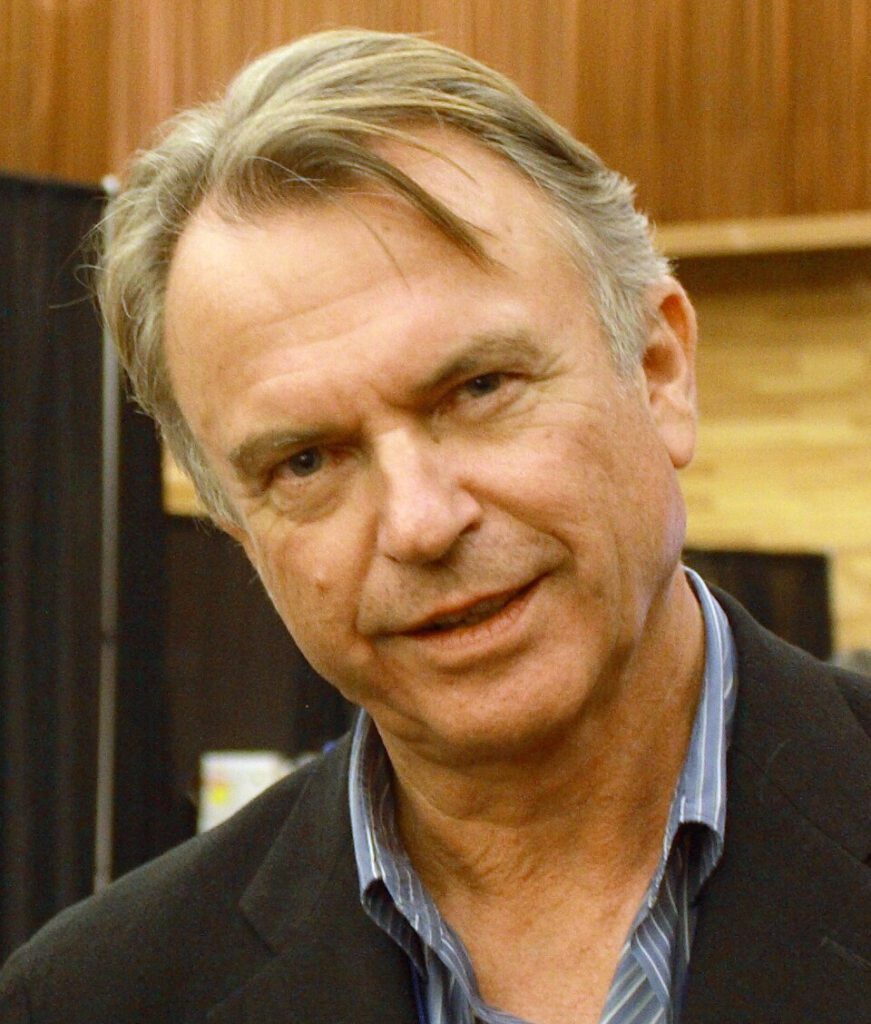
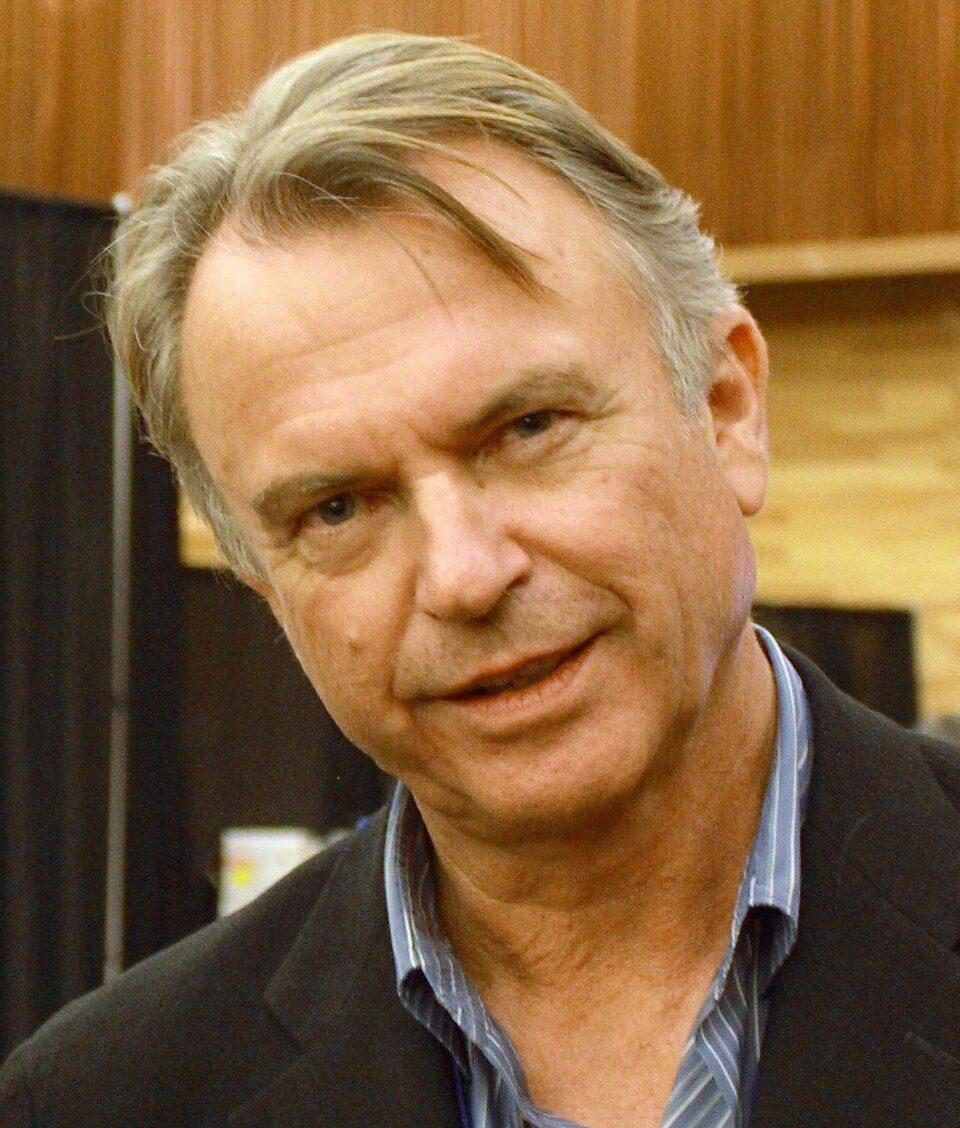
How did Sam Neill build this fortune?
The answer unfolds through the career, earnings, deals and assets behind the headline estimate.
Before the fame
The background and early turning points that shaped Sam Neill’s route to prominence.
Nigel John Dermot Neill was born on 14 September 1947 in Omagh, Northern Ireland, and moved with his family to New Zealand in the early 1950s, according to NBC News. He picked up the nickname Sam at school and kept it for the rest of his life, holding both British and New Zealand citizenship.
He grew up in the South Island, studied English literature at university and found his way into film through documentary work rather than drama school. That route shaped a career that ran to more than 150 screen credits across five decades. His family announced in July 2026 that he had died suddenly in Sydney, aged 78, as reported by Al Jazeera and NPR.
Neill’s early working years were spent making documentaries in New Zealand before he moved in front of the camera. His breakout came in Roger Donaldson’s thriller Sleeping Dogs in 1977, in which he played a man on the run; NZ On Screen describes it as the role that made his name, and Al Jazeera notes it was the first New Zealand feature film in more than a decade.
Australian cinema then provided the next step. Gillian Armstrong’s My Brilliant Career (1979) put him opposite Judy Davis, and the attention it drew led to his first major studio part, the adult Damien Thorn in Omen III: The Final Conflict (1981).
The breakthrough years
The career decisions and defining moments that turned recognition into sustained earning power.
International recognition arrived with the 1983 television serial Reilly, Ace of Spies, in which he played the real-life agent Sidney Reilly, according to NBC News. The series made him a familiar face in Britain and the United States and opened the door to Hollywood.
Over the following decade he built one of the most varied filmographies of his generation: A Cry in the Dark opposite Meryl Streep, the thriller Dead Calm with Nicole Kidman, and a Soviet submarine officer in The Hunt for Red October (1990). Then came 1993, when he played palaeontologist Dr Alan Grant in Jurassic Park and the repressed settler Alisdair Stewart in Jane Campion’s The Piano in the same year.
What the work can earn
Reported pay, contracts, royalties and performance income reveal how the fortune was funded.
Jurassic Park became the biggest commercial success of his career. Box Office Mojo records a worldwide gross of about $978 million from the original 1993 release and more than $1.1 billion across all releases, on a production budget of $63 million.
The Piano won the Palme d’Or at Cannes, giving Neill the rare distinction of starring in the year’s most celebrated art film and its biggest blockbuster. He returned as Grant for Jurassic Park III in 2001 and again for Jurassic World Dominion in 2022, which grossed about $1 billion worldwide according to Box Office Mojo.
Television kept him busy late into his career, from Cardinal Wolsey in The Tudors to Inspector Chester Campbell in Peaky Blinders, and in 2016 he was the gruff foster uncle in Taika Waititi’s Hunt for the Wilderpeople, one of New Zealand’s most popular home-grown films.
Neill was appointed an Officer of the Order of the British Empire in 1991 and a Distinguished Companion of the New Zealand Order of Merit in 2007, and he received one Emmy nomination and three Golden Globe nominations, according to NBC News.
He had declined the title when knighthoods were restored in New Zealand in 2009, but in 2022 he accepted redesignation as a Knight Companion of the New Zealand Order of Merit for services to film, as recorded by the Governor-General of New Zealand and reported by 1News. New Zealand’s prime minister, Christopher Luxon, described him as one of the greats who took New Zealand stories to the world, according to Al Jazeera.

The business beyond the main career
Endorsements, ownership interests and investments can keep compounding long after the initial breakthrough.
Neill did not build a commercial endorsement portfolio in the way many screen stars do. His most visible promotional work was for his own wine, and he became an effective ambassador for Central Otago Pinot Noir through tastings, interviews and social media videos filmed on the farm.
His 2023 memoir, Did I Ever Tell You This?, published by Text Publishing, covered his childhood, his film career and his life in Central Otago. Its sales figures and his advance have not been published.
Neill’s main business was wine. He founded Two Paddocks in 1993 with a first vineyard in the Gibbston Valley of Central Otago, released the first vintage in 1997 and added a Bannockburn site on Felton Road in 2013, according to the winery’s own history at Two Paddocks. All of the vineyards are certified organic, and the company concentrates on Pinot Noir and Riesling.
The estate grew into four vineyards across Central Otago’s main valleys. Two Paddocks lists the original 4.6-hectare First Paddock, the 2-hectare Last Chance vineyard near Alexandra, the Red Bank farm and vineyard that serves as headquarters, and the 6-hectare Fusilier block in Bannockburn. Neill ran it as proprietor with family and friends and was well known for describing the business as time- and money-consuming rather than a source of easy profit.
Notable luxury item
A reported property or major asset offers a tangible glimpse of the wealth behind the public estimate.
Apart from the vineyards, Neill’s most documented asset was property. 1News reported that he bought a home in Double Bay, Sydney, in 1996 for A$839,000 and sold it in 2020 for a price believed to be above A$3.6 million, and that he also kept a property in Wellington.
Red Bank, near Alexandra, was both a working farm and his base. It carries orchards, organic vegetables and livestock, according to Two Paddocks, and Neill became known for naming his animals after film-industry friends, as 1News noted. The land and vines are the largest items in his estate, but their value has not been independently published.
Sam Neill’s estimated net worth
Public estimates vary because private contracts, investments, taxes and liabilities are not fully disclosed.
How this estimate is calculated
One net worth figure for Neill circulates, and it is not a financial record. 1News reported an estimate of NZ$31 million to NZ$34 million, about US$18 million to US$20 million, covering his acting, property and winery interests. 1News attributes that estimate to realestate.com.au, a property listings site; no accounting, valuation or filing lies behind it.
The verified numbers are far thinner. The same 1News report gives one price: a Double Bay house in Sydney bought in 1996 for A$839,000. The 2020 sale price was undisclosed, and the figure of more than A$3.6 million is again the property site’s belief rather than a recorded transaction, so no gain on that house can properly be calculated. Two Paddocks sets out the vineyards: 4.6 hectares at the First Paddock in Gibbston, planted in 1993; two hectares at the Last Chance near Alexandra, planted in 1998; and six hectares at the Fusilier in Bannockburn, acquired in 2013.
From there the working is an estimate of a career. If fifty years of screen work across more than 150 credits produced gross earnings of roughly $50 million to $70 million, and around half went to tax, agents and lawyers, net retained earnings of $25 million to $35 million would remain before living costs and decades of investment in the winery. Adding property and vineyard value, then allowing for the documented cost of running Two Paddocks, gives about $15 million to $25 million.
That lands near the property site’s estimate, which is reassuring only up to a point, because that estimate is the sole external figure the answer can be tested against. The deeper problem is that the assets most likely to matter are the hardest to price: vineyard land has a market rate per hectare, but a small certified-organic label with its own following does not, and the brand has never been offered for sale or valued in public. His Jurassic Park and Jurassic World Dominion fees were never disclosed either, so both the earning side and the owning side are missing their key numbers.
Confidence: Indicative – the only net worth figure in circulation comes from a property listings site rather than any filing, the 2020 sale price of his Sydney house was never disclosed, and his screen fees are unknown.
Neill’s public image was that of a thoughtful, self-deprecating actor who preferred farm life to Hollywood. Tributes after his death, reported by Al Jazeera and NBC News, focused on his warmth, his range and his loyalty to New Zealand film.
He lent his name to New Zealand screen causes, co-directed the 1995 documentary Cinema of Unease about the country’s film history, according to NZ On Screen, and was generous with his time for local productions. He did not run a named charitable foundation, and his personal giving was not publicly itemised.
Neill’s long career attracted remarkably little controversy. He was occasionally outspoken on New Zealand politics, farming and the environment, and he spoke candidly in interviews and in his memoir about the business pressures of running a winery, but there were no significant legal disputes or scandals attached to his name.
The main area of public uncertainty concerns his finances rather than his conduct: neither his film fees nor the winery’s accounts were published, which is why the estimates below rest on a small number of documented figures.