 How Much Are They Worth?
Celebrity fortunes, explained
How Much Are They Worth?
Celebrity fortunes, explained




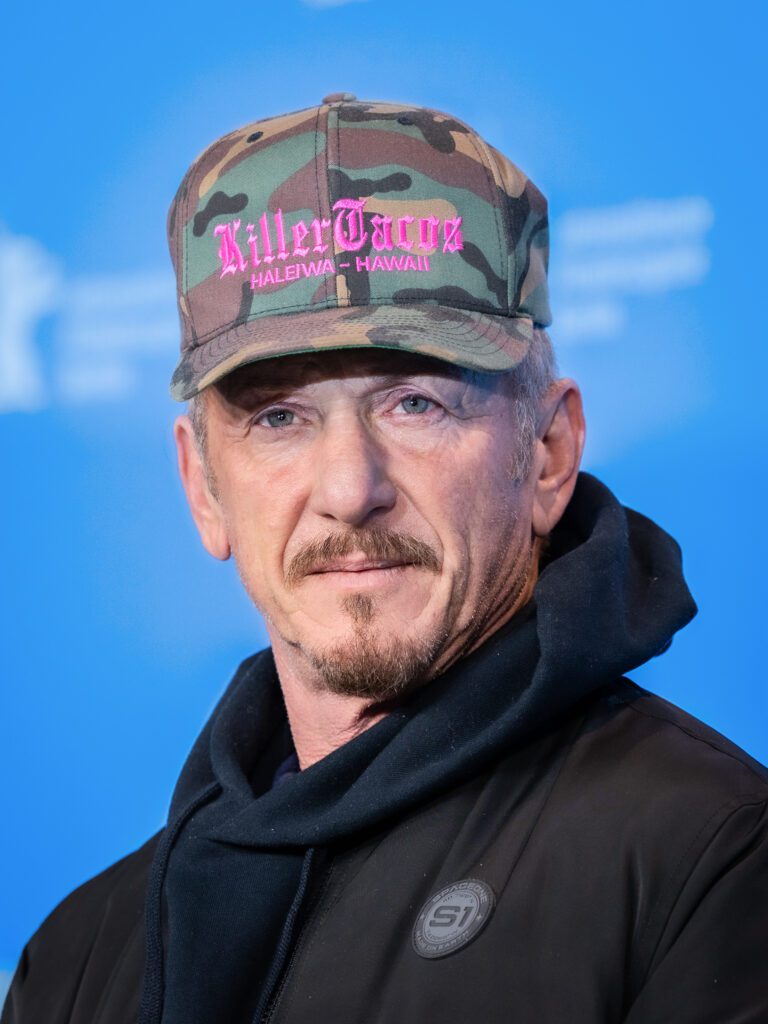
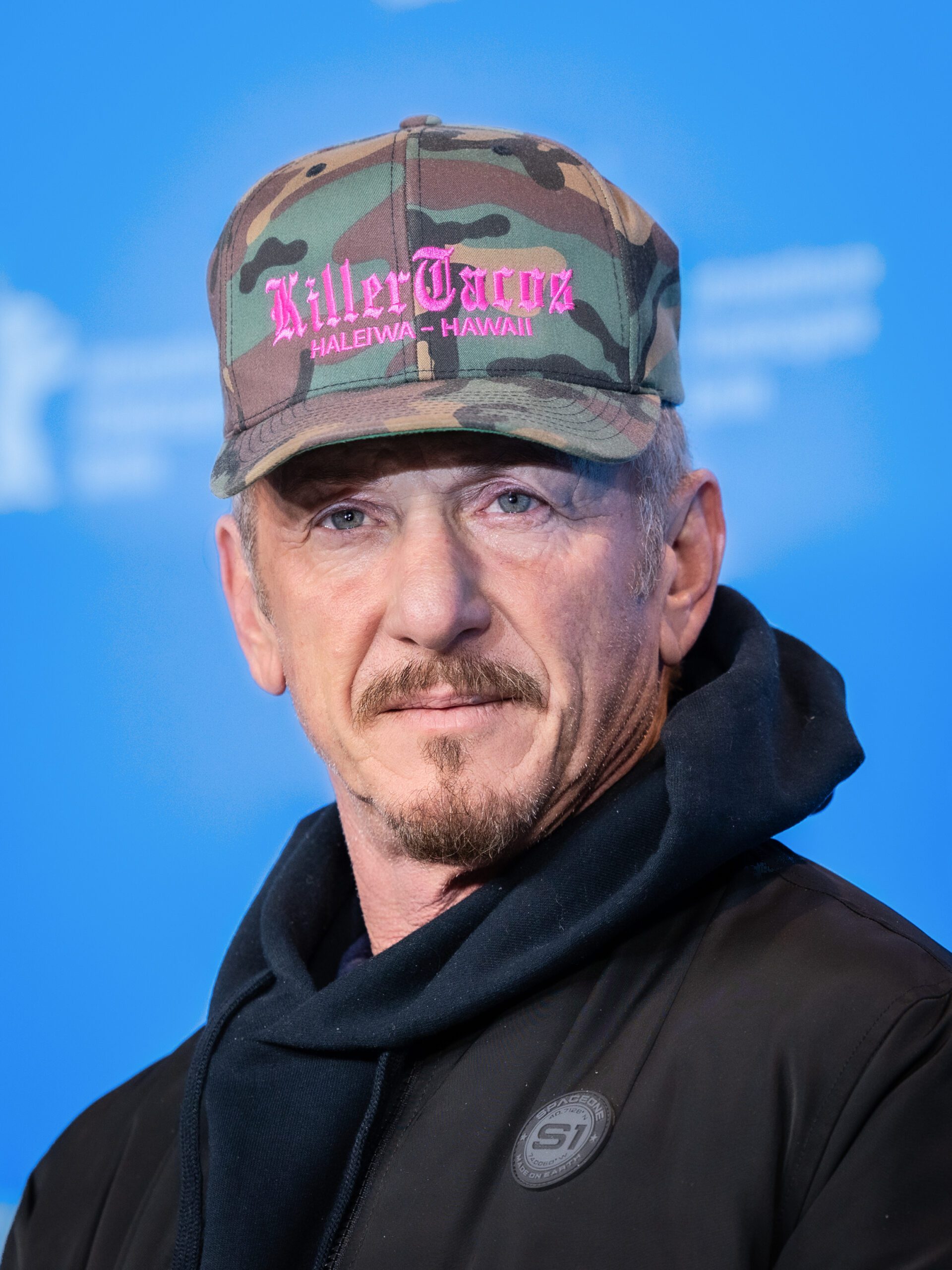
How did Sean Penn build this fortune?
The answer unfolds through the career, earnings, deals and assets behind the headline estimate.
Before the fame
The background and early turning points that shaped Sean Penn’s route to prominence.
Sean Justin Penn was born on 17 August 1960 in Santa Monica, California, according to the Golden Globes. He is the son of the director Leo Penn and the actor Eileen Ryan, and grew up in Malibu alongside his brothers, the musician Michael Penn and the actor Chris Penn.
He made short films with friends as a teenager and trained as an actor in Los Angeles after high school rather than going to university. Growing up in a working film family gave him an early view of both the craft and the precarious economics of the industry, a background he has returned to repeatedly in interviews about why he values directing as much as acting.
His screen career began in television before Taps in 1981 and Fast Times at Ridgemont High in 1982, in which his stoned surfer Jeff Spicoli became a pop-culture fixture, as the Golden Globes credits list shows.
He quickly moved to heavier material, including At Close Range in 1986, Casualties of War in 1989 and State of Grace in 1990, and made his directing debut with The Indian Runner in 1991.
The breakthrough years
The career decisions and defining moments that turned recognition into sustained earning power.
The 1990s established him as a leading dramatic actor. He earned a Golden Globe nomination for Carlito’s Way and another for Dead Man Walking, and a further nomination for Woody Allen’s Sweet and Lowdown, according to the Golden Globes. Mystic River in 2003 brought the breakthrough in awards terms: the Golden Globe for Best Actor in a Drama and the Academy Award for Best Actor.
Our estimate: Penn’s acting, directing and writing have grossed him between $90 million and $130 million across forty-five years. The shape is a slow climb rather than a spike. Television and teen pictures in the early 1980s paid tens of thousands; the serious dramas of the mid-1980s paid low six figures; by the mid-1990s he was a low-seven-figure lead; and from Mystic River onwards a studio lead of his standing commanded roughly $5 million to $10 million a picture, with directing fees and script money on top.

What the work can earn
Reported pay, contracts, royalties and performance income reveal how the fortune was funded.
He won a second Best Actor Oscar for Milk in 2009, playing the San Francisco politician Harvey Milk, and in March 2026 won Best Supporting Actor for Paul Thomas Anderson’s One Battle After Another, as listed by PBS NewsHour, which made him a three-time acting winner. CBS News described his role as Colonel Steven J. Lockjaw as one of his most intense performances.
Each of those wins moved his quote: a Best Actor Oscar typically adds several million dollars a picture to what a leading man can ask, and Penn’s did so twice. As a director his credits include The Crossing Guard, The Pledge and Into the Wild, the 2007 adaptation of Jon Krakauer’s book about Christopher McCandless, widely regarded as his most accomplished work behind the camera. He has also worked with Clint Eastwood, Gus Van Sant, Terrence Malick and Brian De Palma, a range few actors of his generation can match.
Three Oscars place him among a very small group of male actors, and the Golden Globes records six Golden Globe nominations with one win. He did not attend the 2026 ceremony, travelling instead to Ukraine, where he was presented with a version of the statuette, as reported by CNN.
President Volodymyr Zelensky had earlier given him Ukraine’s Order of Merit, after Penn left one of his Oscars in Kyiv in November 2022, according to Variety.

The business beyond the main career
Endorsements, ownership interests and investments can keep compounding long after the initial breakthrough.
Penn has not been a significant commercial endorser and has taken no major brand ambassadorship. His public platform has been used for political and humanitarian causes rather than advertising.
That leaves his personal income concentrated in acting, directing and writing fees, which is where the estimate above does all of its work.
Penn’s work outside acting is concentrated in directing, producing and writing. He published the satirical novel Bob Honey Who Just Do Stuff in 2018, and co-directed the documentary Superpower about the war in Ukraine, which CNN reviewed on its 2023 release.
He has not built a consumer brand or reported investment vehicle, and his largest organisation, CORE, is a non-profit rather than a business.
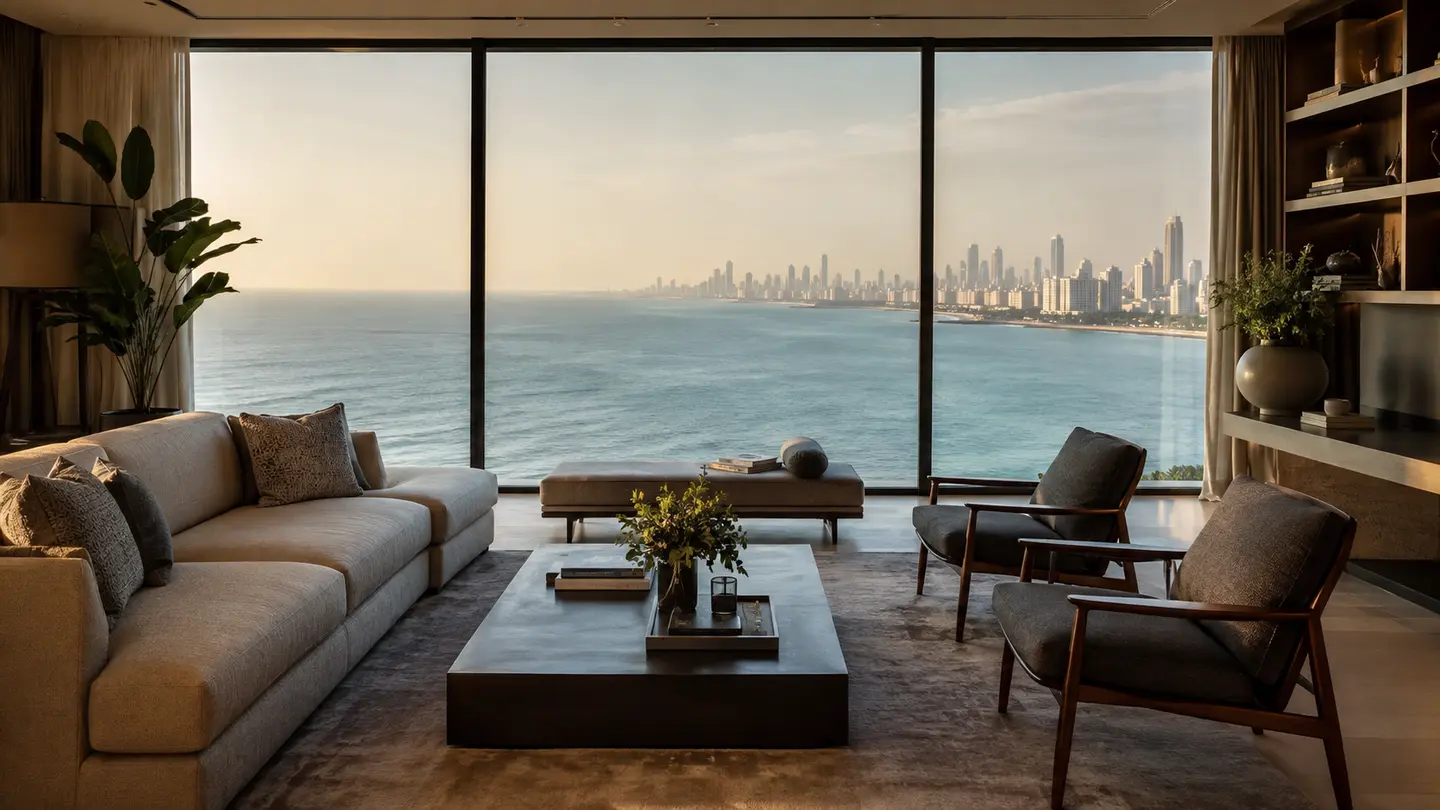
Notable luxury item
A reported property or major asset offers a tangible glimpse of the wealth behind the public estimate.
His best-documented property is a Malibu home that he listed in 2015 for $6.55 million, as reported by ABC7 Los Angeles. He had previously lived for many years in Marin County, north of San Francisco, with Robin Wright, to whom he was married until 2010.
The estimate carries a broad allowance for property equity on the strength of that listing rather than a valuation of any particular house.
Sean Penn’s estimated net worth
Public estimates vary because private contracts, investments, taxes and liabilities are not fully disclosed.
How this estimate is calculated
The large sums in this profile are not his. The filings published by ProPublica Nonprofit Explorer show CORE taking revenue of $122.1 million in 2021, $62.0 million in 2022 and $31.7 million in 2023; that is the charity’s money, spent on the charity’s work, and none of it counts towards his wealth. His three Academy Awards, recorded by PBS NewsHour, establish his standing and say nothing about his fees. The one money figure about him personally is the Malibu house listed in 2015 at $6.55 million (ABC7 Los Angeles).
The working is the career-earnings model set out above. Gross fees of $90 million to $130 million, of which perhaps 40 per cent survives agents, managers, lawyers and combined federal and California tax, leaves about $36 million to $53 million. Add property equity of perhaps $4 million to $12 million and the range below follows. The assumption doing most of the work is the mid-career quote, set at the level a twice-Oscared studio lead commands rather than at what any particular film paid.
Penn is an awkward subject for that model, which assumes a working professional taking the best-paid roles available. He has given much of the past fifteen years to running a relief organisation rather than to studio work, has repeatedly chosen films that were never designed to pay well, has directed passion projects, and has settled two divorces out of public view. Each of those pushes the true figure away from what the model produces, in directions that cannot be quantified from a single asking price on a house he listed a decade ago.
Confidence: Indicative – a 2015 asking price on one house is the only figure of his own on the record, so the range rests on modelled career earnings.
After the January 2010 earthquake in Haiti he founded the J/P Haitian Relief Organization, which became CORE, Community Organized Relief Effort, and later ran mass COVID-19 testing and vaccination sites in the United States. Its tax filings, published by ProPublica Nonprofit Explorer, show total revenue of $122.1 million and expenses of $104.8 million in its 2021 tax year, up from $6.6 million in revenue in 2019.
The same ProPublica Nonprofit Explorer data shows revenue of $62.0 million in 2022 and $31.7 million in 2023 as the pandemic work wound down. These are the charity’s funds, not Penn’s personal wealth, but they show the scale of the organisation he chairs.
Penn’s early fame came with a reputation for confrontation with photographers. In June 1987 he was sentenced to 60 days in jail for violating probation after punching an extra on the set of Colors, as reported by UPI. His marriage to Madonna from 1985 to 1989 was intensely covered by the press.
In 2016 his secretly arranged interview with the fugitive drug lord Joaquin Guzman, published by Rolling Stone, drew widespread criticism of both the ethics and the timing. His visits to Venezuela and Iraq in the 2000s were also contentious.