 How Much Are They Worth?
Celebrity fortunes, explained
How Much Are They Worth?
Celebrity fortunes, explained



How did Taylor Sheridan build this fortune?
The answer unfolds through the career, earnings, deals and assets behind the headline estimate.
Before the fame
The background and early turning points that shaped Taylor Sheridan’s route to prominence.
Taylor Sheridan was born in 1970 and grew up on a family ranch near Cranfills Gap in central Texas. The ranch was sold after his parents divorced, a loss he has called formative, and he drifted through college at what is now Texas State University, studying theatre without much commitment, according to Variety. Ranch life and the economic pressures on rural America became the raw material for almost everything he wrote.
Sheridan spent close to two decades as a working actor, moving from bit parts to recurring roles in “Veronica Mars” and, most prominently, “Sons of Anarchy”, as the deputy police chief David Hale. He left after asking for a raise and being offered a wage lower than almost anyone else in the cast and not enough to let him give up a second job, as The Hollywood Reporter has recounted. His character was written out, and he turned to screenplays.
The breakthrough years
The career decisions and defining moments that turned recognition into sustained earning power.
The change of direction paid off quickly. His first produced screenplay, “Sicario” (2015), directed by Denis Villeneuve, premiered in competition at the Festival de Cannes. “Hell or High Water” (2016), a West Texas bank-robbery drama, earned him an Academy Award nomination for best original screenplay, as IndieWire reported. He then directed his own script for “Wind River” (2017), which won him the best director prize in the Un Certain Regard section at Cannes, according to Variety. The three films are often described as his “modern frontier” trilogy.
What the work can earn
Reported pay, contracts, royalties and performance income reveal how the fortune was funded.
“Yellowstone”, co-created with John Linson and starring Kevin Costner, launched on Paramount Network in 2018 and grew into the biggest drama on American television. Its fifth-season premiere drew nearly 16 million viewers across platforms, which made it the most-watched show on American television that year, according to Deadline. Its prequel “1923” drew 7.4 million viewers for its debut, the biggest premiere in Paramount+ history at the time, as Variety reported. Sheridan built a slate around it, including “1883”, “Mayor of Kingstown”, “Tulsa King”, “Special Ops: Lioness”, “Lawmen: Bass Reeves” and “Landman”, making him one of the most important creative suppliers to Paramount+.
What the writing paid him. Our estimate is that Sheridan’s own craft – scripts, showrunning and directing – has earned him roughly $160 million to $200 million gross to date. The overwhelming share of it is one contract: the overall deal he signed with Paramount in 2021, reported at $200 million and running to the end of 2028, of which something in the region of $150 million had been paid out by 2026. Everything before “Yellowstone” is small beside that – two decades of acting wages and then a first-time screenwriter’s fees on “Sicario”, “Hell or High Water” and “Wind River”, which our estimate puts at $3 million to $6 million all told. The assumption that matters is that the deal is paid evenly across its term, which is how these arrangements are usually structured.
Beyond the Oscar nomination and the Cannes prize, Sheridan’s recognition is measured in audience figures and in the prices studios pay for his work. Trade coverage has described the “Yellowstone” universe as an empire in its own right. He has also appeared on screen in his own shows, including a recurring role as the horse trader Travis in “Yellowstone”.

The business beyond the main career
Endorsements, ownership interests and investments can keep compounding long after the initial breakthrough.
Sheridan does not do conventional celebrity endorsements. His commercial value lies in overall deals, in which a studio pays for exclusive access to everything a creator develops. His first major Paramount pact was extended in 2021 for five further years, through 2028, in a deal sources valued in the nine-figure range, alongside a series order for “1883”, according to The Hollywood Reporter. That arrangement is the closest equivalent in his career to a sponsorship income stream.
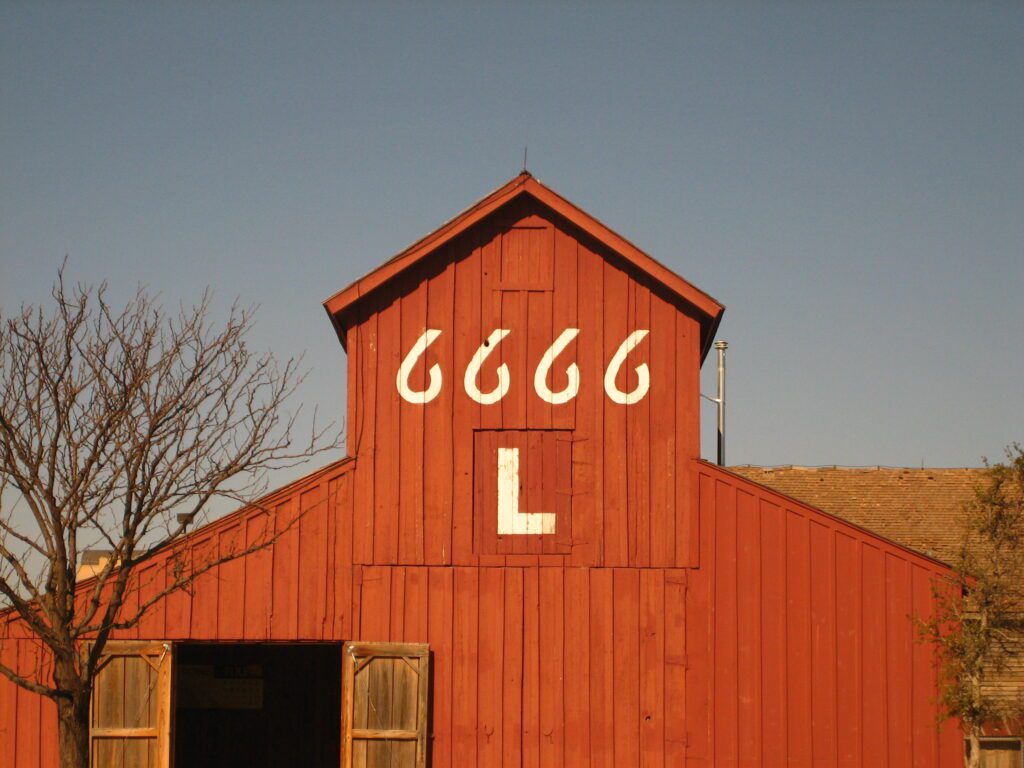
Sheridan’s production company, Bosque Ranch, works closely with David Glasser’s 101 Studios, producer of much of the “Yellowstone” franchise. Outside television his businesses are rooted in the ranching world he writes about: the Bosque Ranch in Weatherford, Texas, a centre for cutting-horse breeding, and the ownership group behind the historic Four Sixes Ranch, whose horse and cattle operations and branded products are part of his public identity (The Land Report).
Notable luxury item
A reported property or major asset offers a tangible glimpse of the wealth behind the public estimate.
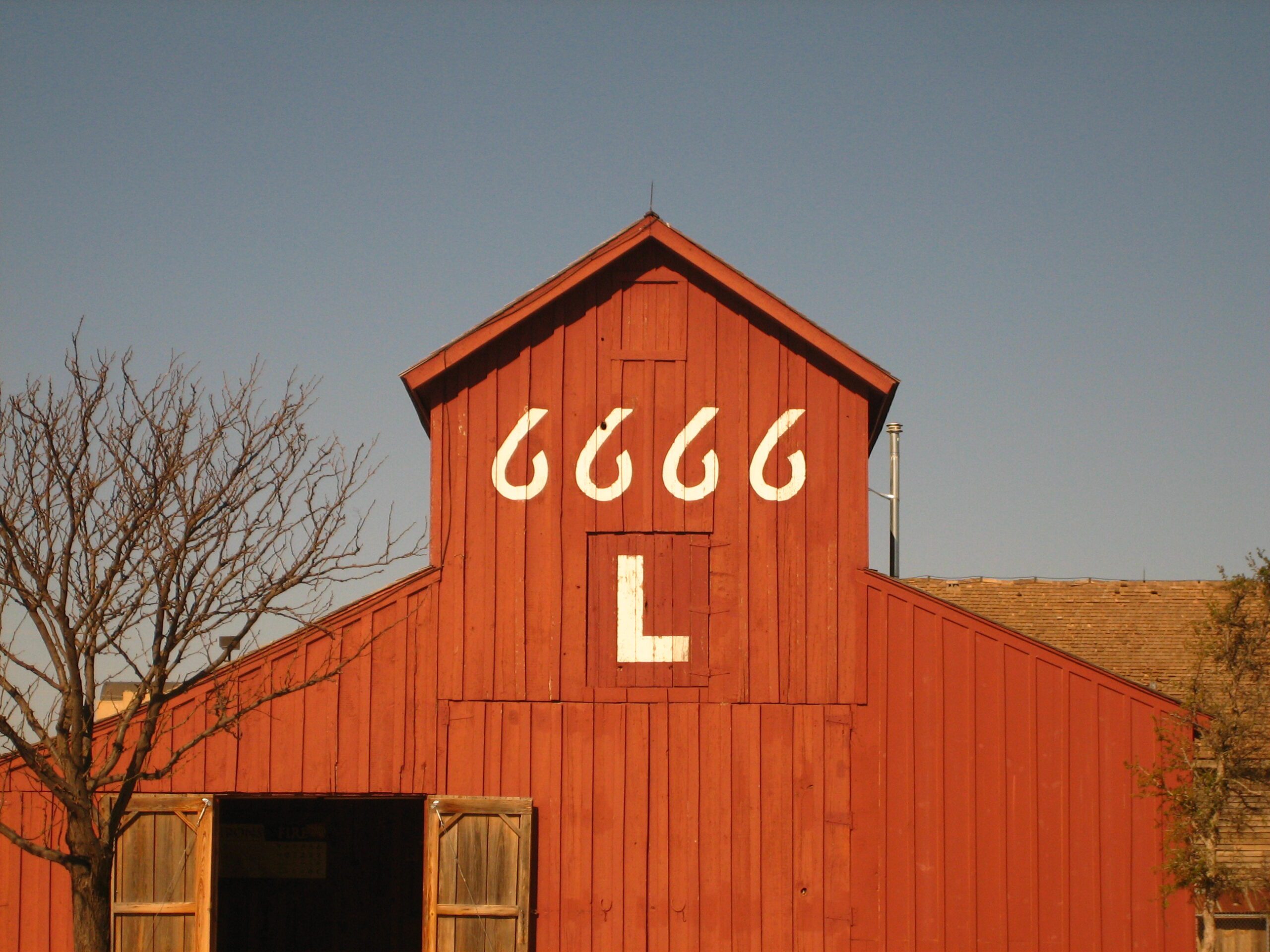
His signature asset is the Four Sixes, a ranch of about 266,000 acres in West Texas. Sheridan assembled a group of investors to buy it from the estate of Anne Windfohr Marion, and the sale closed in January 2022 at a reported $341 million, according to The Land Report. He has said he brought in partners because he could not fund it himself, which points to a minority position; our estimate puts his equity at 10 to 25 per cent, or $35 million to $85 million of the purchase price before any borrowing against it. He also owns the Bosque Ranch near Weatherford, Texas.
Taylor Sheridan’s estimated net worth
Public estimates vary because private contracts, investments, taxes and liabilities are not fully disclosed.
How this estimate is calculated
What is on the record is the reported value of Sheridan’s deals, not the contents of his accounts. His most recent television overall deal at Paramount, signed in 2021, is believed to be worth $200 million, according to Deadline, which put the NBCUniversal package he agreed in October 2025 at as much as $1 billion. The Hollywood Reporter reported the same ceiling, tied to his output across a five-year contract that does not begin until 2029. That money is future and conditional, and it is not counted here. The break itself followed Skydance’s $8 billion takeover of Paramount Global in August 2025, as Variety reported.
The ranch is the complication. Sheridan told The Hollywood Reporter that when the Four Sixes was offered to him at $350 million he replied that he was “about 330 short”, then signed the television deal and brought in investors to bridge the gap: “I was real rich for 45 minutes. Then I was broke again.” That sentence is the best guide there is to his position: he bought in by leveraging a contract rather than by writing a cheque, which means a minority stake carrying debt.
The working. Take the $150 million of the Paramount deal paid out by 2026, deduct about 45 per cent for federal tax and roughly 10 per cent for representation, and $65 million to $80 million remains. Add the pre-“Yellowstone” screenwriting and directing fees, worth perhaps $1.5 million to $3 million after the same deductions, and any back-end on the three films. Then add his equity in the Four Sixes, estimated above at $35 million to $85 million of the purchase price, and take off the borrowing that funded most of it, which on a ranch bought this way would carry two-thirds or more of the value as debt, plus the running costs of a working cattle operation. That points to about $80 million to $150 million.
The spread is wide because of the ranch, and for one more reason worth naming. The $1 billion attached to his name in headlines is a ceiling on work he has not yet delivered under a contract that does not start until 2029. Counting it would describe his prospects rather than his property, and the two are not the same number.
Confidence: Partly documented – the $200 million Paramount deal and the $341 million ranch price are reported figures, while his stake in the ranch and the debt against it are our estimate, which is what makes the range wide.
Sheridan’s best-documented act of principle came in 2017, when allegations against Harvey Weinstein surfaced shortly after “Wind River” was released by the Weinstein Company. He insisted the Weinstein name be removed and future profits directed to the National Indigenous Women’s Resource Center, according to Deadline, telling Variety he would take his own name off the film rather than share billing. Advocacy for Native American representation runs through much of his work.
The biggest public dispute of his career involved Kevin Costner’s exit from “Yellowstone”. Costner’s camp said Sheridan was stretched across too many shows, while Sheridan said Costner had asked to shoot fewer and fewer days to focus on his “Horizon” films, as he told The Hollywood Reporter. Costner later said he believed he was owed $12 million for the unfilmed second half of the fifth season, according to Variety. Sheridan has also been criticised for writing most episodes of his shows himself rather than running a conventional writers’ room.