
 How Much Are They Worth?
Celebrity fortunes, explained
How Much Are They Worth?
Celebrity fortunes, explained









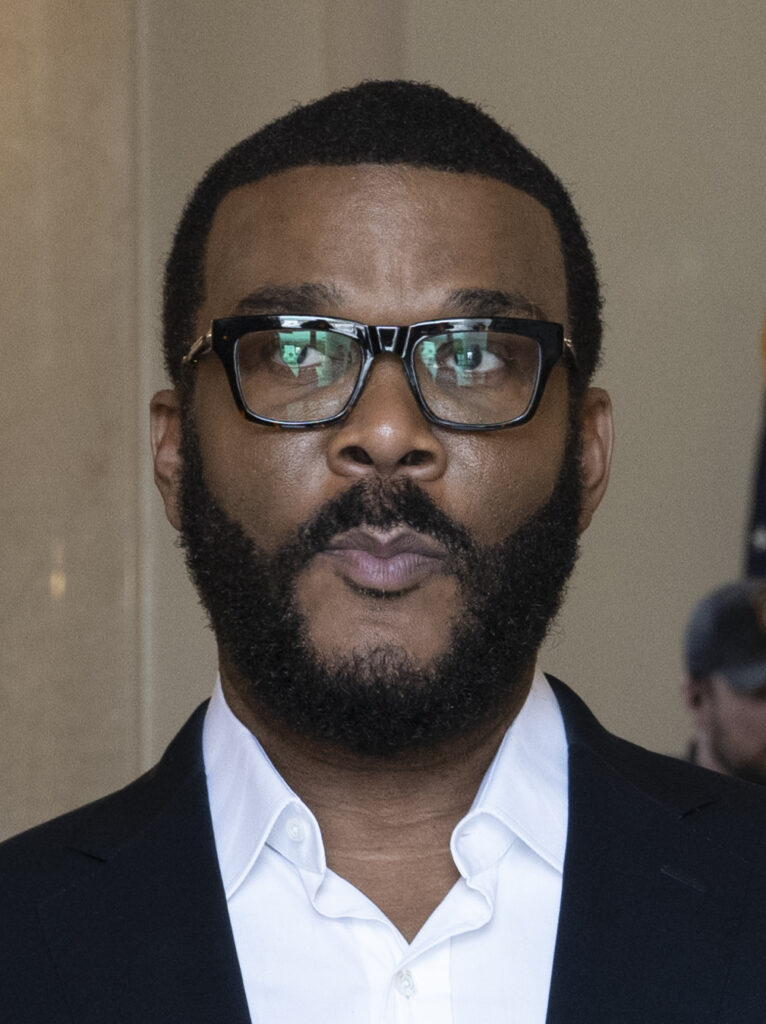
How did Tyler Perry build this fortune?
The answer unfolds through the career, earnings, deals and assets behind the headline estimate.
Before the fame
The background and early turning points that shaped Tyler Perry’s route to prominence.
Tyler Perry was born Emmitt Perry Jr. on 13 September 1969 in New Orleans, Louisiana, to Willie Maxine Perry, a preschool teacher, and Emmitt Perry Sr., a carpenter. Perry has spoken openly about a childhood marked by severe abuse at the hands of his father, alongside sexual abuse by four separate adults before he reached his teenage years, experiences that led him to attempt suicide twice as a teenager. Details of his upbringing, including the abuse and his decision to legally change his first name to Tyler at sixteen to put distance between himself and his father, are documented by BlackPast.org.
Perry has credited his mother’s church attendance and his own vivid imagination with helping him survive a difficult home life in New Orleans, foundations that later fed directly into the faith-driven, family-centred storytelling that would define his stage plays and films. He left Louisiana in his early twenties with a modest sum of savings and moved to Atlanta, a city that would go on to become the base of his entire entertainment empire.
In 1992, Perry used around $12,000 in savings to self-fund and stage his first musical, “I Know I’ve Been Changed”, in Atlanta. The show played to near-empty houses for years, and Perry’s finances collapsed so completely that he spent stretches of the following six years homeless, sleeping in his car and in pay-by-the-week motels while he kept working odd jobs and restaging the production whenever he could scrape together the money.
His persistence paid off in 1998, when a restaging at Atlanta’s House of Blues finally connected with audiences. “I Know I’ve Been Changed” went on to sell out venues across a national tour covering cities including Washington D.C., New York, Chicago and Miami, turning Perry, almost overnight, from a struggling playwright into one of the most successful figures on the “chitlin’ circuit” of Black theatre. The play’s rocky beginnings, self-funded staging and eventual turnaround are documented by the Encyclopaedia Britannica.
The breakthrough years
The career decisions and defining moments that turned recognition into sustained earning power.
Perry’s leap from stage to screen came with “Diary of a Mad Black Woman”, released in February 2005 and directed by Darren Grant from Perry’s own script. Made on a modest budget of roughly $5.5 million, the film opened at number one at the North American box office and went on to gross $50.7 million domestically, an enormous return that instantly established Perry as a commercially viable filmmaker. Detailed box-office figures for the film are recorded by Box Office Mojo.
The film also marked the screen debut of Madea, the pistol-toting, straight-talking grandmother character Perry had originated on stage and continued to play himself in drag. Madea became the connective thread across more than a dozen subsequent films, transforming a single low-budget hit into the foundation of a franchise that has anchored Perry’s career for two decades.
What the work can earn
Reported pay, contracts, royalties and performance income reveal how the fortune was funded.
Perry’s defining professional achievement is the sheer scale and structure of his output: by his own studio’s account he has produced more than 1,200 television episodes, over twenty feature films and at least two dozen stage plays, almost all of it self-financed and self-owned rather than made for a traditional studio paymaster. That ownership model, in which Perry retains the rights and profits from virtually everything he has created since the early 1990s, has repeatedly made him one of the highest-paid people in entertainment.
Perry has appeared multiple times on Forbes’ World’s Highest-Paid Entertainers list, including a top-three finish with reported annual earnings of $175 million, a run that made him the only Black entertainer, and the first to do so twice in a row, to reach the list’s top ten. AfroTech covered his standing on that list in detail.
Perry’s stature in American entertainment was put on full public display on 5 October 2019, when he held the grand-opening gala for Tyler Perry Studios in Atlanta. The star-studded event drew around 800 guests, including Oprah Winfrey, Beyoncé, Jay-Z, Spike Lee, Samuel L. Jackson, Halle Berry, Cicely Tyson and a roster of political figures, with Winfrey telling reporters on the red carpet that she felt “like a proud big sister” watching Perry’s achievement. Coverage of the event and its scale is provided by Variety.
The opening was widely reported as a historic moment for Black ownership in Hollywood, marking the debut of the first major film studio in the United States built and wholly owned by a Black entertainer, and it cemented Perry’s public image as a mogul rather than simply a successful actor-writer.

The business beyond the main career
Endorsements, ownership interests and investments can keep compounding long after the initial breakthrough.
Unlike many entertainers of his stature, Perry has largely stayed away from conventional consumer brand-ambassador work, choosing instead to channel his commercial partnerships into content and distribution deals with major media companies. Alongside his long-running BET and Paramount arrangement, he has signed first-look television and film deals with Netflix and, in December 2022, a four-picture streaming agreement with Amazon Studios under which Perry writes, directs and produces original features for Amazon’s platform.
The Amazon partnership, reported by Forbes, reflects Perry’s broader strategy of using his own studio and production infrastructure as the leverage point in these agreements, rather than lending his name to unrelated consumer products.
Perry’s central business asset is Tyler Perry Studios itself, a 330-acre production campus in southwest Atlanta that he acquired in 2015 on the grounds of the former Fort McPherson army post, land that had served as a Confederate encampment during the Civil War before later becoming a US Army base. The completed studio houses twelve purpose-built soundstages totalling more than 228,000 square feet, alongside extensive office, mill and backlot space, making it one of the largest production facilities in the country. Specifications for the campus are listed by Cinelease, the production-services company that manages stage bookings there.
Beyond producing his own work, Perry generates revenue by leasing the studio’s stages and backlot to outside film and television productions. He has also built major distribution relationships with media conglomerates, including a 2017 multiyear content partnership with Viacom covering film, television and short-form video, under which Perry has produced roughly 90 episodes of original programming a year for BET and its sister networks, as reported by The Hollywood Reporter.
Notable luxury item
A reported property or major asset offers a tangible glimpse of the wealth behind the public estimate.
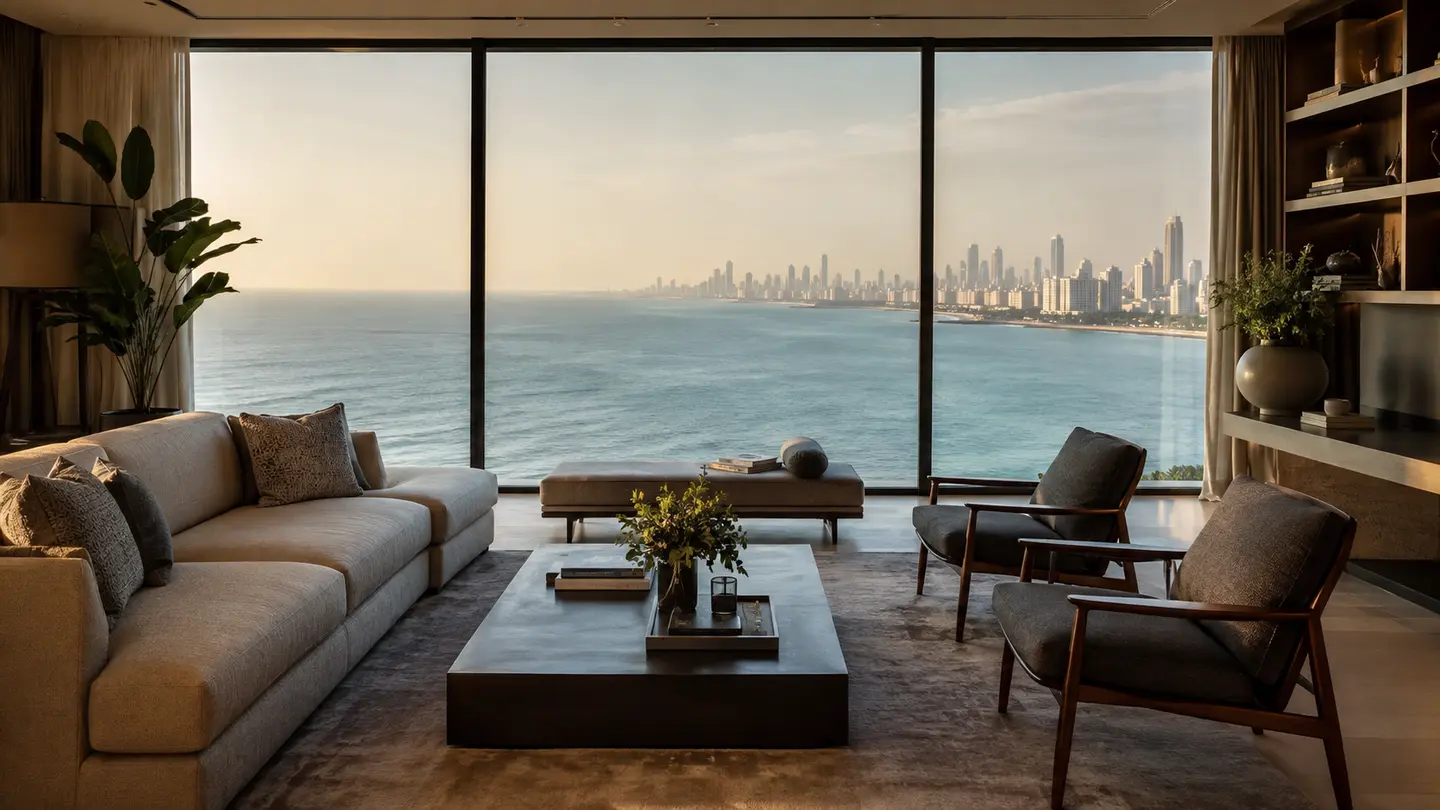
Perry’s most documented residential property is the roughly 35,000-square-foot French Provincial mansion he built on 17 acres along the Chattahoochee River in Atlanta, on land he purchased in 2005 for $9 million. He completed the house, which included an infinity pool, a wine cellar, a home theatre and a guest house, in 2007 and lived there before selling it in April 2016 for $17.5 million, a sale that set the record at the time for the highest-priced residential transaction in Atlanta’s history. The buyer later resold the estate in 2020 for $15 million, as detailed by Fox News and Forbes.
Separate from his personal residences, Perry’s 330-acre Tyler Perry Studios campus is by far his most significant piece of real estate, functioning simultaneously as his primary workplace, an income-generating rental facility for other productions, and one of the largest privately owned production lots in the United States.
Tyler Perry’s estimated net worth
Public estimates vary because private contracts, investments, taxes and liabilities are not fully disclosed.
How this estimate is calculated
Estimating Tyler Perry’s net worth starts with the unusual structure of his business: because he has owned virtually all of the film, television and stage content he has created since the early 1990s, rather than working for a fee under someone else’s ownership, his income streams compound in a way that is rare even among highly paid entertainers. Forbes, whose figures place Perry’s fortune at $1.4 billion, attributes this largely to his full ownership stake in his catalogue, his production and distribution deals with BET, Netflix and Amazon, and the rental income generated by his 330-acre studio campus.
Because Perry, like most entertainment figures, does not publish audited personal accounts, estimates vary considerably between trackers. Celebrity Net Worth (used here as a secondary, cross-checking source rather than a primary one) puts his fortune at a more conservative $850 million, a gap that likely reflects differing treatment of the studio’s asset value and ongoing production revenue rather than any dispute over the scale of his underlying business. Taken together, these figures point to a very wide but genuinely reported range rather than a single precise number.
The working supports a range of $850 million to $1.4 billion. The figure we publish is its midpoint.
Perry’s charitable giving runs through the Tyler Perry Foundation and a long list of individual, often unpublicised, acts of generosity. In September 2017 he pledged $1 million to Hurricane Harvey relief efforts in Texas, including $250,000 routed through Joel Osteen’s Lakewood Church, a donation covered at the time by the Washington Post. He has also funded Perry Place, a 20-home community in New Orleans built for elderly survivors of Hurricane Katrina, and covered funeral and travel costs for the families of George Floyd and Rayshard Brooks in 2020, including a pledge to fund the college education of Brooks’ four children.
Much of Perry’s giving has been quiet and undirected at press coverage, ranging from support for seniors and shooting victims to struggling local communities, a pattern examined by Billionaires.Africa, which has helped shape his public image as a philanthropist as much as an entertainer.
Perry’s most persistent public criticism has come from fellow filmmaker Spike Lee, who in 2009 dismissed the Madea character and Perry’s broader body of work as “coonery buffoonery”, arguing it leaned on demeaning stereotypes for commercial success. Perry responded angrily at the time, and the two have periodically revisited the disagreement in interviews since, coverage of which is set out by Vibe, though the pair appeared cordial when Lee attended the opening of Tyler Perry Studios in 2019.
More seriously, in June 2025 actor Derek Dixon, who appeared in Perry’s shows “The Oval” and “Ruthless”, filed a $260 million lawsuit alleging a sustained pattern of sexual harassment, assault and professional retaliation by Perry. Perry’s attorney has denied the allegations, describing them as a fabricated attempt to extract a financial settlement, and the case remains contested and unresolved. Details of the claims and Perry’s response are reported by TheWrap.