 How Much Are They Worth?
Celebrity fortunes, explained
How Much Are They Worth?
Celebrity fortunes, explained








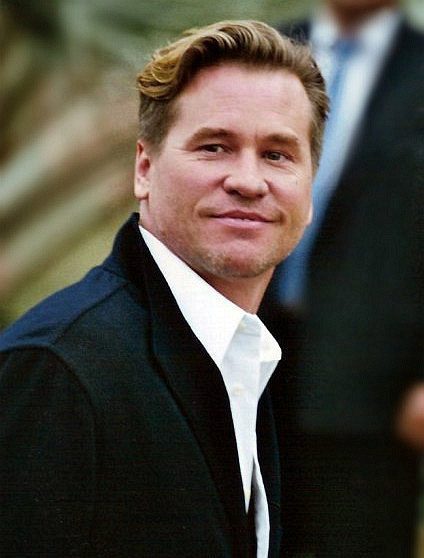
How did Val Kilmer build this fortune?
The answer unfolds through the career, earnings, deals and assets behind the headline estimate.
Before the fame
The background and early turning points that shaped Val Kilmer’s route to prominence.
Val Edward Kilmer was born in Los Angeles on 31 December 1959 and raised in the San Fernando Valley; his father worked in aerospace supply and real estate development, according to The Hollywood Reporter. His parents, who raised him as a Christian Scientist, divorced when he was nine.
His father was said to have built a fortune of around $100 million supplying parts to the aerospace industry, although his real-estate business filed for bankruptcy in 1991, according to The Guardian. Kilmer died in Los Angeles on 1 April 2025, aged 65, as reported by Variety.
At 17 Kilmer became the youngest person admitted to the drama division of the Juilliard School in New York, according to The Hollywood Reporter. While there he co-wrote and starred in How It All Began, which Joseph Papp staged at the Public Theater.
He appeared in 1983 in The Slab Boys opposite Sean Penn and Kevin Bacon, and made his film debut as the rock star Nick Rivers in the spy spoof Top Secret! (1984), singing his own songs, as recalled by BBC News. The comedy Real Genius (1985) followed.
The breakthrough years
The career decisions and defining moments that turned recognition into sustained earning power.
Kilmer’s breakthrough was Tom “Iceman” Kazansky, Tom Cruise’s rival pilot in Tony Scott’s Top Gun (1986). The film cost about $15 million to make and took more than $350 million at the box office, according to BBC News.
He went on to play the swordsman Madmartigan in Willow (1988), where he met his future wife, Joanne Whalley. The couple married in 1988 and divorced in 1996; they had two children, Mercedes and Jack, according to The Guardian.

What the work can earn
Reported pay, contracts, royalties and performance income reveal how the fortune was funded.
His defining role was Jim Morrison in Oliver Stone’s The Doors (1991). He learned around 50 Doors songs and recorded vocals so convincing that the surviving band members reportedly could not tell them from Morrison’s, according to BBC News. Roger Ebert called the performance the best thing in the film.
His Doc Holliday in Tombstone (1993) became one of his most beloved roles. In 1995 he replaced Michael Keaton in Batman Forever, which took $336 million at the global box office, second only to Toy Story that year, according to The Hollywood Reporter. The same year he starred with Al Pacino and Robert De Niro in Michael Mann’s Heat.
In 2012 Kilmer received a Grammy nomination for best spoken word album for an audio production of Zorro, and he toured his one-man show Citizen Twain, about Mark Twain, for several years, according to Variety. His memoir, I’m Your Huckleberry, named after a line in Tombstone, was published in 2020.
The 2021 documentary Val, assembled from hundreds of hours of his own home video, premiered at Cannes and was acquired by Amazon Studios, as reported by Deadline. He returned as Iceman in Top Gun: Maverick (2022), his final screen appearance, according to The Guardian.

The business beyond the main career
Endorsements, ownership interests and investments can keep compounding long after the initial breakthrough.
Kilmer did not build a notable endorsement business. As a teenager he reportedly walked off the set of a hamburger commercial because he could not summon enough enthusiasm for the product, according to The Guardian.
His commercial value was concentrated in film fees rather than brand work. The largest reported fee in his career was the $6 million he reportedly received for The Saint (1997), according to BBC News.
Kilmer’s later business activity revolved around his own creative projects. He wrote, directed and starred in Citizen Twain, which he brought to stages around the country and then to the screen, according to The Hollywood Reporter.
He also painted and exhibited his art, and helped oversee theatre programmes for high-school students performing Twain and Shakespeare, according to Variety. No revenue figures for these ventures were published.

Notable luxury item
A reported property or major asset offers a tangible glimpse of the wealth behind the public estimate.
For many years Kilmer lived on a ranch of around 5,300 acres along the Pecos River near Santa Fe, New Mexico, where he raised bison. In 2011 he sold it to a Texas oil executive for $18.5 million, according to the Albuquerque Journal.
He continued to own land in New Mexico after selling off most of the ranch, according to Variety. The value of what he retained was never published.
Val Kilmer’s estimated net worth
Public estimates vary because private contracts, investments, taxes and liabilities are not fully disclosed.
How this estimate is calculated
One documented transaction does most of the work here, and it is an asset rather than an income stream. In 2011 Kilmer sold his ranch of about 5,300 acres along the Pecos River in New Mexico to a Texas oil executive for $18.5 million, according to the Albuquerque Journal. That is a published price for a property he owned outright enough to sell, and it is the firmest number in this article.
The second figure is a fee rather than an asset. BBC News reported $6 million for The Saint in 1997, the largest of his career, and it is used here only to indicate the order of magnitude of his peak earnings. No per-film rate is assumed here, because his fees for Top Gun, The Doors, Tombstone, Heat and Batman Forever were never published, and the $336 million global take of Batman Forever reported by The Hollywood Reporter says nothing whatever about what he was paid for it.
Working forward from the sale instead: $18.5 million gross in 2011, less capital gains tax, any mortgage and the costs of sale, leaves a good deal less than the headline. Against that he retained land in New Mexico, and after 2011 his screen income fell sharply, his later years being dominated by smaller independent films, a touring one-man show about Mark Twain, audio work and his painting.
Not disclosed: his film fees, any backend participation, the mortgage and net proceeds on the ranch sale, the value of the land he kept, the earnings from his art and theatre work, and the size of his estate. An estate is also the one situation in which a definitive answer may eventually exist, because probate figures can become public in a way that a living actor’s finances never do; if his are filed and reported, the range below should be replaced by them rather than defended.
The working supports a range of $10 million to $20 million. The figure we publish is its midpoint.
Confidence: Partly documented – the $18.5 million sale of his Pecos River ranch is a published price, but no film fee of his was ever disclosed and no probate figure for his estate has been reported.
Kilmer’s public image was complicated. Directors including Joel Schumacher and John Frankenheimer criticised his on-set behaviour, while Michael Mann and Oliver Stone praised him as a collaborator, as recorded by The Guardian. Later in life he acknowledged he had been a difficult colleague and wrote to Ron Howard to apologise.
His work with high-school theatre programmes, noted by Variety, was his most visible community involvement. He was admired for the frankness of Val and his memoir about his career and private life.
Kilmer’s reputation for being difficult shaped his career after the mid-1990s. On The Island of Dr Moreau (1996) he clashed with Marlon Brando and the director John Frankenheimer, who later said he would never work with him again, as reported by Variety.
He declined to return as Batman for Batman & Robin; he implied scheduling problems, though Schumacher’s criticism of him was widely reported, according to Variety. After this period the studio roles dwindled and he worked mostly in independent films.