 How Much Are They Worth?
Celebrity fortunes, explained
How Much Are They Worth?
Celebrity fortunes, explained
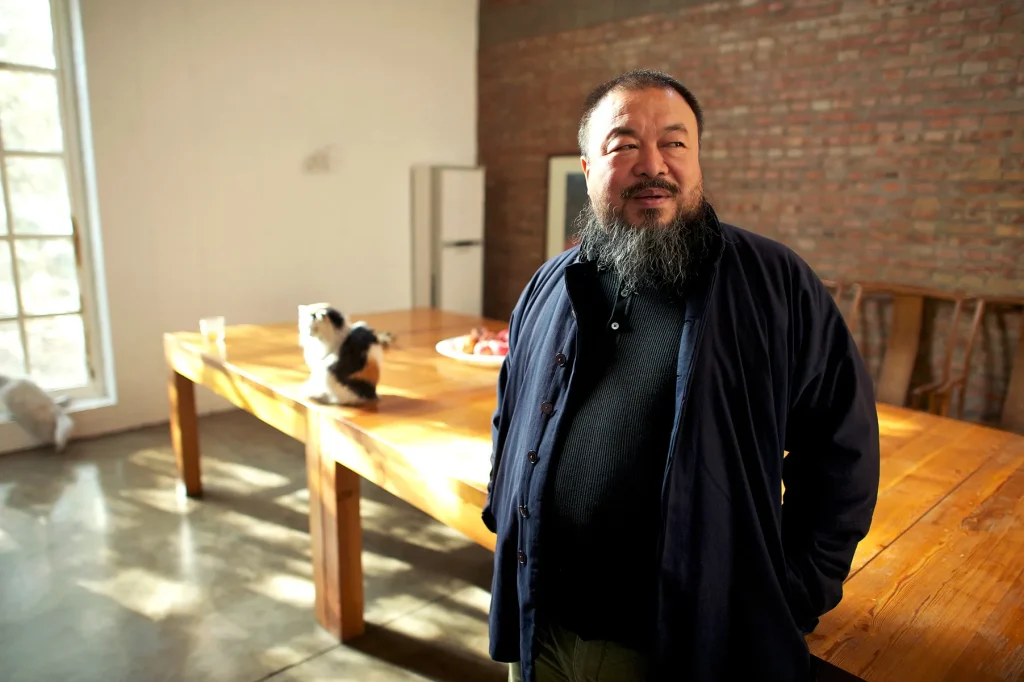
How did Ai Weiwei build this fortune?
The answer unfolds through the career, earnings, deals and assets behind the headline estimate.
Before the fame
The background and early turning points that shaped Ai Weiwei’s route to prominence.
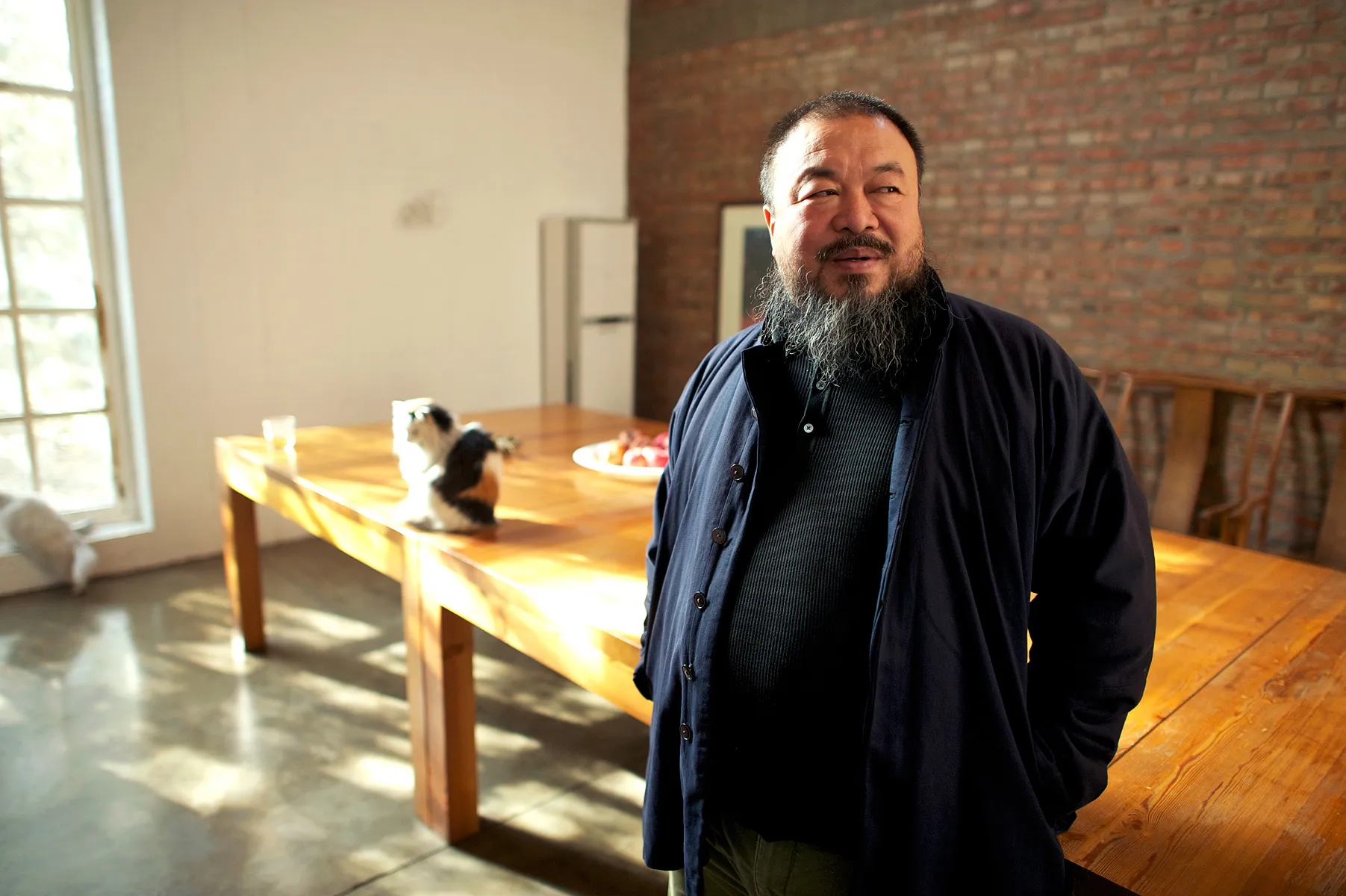
Ai was born in Beijing in 1957, the son of poet Ai Qing, and spent part of his childhood in internal exile after his father was denounced. He studied at the Beijing Film Academy, joined the Stars art group and moved to the United States in the early 1980s. Lisson Gallery’s detailed artist record places his New York period between 1983 and 1993 and documents his later work across sculpture, installation, film, photography and architecture. That range created several potential revenue channels, although no complete studio accounts are public.
After returning to Beijing, Ai edited experimental-art publications, collected historic furniture and objects, and developed a practice that questioned how cultural and monetary value are assigned. Works involving altered antique vessels, wooden furniture and photographs established an international collector base. His role with Herzog & de Meuron on Beijing’s 2008 Olympic stadium brought wider recognition, but no reliable public fee has been disclosed. HMW does not turn landmark association into an invented payment.
The breakthrough years
The career decisions and defining moments that turned recognition into sustained earning power.
Museum-scale installations made Ai’s name legible well beyond specialist contemporary-art circles. Tate Modern’s Turbine Hall commissioned Sunflower Seeds, an installation made from millions of hand-painted porcelain pieces. His practice then expanded through travelling surveys and major public projects. The breadth is visible in Lisson’s record of exhibitions at the Hirshhorn, Royal Academy, Israel Museum, Imperial War Museum and numerous European and Latin American institutions. Exhibition budgets can support production and sometimes artist fees, but institutional attendance is not personal revenue, so HMW does not monetise visitor counts.
What the work can earn
Reported pay, contracts, royalties and performance income reveal how the fortune was funded.
The most conspicuous market result came in June 2015, when Phillips sold Circle of Animals/Zodiac Heads for £3,442,500. Its catalogue identifies the work as number one from an edition of six plus two artist’s proofs. Reporting described the seller as a private collector, meaning the price was secondary-market turnover rather than a disclosed payment to Ai. An earlier gold-plated set had sold for about $4.4 million; Artnet identified Sean Parker as that auction buyer. HMW uses both sales as evidence of collector demand and edition value, while crediting Ai with none of those hammer proceeds.
New sculptures, unique works, photographs and editioned objects sold through galleries form the principal measurable business. The Zodiac Heads catalogue demonstrates how one concept can exist across an edition, but production of twelve monumental bronzes is costly and a resale result cannot be multiplied by edition size to calculate studio revenue. Ai also produces more accessible editions. In 2018, Architectural Digest reported six portrait editions priced at $750 each, limited to 500 of each; all proceeds were designated for the Public Art Fund, UNHCR and International Rescue Committee. That project shows retail reach but is excluded from personal earnings because of its charitable structure.
The business beyond the main career
Endorsements, ownership interests and investments can keep compounding long after the initial breakthrough.
Film and publishing diversify income without supporting blockbuster assumptions. Ai directed and produced Human Flow, released by Amazon Studios. Box Office Mojo records worldwide theatrical gross of $1,824,537. A gross is shared among cinemas, distributors and other participants and does not equal the director’s pay, so the model includes only a modest film allowance. His memoir created a broader rights package: Penguin Random House said world rights were acquired and rights placed in fifteen markets, with hardcover, digital and audio editions. The advance and royalties remain undisclosed.
Ai’s working model depends on galleries, museums, publishers, distributors, architects, craftspeople and fabricators rather than a publicly traded company or disclosed venture portfolio. Lisson remains a key commercial partner and in 2025 staged a London exhibition of new toy-brick and mixed-media works. Such shows can lead to primary sales, but no price list or sell-through data is public. HMW therefore assumes a long but uneven sales history, with gallery participation and production costs deducted, rather than assigning a company valuation to the Ai Weiwei Studio name.
Notable luxury item
A reported property or major asset offers a tangible glimpse of the wealth behind the public estimate.
One personal property provides a limited anchor. Architectural Digest reported in 2023 that Ai listed a 1,400-square-foot Chelsea apartment for $2 million after living there for fifteen years; the artworks shown in the listing were excluded from the sale. A listing price is not a realised price, and the original purchase cost, mortgage and eventual disposition are unknown. His studios and bases in China, Berlin, Cambridge and Portugal cannot simply be counted as owned real estate. HMW includes only restrained residential equity and no speculative valuation for studio buildings or personal art inventory.
Ai Weiwei’s estimated net worth
Public estimates vary because private contracts, investments, taxes and liabilities are not fully disclosed.
How this estimate is calculated
HMW starts with more than three decades of primary-market activity and models an irregular flow of unique and editioned sales, using the £3.4425 million secondary record only to confirm high-end demand—not as revenue and not as a price applied to every edition. It adds conservative allowances for book advances and royalties across fifteen licensed markets, documentary and speaking work, and residential equity capped well below the $2 million Chelsea asking price because sale and debt terms are unknown. It then deducts gallery participation, bronze and porcelain fabrication, studio staff, shipping and installation, professional fees, taxes, activism-related production, the documented tax-case liquidity burden and normal spending. Charitable-edition proceeds and both named auction resales contribute zero personal receipts. The result is rounded to reflect the wide uncertainty in private studio accounts.
Ai’s detention in China in 2011 and continuing criticism of authoritarian power made his public identity inseparable from his work. That profile supports invitations, publishing and film distribution, but it has also produced constraints and expense. Lisson’s exhibition history shows that commercial representation continued alongside activism: its 2013 Disposition exhibition stated that the gallery had worked closely with him since 2010. The relationship matters financially because it provides primary-market access, although the gallery’s commission and Ai’s production obligations are private.
State-imposed liabilities demonstrate why gross art-market evidence needs a strong haircut. In 2011, the Associated Press reported a 15 million yuan, then-$2.4 million, tax and penalty demand against Beijing Fake Cultural Development and $1.4 million raised by supporters. Ai characterised that money as loans, not gifts. The Guardian later reported that he began returning supporters’ money after using a $1.3 million guarantee to challenge the bill. The corporate attribution was disputed, but the episode establishes real liquidity, legal and repayment pressure. Missing data include gallery splits, fabrication invoices, edition ownership, taxes, debt and investment holdings.