 How Much Are They Worth?
Celebrity fortunes, explained







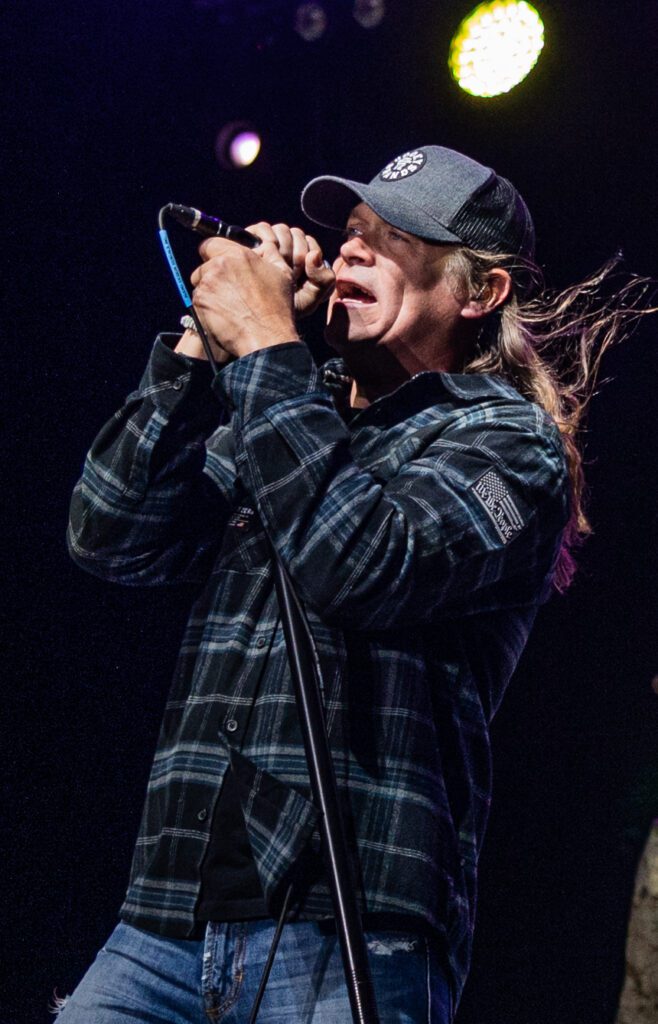
How did Brad Arnold build this fortune?
The answer unfolds through the career, earnings, deals and assets behind the headline estimate.
Brad Arnold before the fame
The background and early turning points that shaped Brad Arnold’s route to prominence.
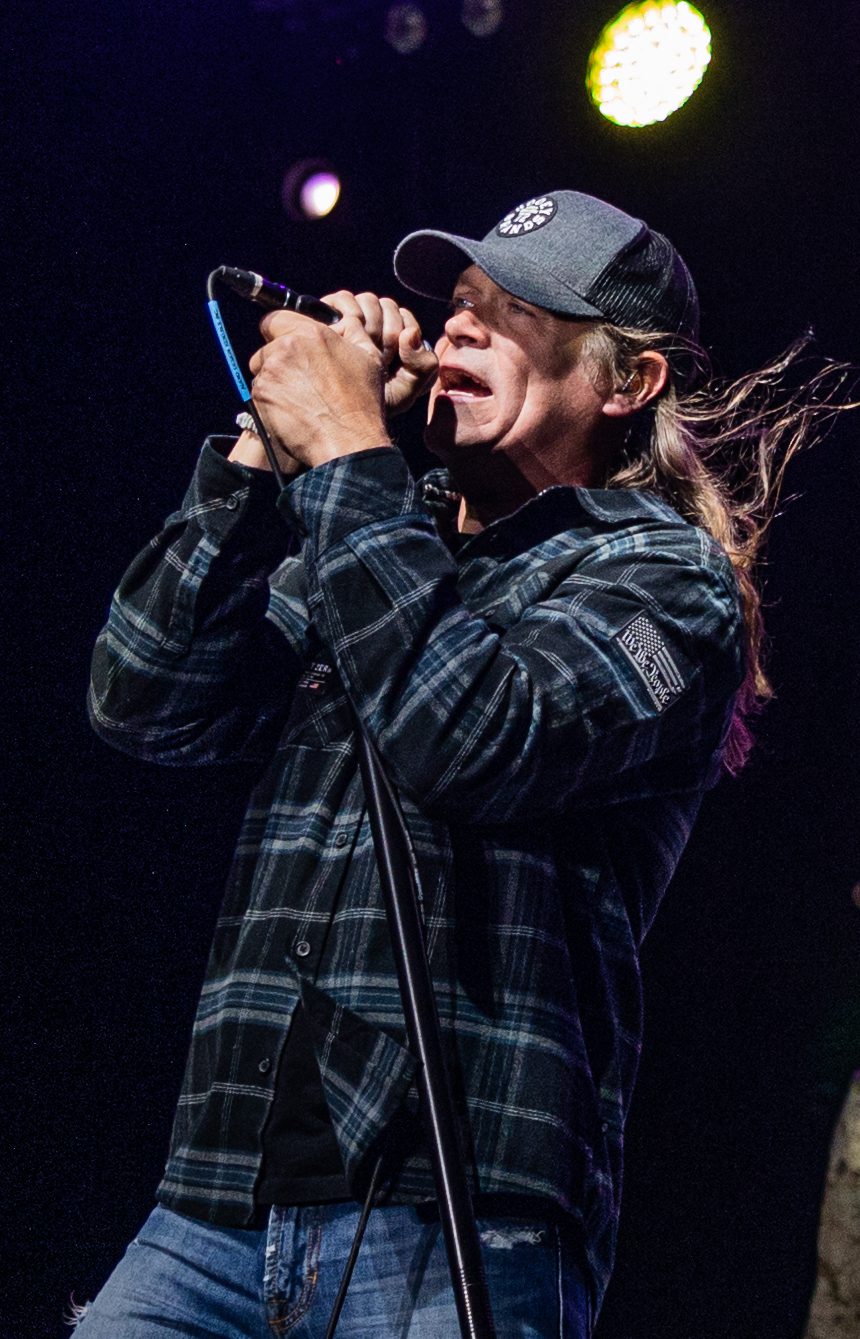
Brad Arnold was born in 1978 and grew up in Escatawpa, a small community in Jackson County, Mississippi, where in 1996 he formed 3 Doors Down with the guitarist Matt Roberts and the bassist Todd Harrell. He was the band’s original drummer and sang from behind the kit before moving to the front of the stage.
Arnold died on 7 February 2026, aged 47.
His money came from three places: royalties on records sold, royalties on songs written, and a share of the band’s road income. He wrote the song that made the band, which is why the second matters more here than it would for most singers.
The band played the Gulf Coast bar circuit in its first years with Arnold drumming and singing. The song that lifted them out of it he had written at fifteen, in an algebra class, as uDiscover Music records.
Local rock radio in Biloxi put the demo into rotation, the response was large enough to reach the majors, and the band signed to Republic, part of the Universal group. Arnold was 21 when the first album came out.
Brad Arnold’s breakthrough years
The career decisions and defining moments that turned recognition into sustained earning power.
The Better Life was released in February 2000 and sold more than six million copies in the United States, uDiscover Music reports. “Kryptonite” reached number three on the Billboard Hot 100 and was nominated for the Grammy for best rock song.
Here is what that was worth to him, and these figures are our estimates. On a 1999-vintage new-artist deal — an all-in royalty in the low teens of retail, less packaging and after recoupment — a band nets roughly a dollar to a dollar and a quarter a unit. Across the catalogue’s roughly 18 million albums, on the certifications the Recording Industry Association of America lists, that is $18 million to $23 million to the band, and on an equal four-way split Arnold’s recording royalties come to about $5 million.
Songwriting is the larger number, because a writer is paid again every time a song is reproduced or played. Mechanicals on around 18 million albums of roughly eleven tracks each, at statutory rates rising from 7.55 cents in 2000 to 9.1 cents by 2006, generate a pool near $17 million, of which the writers’ side takes the larger part; with Arnold credited on the bulk of the early catalogue his share is about $3.3 million. Performance income from radio, television and streaming we put at about $6 million, and synchronisation at about $1.5 million — roughly $10.5 million in publishing.
Touring was the third stream. The band worked arenas and amphitheatres early and sheds, casinos and festivals later. A band typically keeps a quarter to a third of a tour’s gross after production, crew, agency and management, so across twenty-four touring years Arnold’s share comes to about $7 million.
That is roughly $22.5 million gross from the music.
What Brad Arnold’s work can earn
Reported pay, contracts, royalties and performance income reveal how the fortune was funded.
Away from the Sun followed in 2002, reaching number eight on the Billboard 200 and certified four times platinum by the Recording Industry Association of America. It carried “When I’m Gone” and “Here Without You”, and The A.V. Club notes that both brought further Grammy nominations and that the “Here Without You” video has since passed a billion views on YouTube.
Seventeen Days gave the band its first chart-topping album in 2005: Rolling Stone reported it entering the Billboard 200 at number one on first-week sales of 231,000. The self-titled 3 Doors Down repeated that in 2008 on 154,000, Time of My Life reached number three in 2011 and Us and the Night number fourteen in 2016, a run Billboard charts across six albums.
By the middle of the 2010s the band’s worldwide album sales were being reported at around 20 million.
Three Grammy nominations, two albums that entered the Billboard 200 at number one, and a debut that The Boston Globe placed among the biggest first albums of its year are the measurable part of the record. The durable part is the radio: “Kryptonite”, “When I’m Gone” and “Here Without You” have stayed in rock rotation for a quarter of a century, which is the mechanism that kept paying him.

Brad Arnold’s business beyond the main career
Endorsements, ownership interests and investments can keep compounding long after the initial breakthrough.
Rock singers of his generation earned little from consumer brand deals; the equivalent income for a frontman is gear endorsement, usually settled in equipment rather than cash.
The commercial licensing of the songs is real money, used in film, television, sport and advertising for two decades, but it is paid to writers and publishers, not to the singer as an endorser. We count it once, in the $1.5 million synchronisation line above, and add nothing for it here, because counting it twice is the commonest way these figures get inflated.
The band itself was the business. 3 Doors Down was a touring partnership with a recording agreement attached, and the asset that accumulated inside it was a song catalogue, not a company.
That distinction matters below. Touring income stops when a band stops; a writer’s share of a catalogue with rock-radio staples keeps paying and keeps a resale value. Arnold’s position on both sides of that line is why his estate is worth more than his touring years alone would suggest.
Brad Arnold’s notable luxury item
A reported property or major asset offers a tangible glimpse of the wealth behind the public estimate.
The principal asset is the writer’s share of the catalogue. A body of songs generating between $400,000 and $700,000 a year in writer royalties would be valued on a sale at a multiple in the low-to-mid teens of annual income, putting its capital value at $6 million to $10 million. Unlike touring income, it passes to an estate intact.
Alongside it, the working assumes residential property bought out of the album and touring years, with retained cash and investments from twenty-six years of earnings.
Brad Arnold’s estimated net worth
Public estimates vary because private contracts, investments, taxes and liabilities are not fully disclosed.
How this estimate is calculated
The earnings are our estimate throughout, built as activity by rate. Recording: roughly 18 million albums, on the same certifications the Recording Industry Association of America lists, at a net artist royalty near $1.10 a unit gives the band $18 million to $23 million, and an equal four-way split gives Arnold about $5 million. Publishing: mechanicals of about $3.3 million, performance income of about $6 million and synchronisation of about $1.5 million, for roughly $10.5 million. Touring: about $7 million across twenty-four years. Gross, about $22.5 million.
From that we take federal and Mississippi state income tax at an effective rate near 35 to 40 per cent, management at fifteen to twenty per cent of the recording and touring income, and legal and accounting costs. That leaves roughly $9.5 million retained, against which stand twenty-six years of living costs and a family.
So we carry two components. Retained cash, investments and property we put at $4 million to $8 million. The capital value of the writer’s share of the catalogue we put at $6 million to $10 million, on the basis above.
The working supports a range of $10 million to $18 million, and the figure we publish is its midpoint.
The input that moves this figure most is the catalogue multiple, which converts income into capital. A catalogue sale, or a probate filing, would settle it; until then the difference between a ten-times and a sixteen-times multiple is worth more than every other line on this page put together.
Confidence: Indicative — the figure describes his estate at his death and is our reasoned illustration from sales, chart and royalty mechanics, with no published figure about his own money.
The band established a charitable foundation named after its first album, which raised money for children’s causes, much of it on the Gulf Coast the members came from. Arnold’s public image stayed close to that beginning, identified with a small Mississippi town throughout a career that sold records in the millions.
The founding bassist Todd Harrell left 3 Doors Down in 2013 and was replaced, and the band continued recording and touring without him; the change altered the line-up rather than the catalogue, and Arnold’s writing credits were unaffected.
The band also drew public comment for performing at an inauguration concert in Washington in January 2017, a booking debated at the time in the music press, as Paste recalled. Neither matter bears on the calculation below, which rests on sales, chart positions and royalty mechanics.