 How Much Are They Worth?
Celebrity fortunes, explained
How Much Are They Worth?
Celebrity fortunes, explained



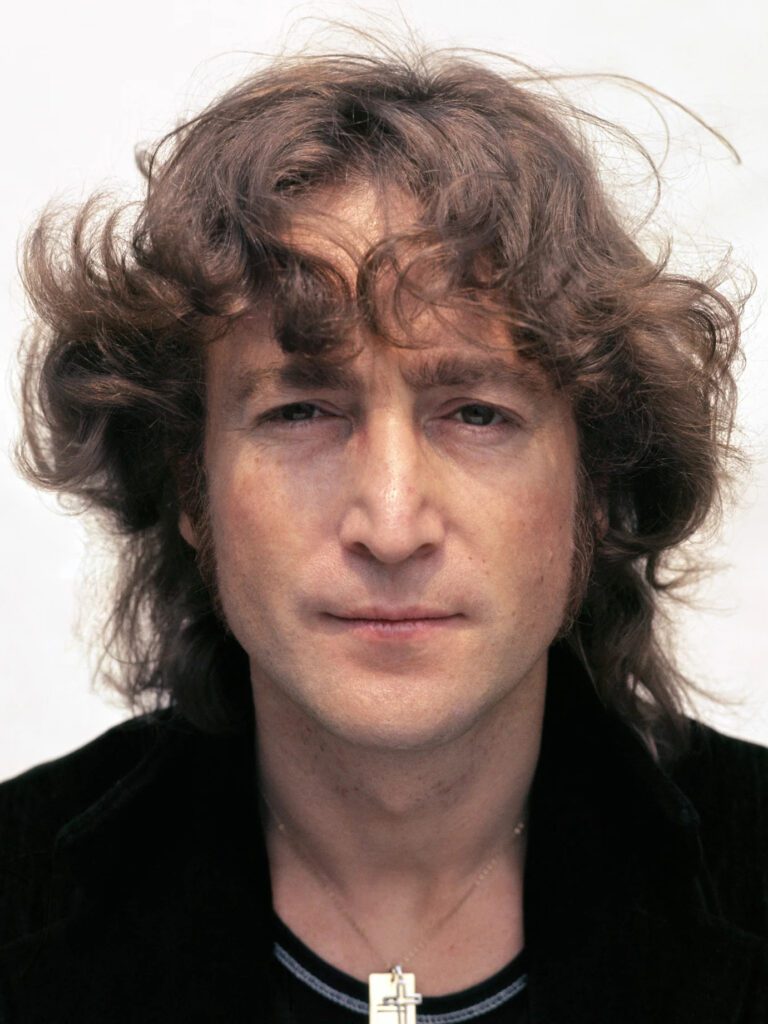
How did John Lennon build this fortune?
The answer unfolds through the career, earnings, deals and assets behind the headline estimate.
Before the fame
The background and early turning points that shaped John Lennon’s route to prominence.
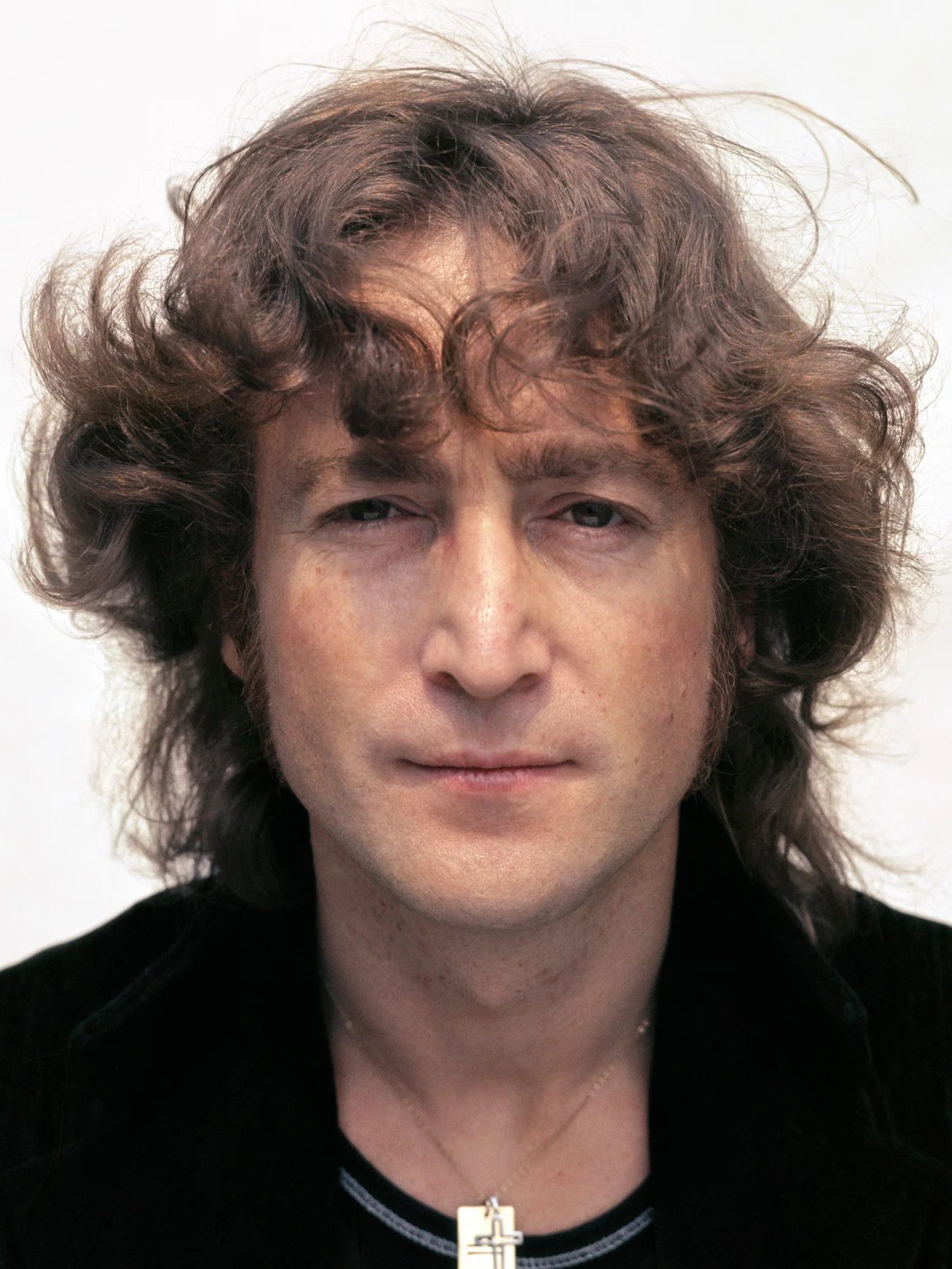
John Winston Lennon was born in Liverpool on 9 October 1940 and was raised largely by his aunt Mimi Smith in the suburb of Woolton. His mother, Julia, encouraged his interest in music and taught him banjo chords before he took up the guitar. He was educated at Quarry Bank High School and briefly at Liverpool College of Art. Lennon was shot and killed outside his New York home in December 1980, at the age of 40.
In 1957 Lennon formed a skiffle group, the Quarrymen, and that July met Paul McCartney at a church fete in Woolton; George Harrison joined the following year. After residencies in Hamburg and at the Cavern Club, and with Ringo Starr replacing Pete Best in 1962, the group became the Beatles and signed with Parlophone under George Martin. The Lennon-McCartney partnership, which the Rock and Roll Hall of Fame credits with some of music’s greatest songs, began almost at once.
The breakthrough years
The career decisions and defining moments that turned recognition into sustained earning power.
“Please Please Me” topped British charts in early 1963, and by February 1964 the Beatles’ appearance on The Ed Sullivan Show had opened the American market. Over the next six years the band released a run of albums including Revolver, Sgt. Pepper’s Lonely Hearts Club Band and Abbey Road that changed the scale and ambition of popular music. Forbes noted that the Beatles had sold some 65 million albums in the United States alone in the decades since, a catalogue in which Lennon’s estate continues to share.
What the music paid him in his lifetime: our estimate is $20 million to $40 million gross between 1963 and 1980, which is something like $80 million to $160 million in today’s money. Three streams make it up. Records first: the Beatles sold on the order of 200 million units during the band’s working life, on a royalty that began below a penny a single, split four ways, and reached roughly 10 per cent of wholesale after the 1967 renegotiation with EMI – average that across the catalogue at 25 to 40 cents a unit to the group and the band earned $50 million to $80 million, a quarter of it his. Songwriting second, and it was the bigger earner: he and McCartney wrote about 180 published songs together, and Lennon held roughly 15 per cent of Northern Songs, the company that owned the copyrights, until the pair sold their stakes to ATV in 1969. Solo work third: five studio albums between 1970 and 1975, then Double Fantasy. Against all of it ran Brian Epstein’s management commission, which took a quarter of the group’s gross at its peak, and British income and surtax that reached 95 per cent on the top slice before he left for New York – the reason “Taxman” exists. The assumption doing the most work is that average royalty rate, which moved several times inside the period.

What the work can earn
Reported pay, contracts, royalties and performance income reveal how the fortune was funded.
After the Beatles split in 1970, Lennon’s solo career produced Plastic Ono Band, Imagine and Double Fantasy, the last released weeks before his death and later awarded the Grammy for Album of the Year. He entered the Rock and Roll Hall of Fame as a Beatle in 1988 and as a solo performer in 1994, inducted by McCartney. “Imagine”, “Working Class Hero” and “Instant Karma!” remain among the most recorded songs of the era.
Lennon was appointed MBE with the other Beatles in 1965 and returned the insignia in 1969 in protest at British involvement in Nigeria and Vietnam. In 2017 the National Music Publishers’ Association gave “Imagine” its Centennial Song Award (Billboard). Liverpool’s airport has carried his name since 2001.

The business beyond the main career
Endorsements, ownership interests and investments can keep compounding long after the initial breakthrough.
Lennon did no commercial endorsements in his lifetime. Since his death, licensing of his name, image, songs and artwork, managed by Yoko Ono, has produced merchandise, reissues and occasional advertising placements, and Forbes has repeatedly ranked him among the highest-earning dead celebrities – an estimated $14 million from the 2019 Abbey Road reissue alone (Newsweek, citing Forbes).
Lennon was a founding partner in Apple Corps, the Beatles’ company set up in 1968, which still manages the band’s catalogue and brand. The publishing rights slipped out of the songwriters’ control, though: the ATV catalogue holding most of their songs was bought by Michael Jackson for $47.5 million in 1985 (Forbes). Lennon’s estate retained its songwriter royalty share and his solo catalogue.
In 2017 the NMPA added Yoko Ono as co-writer of “Imagine”, following Lennon’s own statement in an old BBC interview that the song should be credited to both of them, according to Variety. The change shares future writer royalties from one of the most valuable songs in his catalogue.

Notable luxury item
A reported property or major asset offers a tangible glimpse of the wealth behind the public estimate.
Lennon lived with Yoko Ono at the Dakota on Manhattan’s Upper West Side from 1973, and the couple built up further property in New York and elsewhere. In England he had owned Kenwood in Weybridge and then Tittenhurst Park in Ascot, where Imagine was recorded, before selling it to Ringo Starr in 1973.
His most famous possession was his psychedelically painted 1965 Rolls-Royce Phantom V, sold at Sotheby’s in 1985 for $2.29 million (Rolling Stone) – a measure of how the market values an object he simply owned.
John Lennon’s estimated net worth
Public estimates vary because private contracts, investments, taxes and liabilities are not fully disclosed.
How this estimate is calculated
The anchor is probate. Lennon’s will put his assets in England and Wales at more than $5.5 million, alongside a United States estate of about $30 million, according to UPI, which also carried a figure of $250 million for his total international holdings – an outside guess rather than a filing, and it is set aside here. That leaves $35.5 million of probated assets at his death in December 1980.
The conversion. On the consumer price index published by the Bureau of Labor Statistics, prices have risen roughly 3.9 times since 1980, which makes $35.5 million then worth about $140 million now. Both ends of the range below are that same probated sum, one in 1980 dollars and one in today’s.
What is deliberately excluded. Everything published since 1980 measures the estate’s income rather than his property. Forbes’s annual list of top-earning dead celebrities put it at $22 million in 2023, as Scripps News reported, and at $12 million in 2025 (Forbes Australia); Newsweek calculated at least $346 million earned since 2001. No multiple has been applied to those takings, because capitalising them would value the business Yoko Ono and the estate’s managers built over forty-five years, not what John Lennon owned before it. For the same reason the $20 million to $40 million his music earned in his lifetime sits in the career section above and is not added here: it was income, most of it taxed at British rates that no longer exist, and the part of it that survived is already inside the probate total.
What would move it. The probate figures record what stood in his name in two jurisdictions at the end of 1980, while Beatles income was still tangled up in Apple Corps and years before Michael Jackson bought the ATV catalogue. A full accounting of the New York and English property, the trust settled on Julian and the division with Ono would almost certainly lift the upper end; until one exists, the probated sum is the honest measure of the man rather than the machine.
Confidence: Documented – both ends of this range come from the same probated figure, one in 1980 dollars and one converted to today’s; what the estate has become since is excluded, because that money is the trust’s rather than his.
Lennon used his fame for peace campaigning, most visibly the 1969 bed-ins in Amsterdam and Montreal, and “Give Peace a Chance” became an anthem of the anti-war movement. Proceeds from his and Ono’s projects went to the Spirit Foundation, which they set up in the late 1970s. After his death Ono created the John Lennon Songwriting Contest and supported numerous peace and arts causes in his name (NPR).
Lennon’s 1966 remark that the Beatles were “more popular than Jesus” provoked record burnings and radio bans in parts of the United States. In the early 1970s the Nixon administration tried to deport him over a 1968 British cannabis conviction; he fought the case for years before winning permanent residency in 1976. After his death, the division of his estate led to a long dispute between Yoko Ono and his elder son, Julian, settled privately. The will itself left half of his British assets to Ono, with the remainder placed in trust, according to UPI.