 How Much Are They Worth?
Celebrity fortunes, explained
How Much Are They Worth?
Celebrity fortunes, explained





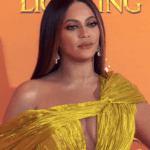




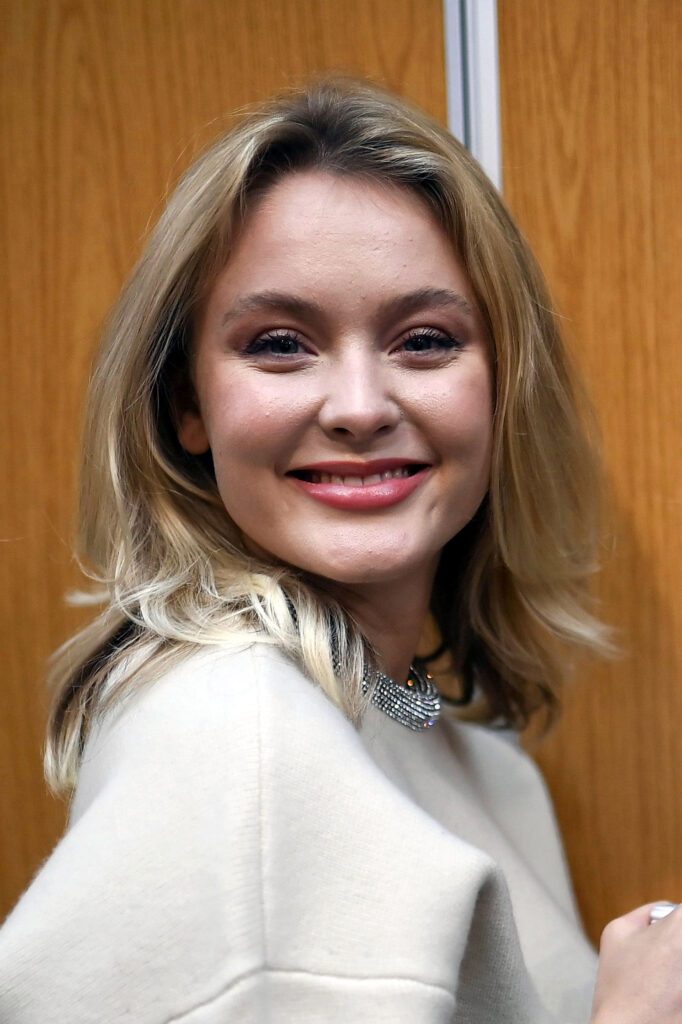
How did Zara Larsson build this fortune?
The answer unfolds through the career, earnings, deals and assets behind the headline estimate.
Before the fame
The background and early turning points that shaped Zara Larsson’s route to prominence.
Zara Larsson was born in December 1997 and grew up in Stockholm. At the age of ten she won Talang, the Swedish edition of the Got Talent format, with a performance of Celine Dion’s My Heart Will Go On, according to NME.
She has since said that she expected instant stardom after the win and that nothing happened for four years. That gap shaped a career built deliberately rather than handed over by a television show.
Larsson signed to the Swedish independent TEN Music Group in 2011 and began a relationship with Epic Records in 2013, per Music Business Worldwide. Her 2013 debut EP, Introducing, produced Uncover, a song that topped the Swedish chart and made her a star at home at 15.
TEN released her Swedish debut album, 1, in 2014, while Epic prepared her for an international launch. That two-track structure, a Swedish independent for the home market and a US major for everywhere else, later made her unusual catalogue deal possible.
The breakthrough years
The career decisions and defining moments that turned recognition into sustained earning power.
The breakthrough came in 2015 with Lush Life, which carried her to international fame, as FashionNetwork notes. The follow-up, Never Forget You with the British singer MNEK, confirmed that she could deliver repeated hits outside Scandinavia.
In 2016 she recorded This One’s for You with David Guetta as the official song of the UEFA European Championship and performed it at the tournament’s opening ceremony in Paris. Her international debut album, So Good, followed on Epic in 2017 and gathered the run of singles into one release.

What the work can earn
Reported pay, contracts, royalties and performance income reveal how the fortune was funded.
Symphony, her 2017 collaboration with Clean Bandit, reached number one on the UK Official Singles Chart, her first UK chart-topper, according to Official Charts Company. Poster Girl (2021) and Venus (2024) kept her in the charts, and her biggest American success came with Midnight Sun, whose title track topped Billboard’s Pop Airplay chart in June 2026, per Billboard.
Our estimate is that fifteen years of music have paid Larsson roughly $25 million to $45 million gross. Recordings are the base: her catalogue had passed nine billion streams by mid-2022 (Music Business Worldwide) and on its trajectory is plausibly at fifteen to twenty billion now, which at the $0.003 to $0.004 a stream reaching rights holders throws off $45 million to $80 million before anyone’s share comes out of it. Live work is the other half, and the one part with a filed number behind it: her company’s best year to date, 2024, turned over 50 million kronor on the back of a European arena tour (Göteborgs-Posten).
By mid-2022 her recordings had been streamed more than nine billion times, according to Music Business Worldwide, which puts her among the most streamed Swedish artists of her generation.
The 2026 Grammy nomination for Midnight Sun, noted by FashionNetwork, arrived more than a decade after Lush Life and marked her arrival as an album artist in the US rather than a singles act.

The business beyond the main career
Endorsements, ownership interests and investments can keep compounding long after the initial breakthrough.
Larsson has a long-term partnership with the Swedish vegan haircare brand Maria Nila, as its face and global ambassador, per Maria Nila. In 2026 the Barcelona fashion label Desigual named her the face of its summer campaign, Life’s a Beach, reported by FashionNetwork, and Urban Outfitters partnered with her around her North American tour, according to Chain Store Age.
Three concurrent ambassadorships at that level are worth $1 million to $3 million a year to an artist of her reach on our estimate, which is real money and still a minor line beside the music.
The most significant business move of her career came in June 2022, when she took control of her entire recording catalogue from TEN Music Group in an agreement with its chief executive, Ola Håkansson, and launched her own label, Sommer House, licensed through Epic in the US and distributed by Sony Sweden, according to Music Business Worldwide. Neither side put a price on the buy-back; for an artist with her streaming base a catalogue of that size changes hands in the low-to-mid eight figures, and what she paid will have been a fraction of that because she was buying from a partner rather than at auction.
Sommer House runs on a licensing model: Epic markets her new music in the US while she keeps ownership of the recordings. It is the single decision that most changes her long-run economics, moving her from a fifteen-to-twenty-five per cent artist royalty to the large majority of what her recordings earn.
Notable luxury item
A reported property or major asset offers a tangible glimpse of the wealth behind the public estimate.
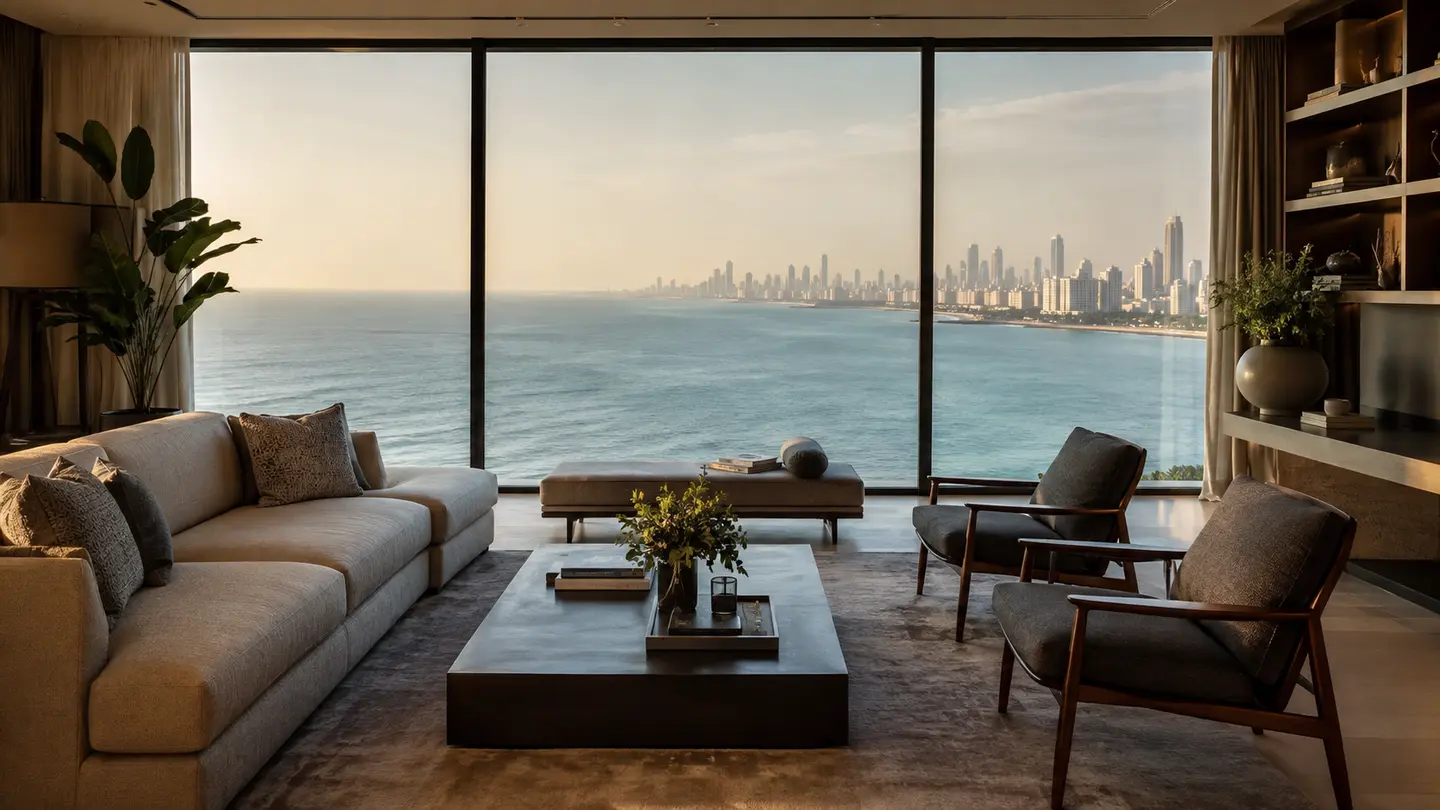
Larsson’s most valuable asset is her recorded-music catalogue, which she has owned outright since 2022 and which earns on every play. On the streaming base above and a conventional multiple of annual net earnings, we put it at $5 million to $12 million – the single largest item behind the range at the foot of this page.
She lives in Stockholm, and Swedish residential property at the level her income supports is a low-seven-figure asset rather than a defining one.
Zara Larsson’s estimated net worth
Public estimates vary because private contracts, investments, taxes and liabilities are not fully disclosed.
How this estimate is calculated
The core earnings. Streaming first. Nine billion streams by mid-2022 (Music Business Worldwide), plus the Venus and Midnight Sun eras and a US airplay number one, puts her at fifteen to twenty billion by 2026. At $0.003 to $0.004 a stream reaching the rights holder that is $45 million to $80 million; her share was a fifteen to twenty-five per cent artist royalty before 2022 and the large majority of it since she bought the catalogue, which blends out at roughly $12 million to $28 million. Songwriting on the portion she co-wrote adds $3 million to $8 million. Live and everything else is anchored on the one filed year: 50 million kronor of net revenue in 2024 with an operating profit of 29.2 million kronor (Göteborgs-Posten), which at about 10.5 kronor to the dollar is $4.8 million and $2.8 million. Scaling that across a fourteen-year career – $0.5 million to $1.5 million a year to 2017, $1.5 million to $3 million to 2023, $4 million to $6 million since – gives $10 million to $20 million. Together, $25 million to $45 million gross. The assumption carrying the most weight is the stream count, projected forward from the 2022 figure rather than counted play by play.
From earnings to wealth. Swedish corporation tax at 20.6 per cent, personal tax on what she draws out, and a decade of touring costs, management and commissions take the great majority of that gross. What is left is a personal position built from retained company profit, the catalogue she owns and ordinary savings: call it $12 million to $22 million. The catalogue is carried at $5 million to $12 million of that, on a conventional multiple of its annual net earnings.
Larsson is the unusual case of an artist whose asset base is growing faster than her income, because at twenty-eight she already owns the recordings most performers spend a career trying to buy back.
Confidence: Partly documented – one year of filed company accounts and a published stream count anchor it, and the catalogue value and the career scaling are our estimate.
Larsson’s public image rests on candour. She has been outspoken on feminism, body image and LGBTQ rights since her teens, and she speaks to her audience directly on social media rather than through a managed persona.
She has also framed catalogue ownership as a matter of principle, saying that owning her own catalogue was very rare for a woman in the music industry, as quoted by Music Business Worldwide.
Her directness has drawn criticism. In March 2026 she was criticised for a joking reply to a fan’s comment about abortion under a concert video. She defended the remark, arguing that the subject did not have to be taboo, as reported by Newsweek.
Claims circulated online that the episode cost her a commercial deal. They trace to social-media accounts rather than to any brand or outlet, and nothing in her subsequent partnership announcements is consistent with them, so they carry no weight in the figures here.