
 How Much Are They Worth?
Celebrity fortunes, explained
How Much Are They Worth?
Celebrity fortunes, explained








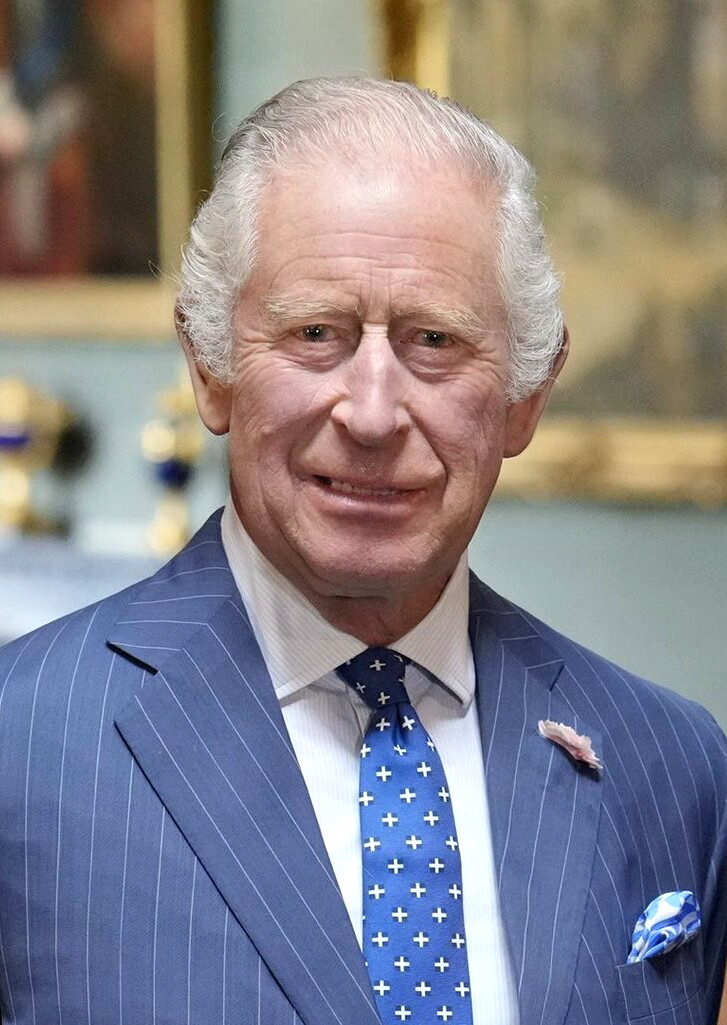
How did King Charles III build this fortune?
The answer unfolds through the career, earnings, deals and assets behind the headline estimate.
Before the fame
The background and early turning points that shaped King Charles III’s route to prominence.
Charles Philip Arthur George was born on 14 November 1948 at Buckingham Palace, the first child of Princess Elizabeth and the Duke of Edinburgh, and became heir apparent at three when his mother acceded to the throne. He was sent to Cheam and then to Gordonstoun in Scotland, his father’s old school, which he later described in bleak terms, and went on to Trinity College, Cambridge, becoming the first heir to the British throne to earn a university degree, according to Wikipedia.
Created Prince of Wales in 1958 and invested at Caernarfon Castle in 1969, Charles served in the Royal Air Force and the Royal Navy through the early 1970s, qualifying as a pilot and commanding a minehunter. He then took on the Duchy of Cornwall, the landed estate that funds the heir, and turned it from a conventional aristocratic holding into a far more actively managed and considerably more profitable enterprise.
The breakthrough years
The career decisions and defining moments that turned recognition into sustained earning power.
His defining decision as heir was to use the position for advocacy rather than ceremony. He founded The Prince’s Trust in 1976 with his naval severance pay, to help young people out of unemployment, and it grew into one of the largest youth charities in Britain. He also became an early and widely mocked advocate of organic farming, architectural traditionalism and environmental protection, positions that took several decades to move from eccentric to mainstream.

What the work can earn
Reported pay, contracts, royalties and performance income reveal how the fortune was funded.
Charles acceded to the throne on 8 September 2022 and was crowned at Westminster Abbey on 6 May 2023, at seventy-three the oldest person ever to become British monarch, after the longest apprenticeship in the institution’s history. The Prince’s Trust has supported well over a million young people. His Duchy Originals food brand, launched in 1990 from the Highgrove estate, established that a royal-backed commercial venture could work at scale, with profits directed to charity.
He is among the most photographed people alive and has been a fixture of public life for the entire television era. His reign has been shaped by two things in particular: a deliberate signalling of a smaller, less expensive monarchy, and his announcement in February 2024 that he was being treated for cancer, which he made public in unusually direct terms and which prompted an unprecedented level of open discussion about a monarch’s health.

The business beyond the main career
Endorsements, ownership interests and investments can keep compounding long after the initial breakthrough.
The monarch endorses no commercial products directly. The royal warrant, however, is effectively the institution’s endorsement instrument, and Charles undertook a substantial review of the warrants on his accession, with the removals and confirmations closely watched by the firms concerned. His own brand involvement runs through Duchy Originals, where the proceeds go to his charitable foundation.
The Duchy of Cornwall, which Charles held for more than fifty years, is a property and land business spanning tens of thousands of acres across the south-west of England, and its annual surplus rose substantially under his stewardship. Duchy Originals, now sold through Waitrose, remains a significant food brand. As king he holds the Duchy of Lancaster instead, which performs the equivalent function for the sovereign.

Notable luxury item
A reported property or major asset offers a tangible glimpse of the wealth behind the public estimate.
Charles personally owns Highgrove House in Gloucestershire, together with Balmoral and Sandringham, inherited from his mother without inheritance tax under the rules governing sovereign-to-sovereign bequests. He also inherited her private investment portfolio, art and jewellery. As with his mother, Buckingham Palace, Windsor Castle, the Crown Jewels and the Royal Collection are held in trust for the nation and cannot be counted as personal property, and the Crown Estate is not his to sell: its profits pass to the Treasury, which returns a proportion as the Sovereign Grant, set at 132.1 million pounds for 2025-26 according to the House of Commons Library and the Royal Household’s own published accounts. The Duchy of Lancaster, which provides his private income as sovereign, is held in trust for him in that role rather than owned outright (the Institute for Government).
King Charles III’s estimated net worth
Public estimates vary because private contracts, investments, taxes and liabilities are not fully disclosed.
How this estimate is calculated
Documented. As with his mother, the institutional side is public record: the Crown Estate’s profits pass to the Treasury, which returns a proportion as the Sovereign Grant – set at 132.1 million pounds for 2025-26 – and the Duchy of Lancaster provides his private income as sovereign while being held in trust for that role (the House of Commons Library, the Royal Household’s published accounts).
Estimated. The Sunday Times Rich List assessed his personal fortune at 640 million pounds in 2025, an increase of 30 million on the previous year and roughly double his mother’s personal wealth at her death. That counts only assets he could sell: Highgrove, Balmoral, Sandringham, inherited investments, private art and jewellery, and the racing bloodstock.
The larger figure. MoneyWeek has reported an investigation estimating his private wealth at around 1.8 billion pounds once royal holdings, vehicles, private jewels and investments are counted together. That is a different measure, not a correction of the first.
Not verifiable. The value of inherited art and jewellery, which is never catalogued publicly; and the terms of the sovereign-to-sovereign inheritance, which passed free of inheritance tax.
Why this range. It follows the narrower and more defensible measure – what he personally owns and could sell – rather than the institutional total.
The working supports a range of $800 million to $900 million. The figure we publish is its midpoint.
Related on How Much Are They Worth: Queen Elizabeth II · Donald Trump · 10 of the Most Expensive Celebrity Homes and Estates
Think you know King Charles III? Take the quiz: Easy · Medium · Legendary
Charles has founded or led a larger charitable network than any previous heir or monarch, with The Prince’s Trust, The Prince’s Foundation and a cluster of environmental and heritage bodies collectively raising very large sums over five decades. His public image has been transformed over that period, from the widely criticised figure of the 1990s to a monarch whose long-held environmental positions are now broadly accepted.
The collapse of his marriage to Diana, Princess of Wales, and the competing television interviews that followed, remain the most damaging episode of his public life. As Prince of Wales he was criticised for the so-called black spider memos, handwritten letters lobbying government ministers, and for cash donations accepted by his charitable foundation from overseas donors. More recently, his Duchies have faced scrutiny over their tax treatment and over commercial rents charged to public bodies.