
 How Much Are They Worth?
Celebrity fortunes, explained
How Much Are They Worth?
Celebrity fortunes, explained





How did Winston Churchill build this fortune?
The answer unfolds through the career, earnings, deals and assets behind the headline estimate.
Before the fame
The background and early turning points that shaped Winston Churchill’s route to prominence.
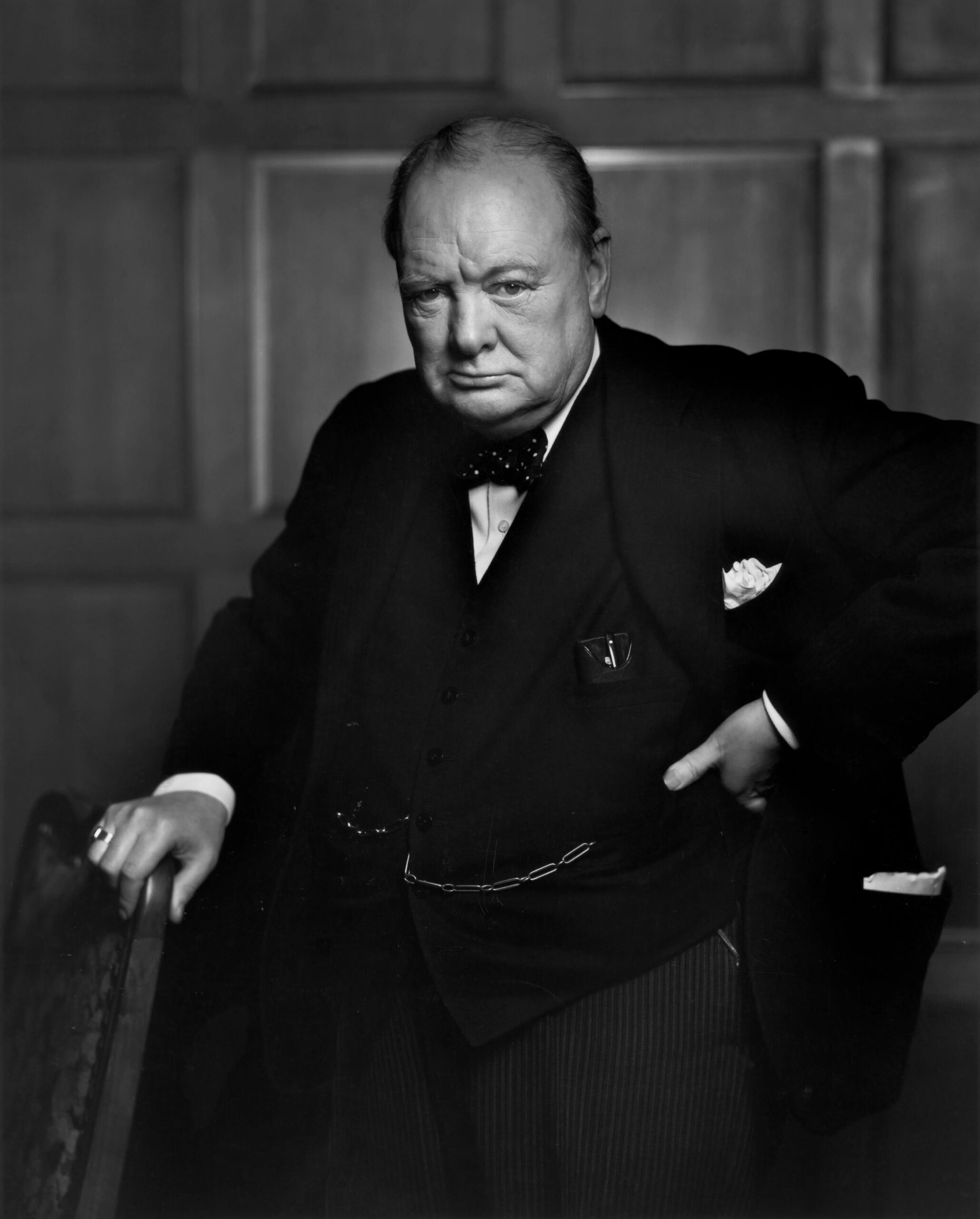
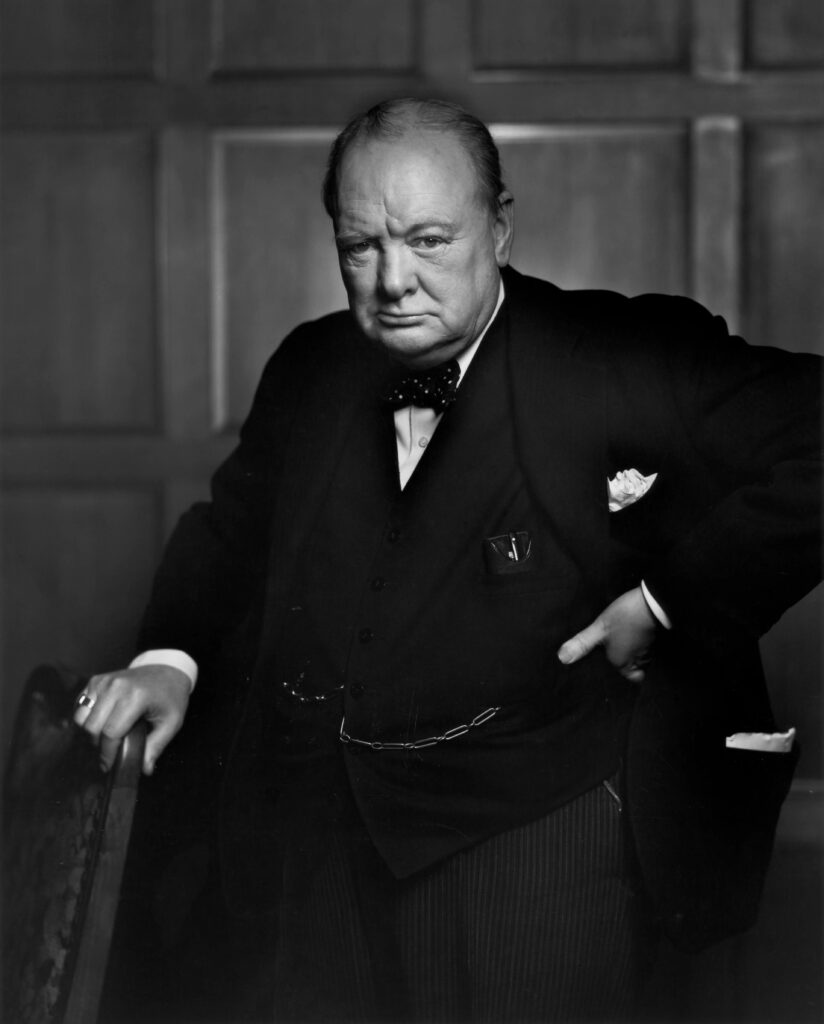
Winston Leonard Spencer Churchill was born on 30 November 1874 at Blenheim Palace in Oxfordshire, the elder son of Lord Randolph Churchill and the American heiress Jennie Jerome. Despite the grand birthplace, he inherited no fortune: his father’s political career consumed the family’s money, and Churchill spent most of his life earning his living by his pen.
Historians of his finances, notably the banker David Lough, have shown that he spent heavily, gambled, lost money on the stock market and repeatedly came close to financial collapse, as summarised by The Churchill Project at Hillsdale College. He died in London on 24 January 1965, aged 90, and was given a state funeral.
Churchill trained at Sandhurst and was commissioned into the 4th Hussars in 1895, but he quickly combined soldiering with journalism. Despatches from Cuba, India and Sudan became his first books, including The Story of the Malakand Field Force and The River War.
In 1899 the Morning Post sent him to South Africa for £250 a month plus expenses, which made him the best-paid war correspondent of the day, according to the International Churchill Society. He was captured by the Boers after an armoured-train ambush and escaped from a prisoner-of-war camp in Pretoria, an episode described by the National Army Museum, and the fame it brought helped him win the Oldham seat in Parliament in 1900.
The breakthrough years
The career decisions and defining moments that turned recognition into sustained earning power.
His political rise was rapid. He held senior office before the First World War as President of the Board of Trade, Home Secretary and First Lord of the Admiralty, and later served as Chancellor of the Exchequer from 1924 to 1929.
His literary income grew alongside. During the 1930s, his ‘wilderness years’ out of office, he was among the highest-paid journalists in Britain, according to The Churchill Project at Hillsdale College, and he resigned from the shadow cabinet in 1931 partly to devote more time to the books and newspaper columns that kept his bank at bay.

What the work can earn
Reported pay, contracts, royalties and performance income reveal how the fortune was funded.
Churchill became Prime Minister in May 1940 and led Britain through the Second World War, serving again from 1951 to 1955. His wartime leadership and speeches are the foundation of his lasting reputation.
As a writer he produced multi-volume works including The World Crisis, Marlborough: His Life and Times, The Second World War and A History of the English-Speaking Peoples. During the war he sold the film rights to Marlborough and to A History of the English-Speaking Peoples for £50,000 each, according to The Churchill Project at Hillsdale College, which put the value of each deal at around $5.6 million in modern money.
In 1953 he was awarded the Nobel Prize in Literature for his mastery of historical and biographical description and for brilliant oratory in defending exalted human values, as recorded by NobelPrize.org. He wrote to his wife that the prize came to £12,100 free of tax, according to The Churchill Project at Hillsdale College; Clementine Churchill received it on his behalf in Stockholm.
He was made a Knight of the Garter in 1953 and became an honorary citizen of the United States in 1963. His home at Chartwell has been open to the public since 1966, according to the National Trust.

The business beyond the main career
Endorsements, ownership interests and investments can keep compounding long after the initial breakthrough.
Churchill did not endorse products in the modern sense, and there were no paid sponsorships. His name was later attached to cigars, whisky and other goods, but those uses developed largely through custom and licensing after his fame was established, not through deals he negotiated for income.
His commercial relationships were with newspapers and publishers: the Morning Post and the Daily Telegraph in Britain, and Life and The New York Times in the United States, which carried his writing to a mass audience.
Churchill’s business was authorship, and he ran it with commercial shrewdness. His literary agent Emery Reves placed his work around the world, and after 1945 the rights to his war memoirs attracted record offers. Time magazine reported in 1947 that the US serial rights were rumoured to be worth a record $1 million or more, according to Time.
The final American terms were larger. The Churchill Project at Hillsdale College records that Life magazine secured the serial rights for $1.4 million, while Houghton Mifflin paid about a further $250,000 for the book rights. Reves charged Churchill nothing for negotiating these contracts. His advisers also devised arrangements that kept much of the post-war income out of ordinary income tax, according to International Churchill Society.

Notable luxury item
A reported property or major asset offers a tangible glimpse of the wealth behind the public estimate.
Chartwell in Kent was the Churchills’ family home from 1922 for around forty years, according to the National Trust. By 1946 its running costs had become a burden, and a group of admirers led by Lord Camrose raised £50,000 to buy it for the nation while allowing the Churchills to live there for life, according to the International Churchill Society. The same account notes that he held more than £100,000 in savings at the time and needed about £12,000 a year to maintain his lifestyle.
He used the proceeds to buy neighbouring farms and to start a racing stable, according to International Churchill Society. His paintings, a private pastime during his lifetime, have since become valuable: his wartime work Tower of the Koutoubia Mosque sold at Christie’s in 2021 for about $11.5 million, according to The Boston Globe, although that sum reflects the art market decades later and not his own wealth.
Winston Churchill’s estimated net worth
Public estimates vary because private contracts, investments, taxes and liabilities are not fully disclosed.
How this estimate is calculated
Churchill held office for most of his adult life, but none of the figures below come from the public purse; his money came from writing and journalism. One contemporary record states what he actually held. International Churchill Society records that in 1946 he had over £100,000 in the bank and calculated that he needed about £12,000 a year to live, and that Chartwell was sold for £50,000 to friends who let the Churchills stay there for life. International Churchill Society records that the buyers were a group of admirers led by Lord Camrose, who presented the house to the National Trust.
Those two sums are the anchor, because a bank balance and a house sale describe what a man owns. Around them sit his earnings: The Churchill Project at Hillsdale College gives £50,000 each for the film rights to Marlborough and A History of the English-Speaking Peoples, sold in 1943 and 1944, and The Churchill Project at Hillsdale College gives the £12,100 Nobel Prize of 1953. The 1946 bank balance already reflects the film-rights money.
Converting with the Bank of England inflation calculator, on which prices have risen roughly 45-fold since the late 1940s, and at about $1.35 to the pound, the £100,000 balance is worth roughly $6 million today, Chartwell’s £50,000 about $3 million and the Nobel Prize about $0.7 million. Adding the contents of Chartwell, his paintings, and the royalties he drew personally after 1953, then allowing for the debts he carried, gives a range of about $8 million to $20 million in today’s prices.
The largest sum in his working life is deliberately left out. The Churchill Project at Hillsdale College records $1.4 million from Life for the US serial rights to The Second World War and about a quarter of a million more from Houghton Mifflin for the book rights, but the 1946 account states plainly that he wanted the memoir income to go to his heirs, and it was settled on a trust rather than kept. Counting it would measure what he earned instead of what he owned, and it is the single reason this range sits well below the figures usually quoted for him. No probate value for his 1965 estate appears here, because no source giving one could be opened, and the conversion itself is contested: measured against average earnings rather than retail prices, the same shillings come out several times higher.
Confidence: Partly documented – a contemporary account of his own bank balance and the Chartwell sale price are firm, but the war-memoir income is excluded because it was settled on a trust for his heirs rather than held by him, and an eighty-year price conversion is itself contested.
Churchill’s public image is inseparable from the Second World War, and he remains one of the most admired figures in British history. Lady Churchill presented Chartwell to the National Trust immediately after his death, according to International Churchill Society, and Churchill College, Cambridge, was founded as a national memorial with public donations.
His private generosity was real but often informal, and his wider financial legacy was directed mainly to his family through trusts that protected the proceeds of his later books.
Churchill’s record draws sustained criticism from historians, including the Gallipoli campaign of 1915, the return to the gold standard in 1925, his views on empire and India, and his government’s response to the Bengal famine of 1943. These debates remain live and contested.
His personal finances have also been scrutinised. International Churchill Society notes that he ran up large debts, gambled, lost substantial sums in the 1929 crash and later share and currency trading, and received secret cash injections from wealthy supporters, beginning in 1938. While Chancellor he treated his literary income as capital rather than income by ‘retiring’ as an author, according to The Churchill Project at Hillsdale College.