Arnold Palmer

How Much Are They Worth? Celebrity fortunes, explained
Arnold Palmer
Net worth story

Arnold Palmer

Net worth revealed after 6 slides

Begin the countdown
The countdown
1 of 7
#
Arnold Palmer
The fortune behind the fame

How did Arnold Palmer build this fortune?

The answer unfolds through the career, earnings, deals and assets behind the headline estimate.

#
Arnold Palmer
6 slides until the reveal

Before the fame

The background and early turning points that shaped Arnold Palmer’s route to prominence.

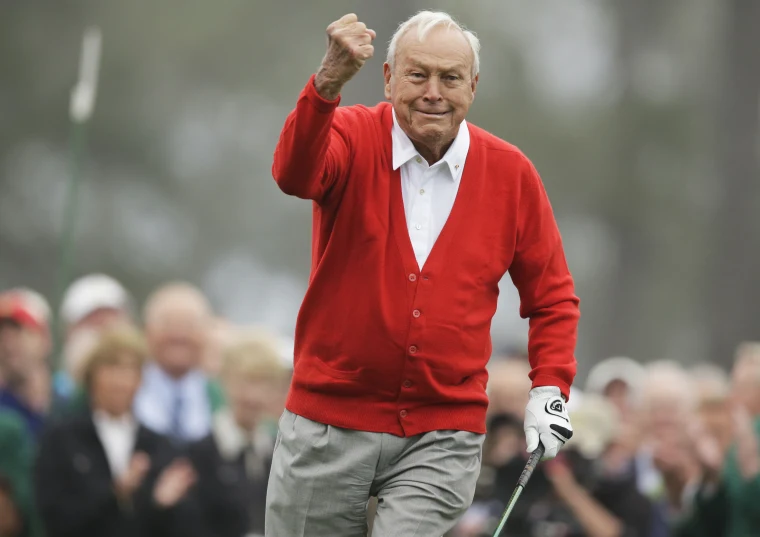
Arnold Palmer won seven majors, transformed televised golf and pioneered the modern athlete-endorsement business with agent Mark McCormack. He died in 2016, so HMW estimates the commercial estate and retained legacy interests rather than a living person’s cash. The PGA Tour profile records 62 tour wins. The financial anchors are Forbes’ lifetime and posthumous earnings, licensing activity, golf properties and design—not prize money alone.

Palmer won the 1954 US Amateur, turned professional and secured his first tour win in 1955. He won the 1958 Masters before television amplified his style and “Arnie’s Army” following. The Masters record confirms four victories. Early endorsement income was reportedly below $10,000 annually before McCormack formalized the commercial program, showing how management changed the economics.

#
Arnold Palmer
5 slides until the reveal

The breakthrough years

The career decisions and defining moments that turned recognition into sustained earning power.

Palmer won the Masters and US Open in 1960 and nearly completed a modern grand slam at the Open Championship. The timing coincided with television’s expansion. The USGA’s 1960 account verifies the major at Cherry Hills. The sporting surge gave McCormack a platform for long-duration corporate relationships rather than one-off appearance fees.

Advertisement
#
Representative illustration of contracts and earnings
Representative image
4 slides until the reveal

What the work can earn

Reported pay, contracts, royalties and performance income reveal how the fortune was funded.

Palmer added two Open Championships and two more Masters titles, helped establish the PGA Tour’s commercial appeal, co-founded Golf Channel and built Bay Hill into a premier tournament home. Golf Channel’s corporate history confirms its Palmer connection. These milestones created recurring media and property value, although tournament charity and purses are not personal assets.

Prize money totaled only about $3.6 million across the PGA and Champions tours, according to Forbes. The larger streams were endorsements, course design, apparel licensing, golf clubs and the tea-and-lemonade beverage. Forbes reported $40 million of posthumous annual earnings in 2017, demonstrating valuable royalty and licensing participation.

#
Representative illustration of endorsements and business growth
Representative image
3 slides until the reveal

The business beyond the main career

Endorsements, ownership interests and investments can keep compounding long after the initial breakthrough.

Palmer’s partners spanned airlines, automobiles, finance and apparel. Hundreds of stores sold branded clothing in Asia. His beverage became a mass-market category through AriZona, but retail sales belong to the manufacturer. The spiked beverage licensing announcement illustrates continued extension. HMW values royalties held by Palmer entities, not manufacturer sales.

Arnold Palmer Enterprises, course design, Bay Hill and Latrobe interests sit alongside licensing managers and family entities. The estate had dozens of licensees after death. Forbes’ all-time analysis noted 39 licensees and $40 million posthumous income. HMW applies a royalty multiple only to normalized estate cash flow, excluding foundation assets and manufacturer-owned operations.

Advertisement
#
Representative illustration of a high-value property asset
Representative image
2 slides until the reveal

Notable luxury item

A reported property or major asset offers a tangible glimpse of the wealth behind the public estimate.

Palmer’s daughters inherited through private arrangements, and ownership of clubs, trademarks and operating companies is not fully public. The Arnold & Winnie Palmer Foundation is separate and excluded. Tax, beneficiary distributions, property maintenance and licensing-manager shares reduce gross brand income. The estate may also have restructured rights after 2016, so early posthumous earnings are not projected unchanged forever.

#
Arnold Palmer
The reveal

Arnold Palmer’s estimated net worth

Approximately $700 million as of August 2026 (HMW estimate).

Public estimates vary because private contracts, investments, taxes and liabilities are not fully disclosed.

How this estimate is calculated

The estate model begins with the portion of lifetime gross plausibly retained at death, cross-checks it against known properties and businesses, then adds the present value of normalized posthumous royalty and licensing cash flow. It applies deductions for management, property upkeep, beneficiary distributions and consumption before death. Beverage and apparel royalties are valued, but manufacturer sales are not. Foundation holdings and tournament charity funds remain excluded.

Posthumous earnings require a different treatment from living-athlete income. Royalties paid to an estate can be distributed to beneficiaries, reinvested, used for property and brand administration or directed under existing charitable arrangements. HMW therefore capitalizes only normalized net cash after manager and operating shares, and applies a declining long-term rate rather than multiplying the unusually strong first posthumous year indefinitely. Bay Hill and Latrobe-related property receive conservative net-equity allowances, while the value of hosting a PGA Tour tournament is not treated as though the estate personally owns the tour’s media rights or prize fund.

This is therefore an estate estimate, not cumulative retail sales.

Palmer remained commercially relevant decades after his last tour win. Forbes estimated $875 million of nominal lifetime earnings, or roughly $1.3 billion adjusted at the time, and $42 million during 2015. These are gross receipts from endorsements, appearances, licensing and design, not an estate valuation.

Forbes’ $875 million lifetime total, $42 million 2015 income and $40 million first posthumous year provide strong benchmarks. They overlap and cannot be added. Gross licensing revenue differs from estate distributions. HMW uses a declining normalized royalty stream, property equity and retained business interests, then deducts tax, beneficiary distributions and costs. It excludes charitable assets and AriZona’s manufacturing value.


HMW uses research and editorial tools to assist production. Every profile is independently sourced, fact-checked, edited and reviewed before publication. Estimates are editorial assessments and not audited financial statements.

Browse the full collection

Explore by category

Sports Athletes, records and earnings Actors & Entertainment Film, television and fame Business Founders, deals and ownership Musicians Tours, catalogues and royalties Influencers Audiences, brands and ventures Gamers Streaming, esports and sponsors DJs Festivals, releases and labels Politicians Careers, disclosures and assets Chefs Restaurants, awards and ventures Models Campaigns, runways and brands YouTube Channels Views, partnerships and businesses American Football Contracts, teams and endorsements Soccer Salaries, transfers and sponsorships Football Players, clubs and commercial deals Cricket Contracts, leagues and endorsements Tennis Prize money, tours and sponsors Golf Winnings, tours and partnerships Boxing Purses, promotions and endorsements Martial Arts Fight purses, bonuses and brands F1 Contracts, teams and sponsorships Basketball Salaries, sneakers and investments Motorsport Racing careers, teams and sponsors Comedians Tours, specials and production deals TV Personalities Broadcast careers and ventures Podcasts Audiences, advertising and ownership CEOs Leadership, equity and compensation Billionaires Ownership, investments and major assets Companies Valuations, ownership and performance Restaurants Hospitality groups and expansion Night Clubs Venues, ownership and nightlife Festivals Events, audiences and commercial scale Criminal Cases Documented cases and asset scrutiny