 How Much Are They Worth?
Celebrity fortunes, explained
How Much Are They Worth?
Celebrity fortunes, explained









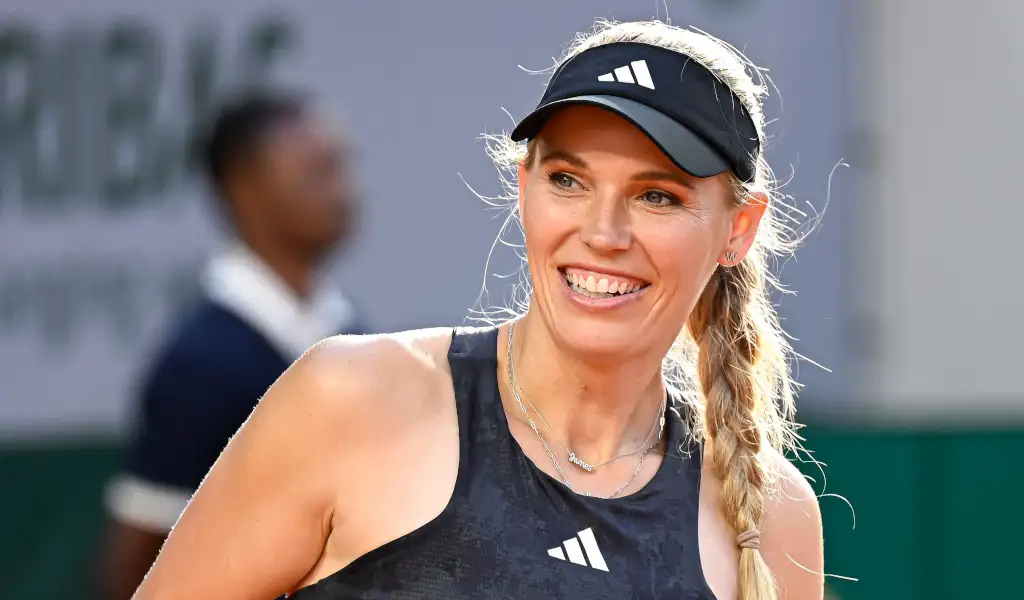
How did Caroline Wozniacki build this fortune?
The answer unfolds through the career, earnings, deals and assets behind the headline estimate.
Before the fame
The background and early turning points that shaped Caroline Wozniacki’s route to prominence.
Caroline Wozniacki was born on July 11, 1990, in Odense, Denmark, to parents of Polish descent. Her mother, Anna Wozniacki, played professional volleyball for the Polish national team, and her father, Piotr Wozniacki, played professional football, later becoming her coach for much of her career. Her older brother, Patrik Wozniacki, also played professional football in Denmark. The family’s athletic background shaped Caroline’s early introduction to competitive sport, and she began playing tennis as a young child in Odense before the family’s tennis ambitions led them toward the international junior circuit.
Wozniacki made her debut on the ITF Junior Circuit in October 2003 and won the girls’ singles title at Wimbledon in 2006, signaling her potential as a future tour player. She turned professional shortly after and made her WTA Tour main-draw debut in July 2005 in Cincinnati. Her true breakthrough came in 2008: at age 17, she won her maiden WTA singles title in Stockholm, then added titles in New Haven and Tokyo the same season, finishing the year in the world’s top 20. The following year, 2009, she reached her first Grand Slam final at the US Open, where she lost to Kim Clijsters, cementing her arrival as one of the sport’s brightest young stars (Wikipedia).
The breakthrough years
The career decisions and defining moments that turned recognition into sustained earning power.
Wozniacki reached the world No. 1 ranking on October 11, 2010, becoming the first Dane, male or female, to top a major professional tennis ranking. She finished as year-end world No. 1 in both 2010 and 2011, and held the top spot for a total of 71 weeks across her career (WTA Official). Despite her dominance in ranking terms, a maiden Grand Slam title eluded her for years, including a second US Open final loss to Serena Williams in 2014. She finally broke through at the 2018 Australian Open, defeating Simona Halep in a three-set final to win her first major title and reclaim the world No. 1 ranking (Australian Open). She also won the season-ending WTA Finals in 2017, beating Venus Williams in the final in Singapore. Diagnosed with rheumatoid arthritis ahead of the 2019 season, Wozniacki’s form declined, and she announced her retirement from professional tennis, playing her final match at the 2020 Australian Open. She ended her original career with 30 WTA singles titles and a career record of roughly 600-plus match wins, ranking fourth all-time in prize money at the time of her retirement (WTA Official). In 2023, Wozniacki announced a comeback to professional tennis, returning at the Canadian Open. She went on to reach the second week of the US Open in both 2023 and 2024 and the third round of Wimbledon in 2024, but has not competed since the 2024 US Open. She announced a third pregnancy with husband David Lee in April 2025 and, as of this writing in August 2026, has not played a tour match since, nor has she issued a formal retirement announcement — she has publicly left open the possibility of a further return once her family situation allows (Sky Sports).

What the work can earn
Reported pay, contracts, royalties and performance income reveal how the fortune was funded.
Wozniacki’s earnings peaked during her run atop the rankings and in the years surrounding her Grand Slam breakthrough. Forbes placed her among the highest-paid female athletes in the world for several consecutive years, estimating her combined on-court and off-court income at roughly $13.7 million in 2013 and again ranking her among the top earners in 2017. Her best-documented year came in 2018, when Forbes ranked her second on its Highest-Paid Female Athletes list behind only Serena Williams, with total earnings of about $13 million, driven by her Australian Open title and a full slate of endorsement contracts (Forbes). Reporting from that period indicated her endorsement income alone was regularly worth around $10 million a year at her commercial peak, roughly matching or exceeding her tour prize money in a given season (BBC). Her comeback years from 2023 to 2024 generated far smaller on-court earnings than her peak, since she played a reduced schedule and did not reach a Grand Slam final.
Wozniacki’s tournament earnings are unusually well documented because the WTA publishes official career prize money records for every player. As of August 2026, her official career prize money total stands at $36,479,231, placing her ninth on the WTA’s all-time career prize money list (WTA Official). The single largest payday of her career was the winner’s check from the 2018 Australian Open, worth roughly A$4 million (about $3.11 million at the time), and she also earned $2.2 million for winning the 2017 WTA Finals in Singapore, one of the tour’s most lucrative season-ending events (WTA Official). It’s important to note that career prize money figures are gross tournament earnings before taxes, coaching fees, travel costs, and agent commissions, all of which meaningfully reduce a touring professional’s actual take-home pay — prize money should not be read as a direct proxy for personal net worth.

The business beyond the main career
Endorsements, ownership interests and investments can keep compounding long after the initial breakthrough.
Wozniacki built one of the more diverse sponsorship portfolios in women’s tennis. She signed with Adidas as a young junior player and remained associated with the brand, including wearing Adidas by Stella McCartney kits, for much of her career. Her equipment contracts included Yonex and later Babolat racquets. She partnered with Rolex as a global ambassador, along with other watch and luxury-adjacent deals typical of top-ranked tennis players. Her endorsement portfolio also included the Belgian chocolatier Godiva, signed in 2015 after she mentioned wanting a chocolate sponsorship in a Wall Street Journal profile (ESPN); the blister-treatment brand Compeed, signed in 2012; the supplement company USANA; Turkish Airlines; and Danish company e-Boks. In 2018, she became the first female athlete to endorse a blockchain-based product, taking an ambassadorial role with the fitness rewards app Lympo (Forbes). She also had a multi-year partnership with a Cayman Islands resort group, signed in early 2018 around the time of her Australian Open win (Sports Business Daily).
Beyond playing contracts and endorsements, Wozniacki has taken on a documented business role away from the court. In January 2022, she and her husband, retired NBA forward David Lee, joined golf legend Tiger Woods as executives on Sports and Health Tech Acquisition Corp, a special purpose acquisition company (SPAC) that filed to raise $150 million with plans to merge with a sports or health technology target valued between $600 million and $1 billion. The filing credited Wozniacki’s relationships in the sports world as contributing to the venture’s “proprietary deal flow” (EssentiallySports). Outside of that specific venture, Wozniacki has generally kept a lower public profile as an entrepreneur than some peers, and there is no verified, sourced record of her holding an equity stake in a personal product line or consumer brand at this time — any such claims found in aggregator articles should be treated with caution absent primary sourcing.

Notable luxury item
A reported property or major asset offers a tangible glimpse of the wealth behind the public estimate.
Wozniacki and David Lee’s best-documented major asset was a penthouse on Fisher Island, an exclusive man-made island off Miami, Florida. The couple purchased the five-bedroom, five-and-a-half-bathroom, roughly 7,000-square-foot penthouse atop the Palazzo Del Sol development in 2021 for $18.7 million, shortly after the birth of their first child. The unit featured a private rooftop lap pool, a summer kitchen, and water views of Biscayne Bay (Homes & Gardens). The couple listed the penthouse in late 2023 for $42.5 million and ultimately sold it in 2024 for $37 million, a gain of roughly $18.3 million over their purchase price (Elite Agent). That real estate transaction stands as the couple’s largest verified single asset movement; it is a jointly held household asset with her husband rather than a documented personal holding attributable to Wozniacki alone, which is worth noting when assessing her individual net worth.
Caroline Wozniacki’s estimated net worth
Public estimates vary because private contracts, investments, taxes and liabilities are not fully disclosed.
How this estimate is calculated
This estimate reflects Caroline Wozniacki’s personal net worth, built from two decades of professional tennis. Her official WTA career prize money is $36,479,231, but that figure is gross tournament income before the significant deductions — coaching, travel, agent commissions, and taxes — that reduce a touring professional’s actual take-home earnings, typically by something like a third to a half over a career. Offsetting that reduction, her endorsement income, reported at roughly $10 million a year during her commercial peak around 2013 and 2018, likely added a comparable or greater amount to her career total, which is consistent with independent aggregator estimates that place her combined wealth well above her prize money alone.
Celebrity Net Worth, a popular but non-primary aggregator, lists a considerably higher figure of around $80 million for Wozniacki. That number appears to reflect combined household wealth alongside her husband, retired NBA player David Lee, whose own NBA career earnings were substantial, rather than a figure attributable to Wozniacki individually — the earlier version of this page likewise noted that “some estimates including husband David Lee’s wealth run higher.” Treating aggregator totals like Celebrity Net Worth’s as a secondary, directional data point rather than a verified figure, and relying instead on her documented WTA prize money, well-sourced endorsement reporting, and the couple’s one verified major real estate transaction, a personal net worth in the $40-50 million range is the best-supported estimate as of August 2026.
| Year | Milestone |
|---|---|
| 2005 | Makes WTA Tour main-draw debut in Cincinnati |
| 2008 | Wins first WTA singles titles (Stockholm, New Haven, Tokyo); breaks into world top 20 |
| 2009 | Reaches first Grand Slam final at the US Open (loses to Kim Clijsters) |
| 2010 | Becomes world No. 1 on October 11; finishes year-end No. 1 |
| 2011 | Finishes year-end world No. 1 for a second consecutive year; signs endorsement deal with Oriflame |
| 2013 | Estimated combined on/off-court earnings of roughly $13.7 million (Forbes) |
| 2017 | Wins season-ending WTA Finals in Singapore, earning a $2.2 million winner’s check |
| 2018 | Wins first Grand Slam title at the Australian Open; ranked No. 2 on Forbes’ Highest-Paid Female Athletes list at roughly $13 million |
| 2019 | Diagnosed with rheumatoid arthritis; marries David Lee |
| 2020 | Retires from professional tennis after the Australian Open |
| 2021 | Purchases Fisher Island, Miami penthouse for $18.7 million; daughter Olivia born |
| 2022 | Joins Tiger Woods-led $150 million SPAC as an executive; son James born |
| 2023 | Announces comeback to professional tennis, returning at the Canadian Open |
| 2024 | Reaches Wimbledon third round and US Open second week; sells Miami penthouse for $37 million |
| 2025 | Announces third pregnancy; son Max born on July 26 |
| 2026 | Career prize money total reaches $36,479,231; playing future remains unconfirmed |
Among Wozniacki’s contemporaries, Maria Sharapova sits well above her financially, with aggregator estimates placing Sharapova’s net worth in the $180-220 million range, driven overwhelmingly by endorsement and business income (including her Sugarpova candy brand) rather than the roughly $38.7 million she earned in career prize money. Naomi Osaka, another multiple Grand Slam champion with a comparably shorter, higher-peak career, has earned about $22 million in career prize money but carries aggregator net worth estimates of roughly $40-50 million, reflecting a Nike deal alone reported at around $10 million a year. Closer to Wozniacki’s own profile are players like Simona Halep, who earned over $40 million in career prize money and carries an estimated net worth of around $30 million, and Victoria Azarenka, a fellow former world No. 1 with $38.9 million in career prize money and an estimated net worth of around $25 million. Wozniacki’s combination of a long stretch at world No. 1, a single Grand Slam title, and a broad but not top-tier endorsement portfolio places her financially in a similar band to Halep and Azarenka — well below the outsized commercial peaks of Sharapova or Osaka, but ahead of many players who spent less time at the top of the rankings.
Sources and references
- Wikipedia — Caroline Wozniacki
- WTA Official — Caroline Wozniacki Record
- WTA Official — Caroline Wozniacki Stats
- WTA Official — Career Prize Money Leaders
- WTA Official — WTA Celebrates Career of Caroline Wozniacki
- Australian Open — Great Dane: Wozniacki Wins Maiden Slam
- Forbes — The Highest-Paid Female Athletes 2018
- Forbes — Game, Set and Blockchain for Tennis Superstar Caroline Wozniacki
- EssentiallySports — Caroline Wozniacki Joins Tiger Woods in $150 Million SPAC
- Elite Agent — Caroline Wozniacki’s Miami Penthouse Fetches US$37 Million
- Sky Sports — Caroline Wozniacki Announces Tennis Return
- Celebrity Net Worth — Caroline Wozniacki Net Worth (secondary aggregator)