
 How Much Are They Worth?
Celebrity fortunes, explained
How Much Are They Worth?
Celebrity fortunes, explained








How did Ousmane Dembélé build this fortune?
The answer unfolds through the career, earnings, deals and assets behind the headline estimate.
Before the fame
The background and early turning points that shaped Ousmane Dembélé’s route to prominence.
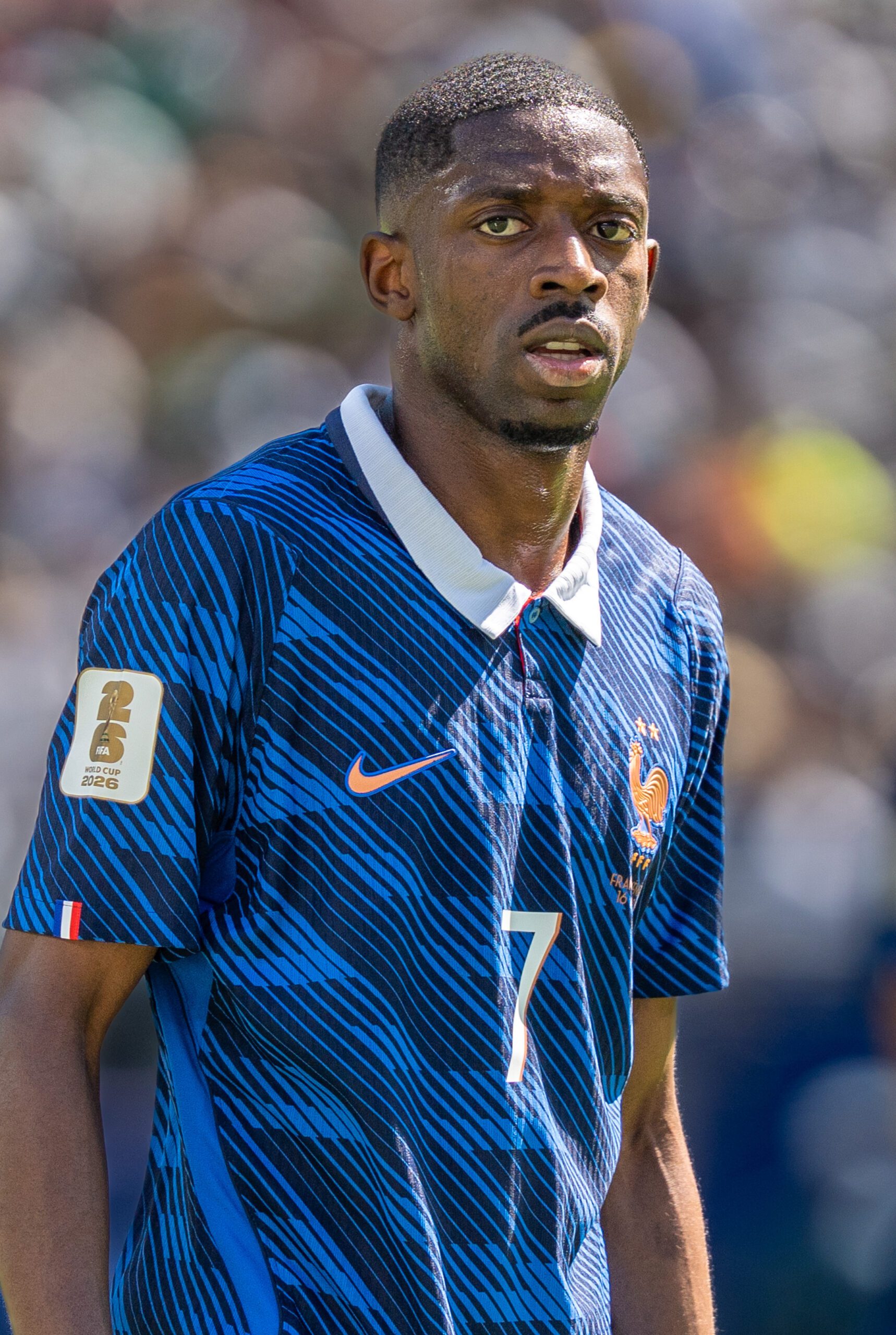
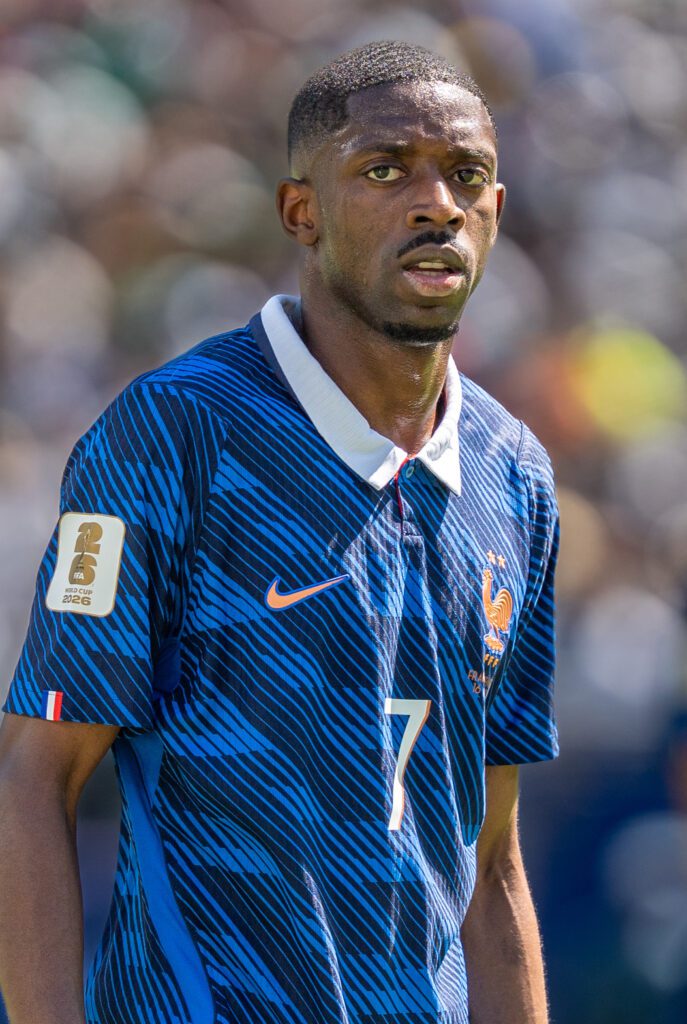
Ousmane Dembélé was born on 15 May 1997 in Vernon, in the Eure department of Normandy, and grew up in Évreux, where he played youth football for local clubs including ALM Évreux and Évreux FC 27 before joining the academy of Stade Rennais at 13. Coaches there worked on his decision-making rather than his dribbling, which was already exceptional, and he progressed through the reserve side before his first-team call-up. He is two-footed to an unusual degree, able to shoot and cross almost equally well with either foot, a trait that has defined his style since his youth career.
His profile is maintained on the official site of Paris Saint-Germain, the club where he has enjoyed the most successful spell of his career.
Dembélé made his first-team debut for Rennes in November 2015 and scored 12 league goals in his only full season, attracting interest from clubs across Europe. In May 2016 Borussia Dortmund signed him on a contract until 2021 for a fee reported at around €15 million, according to ESPN.
In his one season in Germany he scored the opening goal in Dortmund’s 2-1 win over Eintracht Frankfurt in the 2017 German Cup final, the club’s first major trophy in five years.
The breakthrough years
The career decisions and defining moments that turned recognition into sustained earning power.
In August 2017 Barcelona made him the replacement for Neymar, agreeing a fixed fee of €105 million with Dortmund plus add-ons that could take the deal towards €145 million, as reported by ESPN and Sky Sports. His Barcelona contract carried a release clause of €400 million.
Six seasons in Spain brought three La Liga titles and two Copas del Rey, but also a long series of hamstring and muscle injuries that limited his availability, beginning with a torn hamstring in only his third match for the club. His contract expired in the summer of 2022, and after a lengthy stand-off he re-signed on revised terms, then produced his most consistent season in Spain as Barcelona won the 2022-23 league title. He won the 2018 World Cup with France, featuring in the group stage as the squad went on to beat Croatia in the final.

What the work can earn
Reported pay, contracts, royalties and performance income reveal how the fortune was funded.
In August 2023 Paris Saint-Germain signed him from Barcelona for a fee of about €50 million, on a five-year contract, according to ESPN. His first season in Paris was spent alongside Kylian Mbappé; after Mbappé left for Real Madrid in 2024, Luis Enrique rebuilt the attack around Dembélé, moving him from the wing to a central attacking role, and in 2024-25 PSG won Ligue 1, the Coupe de France and the club’s first Champions League.
In September 2025 he won the Ballon d’Or ahead of Lamine Yamal, having scored 35 goals with 14 assists in 53 matches for PSG that season, as reported by ESPN. In May 2026 PSG retained the Champions League, beating Arsenal on penalties in Budapest after a 1-1 draw in which Dembélé scored the equalising penalty, according to NPR.
Dembélé received the Ballon d’Or at a ceremony at the Théâtre du Châtelet in Paris, becoming the sixth French man to win it, a milestone noted by UEFA, which also named him Champions League player of the season for 2024-25.
At the 2026 World Cup he scored in France’s 2-0 quarter-final win over Morocco, reported by Olympics.com, before France lost in the semi-final and then the third-place play-off to England.
The business beyond the main career
Endorsements, ownership interests and investments can keep compounding long after the initial breakthrough.
His best-known commercial deal away from football boots is with the Italian luxury label Zegna, which named him its first football global brand ambassador in 2026, ahead of the World Cup, according to WWD. He has also had boot contracts with major sportswear brands. None of the fees has been disclosed.
Dembélé has no significant business ventures on public record. He has not launched a brand, bought into a club or disclosed investments, and his financial profile rests almost entirely on playing wages and sponsorships. This section is thin because the record is thin.
Notable luxury item
A reported property or major asset offers a tangible glimpse of the wealth behind the public estimate.
No property purchases by Dembélé have been reliably documented in major outlets. Like most players at his level he lives in the Paris area during the season, but the ownership and value of his homes have not been reported, so no property figure is included here.
Ousmane Dembélé’s estimated net worth
Public estimates vary because private contracts, investments, taxes and liabilities are not fully disclosed.
How this estimate is calculated
Transfer fees are paid to clubs, not players, so the €105 million and about €50 million that Barcelona and PSG paid for Dembelé (ESPN) form no part of his wealth. The key documented figure is his PSG salary: Franceinfo, citing L’Équipe, reported him as the best-paid player in Ligue 1 at €1.5 million gross a month, or about €18 million a year.
Three seasons at that rate give about €54 million gross. His Barcelona salary was never officially published; the working assumes €8 million to €12 million a season across six seasons, or €48 million to €72 million, plus €3 million to €5 million from Rennes and Dortmund, and endorsements of €8 million to €15 million over his career. That totals roughly €113 million to €146 million gross, of which only the PSG element rests on a published figure. Deducting about 10 per cent for agents and then about 50 per cent for French and Spanish income tax and social charges leaves about €51 million to €66 million, or roughly $55 million to $75 million at recent exchange rates, with investment returns widening the top of the range.
The honest caveat is that this is cumulative earnings after tax, not an audited position, and the two are only the same for someone who has spent nothing. Dembelé is still in his twenties, with a career that could run another decade and a Ballon d’Or year that will have reset his commercial value, so the figure is as likely to be overtaken as to be revised down. His Barcelona wages, his bonuses for the 2025 Champions League and the Ballon d’Or, his signing-on fees, the terms of any new PSG contract and his sponsorship income are all undisclosed, and he holds no listed company, has filed no public disclosure and has no property price on the record.
Confidence: Partly documented – his PSG wage has been reported, but a wage is what he earns rather than what he owns, and no filing, sale or property record shows how much of it he has kept.
Dembélé has kept a low public profile off the pitch and gives few interviews. His image was long shaped by questions about injuries and professionalism at Barcelona; his transformation under Luis Enrique at PSG, culminating in the Ballon d’Or, largely changed that story. He has supported community and youth football initiatives in Normandy, but no major foundation or disclosed donations are on record.
In July 2021 a video filmed during Barcelona’s 2019 pre-season tour of Japan appeared online, showing Dembélé and Antoine Griezmann mocking hotel staff. Both apologised, with Dembélé denying any racist intent, and Barcelona sponsor Rakuten called the comments unacceptable, according to The Japan Times.
In September 2024 Luis Enrique left him out of a Champions League match at Arsenal for disciplinary reasons, saying he had not met the team’s expectations, as reported by France 24. He returned to the side soon afterwards and became central to the title-winning season.