
 How Much Are They Worth?
Celebrity fortunes, explained
How Much Are They Worth?
Celebrity fortunes, explained






How did James Anderson build this fortune?
The answer unfolds through the career, earnings, deals and assets behind the headline estimate.
Before the fame
The background and early turning points that shaped James Anderson’s route to prominence.
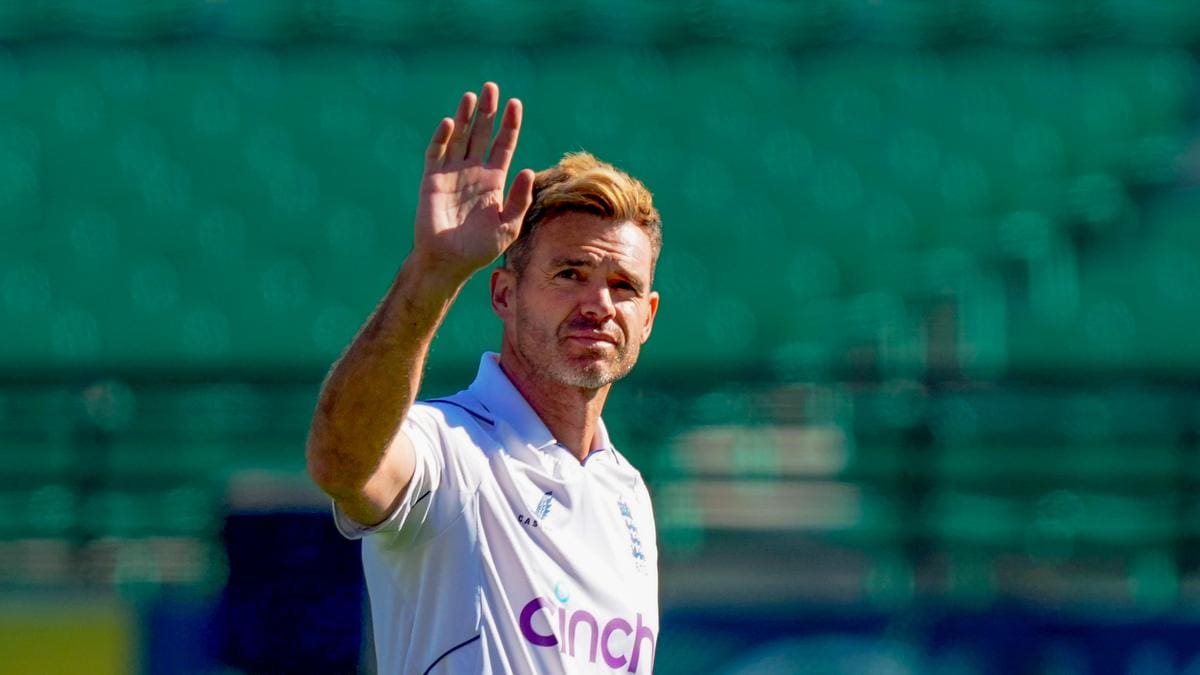
Sir James Anderson is an English fast bowler from Burnley whose senior career began with Lancashire in 2001 and England in 2002. Unlike franchise-era stars, most of his prime earnings came through England central contracts, Test match fees and county pay rather than large IPL auctions. The ECB’s knighthood announcement records 704 wickets in 188 Tests and four Ashes wins. Those achievements establish exceptional longevity, but this estimate reconstructs compensation rather than assigning a monetary value to honors or wickets.
Anderson debuted for Lancashire as a teenager, toured Australia with England in 2002–03 and took five wickets on Test debut at Lord’s in 2003. Early England retainers and county salaries were much smaller than contracts later in his career, and central-contract structures changed across two decades. HMW therefore models a rising historical sequence instead of multiplying a late-career salary by 21 years. His early workload, equipment and travel were largely team-supported, but ordinary living costs and taxes still reduced what could become investments.
The breakthrough years
The career decisions and defining moments that turned recognition into sustained earning power.
His route was not a straight ascent: changes to his bowling action and competition from England’s 2005 Ashes attack limited early continuity. The durable breakthrough arrived when he became the attack leader around 2008 and established control with the moving ball at home and abroad. The ICC’s retrospective documents his 2003 debut and ultimate average of 26.45. Sustained selection matters financially because central contracts and Test appearance fees recur; a single celebrated spell does not.

What the work can earn
Reported pay, contracts, royalties and performance income reveal how the fortune was funded.
Anderson passed Ian Botham as England’s leading Test wicket-taker, reached 500, 600 and then became the first fast bowler to 700. The ICC’s account of wicket 700 identifies Kuldeep Yadav as the milestone dismissal in Dharamsala. His final Test came at Lord’s in July 2024; an ECB tribute confirms wicket 704 and the end of a 21-year Test career. Milestone bonuses are included only within conservative annual compensation assumptions, not invented individually.
For most of Anderson’s peak, the ECB paid a central retainer plus Test match fees and performance-related additions, while Lancashire remained his county employer. Public reports place top England red-ball contracts in the high-six-figure sterling range late in his career, but individual agreements are private and structures changed. HMW uses conservative annual bands, counts only active contracted seasons and avoids adding media estimates that may already include match fees. His farewell was announced in the ECB’s exact retirement release, providing a firm endpoint for international salary.

The business beyond the main career
Endorsements, ownership interests and investments can keep compounding long after the initial breakthrough.
Anderson’s commercial income includes equipment and wellness endorsements, books, speaking and broadcasting. Tailenders gives him a recurring media property rather than a one-off interview, though BBC terms are undisclosed. Following retirement he worked with England as a bowling consultant. Reuters documented the consultancy and his 2025 Lancashire deal, making both legitimate income categories. The estimate uses modest post-playing annual amounts; it does not presume that a celebrated athlete receives television-presenter pay without a disclosed contract.
There is no reliable public evidence that Anderson owns a large operating company. Publishing royalties, podcast participation and endorsement agreements are treated as cash flows, not assigned a speculative business multiple. His name and image retain licensing value, but no sale or audited royalty schedule exists. The model therefore gives only a restrained amount to continuing intellectual-property and media income. It does not capitalize Lancashire, the ECB, the BBC or sponsor enterprise values as though he owned them.

Notable luxury item
A reported property or major asset offers a tangible glimpse of the wealth behind the public estimate.
Property equity, investments, pensions, mortgages, family arrangements and tax filings are private. County and England compensation is quoted gross and must fund tax, agents, training and consumption. Anderson also remained exposed to injury and career interruption as a fast bowler. The BBC’s report on his 2025 calf injury and Lancashire return illustrates that even after signing, appearances were not automatic. HMW does not infer luxury-asset values from photographs or assume every year’s income was invested.
James Anderson’s estimated net worth
Public estimates vary because private contracts, investments, taxes and liabilities are not fully disclosed.
How this estimate is calculated
HMW models 21 years of England compensation using lower central-contract and appearance-fee bands in the early years and higher six-figure sterling bands during Anderson’s established red-ball-contracted peak. It adds conservative Lancashire pay, documented post-retirement playing and coaching years, plus modest endorsement, publishing and media cash flows. Gross career receipts are reduced about 40% for combined UK income tax and National Insurance at peak rates, with a further 8% for representation, training and career costs and a substantial allowance for household spending. Plausible retained savings receive moderate long-term investment growth; no speculative podcast or personal-brand valuation is added. Converting at roughly $1.29 per pound in August 2026, the retained-assets case supports the figure below.
Anderson’s public value comes from rare longevity, Ashes visibility and recognition as Test cricket’s leading pace wicket-taker. He co-hosted the BBC’s Tailenders podcast and later moved naturally into analysis and coaching. His knighthood in 2025 sustained his profile after international retirement, but an honor is not an asset. Audience reach supports publishing, speaking and media fees; follower counts are excluded unless a documented program, book or campaign provides a plausible revenue route.
Official ECB and ICC pages securely establish appearances, milestones and retirement dates; Reuters and BBC confirm Lancashire and coaching activity. Exact historical central-contract and match-fee schedules are less transparent, particularly across earlier collective bargaining periods. County salaries, endorsement consideration, podcast shares and book royalties are undisclosed. The ICC’s final-Test report confirms four wickets in his farewell and 704 overall, but sporting totals cannot directly reveal retained capital. The result is necessarily a modeled estimate rather than an audited balance sheet.