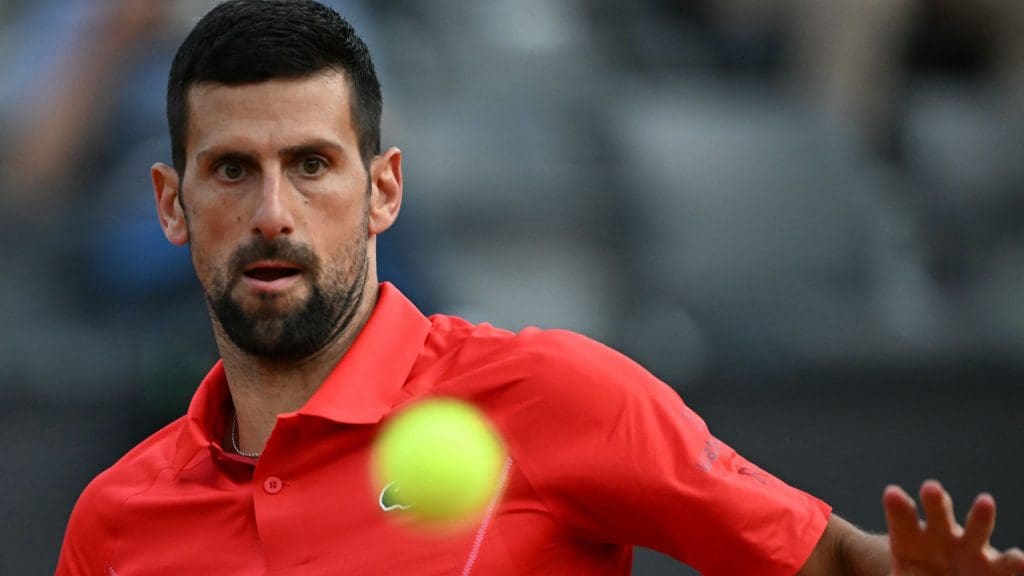
How did Novak Djokovic build this fortune?
The answer unfolds through the career, earnings, deals and assets behind the headline estimate.
Before the fame
The background and early turning points that shaped Novak Djokovic’s route to prominence.
Djokovic was born in Belgrade in 1987 and was identified as a child by coach Jelena Genčić before training at Nikola Pilić’s academy in Germany. Britannica’s biography records that development and his 2003 professional debut. His family background explains the long runway to professional tennis, but contributes nothing directly to the valuation.
His first ATP title arrived in 2006; the decisive step was the 2008 Australian Open, where he broke the Federer–Nadal major-title monopoly. He subsequently built his own team of coaches, physiotherapists and advisers. Those years generated meaningful prize money, but travel and staff costs were substantial, so HMW does not assume that early gross winnings survived intact. The Australian title also made him marketable outside Serbia and created leverage for later global equipment and apparel renewals.
The breakthrough years
The career decisions and defining moments that turned recognition into sustained earning power.
The 2011 season changed Djokovic’s earning power: three majors, a long winning streak and the No. 1 ranking turned him into a global commercial rival to Federer and Nadal. The record later expanded to 24 major singles titles. Forbes’ Djokovic profile also records eight year-end No. 1 finishes and the 2024 Olympic gold medal.
What the work can earn
Reported pay, contracts, royalties and performance income reveal how the fortune was funded.
By August 2025 Forbes placed Djokovic’s career prize money at $189 million, the men’s record. Forbes’ prize-money comparison independently reported $188.9 million. His 100th and 101st tour titles arrived in 2025, according to Reuters’ season review.
Official prize money above $189 million is the strongest cumulative input. It excludes several lucrative categories: Olympic participation, exhibitions, ATP bonus pools and sponsor compensation. HMW therefore models career gross cash receipts well above prize money, while deducting tax across multiple jurisdictions, management, coaching, travel and years of high-performance medical support rather than treating the headline total as savings.
The business beyond the main career
Endorsements, ownership interests and investments can keep compounding long after the initial breakthrough.
His newer contracts show that commercial income has not ended with his peak ranking. Qatar Airways announced a multi-year global-ambassador and wellness-adviser agreement in November 2024. Lacoste, Head, Asics and Hublot remained visible partners; GQ reported a second collaborative Hublot watch after the first sold out. Collaborative products can also generate royalties or fixed campaign fees, although neither Hublot nor Djokovic has published the financial split.
Djokovic has also used his name beyond conventional endorsements. His website’s account of the Qatar partnership describes plans involving his Regenesis recovery technology. Restaurants and wellness concepts have appeared during his career, but public accounts do not establish their current profitability. HMW therefore values accumulated cash and investments, not an invented technology-company multiple.
Notable luxury item
A reported property or major asset offers a tangible glimpse of the wealth behind the public estimate.
Reported residences in Monte Carlo and Serbia, family arrangements and private investments are not audited publicly. The Novak Djokovic Foundation is philanthropic and should not be counted as his property. Likewise, a sponsored watch or airline role is evidence of commercial demand, not proof he owns the sponsoring company. Debt, portfolio performance and tax residency could materially change the retained result. Media reports about homes are also poor substitutes for title records: purchase prices omit mortgages, co-ownership, renovations and later disposals. HMW therefore makes no separate property-price addition.
Novak Djokovic’s estimated net worth
Public estimates vary because private contracts, investments, taxes and liabilities are not fully disclosed.
How this estimate is calculated
The calculation begins with $189 million-plus of official prize money, adds a conservative allowance for many years of sponsorship and appearances—including Forbes’ recent $29.6 million annual reading—and then applies heavy deductions for tax and the cost of his team. The model assumes that his strongest commercial years produced off-court income comparable to his tournament receipts, but it does not extrapolate the latest sponsor rate backward to 2003. HMW allows moderate long-term investment growth but assigns no speculative valuation to restaurants or wellness technology; the final figure is deliberately rounded rather than presented as an audited balance sheet.
Djokovic’s reach is anchored in records rather than social-media assumptions. Forbes estimated $29.6 million of 2025 earnings and listed Aman, Asics, Head, Hublot, Lacoste and Qatar Airways as sponsors. Forbes’ 2025 tennis ranking explains that its figures combine prize money with endorsements and appearance income before taxes and agents’ fees.
The public record is unusually strong on prize money and recent sponsorship activity, but weak on the deductions that determine retained wealth. Forbes figures are estimates rather than tax filings, and contract announcements disclose duration more often than price. Djokovic has earned across countries with different tax rules while paying a large support staff. Those uncertainties justify a broad internal range and a rounded conclusion, not penny-level precision.
JavaScript is off, so all sections are displayed together.