 How Much Are They Worth?
Celebrity fortunes, explained
How Much Are They Worth?
Celebrity fortunes, explained










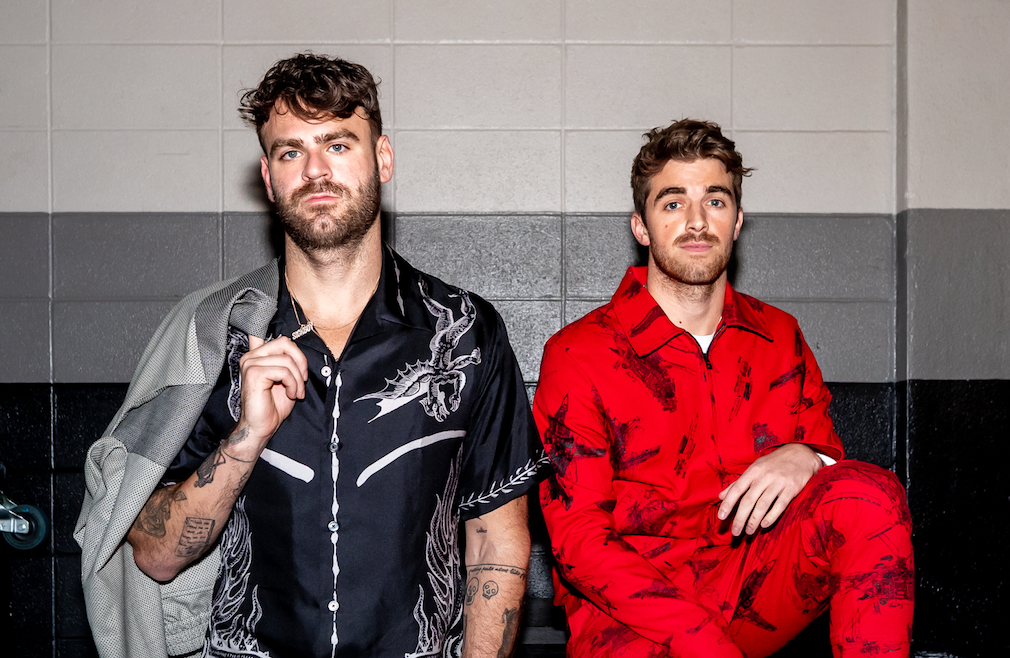
How did The Chainsmokers build this fortune?
The answer unfolds through the career, earnings, deals and assets behind the headline estimate.
Before the fame
The background and early turning points that shaped The Chainsmokers’s route to prominence.
The Chainsmokers are an American electronic-pop duo comprising Alex Pall and Drew Taggart. Formed in New York in 2012, the project developed from remix culture into a chart act, touring business and entrepreneurial platform. The Recording Academy’s Chainsmokers profile identifies Pall and Taggart, their formation and their music-education backgrounds. Financially, the stage name represents a partnership; Pall’s assets, Taggart’s assets and entities such as their venture firm should not be casually merged.
Pall studied art history and music business at New York University, while Taggart attended Syracuse University’s Bandier program. Pall initially worked with Rhett Bixler before Taggart joined. Their early strategy centred on remixes of indie songs shared online, giving them production practice and an audience without a conventional album campaign. The detailed group history and discography records the membership change and early releases. Manager Adam Alpert and Disruptor Records helped convert internet attention into a structured recording career.
The breakthrough years
The career decisions and defining moments that turned recognition into sustained earning power.
“#Selfie” became the first mass-market breakthrough in 2014, reaching the upper portion of charts internationally. The duo then shifted toward melodic songs led by guest vocalists. “Roses,” “Don’t Let Me Down” and “Closer” established a repeatable pop-electronic formula. “Closer,” featuring Halsey and including Taggart’s vocals, dominated the American charts; Billboard Canada’s 21st-century Hot 100 retrospective records its twelve-week run at number one and year-long chart stay.

What the work can earn
Reported pay, contracts, royalties and performance income reveal how the fortune was funded.
The Chainsmokers won the Grammy for best dance recording with “Don’t Let Me Down” and received nominations for best new artist, “Closer” and “Something Just Like This.” Those results are listed by the Recording Academy rather than inferred from fan tallies. Albums including Memories…Do Not Open, Sick Boy, World War Joy and So Far So Good expanded their catalogue. A CNBC Events biography says the 2022 album became their fourth number-one debut on Billboard’s dance/electronic album chart.
The duo became unusually visible for producers because Taggart sang on records and both members appeared prominently in videos, interviews and social media. Their collaborations with Coldplay, Halsey and Daya bridged electronic and mainstream pop audiences. The Billboard Canada 2017 airplay ranking placed “Something Just Like This” second and “Closer” seventh. Awards establish recognition but do not directly value the partnership: trophies do not disclose royalty splits, touring costs or advances.

The business beyond the main career
Endorsements, ownership interests and investments can keep compounding long after the initial breakthrough.
Brand associations, alcohol interests and live-event residencies add income beyond recorded music. The duo’s JAJA connection is an equity relationship rather than a simple endorsement, although the percentage and current valuation are not publicly established. Their continuing festival currency is also reflected in Billboard France’s Palm Tree festival interview. Without contracts, it is inappropriate to assume that campaign value or partner-company sales accrued to Pall and Taggart.
Pall and Taggart co-founded Mantis Venture Capital in 2020, investing in early-stage technology businesses. A Wired report on their cybersecurity investing describes Mantis participation in companies such as iVerify and the musicians’ hands-on networking. They also created Kick The Habit Productions for film, television and podcasts and acquired an interest in JAJA Tequila. Crucially, assets managed by a venture fund belong to its investment vehicles and limited partners; fund size is not the duo’s personal wealth.

Notable luxury item
A reported property or major asset offers a tangible glimpse of the wealth behind the public estimate.
Media reports have covered homes purchased separately by Pall and Taggart, but those are individual assets and may carry mortgages. They are not jointly owned merely because the buyers perform together. The partnership’s more important assets include its share of master recordings, publishing interests, trademarks, touring relationships and merchandising rights. Even these rights can be divided among Disruptor, Columbia, Sony, publishers, collaborators and the artists’ companies. Production gear and tour staging may be leased or held by contractors rather than by either musician.
The Chainsmokers’s estimated net worth
Public estimates vary because private contracts, investments, taxes and liabilities are not fully disclosed.
How this estimate is calculated
The estimate weighs a decade of hit-record royalties, touring and residency fees, catalogue durability, merchandise, production work and plausible equity interests. It subtracts label and publishing shares, collaborators, management, agents, touring overhead, taxes and two-member division. Mantis is treated only as a possible source of carried interest and management economics, not as a personally owned pool equal to assets under management. Private homes and investments are considered only cautiously because prices, debt and ownership vehicles are often incomplete.
The Chainsmokers’ combined economic interests are estimated at $140 million to $180 million. This editorial range covers Pall and Taggart together, including music-related rights and reasonable allowances for established ventures, but it is not a verified consolidated account. It does not treat Mantis portfolio assets, partner-company revenue or reported property prices as cash. The members’ individual positions may differ because their private investments, liabilities and ownership arrangements are not public.
The Chainsmokers funded production and delivery of protective masks to hospitals during the pandemic and have supported youth-focused causes. CNBC’s biography records the PPE initiative and recognition by Youth Emerging Stronger. Their public image has alternated between irreverent party culture and more serious entrepreneurship. Philanthropy contributes to reputation but should not be counted as an asset; donated resources leave the donors’ control. Similarly, a charitable honour is evidence of service, not evidence of personal wealth.
The duo have faced criticism for laddish interviews, public comments and an event held in the Hamptons during pandemic restrictions. New York authorities investigated distancing concerns surrounding that concert, as detailed in New York Times reporting on the Hamptons event. Scrutiny also follows celebrity investing because a famous fund name can be mistaken for personal ownership of portfolio companies. Neither controversy supplies a reliable balance sheet.