
 How Much Are They Worth?
Celebrity fortunes, explained
How Much Are They Worth?
Celebrity fortunes, explained









How did Bernard Arnault build this fortune?
The answer unfolds through the career, earnings, deals and assets behind the headline estimate.
Bernard Arnault before the fame
The background and early turning points that shaped Bernard Arnault’s route to prominence.
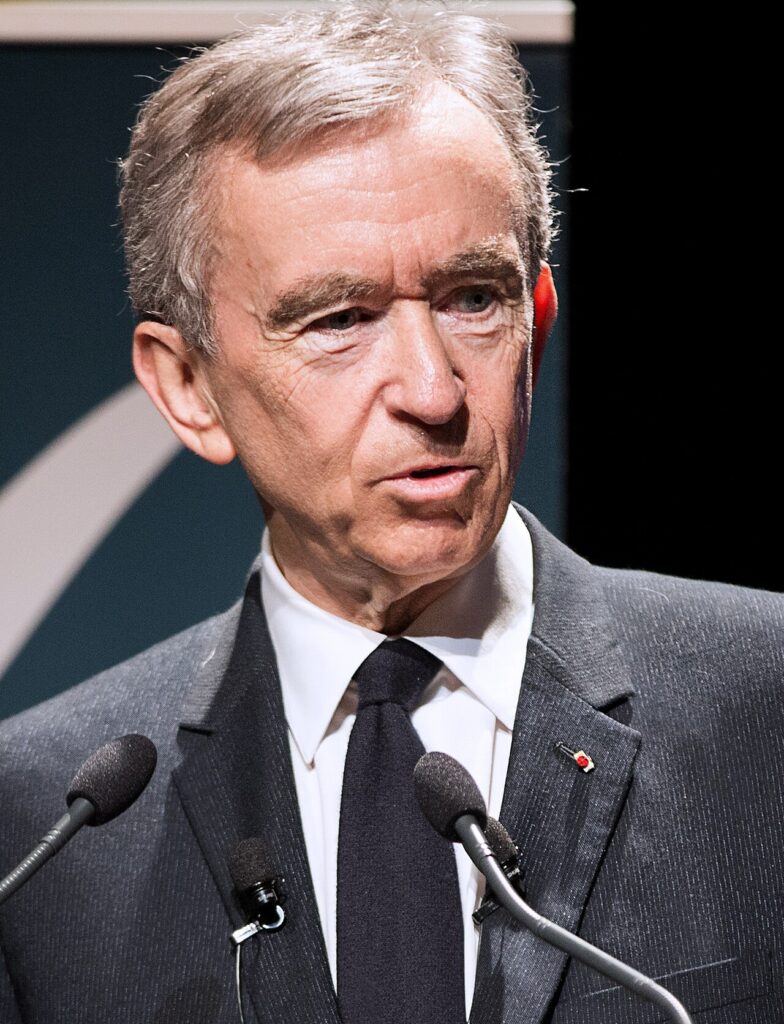
Bernard Jean Étienne Arnault was born on 5 March 1949 in Roubaix, in the industrial north of France, and trained as an engineer at the École Polytechnique. He joined his family’s construction business, Ferret-Savinel, and moved it towards property development. He took control of Boussac in 1984, which brought him Christian Dior, and built LVMH into the largest luxury group in the world. His five children all hold managerial positions within it, which is not incidental: the succession structure and the ownership structure are the same thing.
He ran the family firm’s property arm through the 1970s and left France for the United States in 1981, after the election of François Mitterrand, spending three years developing property in Florida. He returned in 1984 specifically to bid for a distressed asset. Nothing in his background was in luxury goods; he came to the industry as a financier who had noticed that a small number of European brand names carried pricing power that their owners were not using.
Bernard Arnault’s breakthrough years
The career decisions and defining moments that turned recognition into sustained earning power.
In 1984 the French government was seeking a buyer for the Boussac Saint-Frères textile group, which owned Christian Dior and the Le Bon Marché department store. Backed by Antoine Bernheim of Lazard Frères, Arnault acquired control, sold almost everything except Dior and Le Bon Marché, and cut the workforce heavily enough to earn a nickname in the French press that has followed him since. He then moved on LVMH itself, and by January 1989 had taken control of the group after a two-year battle between its founding families (The Fashion Law).

What Bernard Arnault’s work can earn
Reported pay, contracts, royalties and performance income reveal how the fortune was funded.
The group he assembled now owns some seventy-five houses across fashion, leather goods, wines and spirits, watches, jewellery and retail. The largest single deal was Tiffany & Co., completed in January 2021 for $15.8 billion after a public dispute that saw LVMH walk away and return at a reduced price (CNBC). For 2025 LVMH reported revenue of €80.8 billion, down about 1 per cent organically, profit from recurring operations of €17.8 billion at a 22 per cent operating margin, group share of net profit of €10.9 billion and operating free cash flow of €11.3 billion (LVMH 2025 annual results).
He has held the top position on both the Forbes and Bloomberg wealth rankings at various points since 2021, and his fall out of Bloomberg’s top ten in September 2026 was itself treated as news (Bloomberg). That is the useful thing about his public profile: because his wealth is a listed shareholding rather than an estimate, his ranking moves with the LVMH share price and the movement is observable by anyone, which is true of almost nobody else at this level.
Bernard Arnault’s business beyond the main career
Endorsements, ownership interests and investments can keep compounding long after the initial breakthrough.
He endorses nothing personally, and the money runs in the opposite direction. LVMH paid a reported €150 million to be a premium partner of the Paris 2024 Olympic and Paralympic Games, the largest commitment made by any company to those Games, with its jeweller Chaumet designing the medals and Moët Hennessy supplying hospitality (LVMH). That is corporate marketing spend, not personal income, and it is counted nowhere in the figures below.
Unlike most fortunes on this site, his is not an estimate assembled from fragments. As of February 2026 the Arnault family’s holding in LVMH crossed 50 per cent of the capital, at 50.01 per cent, carrying about 65.9 per cent of voting rights (The Business of Fashion). The stake is held through a chain rather than directly: Christian Dior SE holds the largest block, with Financière Agache and Agache S.A. holding further tranches and the family a small direct holding. The structure exists to make control unassailable – voting rights well ahead of economic ownership mean the family decides, whatever the register says.
Bernard Arnault’s notable luxury item
A reported property or major asset offers a tangible glimpse of the wealth behind the public estimate.
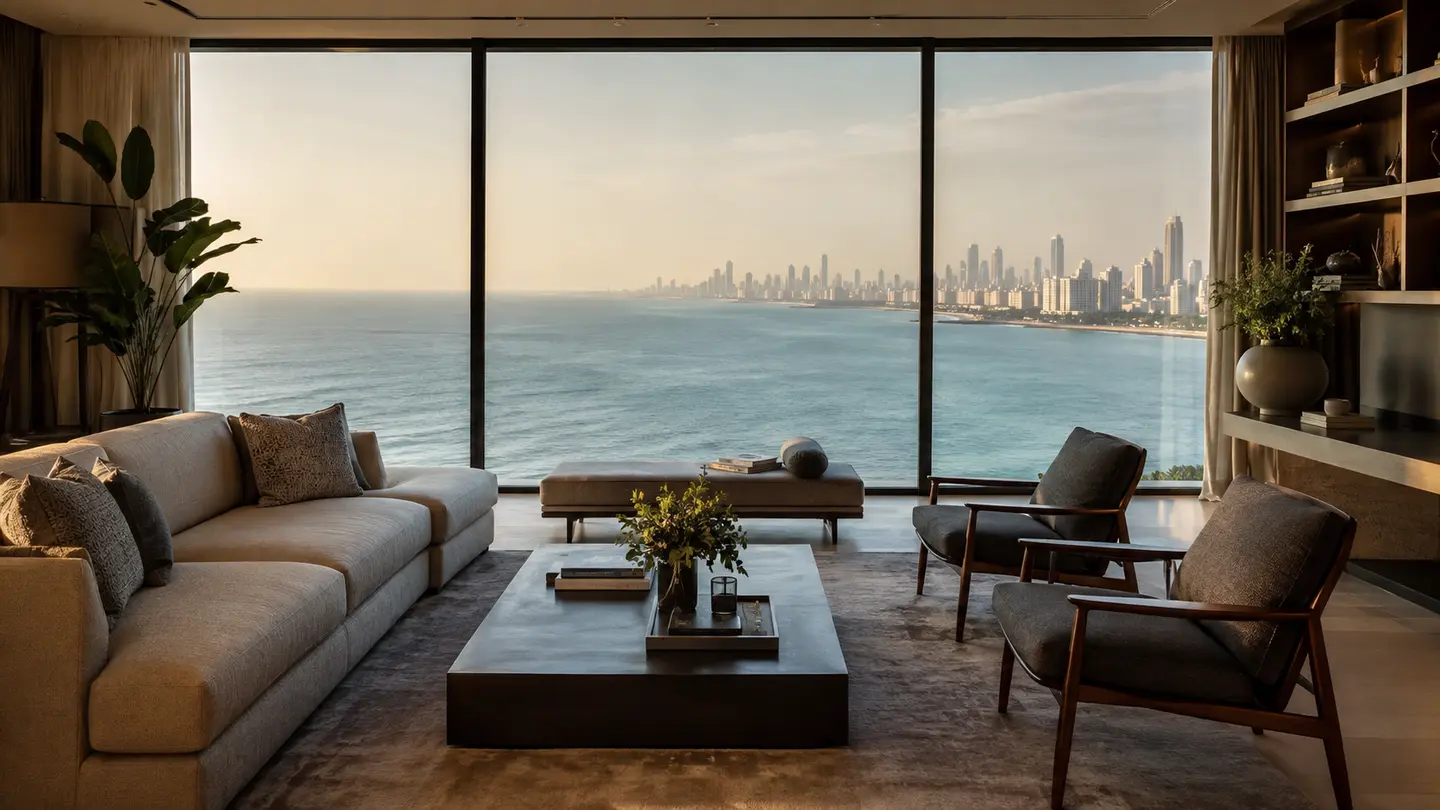
His wealth is effectively a single asset. Against a shareholding worth well over a hundred billion dollars, the personally held items that have been reported – houses in Paris and elsewhere, a yacht, and one of the more significant private art collections in Europe – are immaterial, and none carries a published valuation. Dividends flow up the ownership chain to the family holding companies; Arnault and his five children have each been reported as receiving around one billion euros from the family vehicle Financière Agache, though the vehicle does not publish per-shareholder distributions.
Bernard Arnault’s estimated net worth
Public estimates vary because private contracts, investments, taxes and liabilities are not fully disclosed.
How this estimate is calculated
The arithmetic. This is the rare case where the sum can be written out. Take LVMH’s market capitalisation on any given day and multiply by the family’s 50.01 per cent economic interest (The Business of Fashion); Bernard Arnault’s personal share is a portion of that, with the remainder attributable to his children and the holding structure. Add separately held assets and subtract nothing, because a listed stake carries no debt of its own. Bloomberg’s index, which performs exactly this calculation daily, put him at about $143 billion in mid-September 2026, down roughly $65 billion since the start of that year (Bloomberg). Two cautions apply specifically to him. The family holding is not the same as his personal holding, and no split has ever been published. And a stake of this size is unsellable at the screen price: the number is a mark, not a realisable sum, which is why his position can move by tens of billions in a quarter without anything happening to him or to the business (LVMH 2025 annual results).
The working supports a range of $130 billion to $165 billion. The figure we publish is its midpoint.
Confidence: Documented — a disclosed stake in a listed company, valued daily, with the only real uncertainty being how the family holding divides between him and his children.
Think you know Bernard Arnault? Take the quiz: Easy · Medium · Legendary
The Fondation Louis Vuitton opened in the Bois de Boulogne in October 2014, a Frank Gehry building commissioned by Arnault and paid for by LVMH, whose final cost was reported to be several times the original €100 million budget (Architectural Record). In April 2019, within hours of the Notre-Dame fire, the Arnault family and LVMH pledged €200 million towards the cathedral’s restoration (Forbes). The family said it would not claim the tax relief available on the donation after criticism that it would have reduced the real cost substantially.
In 2012 he applied for Belgian citizenship at the height of the French debate over a proposed 75 per cent top tax rate, and withdrew the application in April 2013 after sustained public criticism (The Business of Fashion). Belgian prosecutors investigated whether he had falsely claimed residence there; the inquiry was closed years later after he agreed a payment without any admission of guilt (WWD). The episode is worth recording because it is one of the few occasions on which his personal, rather than corporate, financial arrangements have been examined in public.