 How Much Are They Worth?
Celebrity fortunes, explained



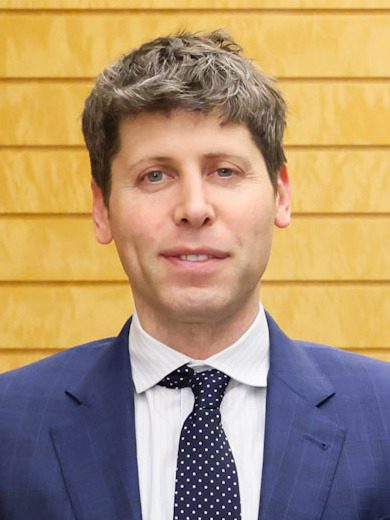
How did Sam Altman build this fortune?
The answer unfolds through the career, earnings, deals and assets behind the headline estimate.
Sam Altman before the fame
The background and early turning points that shaped Sam Altman’s route to prominence.
Samuel Harris Altman was born on 22 April 1985 and grew up in St Louis, Missouri. He studied computer science at Stanford and left after his first year. He was president of Y Combinator before becoming chief executive of OpenAI, and his wealth has an unusual shape for someone in that position: it comes almost entirely from investments made alongside the job rather than from the company he runs. Understanding his finances means ignoring the company he is famous for and looking at everything else.
He co-founded Loopt in 2005, at nineteen, in Y Combinator’s first batch. It was a location-sharing application for mobile phones, it raised substantial venture funding, and it never found a mass audience. Green Dot Corporation acquired it in March 2012 for $43.4 million in cash, a figure that included roughly $9.8 million set aside as a retention pool for staff (AllThingsD). That sale is the first documented money in his career and, in the context of what came later, a small one.
Sam Altman’s breakthrough years
The career decisions and defining moments that turned recognition into sustained earning power.
He became president of Y Combinator in 2014, which put him at the centre of Silicon Valley deal flow for five years and gave him early access to the private companies that now make up most of his balance sheet. In December 2015 he co-founded OpenAI as a non-profit research laboratory alongside Elon Musk and others, and he became its chief executive in 2019. The release of ChatGPT in November 2022 turned a research organisation into a consumer product company almost overnight.

What Sam Altman’s work can earn
Reported pay, contracts, royalties and performance income reveal how the fortune was funded.
OpenAI completed a roughly $7 billion employee share sale in August 2026 at a valuation of about $852 billion, which makes it one of the most valuable private companies ever assembled (CNBC). Altman holds no direct equity in it. This is not a technicality about vesting or structure – it is the position he has stated publicly and which a court filing has since documented. Where a founder-chief executive of a company at that valuation would normally hold a stake worth tens of billions, his is nil.
He is among the most recognised executives in the technology industry and has become the public face of a product used by hundreds of millions of people. He testified before a United States Senate subcommittee on artificial intelligence oversight in May 2023 and has since spent much of his time in front of governments rather than customers. None of that recognition converts into personal income in the way it would for an entertainer, which is part of why his finances look so unlike his profile.

Sam Altman’s business beyond the main career
Endorsements, ownership interests and investments can keep compounding long after the initial breakthrough.
There is nothing to report here, and that is itself informative. He does no endorsement work and licenses his name to nothing. His public profile functions as an asset of the companies he backs rather than as something he rents out, which is the opposite of the pattern on most profiles on this site and removes an entire income category that would otherwise be estimable.
His investments are where the money is. He put $375 million into the fusion company Helion Energy in 2021, his largest single personal investment, and chaired its board (Newsweek). He chaired the nuclear fission company Oklo and took it public through the AltC special purpose acquisition vehicle he co-founded (Newsweek). He also holds positions in Retro Biosciences and Stripe, and co-founded Tools for Humanity, the company behind the World digital identity project. Several of these companies subsequently did business with OpenAI, which is the root of the disclosure below.

Sam Altman’s notable luxury item
A reported property or major asset offers a tangible glimpse of the wealth behind the public estimate.
He bought a Russian Hill house in San Francisco in 2020 that has been reported at $27 million, a compound with a main residence, a wellness building and a cantilevered pool (The San Francisco Standard). Reporting has also placed property in his name in Napa, Big Sur and Hawaii (San Francisco Chronicle). Even taken together these are a rounding error against the private holdings; unlike most subjects, his property is not a meaningful part of his position.
Sam Altman’s estimated net worth
Public estimates vary because private contracts, investments, taxes and liabilities are not fully disclosed.
How this estimate is calculated
The arithmetic. Start from the $2 billion-plus disclosed in the May 2026 filing as at a 31 December 2025 valuation date (Reuters), of which Helion Energy was about $1.7 billion, Stripe roughly $633 million and Retro Biosciences about $258 million. That total covers only companies with an OpenAI relationship, so it is a floor rather than a total. Add holdings with no OpenAI connection, which the filing had no reason to list, the Loopt proceeds and fifteen years of Y Combinator-era investing (AllThingsD), and property reported at well under $100 million (San Francisco Chronicle). Subtract nothing for OpenAI, because he owns none of it (CNBC). Published estimates put him around $4 billion, which implies roughly as much again outside the disclosed set. One further caution is specific to him: a December 2025 mark on a pre-revenue fusion company is a valuation agreed between investors, not a price anyone has paid, and reporting on his Reddit position has been inconsistent – 2026 coverage described the holding as still worth about a billion dollars (The Motley Fool) while the filing indicates it had been sold by the end of 2025, and the filing is the better-evidenced of the two.
The working supports a range of $2 billion to $4 billion. The figure we publish is its midpoint.
Confidence: Partly documented — the floor is a court-filed disclosure of named holdings at a stated valuation date; everything above it is inference about assets nobody was obliged to list.
Think you know Sam Altman? Take the quiz: Easy · Medium · Legendary
He funded the largest recent study of unconditional cash payments in the United States. OpenResearch gave 3,000 participants in Illinois and Texas $1,000 a month for three years against a control group receiving $50, on roughly $60 million of funding, of which Altman personally contributed $14 million (CBS News). The results, published in 2024, found recipients spent more on basic needs and did not leave the workforce, though they worked slightly fewer hours (Bloomberg).
On 17 November 2023 OpenAI’s board removed him as chief executive, saying he had not been consistently candid in his communications with it. A near-total staff revolt followed, he was reinstated within days, and a reconstituted board formally restored him on 29 November (NPR; Fortune). The second and more relevant episode is the May 2026 court filing that set out his holdings in nine private companies that had dealings with OpenAI – a disclosure produced by a conflict-of-interest dispute rather than volunteered (Reuters).