 How Much Are They Worth?
Celebrity fortunes, explained





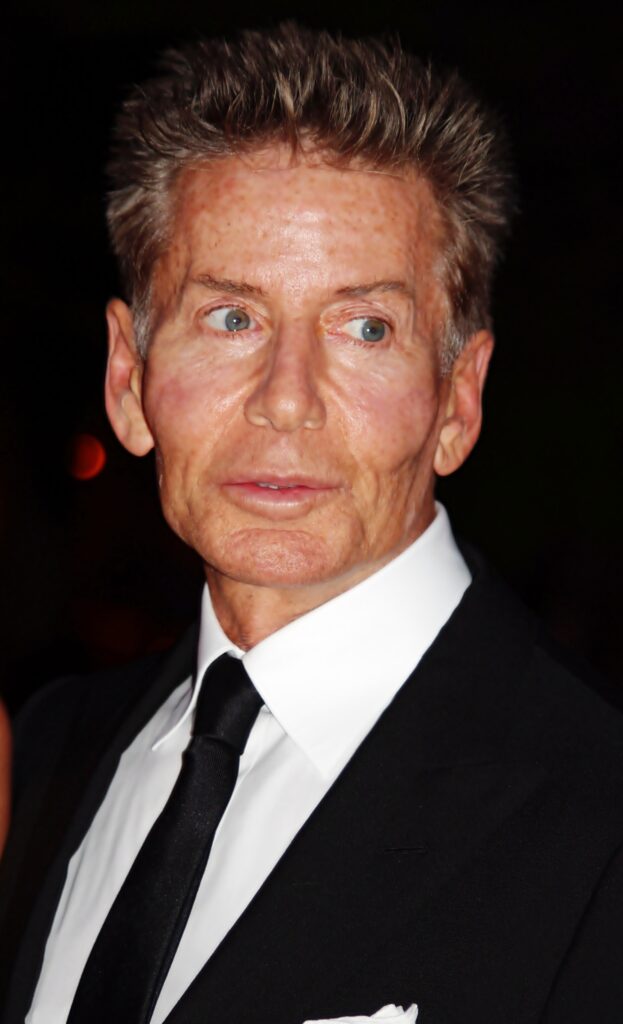
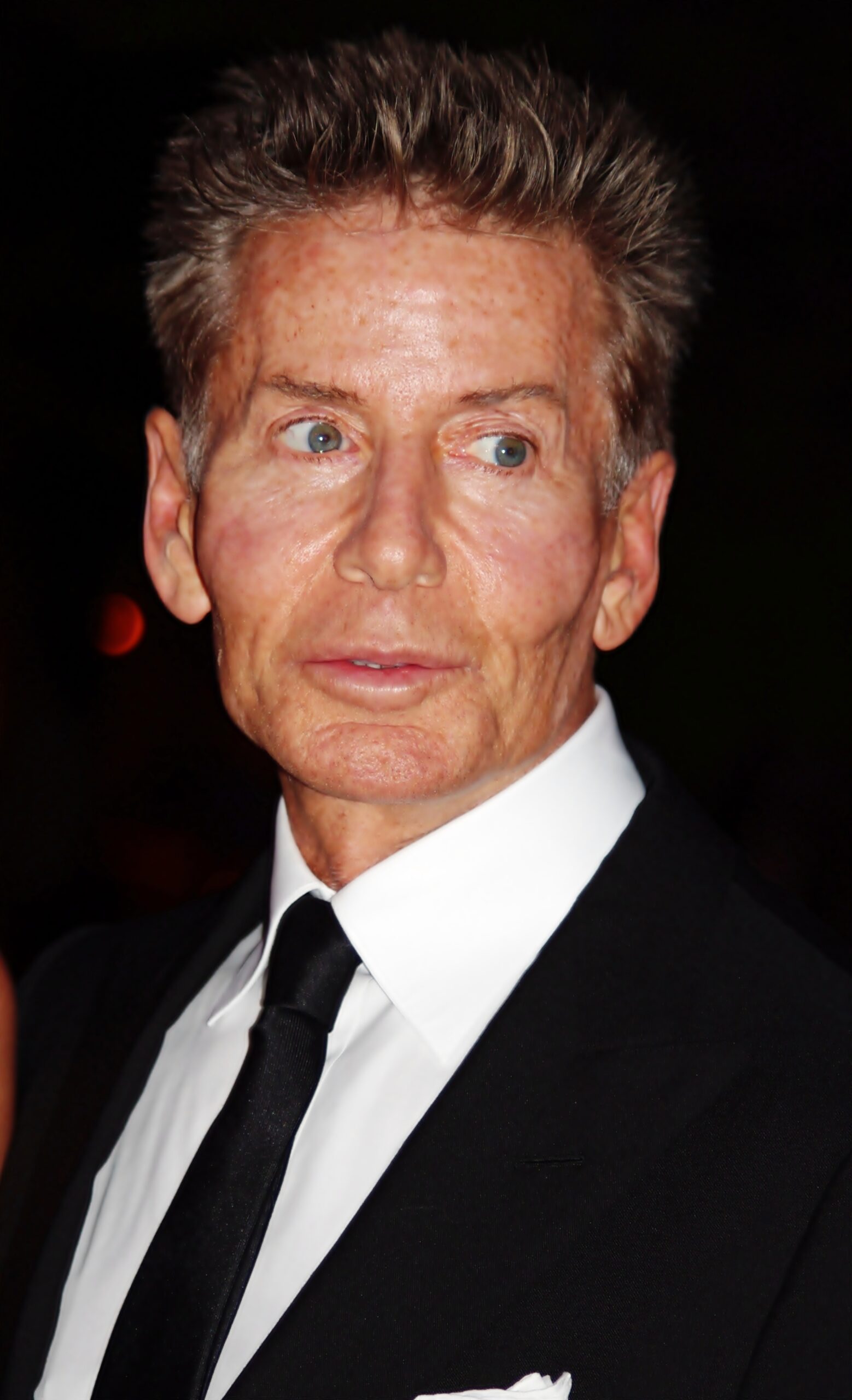
How did Calvin Klein build this fortune?
The answer unfolds through the career, earnings, deals and assets behind the headline estimate.
Calvin Klein before the fame
The background and early turning points that shaped Calvin Klein’s route to prominence.
Calvin Richard Klein was born on 19 November 1942 in the Bronx, the son of a grocer whose family had come from Hungary. His grandmother was a seamstress, and he learned to sketch and to cut at her kitchen table.
He went to the High School of Art and Design and then the Fashion Institute of Technology, which he left in 1962 without graduating. The next six years were spent on Seventh Avenue as an apprentice and then an assistant coat designer, on the wages of a junior in a trade that paid juniors very little.
In 1968 he set up with Barry Schwartz, a friend from the Bronx who put in $10,000 and ran the business side for the next 34 years. The company began in one room of the York Hotel with a rail of coats and dresses.
The break was an accident. A buyer from Bonwit Teller came out of the lift on the wrong floor, saw the rail, and placed an order worth about $50,000 – enough to put the label into one of New York’s best stores in its first season. First-year sales were around half a million dollars, and the partnership never took outside equity.
Calvin Klein’s breakthrough years
The career decisions and defining moments that turned recognition into sustained earning power.
He won the Coty American Fashion Critics’ Award in 1973, 1974 and 1975, the first designer to take it three years running. The money came from a different decision: putting his name on licensed product. Designer jeans arrived in 1978, the Brooke Shields campaign in 1980, men’s underwear in 1982, then the fragrances – Obsession in 1985, Eternity in 1988, CK One in 1994.
Because the company stayed private and wholly owned by two men, his earnings from all of it were salary, dividends and the occasional sale of a division. In March 1994 Calvin Klein Inc. sold its men’s underwear business and the worldwide trademarks to the Warnaco Group for $62.5 million, including $24 million in Warnaco stock, as WWD reported. Across 1968 to 2002 our estimate of Klein’s share of salary, dividends and divisional proceeds is $150 million to $250 million gross.

What Calvin Klein’s work can earn
Reported pay, contracts, royalties and performance income reveal how the fortune was funded.
Everything he owns rests on one document. On 17 December 2002 Phillips-Van Heusen agreed to buy every Calvin Klein entity outright. The terms, in an SEC filing, were $400 million in cash and $30 million in PVH stock, the sellers named as Klein, Schwartz and certain family members and affiliated trusts, plus a nine-year warrant for Klein to buy 320,000 PVH shares at $28.
The clause that mattered most was the last: contingent purchase-price payments to Klein personally, based on future brand sales. PVH’s annual report later put the mechanism on the record – 1.15 per cent of total worldwide net sales of products bearing any Calvin Klein mark, running until sales made through 12 February 2018 – and disclosed what it cost: $51 million in 2015, $53 million in 2016 and $56 million in 2017. Scaling those three years back across the fifteen-year term, our estimate of the whole tail is $450 million to $550 million. It is larger than the headline price, and the biggest thing he has ever earned.
His standing in the trade is settled: three consecutive Coty awards, honours from the CFDA, and advertising from 1980 onwards that is studied as a cultural artefact rather than as sales material. He stepped away from designing the collections in 2003, the year after the sale.
One consequence needs stating plainly, because it is where most published figures about him go wrong. PVH reports Calvin Klein brand retail sales well over $9 billion a year. That is PVH’s revenue, not his money, it is never added to his wealth, and his last financial participation in it ended in February 2018.
Calvin Klein’s business beyond the main career
Endorsements, ownership interests and investments can keep compounding long after the initial breakthrough.
The direction of travel here is the reverse of a normal profile. Calvin Klein is the brand that pays endorsers, not an endorser himself, and the faces it has signed over four decades have been paid out of the company’s marketing budget. Since 2003 that budget has been PVH’s.
In his own name he has taken occasional paid design work, appearing at industry events as an elder statesman rather than a contracted face. Our estimate of his post-2003 fee income from all of it is $5 million to $15 million, a rounding error beside the royalty.
He has not built a second operating company. After 2003 his working life became advisory: design consultancy, interiors and a few collaborations, none on the scale of what came before.
What he does run is capital. From 2003 to 2018 he was receiving a royalty that behaved like an index-linked annuity on global fashion sales, and the business question of his last two decades has been what to do with it – which has meant property, art and conventional investment rather than new ventures.

Calvin Klein’s notable luxury item
A reported property or major asset offers a tangible glimpse of the wealth behind the public estimate.
Property is where the money went. His ocean-front compound at 650 Meadow Lane in Southampton took three decades and an estimated $45 million to build, and he sold it off-market in March 2020 for $84.44 million to the hedge-fund founder Ken Griffin, as 27 East and Fox Business reported. His Miami Beach house sold in February 2017 for $12.85 million, per W.
Alongside the New York residences he has kept, he has assembled a serious private collection of modern art and twentieth-century design, built through the years when the royalty was arriving. Our estimate of his current property and collections, net of borrowing, is $120 million to $200 million.
Calvin Klein’s estimated net worth
Public estimates vary because private contracts, investments, taxes and liabilities are not fully disclosed.
How this estimate is calculated
The inputs are unusually good for a designer, because his money passed through a listed company’s filings. Documented: $400 million in cash and $30 million in stock on 17 December 2002, shared with Schwartz and family trusts; a royalty of 1.15 per cent of worldwide Calvin Klein net sales payable to him until February 2018, per PVH’s annual report; and three annual payments under it of $51 million, $53 million and $56 million.
The arithmetic. His share of the $430 million, taken at about half on the assumption the two founding partners held roughly equal stakes: $200 million to $240 million. The royalty tail, scaled from the three disclosed years back through the smaller brand of the 2000s: $450 million to $550 million. Owner’s salary, dividends and divisional sales 1968 to 2002: $150 million to $250 million. The PVH warrant, exercised above its $28 strike: $10 million to $25 million. Gross realisations: $810 million to $1.07 billion. Royalties are ordinary income and the sale a capital gain, so a blended New York effective rate near 38 per cent leaves $500 million to $660 million. Add two decades of investment and property appreciation, deduct a very large standard of living, two divorce settlements and what he has given away, and the working supports a range of $600 million to $900 million, whose midpoint we publish.
The one input that could move this by $200 million is the split with Barry Schwartz. The filing names the sellers but not their percentages, and 34 years of a two-man partnership could have ended anywhere between an even division and a clear majority for the designer whose name was on the door. A probate record or a divorce exhibit would resolve it; nothing else here is nearly as sensitive.
Confidence: Partly documented — the sale price, the royalty rate and three years of royalty payments come from filings, while his share of the proceeds and the full fifteen-year tail are our own working.
His giving has run through the causes his industry took up earliest – AIDS research and care from the mid-1980s, when the fashion business was losing people faster than any other – and arts and design education since. He gives privately.
The public image is the one he built in the advertising: spare, provocative and controlled. He has given few interviews since leaving the studio, and the Bronx-to-Seventh-Avenue story he tells about himself has stayed consistent for fifty years.
Three episodes belong on the record. In 1992 the company came close to failure under its debt, and its outstanding bonds were bought by the entertainment executive David Geffen; Klein repaid him the following year with a $58 million bank loan. In 1995 a jeans advertising campaign was withdrawn after widespread criticism, and a federal review of it closed without a finding against the company.
In 2000 Calvin Klein Inc. sued the Warnaco Group and its chief executive over the distribution of CK jeans into discount channels; Warnaco counter-sued and the two sides settled in January 2001. All three were corporate matters, resolved before the sale that created the wealth below.