 How Much Are They Worth?
Celebrity fortunes, explained










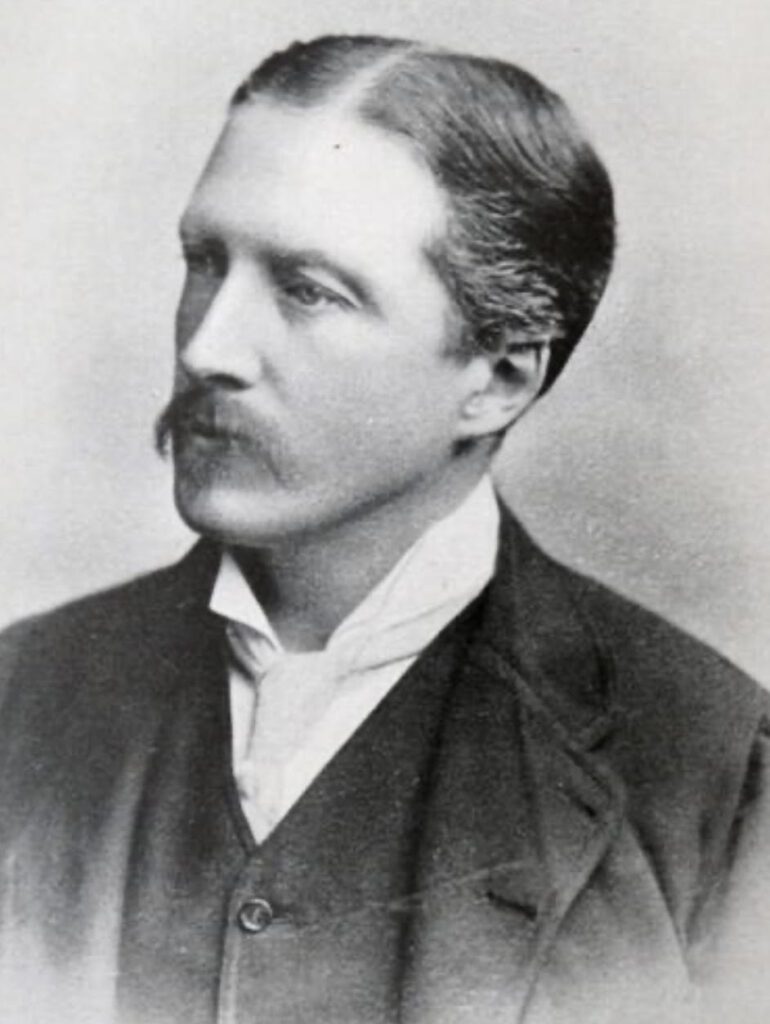
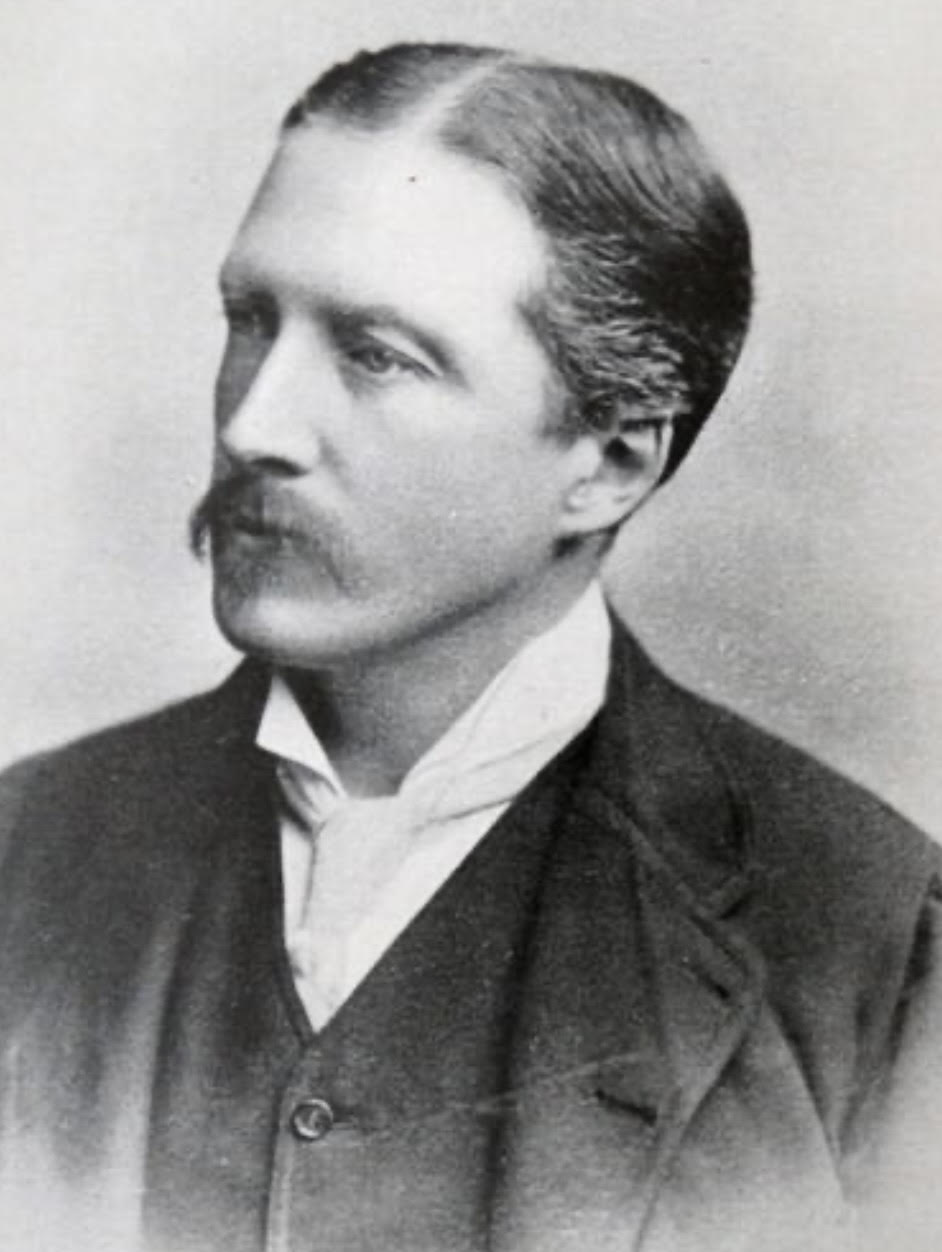
Edward Guinness, 1st Earl of Iveagh
Net worth revealed after 6 slides
Begin the countdown ↓
How did Edward Guinness, 1st Earl of Iveagh build this fortune?
The answer unfolds through the career, earnings, deals and assets behind the headline estimate.
Edward Guinness, 1st Earl of Iveagh before the fame
The background and early turning points that shaped Edward Guinness, 1st Earl of Iveagh’s route to prominence.
Edward Cecil Guinness was born on 10 November 1847 at Clontarf, on the northern edge of Dublin, the third son of Sir Benjamin Lee Guinness, first baronet, and a descendant of the Arthur Guinness who took the lease on the St James’s Gate brewery in 1759. The family was already wealthy and already the largest brewer in Ireland.
He married his cousin Adelaide Maria Guinness in 1873 and they had three sons: Rupert, who succeeded him; Arthur Ernest; and Walter, later Lord Moyne. What the third son inherited was not a fortune to preserve but a business to multiply, and that difference is the whole story of his money.
Sir Benjamin died in 1868, when Edward was twenty, leaving the brewery jointly to him and his elder brother Arthur, later Lord Ardilaun. Edward ran it. the Brewery History Society records the business then brewing around 350,000 barrels a year and returning average annual profits of about £120,000 — already a very large income, and half of it his.
Arthur had no appetite for trade. In 1876, aged twenty-nine, Edward bought out his brother’s half-share for about £600,000, which valued the whole brewery at roughly £1.2 million and left him sole proprietor of it. He was High Sheriff of Dublin City the same year.
Edward Guinness, 1st Earl of Iveagh’s breakthrough years
The career decisions and defining moments that turned recognition into sustained earning power.
The decade of sole ownership is where the fortune was actually made, and it was made by brewing rather than by dealing. Output rose to about 1.2 million barrels by 1886 and annual profits to around £450,000, on the Brewery History Society’s figures, while more than £1 million went on capital projects at St James’s Gate, all of it out of retained earnings.
Because he owned the business outright, those profits were his personal income. Averaging the rise from £120,000 to £450,000 across 1876 to 1886 gives roughly £3.3 million of profit in the decade, of which we estimate he drew £2.3 million to £3 million after reinvestment — about £330 million to £430 million in 2026 money.

What Edward Guinness, 1st Earl of Iveagh’s work can earn
Reported pay, contracts, royalties and performance income reveal how the fortune was funded.
In October 1886 he took two-thirds of the brewery to the London Stock Exchange as Arthur Guinness Son and Company, at a capitalisation of £6 million. It was one of the most sought-after issues of the century: twenty times oversubscribed, with the shares closing their first day at a 60 per cent premium. As the selling proprietor the £6 million raised was his, and he kept roughly 35 per cent of the company, buying further shares afterwards to hold control.
The retained stake then paid him for forty years. Company profits were £543,000 in 1887, £1,125,202 in 1913 and £2,175,816 in 1919. On a normal Victorian distribution of about seventy per cent of profit as dividend, a 35 per cent holding yields £8 million to £13 million across 1887 to 1927 on our estimate. Lifetime brewing income therefore comes to roughly £16 million to £21.7 million in the money of the day, about $2.3 billion to $3.2 billion in 2026 terms.
The honours tracked the money closely: a baronetcy in 1885, Baron Iveagh in 1891, Knight of St Patrick in 1895, Viscount Iveagh in 1905, Fellow of the Royal Society in 1906, a Knight Grand Cross of the Royal Victorian Order in 1910, and in 1919 Earl of Iveagh and Viscount Elveden.
He was elected Chancellor of the University of Dublin in 1908 and held the office until his death. He also financed the British Antarctic Expedition of 1907 to 1909, which is why there is a Mount Iveagh in Antarctica.

Edward Guinness, 1st Earl of Iveagh’s business beyond the main career
Endorsements, ownership interests and investments can keep compounding long after the initial breakthrough.
Personal endorsement income is a twentieth-century invention and there is none of it here. The commercial equivalent in his lifetime ran the other way: the Guinness name was itself the brand, and he spent money attaching it to things rather than being paid to lend it.
That spending was substantial and deliberate — the Antarctic expedition, the Radium Institute he co-funded in 1908, university buildings in Dublin — and bought the family a standing that outlasted him. All of it is expenditure, which is why it appears as a deduction in the working rather than as income.
For a man of his means he was strikingly undiversified. The brewery was the business: his capital and his attention sat inside it, and his one great financial manoeuvre was the 1886 flotation, which converted an illiquid family partnership into cash plus a controlling block of tradeable shares while leaving him in charge of it.
He stayed chairman and kept spending on the plant, commissioning the St James’s Gate storehouse in 1902, and by 1914 output had doubled again from the 1886 level. The judgement that matters commercially is that he sold two-thirds of the company at the top of a speculative market and kept the third that went on compounding.

Edward Guinness, 1st Earl of Iveagh’s notable luxury item
A reported property or major asset offers a tangible glimpse of the wealth behind the public estimate.
He bought and built on a scale that consumed much of the flotation money. Farmleigh, on the edge of Dublin’s Phoenix Park, was acquired early and repeatedly extended. Elveden Hall in Suffolk, bought in 1894, became one of the great shooting estates of Edwardian England after a remodelling that ran to hundreds of thousands of pounds. He also held 80 St Stephen’s Green in Dublin, later Iveagh House, and a London house at Grosvenor Place.
Then there was the art. Between 1887 and 1891 he assembled a collection of Old Masters and British paintings — Rembrandt, Vermeer, Gainsborough, Reynolds, Turner — and in 1925 bought Kenwood House on Hampstead Heath to hold the best of it, as English Heritage records.
Edward Guinness, 1st Earl of Iveagh’s estimated net worth
Public estimates vary because private contracts, investments, taxes and liabilities are not fully disclosed.
How this estimate is calculated
This is one of the few historical fortunes with a hard number attached. His estate was assessed for probate at £13,486,146 16s 2d, a British record that stood until 1933. That is a filed assessment of what he personally owned, not a company valuation, which is exactly the anchor a net worth figure needs.
The conversion method matters as much as the figure. We use the retail price index, the conventional and conservative measure, calculated with the Bank of England and cross-checked against MeasuringWorth: £1 in 1927 is worth roughly £74 to £82 in 2026, which puts the estate at about £1.0 billion to £1.11 billion, or $1.3 billion to $1.5 billion at current exchange. The alternative measure historians sometimes prefer, his estate as a share of national income, would produce something closer to $10 billion; we do not use it, and we say so rather than quietly choosing the bigger number.
The working is consistent with the earnings above. Lifetime brewing income of £16 million to £21.7 million, against an estate of £13.5 million, is explained by Elveden, Farmleigh, Kenwood, the paintings and at least £750,000 of documented gifts. The assumption is that probate captured his holdings fairly, which for quoted shares and English land of the period it generally did. The working supports a range of $1.3 billion to $1.5 billion. The figure we publish is its midpoint. Everything here depends on which conversion is used: retail prices put his fortune near 1.4 billion dollars today, while measuring it as a share of national income would put it near ten billion, and the first is the honest comparison for a personal estate.
Confidence: Documented — his estate was assessed for probate at £13,486,146, and the one judgement left in the figure is the choice of the retail price index to bring it forward to 2026.
His giving was on the scale of his earning. In 1889 he settled £250,000 on housing for the poor of London and Dublin, the endowment the Guinness Partnership traces its origins to, and later gave a further £250,000 to the Bull Alley clearance scheme in Dublin, the largest urban renewal in Edwardian Ireland and the foundation of what the Iveagh Trust became. He gave £250,000 to the Lister Institute in 1898, created St Patrick’s Park in 1901 and handed over the Iveagh Gardens in 1908.
The last act was the largest: on his death Kenwood and the paintings passed to the nation as the Iveagh Bequest, and remain open to the public. Three gifts of a quarter of a million pounds each, in the money of their day, are together worth well over £100 million now.
Two criticisms followed him. The first was the source of the money: temperance was a powerful movement in both Britain and Ireland, and a peerage built on stout was contentious enough that brewers’ elevations were argued over in Parliament and the press.
The second was the 1886 flotation. An issue twenty times oversubscribed that jumped 60 per cent on day one was read by critics as evidence that the public had been sold a family business at a speculator’s price. His slum clearances drew a version of the same complaint: the rebuilt tenements were a genuine improvement, but the clearing displaced the poorest tenants, who could not afford the new rents. He died on 7 October 1927, aged seventy-nine.