
 How Much Are They Worth?
Celebrity fortunes, explained







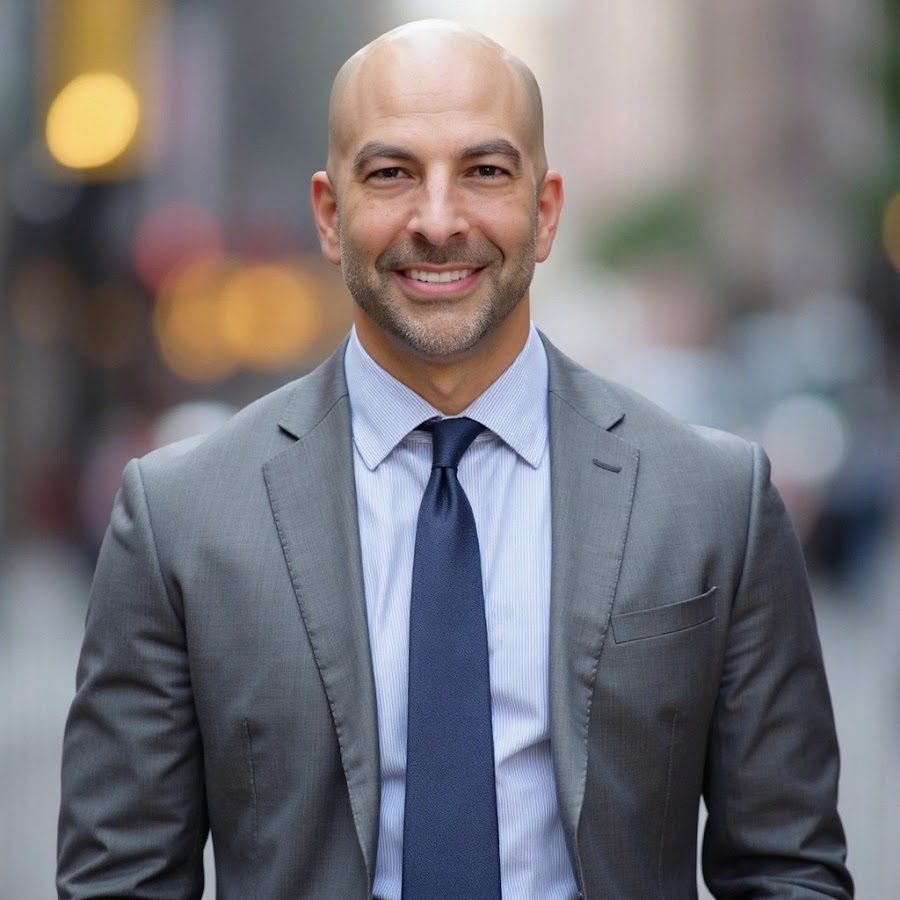
How did Peter Attia build this fortune?
The answer unfolds through the career, earnings, deals and assets behind the headline estimate.
Peter Attia before the fame
The background and early turning points that shaped Peter Attia’s route to prominence.
Peter Attia was born on 19 March 1973 in Toronto, into an Egyptian Coptic family that had emigrated to Canada. He spent his teenage years as a competitive amateur boxer.
He took a degree in mechanical engineering and applied mathematics at Queen’s University in Kingston, Ontario, then went south for medicine. His medical degree is from the Stanford University School of Medicine, as his biography records – an engineer’s training followed by a clinician’s, the combination his whole commercial career has been built on.
The first decade after Stanford was institutional and paid like it: five years in general surgery at the Johns Hopkins Hospital, then two years at the National Institutes of Health as a surgical oncology fellow. Residents and federal fellows of that era earned $45,000 to $60,000 a year.
He then left clinical practice altogether for McKinsey and Company, in its corporate risk practice from 2006. Consulting at that grade paid $180,000 to $350,000 a year. In 2012 he co-founded a non-profit nutrition research organisation and was its president until 2015, on our estimate of $250,000 to $450,000 a year. Across 2001 to 2013 our estimate of his earnings is $1.3 million to $2.1 million gross.
Peter Attia’s breakthrough years
The career decisions and defining moments that turned recognition into sustained earning power.
The business that made him is the practice he set up for himself, now trading as Early Medical. Its commercial design is the point: an annual retainer paid directly rather than claims billed to an insurer, and a roster held in the dozens rather than the hundreds, which is what lets one physician charge what he charges.
Here is our estimate of the retainer. A practice of this type, at the top of its market, prices at $80,000 to $150,000 a year, and a roster of 40 to 70 produces $3.2 million to $10.5 million of revenue. A clinical team and premises absorb 55 to 70 per cent, leaving the principal $1.2 million to $3 million a year once it is mature. Scaled back through a slow build from 2014, our estimate of what the practice has paid him to 2026 is $10 million to $27 million gross.

What Peter Attia’s work can earn
Reported pay, contracts, royalties and performance income reveal how the fortune was funded.
The second and third earning lines are media. The Peter Attia Drive began in 2018 and was built on paid membership rather than advertising, at $149 a year, as his own site sets out; Supercast, the platform running the subscriptions, has published the show as a case study. Our estimate of 15,000 to 35,000 members gives $2.2 million to $5.2 million of annual revenue, and after a standing production team our estimate of what the show has paid him since 2020 is $5 million to $12 million.
Then the book. Penguin Random House published Outlive, written with Bill Gifford, in March 2023; it went to number one on the New York Times list and has stayed on bestseller lists since. On our estimate of two to four million copies worldwide, a blended royalty near $2.75 a copy and a collaborator’s share of about 30 per cent, his royalties come to $4 million to $8 million. The three lines together are worth $19 million to $47 million gross to him across 2014 to 2026.
Recognition arrived in the order the money did. The podcast built the audience, the book converted it into a number-one bestseller, and the two made him the best-known name in a field that had barely any consumer profile when he started. He also held a contributor role with CBS News.
What matters commercially is that the recognition is his personally rather than a company’s. Every earning line runs through him personally, which is why each one is exposed to his own reputation in a way a founder’s equity would not be.

Peter Attia’s business beyond the main career
Endorsements, ownership interests and investments can keep compounding long after the initial breakthrough.
He has almost none, by design. Running the podcast on subscription rather than advertising traded a large, immediate advertising income for a smaller, more durable one he controls, which is why his media money is membership revenue rather than sponsorship fees.
What he has taken instead is paid speaking and advisory work. Appearances of that kind pay $50,000 to $150,000 at his level of demand, and at six to twelve a year in his busiest period our estimate of his fee income since 2019 is $1 million to $4 million.
Two private companies carried his name. He was co-founder and chief medical officer of Biograph, a preventive-diagnostics business that opened to the public in 2025 on membership tiers of $7,500 and $15,000 a year, as Fortune and Athletech News reported, backed by Vy Capital, Human Capital, Alpha Wave and WndrCo. He was also an early investor in and chief science officer of David, the protein-bar company that raised a $75 million Series A led by Greenoaks in May 2025.
Those valuations belong to the companies, not to him. What he holds is a founder’s and early investor’s slice of each, which we value at $3 million to $15 million on the assumption of low single-digit percentages at the last round prices.

Peter Attia’s notable luxury item
A reported property or major asset offers a tangible glimpse of the wealth behind the public estimate.
He has been based in Austin, Texas, for several years, and the move matters to the arithmetic: Texas levies no state income tax, so a dollar earned there is worth more kept than the same dollar earned in California or New York, where he worked earlier. Our estimate of his housing equity, net of mortgage, is $3 million to $8 million.
The rest is the book’s continuing royalty, the podcast’s subscriber base – an asset only while it renews – and the two private stakes carried above. Those three lines complete the asset side.
Peter Attia’s estimated net worth
Public estimates vary because private contracts, investments, taxes and liabilities are not fully disclosed.
How this estimate is calculated
This figure is our reasoned illustration, built from prices that are public: a podcast membership at $149 a year on his own site, Biograph tiers at $7,500 and $15,000, a $75 million Series A at David, and a number-one bestseller. Everything about his share of them is ours.
The arithmetic. Practice earnings 2014-2026: $10 million to $27 million. Podcast earnings after production costs, 2020-2026: $5 million to $12 million. Outlive royalties: $4 million to $8 million. Pre-2014 salaries: $1.3 million to $2.1 million. Speaking and advisory fees: $1 million to $4 million. Gross career earnings: $21.3 million to $53.1 million. A blended effective tax rate near 38 per cent, reflecting his later Texas residency as well as his earlier years in high-tax states, leaves $13.2 million to $32.9 million. Deduct two decades of living costs, add investment growth and the $3 million to $15 million of private equity, and the working supports a range of $18 million to $42 million, whose midpoint we publish.
Two inputs carry nearly all the uncertainty, and February 2026 moved both. The private stakes are valued on the assumption that a founder’s and early investor’s equity survives the loss of an operating title – usual, but an assumption here rather than a fact. More materially, the practice and the subscription are annuities on a personal reputation rather than a brand, so one renewal cycle could re-rate the largest line in this working in either direction. Until Early Medical files a year of accounts, that line stays the largest guess here, and what prices it is a reputation rather than a business.
Confidence: Indicative — the prices his businesses charge are public, but no figure for his own income or holdings has been reported, so the number is our reasoned illustration.
His non-profit chapter was the research organisation he co-founded in 2012 and led until 2015, funded by philanthropy rather than by him.
The public image was built on length: three-hour interviews, long newsletters and a book past 400 pages, in a market that otherwise trades in short claims. That positioning is what the $149 membership sells, and why his audience converts to paying subscribers at a rate most podcasts never approach.
One episode dominates the recent record and it has had direct commercial consequences. Justice Department files released in early 2026 include emails Attia exchanged with Jeffrey Epstein, in which his name appears hundreds of times, and NBC News reported the backlash that followed. He has not been accused of any wrongdoing in connection with Epstein. Attia said publicly that he was ashamed of the content of some of those emails, that he had not been involved in criminal activity, and that he had never visited Epstein’s island or travelled on his plane.
The business effect was immediate. On 3 February 2026 David’s founder said Attia had stepped down as chief science officer, and TechCrunch reported that Biograph declined to comment on his continuing involvement and had removed the pages naming him; his CBS News role also ended. Three paid roles ended within weeks, and the two lines that produce most of his income depend on the same reputation.