
 How Much Are They Worth?
Celebrity fortunes, explained
How Much Are They Worth?
Celebrity fortunes, explained







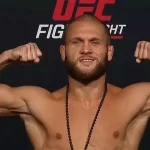
How did Pedro Munhoz build this fortune?
The answer unfolds through the career, earnings, deals and assets behind the headline estimate.
Before the fame
The background and early turning points that shaped Pedro Munhoz’s route to prominence.
Pedro Henrique Lopes Munhoz was born on September 7, 1986, in Sao Paulo, Brazil. He began training in Shotokan karate at age six, added judo a couple of years later, and started Brazilian Jiu-Jitsu at age 13, the discipline that would come to define his fighting career. He has said that watching Royce Gracie compete was part of what drew him toward the sport as a teenager growing up in Sao Paulo.
His birth details, early martial arts background and BJJ lineage under Rubens “Cobrinha” Charles and Marco Barbosa are documented on Wikipedia and in his official UFC athlete profile.
Munhoz turned professional in March 2009, fighting on regional cards in Sao Paulo before working his way through the Brazilian and North American circuits. Alongside his early MMA bouts he built a decorated grappling resume, becoming a two-time Brazilian National No-Gi Champion and six-time state Brazilian Jiu-Jitsu champion, credentials that underpinned his reputation as one of the more technically dangerous fighters entering the bantamweight scene. In August 2013 he won the Resurrection Fighting Alliance bantamweight title and defended it once before signing with the UFC.
His amateur grappling titles, RFA championship run and 2014 UFC signing are listed in his official UFC biography.
The breakthrough years
The career decisions and defining moments that turned recognition into sustained earning power.
Munhoz made his UFC debut on February 22, 2014, at UFC 170, and spent the next several years establishing himself as a durable, always-forward bantamweight who has never been finished by strikes or submission in his professional career. His breakthrough moment arrived at UFC 235 in March 2019, when he knocked out former UFC bantamweight champion Cody Garbrandt in the first round, a result that ranked among the UFC’s official upset and fight highlights for that year.
The Garbrandt knockout and its significance are covered on Wikipedia and in fight-by-fight detail on The Allstar’s career record.

What the work can earn
Reported pay, contracts, royalties and performance income reveal how the fortune was funded.
Across more than a decade in the UFC, Munhoz compiled one of the division’s most extensive resumes, ranking among the promotion’s leaders for total bantamweight bouts contested. He earned three UFC Performance of the Night bonuses and four Fight of the Night bonuses, including for his 2021 decision win over Jimmie Rivera and his 2021 decision loss to Dominick Cruz. His other notable wins include finishes over Bryan Caraway and Russell Doane and a decision victory over former UFC lightweight champion Frankie Edgar in 2020.
His bonus history and full list of notable opponents are detailed in his official UFC profile and on The Allstar.
Munhoz’s 2019 win over Garbrandt was recognized in the UFC’s own year-end coverage, which ranked it among the top upsets and fights of the year. Beyond individual honors, he built a reputation among fans, broadcasters and fellow fighters as one of the bantamweight division’s toughest and most respected veterans, a fighter opponents rarely wanted to share the cage with even when he was not ranked in the top five.
His 2019 UFC.com year-end recognition and standing in the division are noted on Wikipedia.

The business beyond the main career
Endorsements, ownership interests and investments can keep compounding long after the initial breakthrough.
Like all UFC roster fighters, Munhoz has earned apparel income through the promotion’s official outfitting program, which has run through deals with Reebok and, more recently, Venum, paying fighters according to tenure and standing rather than individual sponsorship negotiation. Outside of that promotion-wide structure, no major individual endorsement deals with outside brands are publicly documented for Munhoz, a common picture for a durable, respected gatekeeper-level fighter rather than a pay-per-view headliner.
The UFC’s shift between outfitting partners is documented on Wikipedia.
Munhoz’s income has come almost entirely from competing rather than from outside companies or franchises. His clearest commercial connection outside the cage is his long affiliation with American Top Team, the Coconut Creek, Florida gym he joined in 2017, where he has also taken on a senior, mentoring role for younger fighters training alongside world champions. No independent businesses, product lines or ownership stakes for Munhoz personally are publicly documented.
American Top Team’s scale, roster and commercial standing as one of MMA’s leading gyms are described on Wikipedia.

Notable luxury item
A reported property or major asset offers a tangible glimpse of the wealth behind the public estimate.
After relocating to South Florida in 2017 to train full time at American Top Team, Munhoz moved his family from temporary housing near the gym into a home he purchased in the Coconut Creek area, the clearest documented real-estate asset tied to his career earnings. No further property holdings, vehicles or major purchases have been publicly disclosed.
The relocation and home purchase are described in the UFC’s own feature “Munhoz Knows It’s Showtime”.
Pedro Munhoz’s estimated net worth
Public estimates vary because private contracts, investments, taxes and liabilities are not fully disclosed.
How this estimate is calculated
The estimate is built primarily from Munhoz’s disclosed UFC fight purses across roughly 20 bouts over a 12-year tenure, which independent trackers place at a little over $1.1 million in cumulative base and win money, including a reported $162,000 payday for his 2021 win over Jimmie Rivera and a purse of roughly $153,000 for his 2019 fight with Cody Garbrandt. It adds his three Performance of the Night and four Fight of the Night bonuses on top of that purse total, and factors in UFC-program apparel income rather than outside endorsement deals, since none are publicly documented for him.
Set against those gross career earnings are the standard costs of a full-time MMA career, coaching and camp fees, travel, management and taxes, which several independent trackers already account for in their roughly $1 million net worth estimates. Purse and bonus figures are compiled by CollegeNetWorth and Sportskeeda, both used here as secondary, aggregated sources rather than primary financial disclosures.
Munhoz has not been publicly linked to a personal charitable foundation or headline philanthropic campaign. His public image instead rests on his role as a mentor and senior training partner at American Top Team, where he helps develop younger fighters, and on the respect he has earned across the sport for showing up to fight the toughest available opponents throughout a long career, rather than protecting a ranking.
His mentoring role and standing within the American Top Team room are referenced in the gym’s roster history and his own career profile.
The most significant controversy of Munhoz’s career followed his October 2014 win over Jerrod Sanders in Halifax, Nova Scotia, when a post-fight test returned an elevated testosterone reading. The result was changed to a no contest while the matter was reviewed. Munhoz and an independent anti-doping expert he hired disputed the finding, pointing to testing and chain-of-custody irregularities by the local commission, and the UFC itself publicly pushed back on how the case was handled; no suspension was ultimately upheld against him.
The disputed test, the procedural issues raised and the eventual outcome are laid out in detail by MixedMartialArts.com.