 How Much Are They Worth?
Celebrity fortunes, explained
How Much Are They Worth?
Celebrity fortunes, explained





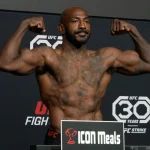



How did Curtis Blaydes build this fortune?
The answer unfolds through the career, earnings, deals and assets behind the headline estimate.
Before the fame
The background and early turning points that shaped Curtis Blaydes’s route to prominence.
Curtis Lionell Blaydes was born on February 18, 1991, in Naperville, Illinois, and was raised nearby in Chicago alongside four siblings, according to Wikipedia’s account of his life. He attended De La Salle Institute in Chicago, where he wrestled and played defensive end in football, capping his high school wrestling career with a state title as a senior after posting an undefeated 44-0 record that year, part of a four-year varsity mark of 95 wins and 18 losses with 121 career takedowns. Blaydes, who fights under the nickname “Razor,” grew up far from the fight-camp hubs that produce most UFC heavyweights, and his path into combat sports ran through amateur wrestling and football rather than a striking gym, a background that still shows in the grinding, control-heavy style that later defined his UFC career. His Chicago roots and Midwestern wrestling pedigree set him apart from the kickboxing and Brazilian backgrounds common among his heavyweight peers.
Blaydes earned a full wrestling scholarship to Northern Illinois University, then transferred to Harper College, a junior college program, where he won an NJCAA national championship in the heavyweight bracket as a redshirt sophomore and earned NJCAA All-American honors, per UFC’s official athlete profile. Before committing to a full-time fighting career, he worked in nightclub security in the Chicago area, a detail his own promotion highlights as part of his path into the sport. He also picked up amateur kickboxing, winning an IKF national title, before compiling an 8-0 amateur MMA record and turning professional in 2014. His first five professional fights all ended in TKO wins on the regional circuit, including bouts for the Resurrection Fighting Alliance, and that finishing rate combined with his wrestling pedigree made him a fast-tracked prospect who reached the UFC after fewer than a dozen amateur and professional fights combined.
The breakthrough years
The career decisions and defining moments that turned recognition into sustained earning power.
Blaydes made his UFC debut on April 10, 2016, against fellow late bloomer Francis Ngannou, a fight he lost to a doctor stoppage after eye damage in the second round, and he needed several years of steady, largely wrestling-heavy wins before he broke through as a genuine contender. The turning point came against a former champion: on January 25, 2020, Blaydes stopped Junior dos Santos by TKO in the second round in Raleigh, a win he later singled out as significant because, in his own words relayed by ESPN’s report on the fight, it was the first fight he had won without landing a single takedown. That victory, layered on top of an earlier stoppage of former title challenger Alistair Overeem in June 2018, reframed Blaydes from a one-dimensional grinder into a heavyweight who could hurt opponents standing, and it pushed him into the thick of the heavyweight title picture for the first time.

What the work can earn
Reported pay, contracts, royalties and performance income reveal how the fortune was funded.
Blaydes holds the UFC heavyweight division record for most takedowns landed in the promotion’s history, a mark he broke by surpassing former champion Cain Velasquez’s total, according to EssentiallySports’ coverage of the record. Within that broader mark, his 2020 decision win over Alexander Volkov included 14 takedowns landed, the most in a single heavyweight bout in UFC history. His resume includes wins over two former UFC heavyweight champions, Junior dos Santos and, in their first meeting, a doctor-stoppage win over future interim champion Tom Aspinall, plus a knockout of surging contender Jailton Almeida in March 2024. Despite that level of opposition, and despite twice fighting into eliminator or interim-title stakes, first losing to Ngannou in a 2018 eliminator and later to Aspinall in the 2024 interim title fight itself, Blaydes has never held UFC gold, making his takedown record and win total over ranked contenders the centerpiece of his career case rather than a championship reign.
Blaydes has spent nearly a decade as a ranked UFC heavyweight, a run reflected in his current standing in the promotion’s official rankings, where CBS Sports’ fighter profile lists his professional record and continued top-division placement as of mid-2026. He has collected four Performance of the Night bonuses, for his wins over Cody East, Alistair Overeem, Chris Daukaus and Jailton Almeida, and a Fight of the Night bonus for his 2026 loss to Josh Hokit, an unusual distinction of being rewarded for a losing effort in a five-round headline slot. That combination, headline main-card appearances stretching back to 2016, a division-record takedown total and a reputation as a durable gatekeeper for the sport’s top contenders, has kept him a recognizable name in heavyweight MMA circles even without a title reign to anchor his public profile.

The business beyond the main career
Endorsements, ownership interests and investments can keep compounding long after the initial breakthrough.
Blaydes’ endorsement portfolio has stayed modest relative to his standing in the division. He has a partnership with Bosley, the hair-restoration brand, and continues to draw the UFC’s standard athlete compliance pay for wearing the promotion’s official Venum fight kit, a leaguewide arrangement rather than a personal sponsorship, according to EssentiallySports’ financial breakdown of his career. Earlier in his career he also drew per-event sponsorship pay during the UFC’s now-discontinued Reebok outfitting period, a standard but comparatively small revenue stream that applied to most fighters on the roster at the time. Compared to marquee UFC names who carry watch, spirits or cryptocurrency endorsement deals worth seven figures, Blaydes’ sponsorship income has functioned as a secondary supplement to his fight purses rather than a major independent pillar of his finances.
Blaydes has not built a company or ownership stake comparable to some of his UFC contemporaries. He previously operated a personal merchandise storefront, Teamblaydes.com, selling branded apparel and running periodic fan giveaways, though a financial profile tracking his career notes that operation has since been discontinued. His other outside income has come from small-scale digital ventures rather than traditional business ownership, including a Twitch channel where he streams to a modest but growing following. There is no public record of Blaydes founding a gym, a supplement line or a media company under his own name, and unlike several heavyweight peers who have branched into coaching academies or apparel brands, his financial profile outside the cage remains built almost entirely around his own fight purses rather than outside enterprise.

Notable luxury item
A reported property or major asset offers a tangible glimpse of the wealth behind the public estimate.
There is no public record of Blaydes owning a notable estate, investment property or car collection. His own website explains that his relocation from the Chicago area to the Denver region, where he has trained for most of his UFC career, was a professional decision rather than a lifestyle one: “I moved from Chicago to Denver mainly because I wanted to join a major gym with legit coaches and sparring partners,” he says on his official athlete website. That framing, along with the absence of any documented luxury real estate or vehicle purchases in sports or celebrity financial coverage, points to a fighter whose spending has stayed oriented around training logistics rather than visible wealth, a pattern consistent with a heavyweight contender who has never landed the kind of title-fight payday that typically funds major asset purchases.
Curtis Blaydes’s estimated net worth
Public estimates vary because private contracts, investments, taxes and liabilities are not fully disclosed.
How this estimate is calculated
This estimate starts from Blaydes’ disclosed fight purses, which total roughly $2.14 million across the fourteen bouts for which pay data has been publicly reported, ranging from an early-career payday near $12,000 up to his career-high $366,000 purse for knocking out Jailton Almeida at UFC 299 in March 2024, according to a salary database tracking his per-fight earnings. His average disclosed purse sits close to $185,000 per bout, reflecting a career built on steady mid-card and co-main paydays rather than the pay-per-view points and eight-figure paydays available to champions. Layered on top of that base are modest, largely undisclosed sums from his Bosley partnership, UFC kit compliance pay, merchandise sales and Twitch streaming, none of which appear to add up to a significant fraction of his fight income. After accounting for typical deductions, coaching and team percentages, training camp costs and income tax on purses earned across multiple U.S. states, and cross-checking against third-party trackers that independently put his net worth in a similar band, this estimate settles into a range consistent with a long-tenured, frequently-paid contender who has not yet cashed a title-fight payday.
Based on the available evidence, Curtis Blaydes’ estimated net worth falls between $1.5 million and $2.5 million. The lower end reflects the most conservative reading of his disclosed purses after taxes and standard camp and coaching deductions, while the upper end accounts for his largest documented paydays, his ongoing Bosley and Venum-related compliance income, and the modest but real supplemental earnings from merchandise and streaming. It is not a disclosed figure, and it could move in either direction depending on the outcome of his still-active UFC career, including his scheduled September 2026 fight against Waldo Cortes-Acosta, and on whether he ever secures the undisputed title opportunity that has eluded him despite more than a decade near the top of the heavyweight division.
Blaydes has no dedicated charitable foundation or large-scale publicized philanthropic initiative on record. His public image instead centers on his family life and his direct relationship with fans: he is engaged to his longtime partner Alexandria, with whom he shares a daughter, Harlie, and he has spoken openly about living with a speech impediment, a disclosure covered by a profile of his personal life. He maintains an active presence with fans through social media and Twitch streaming rather than through gala appearances or a named nonprofit, and his public reputation within MMA circles skews toward being a workmanlike, low-drama professional best known for his in-cage habits, most takedowns, most control time, rather than for a curated off-camera persona. That combination gives him a public image built on approachability and consistency more than headline-grabbing charity work.
Blaydes’ clearest brush with controversy came early in his UFC run: after defeating Adam Milstead by TKO in February 2017, he tested positive for marijuana metabolites, a result that triggered a 90-day suspension and $1,000 fine from the Texas Department of Licensing and Regulation and overturned his win to a no contest, according to Bloody Elbow’s reporting at the time. Notably, USADA itself did not sanction him, since his metabolite level fell under the promotion’s anti-doping threshold for marijuana, and the punishment came entirely from the state commission. When USADA dropped marijuana from its list of sanctionable substances in 2021, Blaydes welcomed the change publicly, telling MMA Mania it was “about time.” Beyond that episode, his career has been largely free of the doping, legal or interpersonal disputes that have shadowed several heavyweight peers.