Robert Redford

Robert Redford

Background

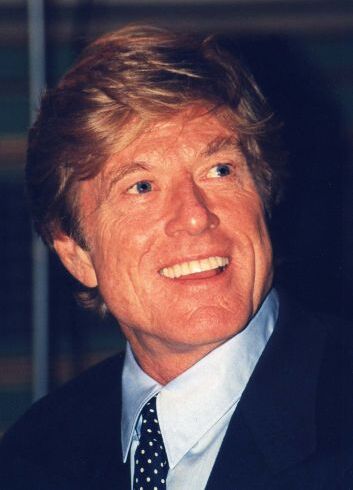
Charles Robert Redford Jr was born on 18 August 1936 in Santa Monica, California, to an accountant father who had worked as a milkman and a mother who died when he was in his teens. He won a baseball scholarship to the University of Colorado but lost it, drifted through Europe painting, and returned to study at the Pratt Institute and the American Academy of Dramatic Arts in New York, where acting began as a route into stage design rather than performance, according to Wikipedia.

Early Career

Redford worked steadily in live American television through the early 1960s before Neil Simon cast him on Broadway in Barefoot in the Park, a role he carried into the 1967 film opposite Jane Fonda. The combination of stage discipline and an extraordinarily photogenic face made him a studio proposition almost immediately, though he was already showing the wariness of Hollywood that would define the rest of his career.

Career Breakthrough

Butch Cassidy and the Sundance Kid, released in 1969 with Paul Newman, made him a star and gave him the name he would later attach to everything else he built. The Sting reunited the pair in 1973 and won Best Picture, and by the middle of the decade he was among the biggest box-office draws in the world, following it with The Way We Were, Three Days of the Condor and All the President’s Men, which he also produced.

Major Achievements

Redford won the Academy Award for Best Director for Ordinary People in 1981, his first film behind the camera, and later directed A River Runs Through It and Quiz Show. He received an honorary Academy Award in 2002 and the Presidential Medal of Freedom in 2016. His most consequential achievement, though, was institutional rather than artistic: the Sundance Institute, founded in 1981, rebuilt the economics of American independent film.

Public Recognition

For a generation Redford was the archetype of American screen stardom, and he spent much of his career working against it, choosing political thrillers and character pieces over the obvious commercial roles. The Sundance Film Festival became the most important launch platform in independent cinema, and by the end of his life his name was attached at least as firmly to the discovery of other film-makers as to his own performances.

Business Ventures

Redford bought land in Provo Canyon, Utah, in the 1960s and developed it into the Sundance Mountain Resort, which he ran for decades before selling his stake in 2020. Around it he built the Sundance Institute, the festival, and the Sundance Catalog retail business, and he later co-founded the Sundance Channel, sold to Cablevision in a transaction that accounted for a substantial share of his fortune.

Endorsements and Sponsorships

Redford largely refused conventional endorsement work, a stance consistent with his broader distance from celebrity culture, and the commercial use of his name was concentrated almost entirely in his own Sundance businesses. Where he did lend his voice, it was typically to documentary narration or environmental campaigns rather than to consumer brands.

Property and Major Assets

Land was Redford’s principal asset. Beyond the Utah holdings, he owned property in Napa Valley, New Mexico and Connecticut, selling several over the last decade of his life, and he placed large tracts under conservation protection rather than developing them. He died at his home at Sundance in the Utah mountains on 16 September 2025, aged 89, according to CNN.

Philanthropy and Public Image

Redford was among the most persistent environmental campaigners in American public life, serving on the board of the Natural Resources Defense Council for decades and lobbying on climate and public lands long before either was a mainstream celebrity cause. He was also a founder-level supporter of Native American arts programmes through the Sundance Institute.

Controversies and Public Scrutiny

Redford attracted comparatively little scandal across sixty years of fame. The criticism he did receive was structural: that the Sundance festival had become the corporate marketplace it was founded to bypass, a charge he acknowledged more than once, and that the resort development sat awkwardly with his environmental advocacy.


How the Estimate Is Calculated

This estimate follows Celebrity Net Worth, which put Redford’s wealth at approximately 200 million dollars at the time of his death. The figure is built from six decades of acting and producing income, the sale of his stake in the Sundance Mountain Resort in 2020, proceeds from the sale of the Sundance Channel, and an extensive and appreciating land portfolio in Utah, California and the south-west. Land valuations are inherently imprecise, and conservation easements reduce market value in exchange for tax treatment, so the total should be read as an informed range rather than a settled figure.

Estimated Net Worth

$170 Million – $200 Million

HMW uses research and editorial tools to assist production. Every profile is independently sourced, fact-checked, edited and reviewed before publication. Estimates are editorial assessments and not audited financial statements.

Browse the full collection

Explore by category

Sports Athletes, records and earnings Actors & Entertainment Film, television and fame Business Founders, deals and ownership Musicians Tours, catalogues and royalties Influencers Audiences, brands and ventures Gamers Streaming, esports and sponsors DJs Festivals, releases and labels Politicians Careers, disclosures and assets Chefs Restaurants, awards and ventures Models Campaigns, runways and brands YouTube Channels Views, partnerships and businesses American Football Contracts, teams and endorsements Soccer Salaries, transfers and sponsorships Football Players, clubs and commercial deals Cricket Contracts, leagues and endorsements Tennis Prize money, tours and sponsors Golf Winnings, tours and partnerships Boxing Purses, promotions and endorsements Martial Arts Fight purses, bonuses and brands F1 Contracts, teams and sponsorships Basketball Salaries, sneakers and investments Motorsport Racing careers, teams and sponsors Comedians Tours, specials and production deals TV Personalities Broadcast careers and ventures Podcasts Audiences, advertising and ownership CEOs Leadership, equity and compensation Billionaires Ownership, investments and major assets Companies Valuations, ownership and performance Restaurants Hospitality groups and expansion Night Clubs Venues, ownership and nightlife Festivals Events, audiences and commercial scale Criminal Cases Documented cases and asset scrutiny