
 How Much Are They Worth?
Celebrity fortunes, explained
How Much Are They Worth?
Celebrity fortunes, explained









How did Dharmendra build this fortune?
The answer unfolds through the career, earnings, deals and assets behind the headline estimate.
Dharmendra before the fame
The background and early turning points that shaped Dharmendra’s route to prominence.
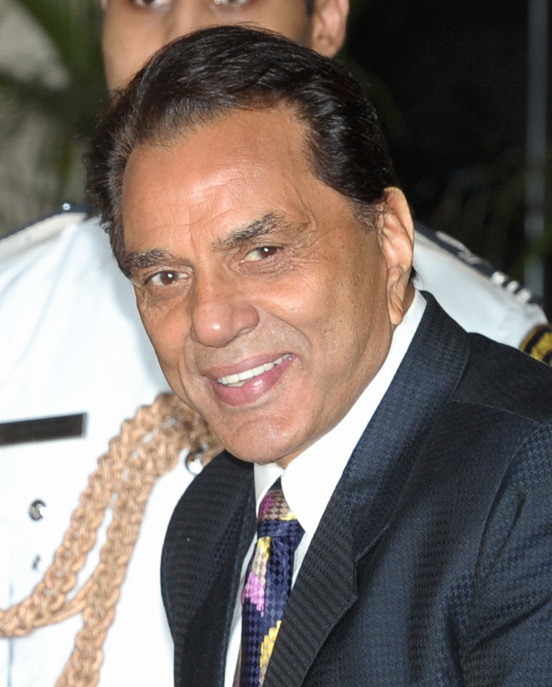
Dharmendra Kewal Krishan Deol was born on 8 December 1935 in Nasrali, in the Ludhiana district of Punjab, the son of a village schoolteacher. He worked as a drilling-machine operator for an American oil-exploration contractor before entering a Filmfare talent contest that took him to Bombay in 1958. He often recalled being paid 51 rupees for his debut in Dil Bhi Tera Hum Bhi Tere in 1960.
The first years were slow and poorly paid: supporting parts in Shola Aur Shabnam and Bandini, and leading roles in small films that paid a few thousand rupees each. What changed his trajectory was Anupama and, decisively, Phool Aur Patthar in 1966, a solo hit that made him a major star, brought his first Filmfare nomination and established the physical presence that earned him the epithet He-Man of Bollywood. From 1966 his fee moved from thousands of rupees to lakhs, and five or six releases a year became the real engine of his income.
Dharmendra’s breakthrough years
The career decisions and defining moments that turned recognition into sustained earning power.
Sholay in 1975, in which he played Veeru opposite Amitabh Bachchan’s Jai, is among the most commercially successful and culturally significant films ever made in India, and it is also the one film for which his fee is on the record: 15 lakh rupees, the highest of any member of the cast, at a time when Bachchan was paid one lakh (DNA India). Chupke Chupke the same year demonstrated a comic timing critics had underrated, and Dharam Veer, The Burning Train and Ghulami kept him at the top of the fee table into the late 1980s.
That single documented figure anchors our estimate of what the craft paid across sixty-five years. Working era by era: some 25 films in the early 1960s at a few thousand rupees each; around 70 films between 1966 and 1975 at an average near five lakh; roughly 110 films in his peak years from 1976 to 1990 at about 20 lakh; some 50 in the 1990s at around 40 lakh; and about 40 character and family-production roles since 2000 at roughly one crore. That gives gross acting fees of 75 to 125 crore rupees in the money of the day, our estimate, or about 9 to 15 million dollars – and several times that in today’s rupees, since most of it was earned when a lakh bought what a crore buys now.

What Dharmendra’s work can earn
Reported pay, contracts, royalties and performance income reveal how the fortune was funded.
He appeared in more than 300 films across seven decades (Variety), a body of work matched by very few actors anywhere. He received the Filmfare Lifetime Achievement Award in 1997 and the Padma Bhushan, India’s third-highest civilian honour, in 2012 (the Padma Awards). His late career was its own achievement: Apne in 2007 and Yamla Pagla Deewana in 2011 put him on screen with both sons, and Rocky Aur Rani Kii Prem Kahaani in 2023 introduced him to an audience born fifty years after Sholay. Adjusted for Indian inflation era by era, the fees above are worth roughly 600 to 900 crore rupees in today’s money, on our estimate.
He served as Member of Parliament for Bikaner from 2004 to 2009 after winning the seat for the BJP, a single term he did not seek to repeat (The Tribune). He died in Mumbai on 24 November 2025, aged 89 (The Tribune, Al Jazeera), and the tributes that followed came from the President, Vice President and Prime Minister of India (All India Radio) as well as from three generations of the industry.

Dharmendra’s business beyond the main career
Endorsements, ownership interests and investments can keep compounding long after the initial breakthrough.
Dharmendra belonged to a generation of stars who advertised rarely and cheaply. His few campaigns paid a few lakh rupees at most, and the commercial use of his image went instead into Garam Dharam, where the persona earned a share of the business rather than a fee. Sponsorship contributes nothing material to the estimate.
His business interests were substantial and built largely on land. He farmed at scale on a 100-acre property at Lonavala, between Mumbai and Pune. Vijayta Films, the production company he founded in 1983 to launch Sunny Deol in Betaab, went on to produce for Bobby Deol and the family’s later ensemble pictures, giving him a producer’s share on films in which he also acted. The Garam Dharam restaurant chain, launched in 2015 and trading on his own screen persona, grew into several outlets in Delhi and along the highway north of it (Garam Dharam).
Dharmendra’s notable luxury item
A reported property or major asset offers a tangible glimpse of the wealth behind the public estimate.
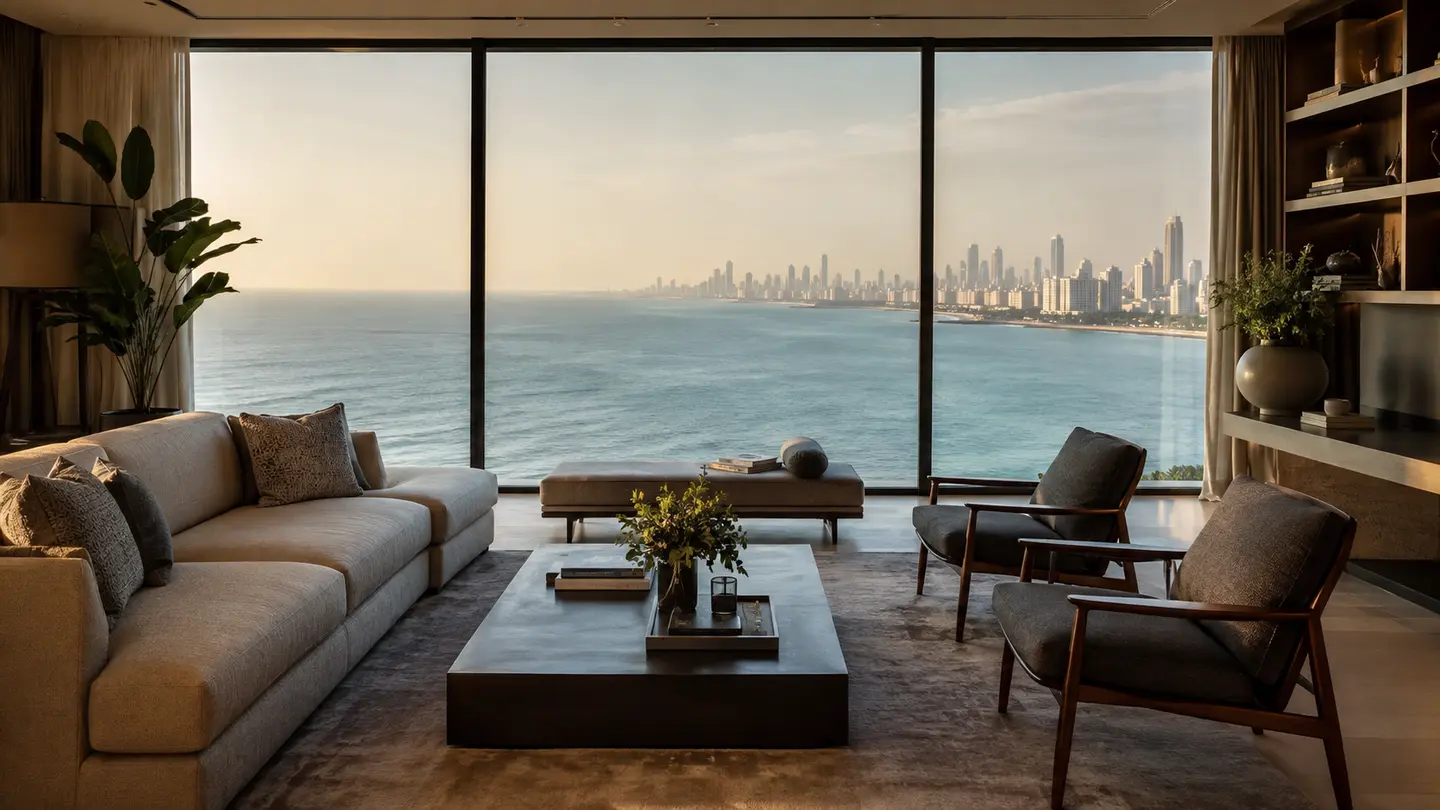
Property is the dominant asset. The Lonavala farmhouse was held for roughly fifty years in a corridor whose land values have appreciated enormously, and on our estimate the 100 acres are worth 100 to 200 crore rupees today. Around it sit the family bungalow in Juhu, Mumbai, worth perhaps 60 to 100 crore, ancestral agricultural land in Punjab, and a collection of vehicles; The Tribune’s account of his holdings lists the multi-crore properties, the culinary ventures and the farmland together as the estate’s main components (The Tribune). The restaurant and production businesses add a further 20 to 40 crore on our estimate.
Dharmendra’s estimated net worth
Public estimates vary because private contracts, investments, taxes and liabilities are not fully disclosed.
How this estimate is calculated
Two things are documented: the 15 lakh rupee fee for Sholay, the highest of the cast (DNA India), and the composition of the estate – the Lonavala farm, the Mumbai property, the Punjab land and the restaurant and production businesses (The Tribune). Everything numerical beyond that is our estimate.
Earnings first. Twenty-five early films at a few thousand rupees; 70 films at five lakh gives 3.5 crore; 110 peak-era films at 20 lakh gives 22 crore; 50 films at 40 lakh gives 20 crore; 40 later films and productions at one crore gives 40 crore. That sums to roughly 85 crore rupees in the money of the day, which we round to 75 to 125 crore, or 9 to 15 million dollars. The assumption is that his fee sat at or near the top of the table from 1966 to 1990, which Sholay supports. Much of that income was earned when India’s top marginal tax rate exceeded 70 per cent, so the retained share was small and the wealth that survives is mostly what was put into land early.
Assets second. Lonavala at 100 to 200 crore, Juhu at 60 to 100 crore, the businesses at 20 to 40 crore, and Punjab land and vehicles at 20 to 40 crore give 200 to 380 crore rupees, which we widen slightly for property that has not been marketed and convert at about 84 rupees to the dollar. Indian land of this kind trades rarely and at prices that vary with what a buyer intends to build, which is why the range is wide.
The working supports a range of $35 million to $50 million. The figure we publish is its midpoint.
Confidence: Indicative — the composition of the estate is reported and one film fee is on the record, but the land values that dominate the figure are modelled from the local market rather than from any transaction.
Think you know Dharmendra? Take the quiz: Easy · Medium · Legendary
He was the patriarch of a film dynasty – Sunny and Bobby Deol and Esha Deol all became actors – and his public image was of a man who had stayed a Punjabi farmer’s son throughout: unpretentious, sentimental about his village, and generous with time and money in Sahnewal and Nasrali, where he funded local schooling and infrastructure without publicity. In his final years he was a warm presence on social media, sharing poetry and farm videos with a younger audience.
His marriage to Hema Malini in 1980 while remaining married to his first wife Prakash Kaur attracted persistent comment in the Indian press for four decades. His parliamentary term drew criticism for poor attendance, and a campaign remark in 2004 that he would like to be a dictator for a while to teach the country some discipline caused a brief national stir (The Tribune).