 How Much Are They Worth?
Celebrity fortunes, explained





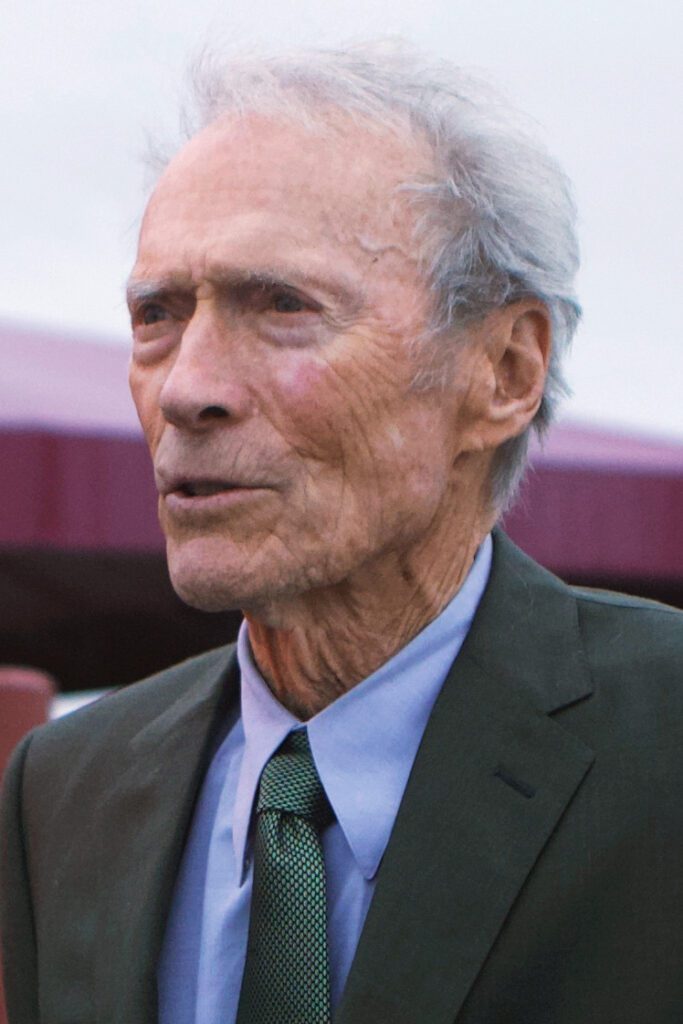
How did Clint Eastwood build this fortune?
The answer unfolds through the career, earnings, deals and assets behind the headline estimate.
Clint Eastwood before the fame
The background and early turning points that shaped Clint Eastwood’s route to prominence.
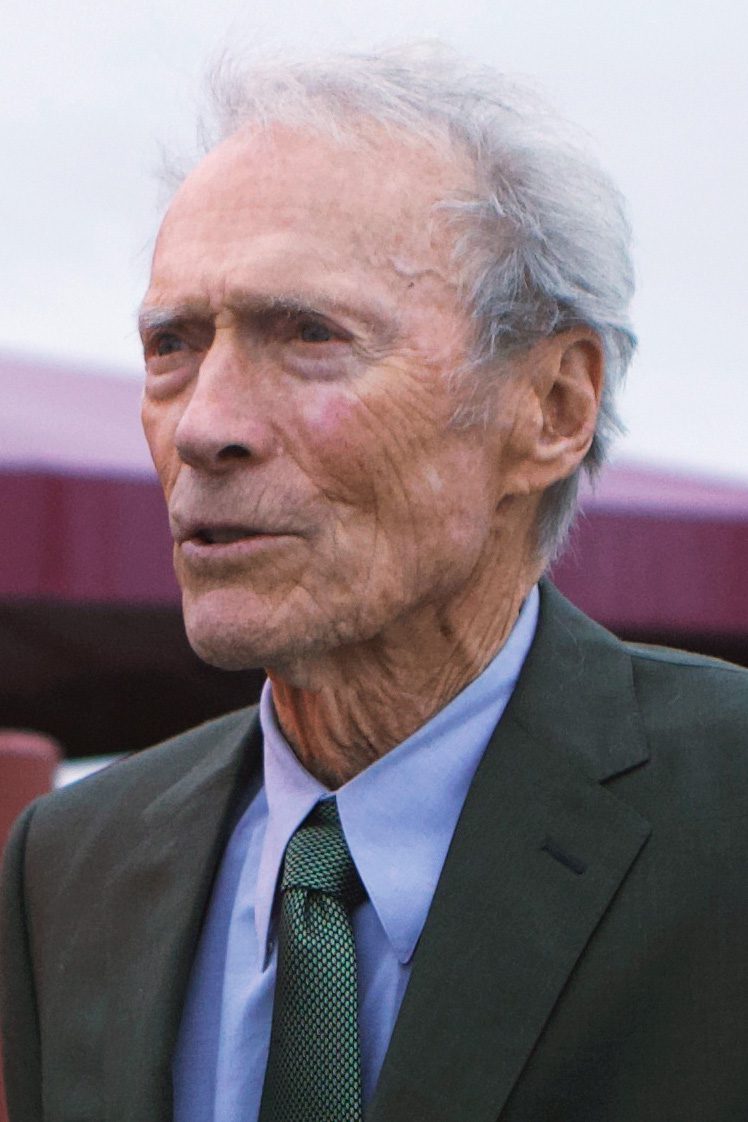
Clint Eastwood was born on 31 May 1930 in San Francisco. He was drafted in 1951 and served at Fort Ord, then signed with Universal in 1954 as a contract player on 75 dollars a week for bit parts before it let him go.
The first steady money was television. From 1959 to 1965 he played Rowdy Yates in the CBS western Rawhide, starting at around 750 dollars a week and rising with the show’s success; on our estimate the series paid him roughly half a million dollars across more than 200 episodes. In 1964 he went to Spain to make a low-budget western for Sergio Leone and, by his own account, was paid 15,000 dollars for it. A Fistful of Dollars (Box Office Mojo) made him a star in Europe two years before America saw it.
Clint Eastwood’s breakthrough years
The career decisions and defining moments that turned recognition into sustained earning power.
The Leone trilogy set his price. He took 50,000 dollars for For a Few Dollars More and 250,000 plus a share of profits for The Good, the Bad and the Ugly, and by 1968 he was commanding 800,000 dollars for Where Eagles Dare. The commercially significant decision of his career came the same year: he founded Malpaso Productions, named after a creek near Carmel, and has produced almost all of his own work through it since (Variety). Owning the production company meant that from Hang ‘Em High onwards he held a producer’s share of the gross, not merely an actor’s fee.
Dirty Harry in 1971 and the four sequels that followed, Every Which Way But Loose in 1978 – for which he traded his fee for a percentage of a film that became one of the biggest of the decade – and the westerns and thrillers of the 1980s kept him at or near the top of the Hollywood pay table for twenty years. On our estimate the 1968 to 1990 period paid him 150 to 200 million dollars in fees and participations, with the percentage deals contributing more than the salaries.
What Clint Eastwood’s work can earn
Reported pay, contracts, royalties and performance income reveal how the fortune was funded.
Unforgiven in 1992 won him Academy Awards for Best Picture and Best Director, and Million Dollar Baby in 2004 did the same, on a budget of 30 million dollars against a worldwide gross above 216 million (Box Office Mojo). His directing is known for coming in under budget and on schedule, which matters financially because Malpaso’s share rises with the margin: Gran Torino took some 270 million dollars worldwide on a 33 million dollar budget (Box Office Mojo), American Sniper more than 547 million (Box Office Mojo), and Sully over 150 million against 60 million (Variety).
That is where the bulk of the money sits. On our estimate the films he has directed and starred in since 1990, some twenty-five of them, brought him 250 to 400 million dollars in combined fees, directing salaries and back-end participation, with the four most profitable – Unforgiven, Million Dollar Baby, Gran Torino and American Sniper – accounting for perhaps half. Adding the early television, the Leone years and the two decades of percentage deals, we put his gross career earnings from acting, directing and producing at 400 to 600 million dollars before tax and representation.
Four competitive Oscars, the Irving G. Thalberg Memorial Award in 1995, the American Film Institute’s Life Achievement Award in 1996, Kennedy Center Honors in 2000 and the French Légion d’honneur mark the institutional side. Juror No. 2, released in 2024 when he was 94, was widely reported as his last film (Deadline, The Hollywood Reporter).

Clint Eastwood’s business beyond the main career
Endorsements, ownership interests and investments can keep compounding long after the initial breakthrough.
Eastwood has sold almost nothing but his films. The exception was Chrysler’s Halftime in America commercial during the 2012 Super Bowl, a two-minute piece he narrated and said he had made for no personal fee, with the payment going to charity. Sponsorship income is not a component of the estimate.
Malpaso is the business, run with a small staff and a long relationship with a single distributor in Warner Bros. Around it he has kept a cluster of Carmel interests. He co-owned the Hog’s Breath Inn from 1972 until 1999 (the Hog’s Breath Inn), bought the Mission Ranch hotel in 1986 to stop it being turned into condominiums and restored it over a decade, and in 1999 joined Peter Ueberroth, Arnold Palmer and Richard Ferris in the investor group that bought the Pebble Beach Company, the resort and golf operator, for a reported 820 million dollars. That stake is the most valuable asset he owns outside the films.

Clint Eastwood’s notable luxury item
A reported property or major asset offers a tangible glimpse of the wealth behind the public estimate.
He served as mayor of Carmel-by-the-Sea from 1986 to 1988 and his landholding in the area is substantial. Teháma is a roughly 2,000-acre private enclave he developed in the hills above Carmel, with only about 90 homesites and the majority of the land left as open space (Forbes, The Hollywood Reporter, Teháma); on our estimate the remaining lots and the retained land are worth 100 to 150 million dollars. He also owns a home in Pebble Beach, a ranch near Shasta in northern California, a house in Sun Valley, Idaho, and the Mission Ranch property itself.
Clint Eastwood’s estimated net worth
Public estimates vary because private contracts, investments, taxes and liabilities are not fully disclosed.
How this estimate is calculated
The documented figures are the grosses and the land. Million Dollar Baby at more than 216 million dollars on a 30 million budget, Gran Torino at around 270 million on 33 million, and American Sniper at more than 547 million (Box Office Mojo, Box Office Mojo, Box Office Mojo); Sully at over 150 million on 60 million (Variety); and Teháma’s 2,000 acres and 90 homesites (Forbes). The early fees – 15,000, 50,000, 250,000 and 800,000 dollars – are his own account. Everything else is our estimate.
The arithmetic: half a million from Rawhide; roughly a million from the Leone films and their profit share; 150 to 200 million from the 1968 to 1990 fee-and-percentage era, assuming an average of five to eight million per picture across twenty-five films with the percentage deals weighted towards the hits; and 250 to 400 million from the twenty-five films since 1990, assuming producer participations of 10 to 15 per cent of studio net on the four big earners and modest back-end on the rest. That gives 400 to 600 million dollars gross, and the key assumption is that Malpaso’s terms with Warner were at the generous end of what a director with his record could command.
After combined federal and California tax of close to half and representation costs, retained earnings of roughly 200 to 280 million dollars, compounded over six decades and joined by the Pebble Beach stake and the Carmel land, produce the range below. What could move it most is the one asset without a public price: 2,000 acres of coastal California that its owner has spent thirty years choosing not to sell.
The working supports a range of $375 million to $500 million. The figure we publish is its midpoint.
Confidence: Partly documented — anchored to the published grosses and budgets of films he owns a share of through Malpaso and to the recorded extent of his Carmel land, with fees, participations and the Pebble Beach stake modelled rather than disclosed.
Think you know Clint Eastwood? Take the quiz: Easy · Medium · Legendary
His giving has been local and practical rather than institutional: the Mission Ranch rescue, land conservation through the Teháma design, and support for the Monterey Peninsula’s arts and civic bodies. The Eastwood Ranch Foundation, run by his daughter Alison, works on animal welfare. His public image – the laconic professional who spends the studio’s money as if it were his own – has been commercially useful, because studios kept financing a director whose budgets they trust.
His 2012 Republican National Convention appearance, addressing an empty chair as a stand-in for the President, was widely mocked and is the moment his politics drew most attention. The other public dispute of his late career was commercial: Warner Bros. gave Juror No. 2 a limited release and no awards campaign, which critics and trade columnists read as the studio writing off the final film of a director who had made it hundreds of millions (Variety, Variety, Warner Bros.).