 How Much Are They Worth?
Celebrity fortunes, explained








How did Sylvester Stallone build this fortune?
The answer unfolds through the career, earnings, deals and assets behind the headline estimate.
Sylvester Stallone before the fame
The background and early turning points that shaped Sylvester Stallone’s route to prominence.
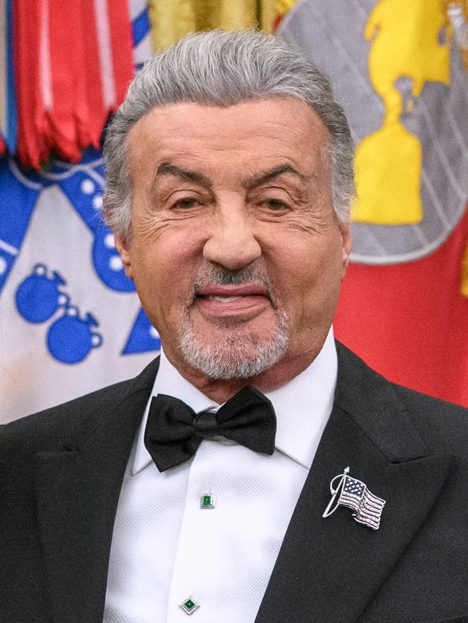
Sylvester Stallone was born on 6 July 1946 in New York City. He wrote and starred in Rocky in 1976, appeared in all six films of the original series and later reprised the character in the first two Creed films, alongside the Rambo and Expendables franchises.
His finances turn on a distinction most write-ups miss: he created one of the most durable properties in American cinema, and has never owned any part of it.
Stallone spent the first half of the 1970s as a working actor with no leverage, taking small parts in low-budget features and writing scripts on the side because writing was the one thing nobody could stop him doing. The Lords of Flatbush in 1974 and Roger Corman’s Death Race 2000 in 1975 gave him screen time but no standing.
That period explains the deal he later accepted: a man with no bargaining position sells what he owns to buy what he wants, and what he wanted was the part.
Sylvester Stallone’s breakthrough years
The career decisions and defining moments that turned recognition into sustained earning power.
Stallone wrote the Rocky screenplay in three days and sold it to the producers Irwin Winkler and Robert Chartoff on one condition: that he play the lead (Variety). It is one of the most celebrated bargains in Hollywood, and it worked precisely as he intended.
The film won Best Picture at the 49th Academy Awards in March 1977, with Winkler and Chartoff collecting as producers, while Stallone was nominated for Actor in a Leading Role and for the screenplay (Academy of Motion Picture Arts and Sciences). What the deal did not include was ownership: he sold the rights to his own script and has never held a stake in the franchise built on it (Variety).
The bargain paid him a token sum at the time and set the price of everything after it. Our estimate: across fifty years and some forty-five leading roles, Stallone’s acting, writing and producing have grossed him between $350 million and $500 million in fees and back-end participations. That is the money from the craft itself; the working is in How the Estimate Is Calculated.

What Sylvester Stallone’s work can earn
Reported pay, contracts, royalties and performance income reveal how the fortune was funded.
The Rocky sequels ran to six films, the Rambo series to five and The Expendables to four, keeping him a leading man across five decades. Forty years on he returned to the character in Creed and was nominated for Actor in a Supporting Role in 2016 (Academy of Motion Picture Arts and Sciences).
The fees moved with the franchises. On the same estimate his asking price peaked at roughly $15 million to $20 million a picture in the late 1980s and early 1990s, when he was the best-paid actor in American cinema, settled near $10 million through the 2000s and held in the low millions for ensemble work after that. Television paid on the film scale: Variety placed him in the $1 million-an-episode club for Tulsa King, a Paramount+ series renewed well beyond its first run (Paramount), and the rate climbed with each renewal.
Stallone’s three Academy Award nominations bracket his career at each end: two in 1977 for writing and starring in Rocky and one in 2016 for returning to the same character (Academy of Motion Picture Arts and Sciences). Very few performers are nominated for the same role four decades apart.
The wider recognition is cultural rather than institutional. Rocky is in the National Film Registry, and the statue outside the Philadelphia Museum of Art and the steps beneath it are tourist sites in their own right – value attached to a character he wrote and does not own.

Sylvester Stallone’s business beyond the main career
Endorsements, ownership interests and investments can keep compounding long after the initial breakthrough.
Stallone’s endorsement history is real but small beside the film money. He fronted overseas advertising campaigns through the 1980s and 1990s, of the kind American stars took in Japan and Europe rather than at home, and has lent his name to fitness and supplement products at various points.
These were six-figure arrangements set against a seven- and eight-figure film income, so they are noted rather than counted.
In 1991 Stallone became an investor in the Planet Hollywood restaurant chain alongside Bruce Willis and Arnold Schwarzenegger, lending the venture the star power that was its entire proposition (The Hollywood Reporter). The chain expanded aggressively and then contracted just as fast, and the equity its celebrity backers held fell away with it.
His current business is structured more sensibly. He produces through his own company and negotiates as a principal: in 2024 he was reported to be nearing a deal for the third and fourth seasons of Tulsa King, a show he fronts and produces (Variety). He has also built a second career as a painter, exhibiting in Toronto in 2022 (The Hollywood Reporter) and at the LA Art Show in 2026 (Forbes).
Sylvester Stallone’s notable luxury item
A reported property or major asset offers a tangible glimpse of the wealth behind the public estimate.
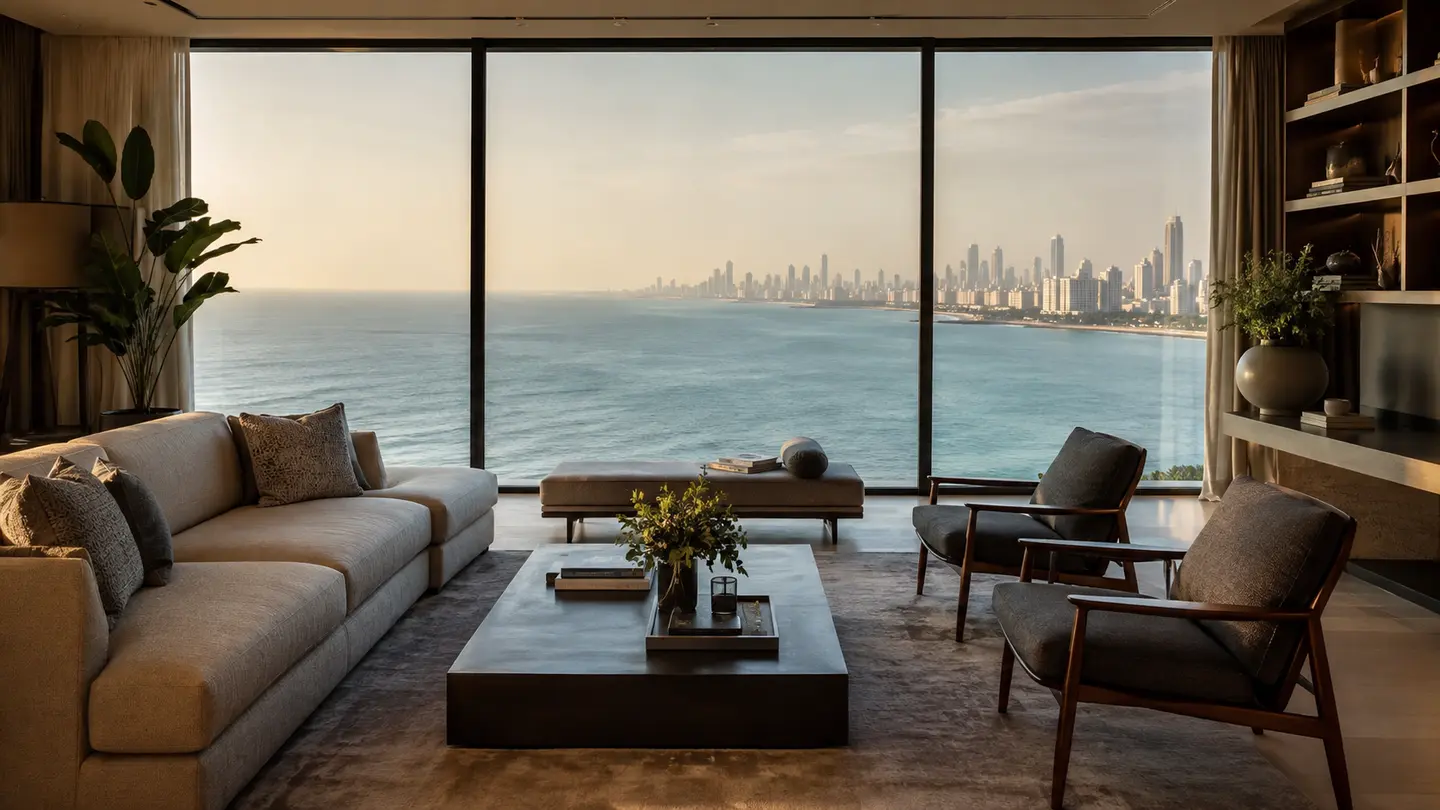
In December 2020 Stallone and his wife Jennifer Flavin bought a waterfront estate in Palm Beach for $35.375 million, held through a trust, on a 1.5-acre site with a main house, guest house and private beach (The Real Deal, WPTV). The purchase followed a long period based in California.
His other substantial holding is art. He is both a collector and a working painter, and the canvases shown at Toronto in 2022 spanned work made between 1975 and 2020 (The Hollywood Reporter). The Palm Beach estate anchors the asset side; the art and the remaining property sit beside it as capital rather than income.
Sylvester Stallone’s estimated net worth
Public estimates vary because private contracts, investments, taxes and liabilities are not fully disclosed.
How this estimate is calculated
What is documented about Stallone’s money is mostly what he does not have: the sale structure of Rocky and his lack of any ownership stake in it (Variety). On the asset side, the $35.375 million Palm Beach purchase of December 2020 is a matter of public record (The Real Deal).
The arithmetic runs on income rather than equity. Take the estimate above – about forty-five paid leading roles from 1976 onwards, priced near scale at the start, $15 million to $20 million a picture at the peak, around $10 million through the 2000s and low single-digit millions since, plus three seasons of Tulsa King at a seven-figure episode rate (Variety) and back-end participation across the franchises. That is $350 million to $500 million gross. Representation takes fifteen to twenty per cent and combined tax roughly half the remainder, retaining $120 million to $180 million in cash. Compound that over four decades, hold the Palm Beach estate and the art as assets rather than income, and the range below follows. The load-bearing assumption is the per-film average, because most of his contracts were negotiated privately.
No Rocky franchise value enters the calculation at any point, because he does not own it; figures that attribute franchise value to him are attributing somebody else’s property. His income has been contractual rather than proprietary from the first day, and it stops growing the day he stops working.
Confidence: Partly documented — one confirmed property purchase, a documented absence of franchise ownership and a reported television episode rate, with five decades of film fees and participations modelled.
Think you know Sylvester Stallone? Take the quiz: Easy · Medium · Legendary
Stallone has supported veterans’ and children’s causes for many years, giving quietly and largely through direct personal support rather than a named foundation.
His public image is the more interesting asset. He is understood as a writer who wrote his way out rather than an actor who was cast, and that story has survived fifty years of sequels intact. It is also why his complaints about ownership are received sympathetically: audiences accept that the character was his to begin with.
The dispute that has defined his later public life concerns those rights. In 2022, after a spin-off centred on the Drago characters was announced, he called publicly for what was left of his rights, describing the producers as vultures and parasites (Deadline).
What he wanted, he has said, was an asset he could leave to his children rather than fees that stop when he does (Variety). He is still paid through back-end participation, but participation is not ownership: it carries no control, and it falls away when the films stop being made.